
Netanyahu Orders West Bank Closure After Deadly Hebron Shooting Wounds Five

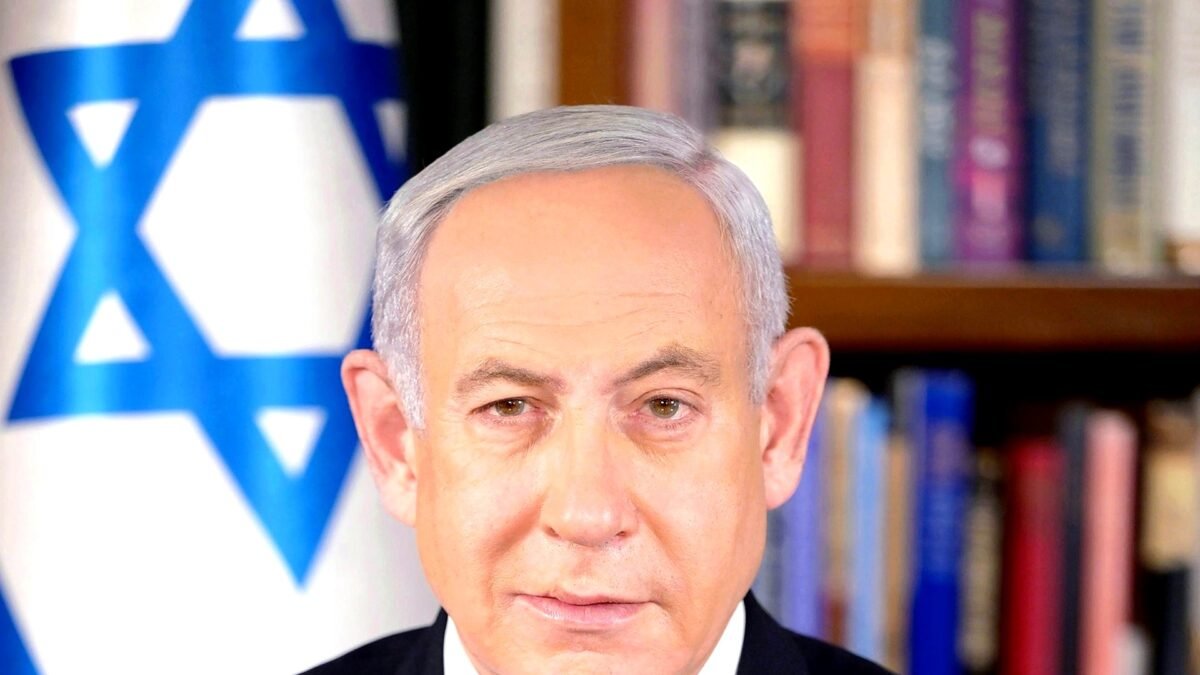
Israeli Prime Minister Benjamin Netanyahu ordered a closure of Hebron and preparations for a full lockdown across the West Bank on Friday morning, after two gunmen opened fire at a junction near Hebron, wounding five people — two of them critically — before both attackers were killed by Israeli troops.
The shooting took place at Yehuda Junction on Route 35 near Hebron in the southern West Bank, according to The Media Line and the New York Post. The attackers arrived by vehicle, exited, and opened fire on people in the area before security forces engaged them. Magen David Adom said its crews treated five wounded people at the scene and evacuated them to hospitals in Jerusalem, including Shaare Zedek and Hadassah Ein Kerem, with two of the victims — both men in their twenties — in serious condition with gunshot wounds to their lower limbs.
The exchange of gunfire reportedly lasted more than 20 minutes, complicating evacuation efforts, according to accounts from medics at the scene. One medic was recorded saying that shooting was still under way as the first crews arrived, with ambulances held back because the area remained under active fire.
The Israel Defense Forces said the two gunmen were killed by soldiers from the Home Front Command’s Ari Battalion after a manhunt and roadblocks were set up around the area. According to the IDF, the attackers were armed with an M16 assault rifle and a handgun.
IDF Chief of Staff Lt. Gen. Eyal Zamir held a situational assessment with the commander of Central Command and other senior officers after the attack. “This was a serious attack. The troops’ swift action prevented an even more serious attack and further harm to civilians and security forces,” Zamir said, according to ANI. Zamir added that a large quantity of ammunition was found in the vehicle in which the attackers arrived, which he said indicated they had intended to carry out a larger-scale attack.
Netanyahu orders Hebron cordon and West Bank closure
Hours after the shooting, Netanyahu and Defence Minister Israel Katz instructed Zamir to impose a cordon on Hebron and prepare for a full closure across Judea and Samaria — the term Israeli authorities use for the West Bank — beginning Friday, with the closure to remain in place at least until after Israel’s parliamentary election on October 27, according to the New York Post and ANI.
In a statement, Netanyahu commended the soldiers who responded. “I commend our heroic fighters who acted with determination and prevented a major terrorist attack, and I wish a speedy recovery to our wounded,” he said. He added that Israeli forces were “operating with enhanced strength to thwart terrorism and are carrying out extensive waves of arrests,” and vowed to pursue Hamas and its dispatchers “everywhere and at all times,” saying: “You have no safe haven.”
Kan 11, Israel’s public broadcaster, reported that one of the attackers was believed to be affiliated with Hamas, according to the New York Post. No group had publicly claimed responsibility for the attack in initial reports, according to Particle News’s roundup of the coverage.
The IDF said it had imposed a closure on Hebron and cordoned off several surrounding villages following the attack, while troops continued searches in the area, according to The Bull Post. Photographs published online appeared to show one of the gunmen during the exchange of fire with Israeli forces.
Attack comes four days before Israel’s election
The shooting occurred four days before Israelis vote on October 27 for the 120-seat 26th Knesset, the country’s first on-time election since 1988. The military had already been placed on heightened alert ahead of the vote, with the IDF reinforcing its forces in the West Bank with an additional regular brigade, according to the New York Post.
Polls show a deadlocked race between Netanyahu’s Likud and Gadi Eisenkot’s Yashar party, with neither bloc close to the 61 seats required to form a government, according to the AIJAC election fact sheet and the SFG Media explainer. Recent surveys put Yashar at roughly 22 to 26 seats and Likud at about 18 to 20, with several smaller parties hovering near the 3.25 per cent electoral threshold that could determine which side can govern.
Security has been a central issue in the campaign, particularly since the Hamas-led October 7, 2023 attacks, in which about 1,200 people were killed and 251 taken hostage, according to the Newsy Today election roundup. The vote is widely seen as a referendum on Netanyahu, Israel’s longest-serving prime minister, and on accountability for the security failures surrounding October 7.
Escalating violence in the West Bank
The Hebron shooting is the latest incident in a period of escalating violence in the West Bank. Settler attacks on Palestinians are surging, with at least 170 recorded since September 27, according to the Israeli human rights group Yesh Din, as reported by Reuters on October 19.
Earlier in October, masked Israeli settlers were filmed assaulting Heidi Levine, a photojournalist with The Washington Post, while she covered a Palestinian olive harvest, and European diplomats and a French mayor were attacked by masked settlers in a separate incident, according to Reuters. The violence drew condemnation from the United States and from France, Belgium and Poland, whose diplomats were targeted. US Secretary of State Marco Rubio said Washington was “very disturbed by those images and what we’re seeing,” and warned of a brewing “crisis” in the occupied West Bank, according to The Daily Circular.
Netanyahu’s coalition government is projected to lose its governing majority in the October 27 vote, according to the Reuters report on the settler attacks, and he has responded cautiously to the settler violence, saying the diplomats had entered “a sensitive area with a history of confrontations without prior coordination” with the military and that the facts of the Levine attack were “unclear.”
Analysis: Why It Matters
Security moves always carry political weight before an election
A West Bank closure in the wake of a shooting is a well-established instrument of Israeli counterterrorism policy: it restricts movement, raises the cost of follow-on attacks, and buys security forces room to hunt accomplices. But in the four days before a national election, every security decision also becomes a campaign statement. The order to close Hebron and prepare a full lockdown came not from a field commander but from the prime minister and defence minister directly, and its announced duration — “at least until after” the vote — makes the connection to the election explicit. That is not unusual in Israeli politics, where security crises have historically reshaped campaigns. What matters is whether voters read the move as decisive leadership or as a reminder that the violence continues under the incumbent’s watch.
The ammunition in the car is the detail that shapes the response
The IDF’s disclosure that the attackers carried a large quantity of ammunition reframes the incident from a lone shooting into a potentially aborted mass-casualty attack. That assessment, attributed by ANI to Zamir, is doing heavy lifting in justifying the scale of the response: a full West Bank closure is a blunt, disruptive instrument, and governments typically need to show that the threat was proportionate to it. The “extensive waves of arrests” Netanyahu announced suggest the security establishment is treating this as a cell rather than a pair of individuals, which means Hebron-area Palestinians could face days of raids, checkpoints and movement restrictions regardless of whether further attacks materialise.
The election arithmetic makes small events loom large
The closeness of the race magnifies everything. With Yashar and Likud separated by a handful of seats and neither bloc near 61, small shifts in voter mood can decide who gets first crack at forming a government. Netanyahu has spent the campaign leaning on his security credentials — and on Donald Trump’s endorsement — while the opposition argues he failed on October 7. A shooting attack four days before polling is the kind of event that concentrates voters’ minds on exactly that question. The polls, with only about 2 per cent of voters undecided according to one survey, suggest the blocs are stable; but security shocks are precisely what can move the few votes that decide which small parties clear the threshold.
West Bank policy is becoming a US-Israel friction point
The Hebron shooting lands in a West Bank that has already drawn unusually sharp American criticism. Rubio’s warning of a brewing “crisis,” prompted by settler attacks on an American journalist and European diplomats, put Netanyahu’s management of the territory on the agenda in Washington. Israel’s closest ally is watching both directions of violence — Palestinian attacks and settler attacks — and a full closure ordered days before an election will be read in Washington as much for its political timing as its security logic. How the next Israeli government manages the West Bank, and whether it restrains settler violence, is likely to be an early test in US-Israel relations no matter who forms the coalition.
What to watch next
- Follow-on arrests and their scale: the IDF’s promised “extensive waves of arrests” will show whether investigators believe a wider network was involved and how long the Hebron cordon stays in place.
- Whether the closure holds past the election: the announced end point is the vote. If restrictions continue into the coalition negotiations, that would signal the security establishment sees an ongoing threat rather than a precautionary posture.
- Any claim of responsibility: with one attacker reportedly linked to Hamas by Kan 11 but no group claiming the attack, a claim — or the absence of one — will shape how Israel frames the threat.
- Polling movement in the final days: the next pre-election surveys will show whether the attack has shifted security-minded voters, particularly around the threshold-polling smaller parties.
- The settlers-violence track: parallel to this attack, the investigations into the Levine and diplomat assaults will continue — and Washington’s stated “crisis” warning keeps the spotlight on how Israel polices both sides of the violence.
Sources
- New York Post — “Netanyahu orders closure of West Bank after 5 wounded in shooting, 2 terrorists killed”
- The Media Line — “5 Wounded, 2 Critically, 2 Terrorists Eliminated in Shooting Near Hebron”
- ANI via Devdiscourse — “No safe haven for Hamas, says Israel PM Netanyahu after terror attack in West Bank injures 5 people”
- AIJAC — Fact Sheet: The 2026 Israeli Election (context)

About the Author — Abdul Mannan
Related Articles
Türkiye Submits Mecca Defence Pact With Saudi Arabia and Pakistan to Parliament for Ratification, Mulls Troop Deployment Mandate
Türkiye has submitted the trilateral Mecca Joint Defence Agreement to parliament for ratification and an AK Party lawmaker…

Iran’s IRGC Navy Claims Seven Vessels Hit in Persian Gulf, Warns US Bases Could Be Next
Iran's IRGC Navy said on Thursday its forces struck four vessels conducting what it called illegal oil transfers…
Aramco Orders Staff to Evacuate Dhahran Headquarters as Houthi Attacks Escalate
Saudi Aramco has told staff to evacuate its Dhahran headquarters and work remotely in the first such order…