
Aramco Orders Staff to Evacuate Dhahran Headquarters as Houthi Attacks Escalate

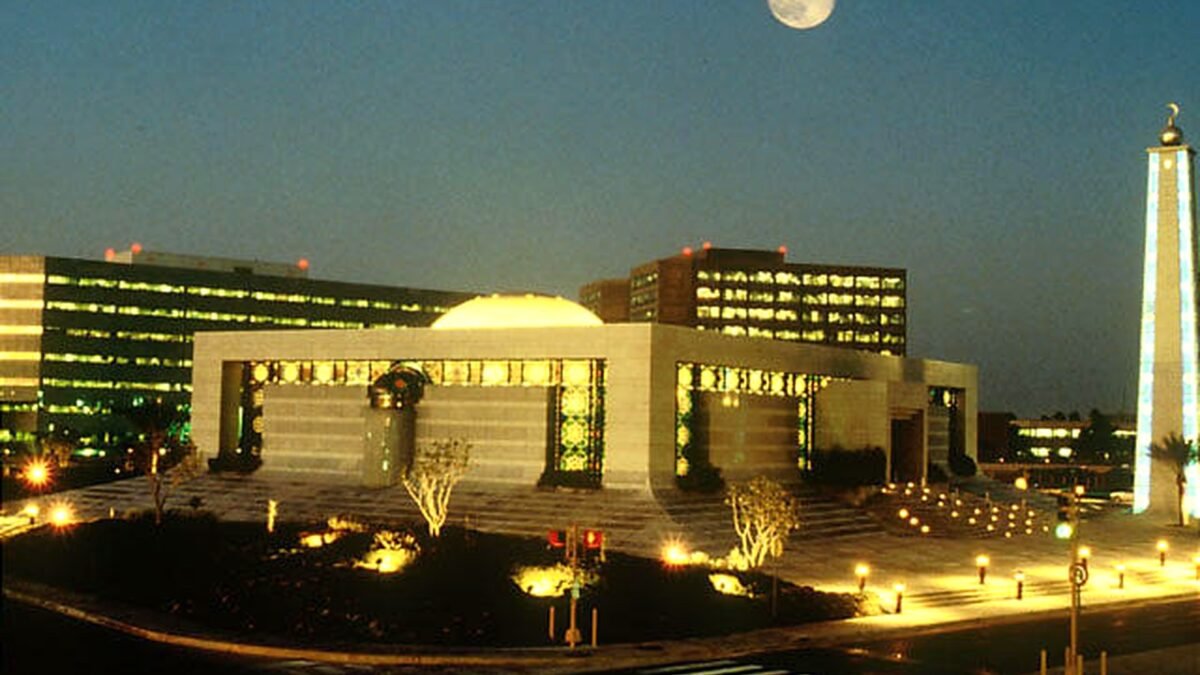
Saudi Aramco has ordered staff to evacuate its headquarters in Dhahran and work remotely, six people with knowledge of the matter told Reuters on Thursday, in the first such evacuation since the start of the Iran war and a sign of how deeply Yemen’s Houthi attacks are rattling the world’s largest oil company.
The instruction followed a wave of Houthi strikes on the kingdom, including a deadly attack on King Fahd International Airport in nearby Dammam on Wednesday evening that killed two people and wounded eight, according to Saudi Arabia’s General Authority of Civil Aviation.
Aramco did not immediately respond to a request for comment, and the reason for the evacuation order was unclear, Reuters reported. A separate report by Agence France-Presse, citing two sources briefed on the matter, said the remaining staff at the sprawling complex were told to work from home until further notice, and that residential areas inside the campus were not evacuated. Non-essential employees had already been working remotely since the headquarters was struck last week.
The Dhahran compound is the beating heart of Aramco’s global operation. Beyond the administration buildings, it hosts an operations centre that oversees the company’s onshore and offshore oil rigs, refineries, export terminals and thousands of kilometres of pipelines, according to Reuters.
The strike that set the stage
The evacuation comes just over a week after Houthi forces struck the headquarters complex itself. Reuters, citing three people with direct knowledge of the damage, reported that the attack caused extensive damage to the building, with fire spreading across several floors.
The strike landed on the evening of October 13, when a company source told Reuters that a ballistic missile had hit an office tower, damaging its top three floors. Saudi Arabia’s energy ministry confirmed the following day that an administrative building belonging to Aramco in Dhahran had been targeted, describing what it called a “limited fire” and reporting no injuries or deaths. Aramco itself said at the time that operations remained unaffected.
The Houthis framed the strike as retaliation for Saudi-led coalition air strikes earlier that day on a fuel depot in Sanaa run by the Houthi-controlled Yemen Petroleum Company. The coalition’s account diverged: spokesman Turki al-Maliki said interception debris had fallen on a residential area of Dhahran, a formulation that left open whether the administrative building had taken a direct hit.
Wednesday’s deadly attacks
The Wednesday evening attack on King Fahd International Airport in Dammam was the deadliest in a series of strikes on Saudi airports in recent weeks. The airport sits in Saudi Arabia’s eastern oil hub, about 15 kilometres north of Dhahran, putting the Houthis’ reach uncomfortably close to the nerve centre of the kingdom’s oil industry.
Separately, Saudi Arabia’s energy ministry said on Wednesday that two people were killed after Saudi air defences intercepted a drone attempting to hit a facility at Aramco’s Shaybah oilfield, hundreds of kilometres to the southeast. The Shaybah deaths followed an attack on October 10 on Riyadh airport that killed at least 12 people, among the deadliest strikes on the kingdom in a decade.
The war widens: drones over Riyadh and Medina
On Thursday, the Saudi-led coalition said it had intercepted and destroyed eight drones over the previous 24 hours, including four in the Riyadh and Madinah regions within a single hour, according to AFP. Col al-Maliki also reported interceptions in the southern, eastern and Riyadh regions.
Houthi military spokesman Yahya Saree said in a televised address on Thursday that the group had launched attacks on the Saudi defence ministry in Riyadh, Aramco facilities in the Red Sea city of Yanbu, and King Fahd International Airport in Dammam. There was no immediate Saudi confirmation of the Riyadh or Yanbu claims, and the Houthi assertions could not be independently verified.
The fighting between Saudi Arabia and the Houthis in recent weeks has ended a 2022 UN-brokered truce that had largely halted cross-border attacks, opening another front in the war between the United States, Israel and Iran. Washington has so far rebuffed Saudi efforts to bring the US directly into the campaign against the Houthis, Reuters reported.
Markets reacted swiftly. Saudi Arabia’s benchmark Tadawul index fell 2.5 per cent on Thursday following the Aramco news, according to LSEG data, while Brent crude climbed above $112 a barrel — a five-month high — and US benchmark WTI rose to nearly $100, as traders priced in a growing risk premium for Middle East supply.
Analysis: Why It Matters
The world’s biggest oil company is now running scared from its own HQ
There is a particular shock value in Aramco — the most valuable company on earth for much of the last decade, the financial engine of the Saudi state — telling its own people to leave its own campus. Corporations evacuate factories in war zones; they are not supposed to evacuate their global headquarters. The order concedes, in practical terms, that the Houthis can reach into the eastern province at will, and that no amount of air defence has closed the gap. That is the kind of admission that changes boardroom calculations from Riyadh to Tokyo.
Dammam showed them the targeting is personal
Until October, the Houthis’ campaign was aimed at things Saudi Arabia needs: airports, oilfields, ports. The October 13 strike on the headquarters and now the evacuation order show the campaign has become aimed at things Aramco itself is: the buildings where its executives sit. Houthi spokesman Saree warned oil workers to stay away from named sites, publishing what the group said were coordinates. When the attacker publishes the map, the defender’s best answer is to move the people. That is exactly what Aramco has now done.
An evacuation is cheap; a sustained empty HQ is expensive
Remote work for an operations centre is not remote work for a call centre. The Dhahran campus coordinates the physical flow of millions of barrels a day through rigs, refineries, terminals and pipelines. Aramco insists production is unaffected, and so far the evidence supports that. But the company has just accepted the premise that its headquarters is a target that must be dispersed. If the evacuation stretches from days into weeks — as the last week’s remote-work posture suggests it might — the operational friction becomes real, and competitors, insurers and buyers will price it in.
The truce is dead and nobody is mourning it
The 2022 UN-brokered truce did something remarkable: it largely stopped cross-border attacks for years. Its collapse in recent weeks has been met with no serious effort at revival — not from Riyadh, which is striking Houthi missile sites; not from the Houthis, who are expanding the target list; and not from Washington, which has its hands full with the Iran war. The truce died quietly and the escalation that replaced it is anything but quiet. That asymmetry tells you everything about the region’s priorities right now.
Riyadh’s problem is bigger than missiles
Saudi Arabia is fighting on two fronts it cannot fully control. Militarily, it intercepts missiles and drones daily yet still absorbs strikes. Diplomatically, it wants American backing for the Houthi campaign and is not getting it — Washington’s priority is Iran, and Riyadh’s requests for direct US involvement have been rebuffed. The kingdom that once bankrolled regional stability is now watching its own stock market fall 2.5 per cent in a day because its oil company cannot keep its lights on. The war with the Houthis was supposed to be the finished business; it is turning into the defining one.
What to Watch Next
- Whether Aramco names a return date: the “until further notice” instruction is open-ended. A firm return-to-office date would signal confidence; silence would signal the opposite.
- The Saudi coalition’s retaliation: Riyadh has answered Houthi strikes with waves of attacks on missile launcher sites. The pace and scale of the next wave will show whether the kingdom is trying to deter or simply to respond.
- Oil price direction: Brent above $112 reflects fear, not disruption. An actual hit on production infrastructure — a refinery, an export terminal, the pipeline to the coast — would move prices from the fives to territory nobody in consuming nations wants to contemplate.
- The American position: the US has ordered its own non-emergency staff out of Saudi Arabia. Whether Washington converts that caution into direct action against the Houthis remains the unanswered question hanging over the whole crisis.
- The Houthis’ next claim: Saree’s televised claims now routinely precede the strikes themselves. What he announces next — and whether Riyadh confirms or denies it — will map the expanding geography of the campaign.
Sources
- Reuters — Saudi Aramco tells staff to evacuate Dhahran headquarters, sources say
- Pakistan TV — Saudi coalition intercepts eight drones in 24 hours as Aramco orders evacuation (AFP reporting)
- OilPrice.com — Oil Prices Surge Above $111 as Houthis Strike Saudi Targets
- The Times — US withdraws diplomats from Saudi Arabia amid deadly Houthi attacks

About the Author — Abdul Mannan
Related Articles
US Orders Non-Emergency Staff and Families Out of Saudi Arabia After Deadly Houthi Strikes on Dammam Airport and Oil Field
The US State Department has ordered non-emergency government employees and their families to leave Saudi Arabia after Houthi…
Tehran Tells Pakistan’s Army Chief No Talks With Washington Until Demands Are Met
Tehran has told Pakistan's army chief there will be no talks with Washington until its demands are met…
Iran Says Saudi Arabia and Houthis Have Not Answered Its Mediation Offer as Gulf Crisis Widens
Iran's foreign minister says Riyadh and the Houthis have not answered Tehran's offer to broker talks, as Egypt…