
Ukraine Denies Starlink Restoration Claim, Says Speed Restrictions Remain Despite Trump’s Assurances

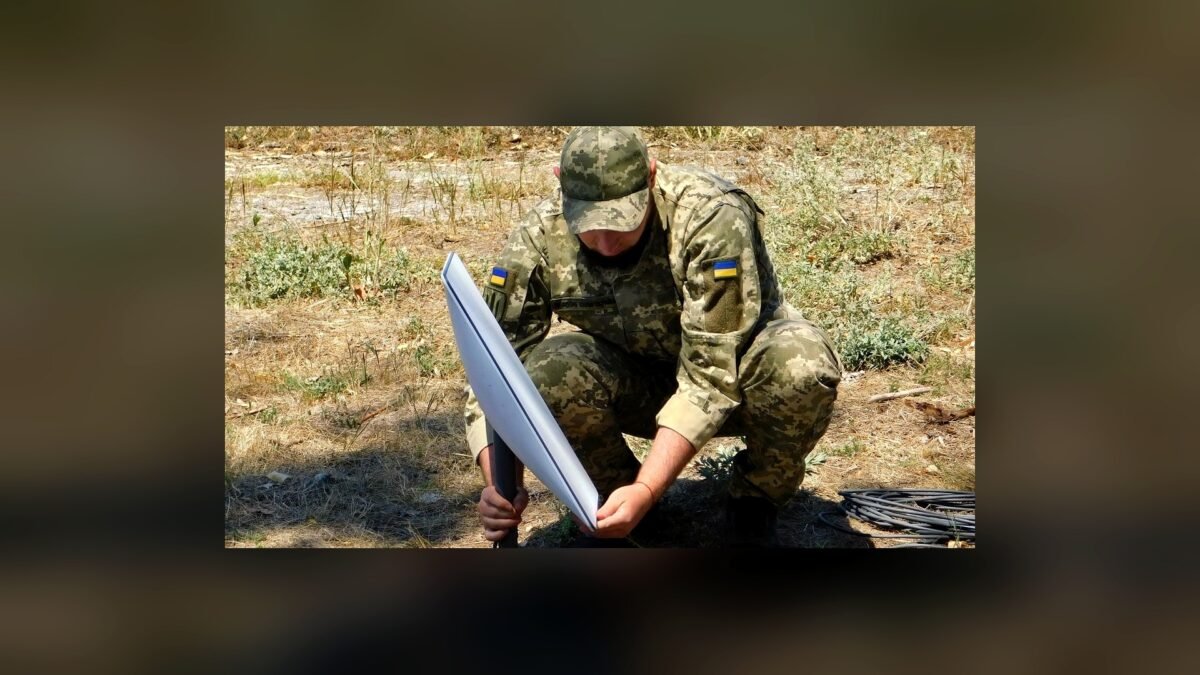
Ukrainian officials said on Friday that speed restrictions on Starlink communications in Ukraine remained in force, directly contradicting United States President Donald Trump’s announcement a day earlier that SpaceX chief Elon Musk had restored the service. The dispute leaves one of Ukraine’s most critical military communication systems in limbo, with Kyiv insisting nothing has changed and Washington insisting the problem will be resolved.
Five Ukrainian officials familiar with the matter told Reuters that the curbs — which cut data links for any equipment moving faster than about 160 kilometres per hour — persisted on Friday morning, according to Reuters. Serhiy Beskrestnov, a presidential adviser to Volodymyr Zelensky on defence technology, wrote on Telegram that “we are currently not observing any lifting of speed limits on Starlink.” He added that isolated cases in which terminals briefly performed slightly faster were “likely due to the SpaceX algorithm or specific usage conditions” rather than a lifting of the restrictions. A Defence Ministry source and two other officials confirmed the assessment to Reuters, while the Ukrainian embassy in the United States said on X that “as of today, nothing has changed. We continue to wait.”
Zelensky himself addressed the matter on Friday afternoon in Kyiv, telling reporters that “the speed limits on Starlink and Starshield are still there, and the speed has not been restored,” according to CNN. He added that Ukraine hoped “the SpaceX and American administration will do it” and that Kyiv was counting on such decisions.
Trump, speaking to reporters at the White House on Friday, struck a different note. “I’ve heard it was fixed but if it’s not I’ll speak to him,” he said, referring to Musk, according to the Wall Street Journal. “If there is a problem, I’ll get it straightened out.” He also said he had not yet spoken to Musk about the matter, but defended the billionaire: “Elon will never do anything wrong. I know him very well. He’s a fair person, and you know it’s an unusual situation where they’re talking to a private company.”
The contradiction
The disagreement is the latest twist in a dispute that has been escalating for more than a week. On Thursday, Trump had told reporters that Musk had restored Ukraine’s access to the military-grade version of the service, known as Starshield. Asked whether he had personally called Musk, Trump declined to answer directly: “I don’t want to comment on it, whether I called or whether somebody else called, doesn’t make any difference, I guess. The bottom line — he put it back,” he said, according to CNN.
The Wall Street Journal, citing United States officials, reported that Trump did in fact call Musk on Wednesday and asked him to lift the restrictions on Starshield, telling him he was frustrated that speeds remained capped at about 100 miles per hour. Some United States and Ukrainian officials said the system appeared to be working more normally on Thursday after the call, raising hopes that full service had been restored.
But late Thursday and overnight into Friday, most of Ukraine’s military continued to report failing connections at higher speeds, military and government officials told the Wall Street Journal. Drone pilots testing their equipment found that once they accelerated past roughly 160 kilometres per hour, connections dropped, forcing them to fly slowly to avoid navigation problems.
POLITICO, quoting a drone pilot with the elite Magyar’s Birds unit who goes by the call sign Leon, reported a partial improvement: drones tested over the Black Sea on Thursday evening briefly reached 200 kilometres per hour, but connections kept dropping above 160. “The key point is: we accelerate above 180 km/h, fly for a couple of minutes, the connection drops,” the pilot said. “So it works better, but with constant connection interruptions.”
A system under strain since October 13
The restrictions first appeared around October 13, when SpaceX limited Starshield — the military-grade service built on Starlink infrastructure — to speeds of about 100 miles (160 kilometres) per hour, with no advance warning to Kyiv. Beskrestnov, who first flagged the disruption, has said the cap was deliberately applied to Ukraine, according to Reuters.
The timing deepened the political charge. The slowdown surfaced as relations between Kyiv and Washington were deteriorating: Trump had announced a deal to buy Russian diesel, waived new sanctions against Moscow, urged Ukraine to halt its attacks on Russian oil refineries, and said Zelensky should be replaced, according to Reuters. The Telegraph reported on October 16 that Musk had approached Trump with the idea of the slowdown and that Trump had “agreed” — citing four unnamed sources. The Wall Street Journal reported on October 20 that Musk had personally ordered the slowdown, though Reuters said it could not verify that claim.
The accounts of who actually ordered the restriction remain contradictory. Two senior United States officials told CNN the order did not come from Trump. Reuters reported earlier that an instruction had come from inside the White House. Defence Secretary Pete Hegseth has said the Pentagon never ordered it. Musk wrote on X that the limits were “decided by the US military and ultimately POTUS.” Trump has said “it wasn’t me, and I don’t think it was Elon.” Secretary of State Marco Rubio said the administration could not direct SpaceX or Musk because it is a private company. Pressed by CNN’s Alayna Treene on Friday about who ordered the slowdown in the first place, Trump replied: “I have no idea, but I wouldn’t tell you if I did.”
What is not in dispute is the battlefield impact. Ukraine’s interceptor drones — built to chase down Russian jet-powered attack drones before they hit Ukrainian cities — need to fly at speeds well above 160 kilometres per hour. The cap has also disrupted drone operations along the front line, where Starlink terminals are used to fly drones deep into occupied territory, and has complicated Ukraine’s efforts to repel Russian attacks, according to Reuters and Ukrainian officials.
Analysis: Why It Matters
A president’s word against the battlefield’s
The most striking feature of this dispute is how directly the two accounts collide. Trump said the service had been restored; Kyiv says, with named officials and unit-level test results, that it has not. There is no ambiguity to hide behind: the speeds are either lifted or they are not, and the people flying the drones are the ones who know. That makes this a rare case where a presidential assurance can be falsified in near real time by the intended beneficiaries of that assurance. Whatever the eventual outcome, the episode will be remembered as a case study in how easily a claim about a technical system can be checked by its users.
One company’s switch, an entire war’s nervous system
The crisis has exposed something Ukraine’s allies have long preferred not to dwell on: a large share of Ukraine’s tactical communications infrastructure rests on a private network owned by a single man whose personal relationship with the sitting American president is volatile and heavily publicised. When the switch that decides whether an interceptor drone can climb above 160 kilometres per hour sits with one chief executive, every misunderstanding — or political calculation — becomes a battlefield event. The partial Thursday improvements suggest restoration is technically trivial, which only deepens the question of why it has not fully happened.
The phone call nobody will put on the record
The Wall Street Journal’s account of the Wednesday call between Trump and Musk is the closest thing this saga has to a turning point, yet Trump refuses to confirm it happened. That reticence matters. If the president did ask Musk to restore service and it has not been restored, the question becomes whether Musk declined, whether the restoration is technically incomplete, or whether the call never quite happened the way it was described. If it did not happen, the claim of restoration rests on thinner ground still. Either way, the refusal to confirm leaves allies and adversaries alike guessing about how the White House actually exercises its leverage over the world’s most powerful private satellite operator.
The politics around the throttle
The slowdown cannot be separated from the broader rupture in the United States–Ukraine relationship. It began within days of Trump announcing a diesel deal with Russia, waiving sanctions on Moscow, and publicly suggesting Zelensky should be replaced. Kyiv’s officials have stopped short of calling the cap a punishment, but the sequence of events has made the inference difficult to avoid. That is why Zelensky’s careful wording matters: he framed the restoration not as a favour but as an expectation — “we count on such decisions.” The Starlink dispute is, in effect, a proxy for the larger question of whether Washington remains a reliable guarantor of Ukraine’s war effort.
Washington’s credibility problem
Beyond Ukraine, the episode damages American credibility in a subtler way. United States and European officials told reporters on Thursday that the system appeared to be working more normally — an assessment that now looks premature. The European Union had already called the slowdown reports “extremely worrying” and demanded restoration. When allied officials relay reassurances that turn out to be false, it erodes the trust that the entire wartime information-sharing apparatus runs on. Trump’s promise to “get it straightened out” will now be measured against a clock Kyiv is watching closely.
What to Watch Next
- The promised fix: Trump said he would speak to Musk if the problem persists. Whether a second call happens — and whether full speeds return across the front line — is the immediate test of the president’s assurance.
- Unit-level tests: Ukrainian drone units are testing speeds daily. Consistent operation above 180–200 kilometres per hour without connection drops will be the first reliable sign of a genuine restoration.
- The European response: The EU has demanded restoration once already. If the restrictions persist, Brussels may move from statements to concrete action on alternative satellite connectivity for Ukraine.
- Washington’s internal accounting: The contradictory accounts — Hegseth, Rubio, Musk, anonymous officials — point to unresolved questions about who controls Starshield. Congress may seek clarity on the chain of command.
- The diplomatic clock: The Starlink dispute is entangled with the wider deterioration of the United States–Ukraine relationship, including the diesel deal with Russia and the refinery-strike dispute. Its resolution — or not — will signal where that relationship stands.
Sources
- Reuters — Ukraine says Starlink speed curbs remain despite Trump assurance
- CNN — Ukrainian officials say Starshield restrictions still in place, despite Trump’s claims
- Reuters — Trump says he will fix any Starlink access problem in Ukraine
- The Wall Street Journal — Trump called Musk and asked him to lift Ukraine Starlink restrictions

About the Author — Abdul Mannan
Related Articles
Trump Says Musk Has Restored Ukraine’s Starlink Access After Nine-Day Slowdown — but Won’t Say If He Made the Call
Trump said Elon Musk had restored Ukraine's Starlink service but would not say whether he had spoken to…

Federal Judge Curbs DHS Hunt for Noncitizen Voters in Nine States, Ruling Data ‘Flawed’ and Operations Amount to Voter Intimidation
A federal judge in Oakland has curbed Homeland Security's pre-election hunt for noncitizen voters in nine states, ruling…

Ilhan Omar Gives First Detailed Account of ‘Bizarre’ Predawn Federal Raid and Says She Must Move Out of Washington Home
Ilhan Omar has given her first detailed account of the October 12 predawn federal search of her Washington…