
Federal Judge Curbs DHS Hunt for Noncitizen Voters in Nine States, Ruling Data ‘Flawed’ and Operations Amount to Voter Intimidation

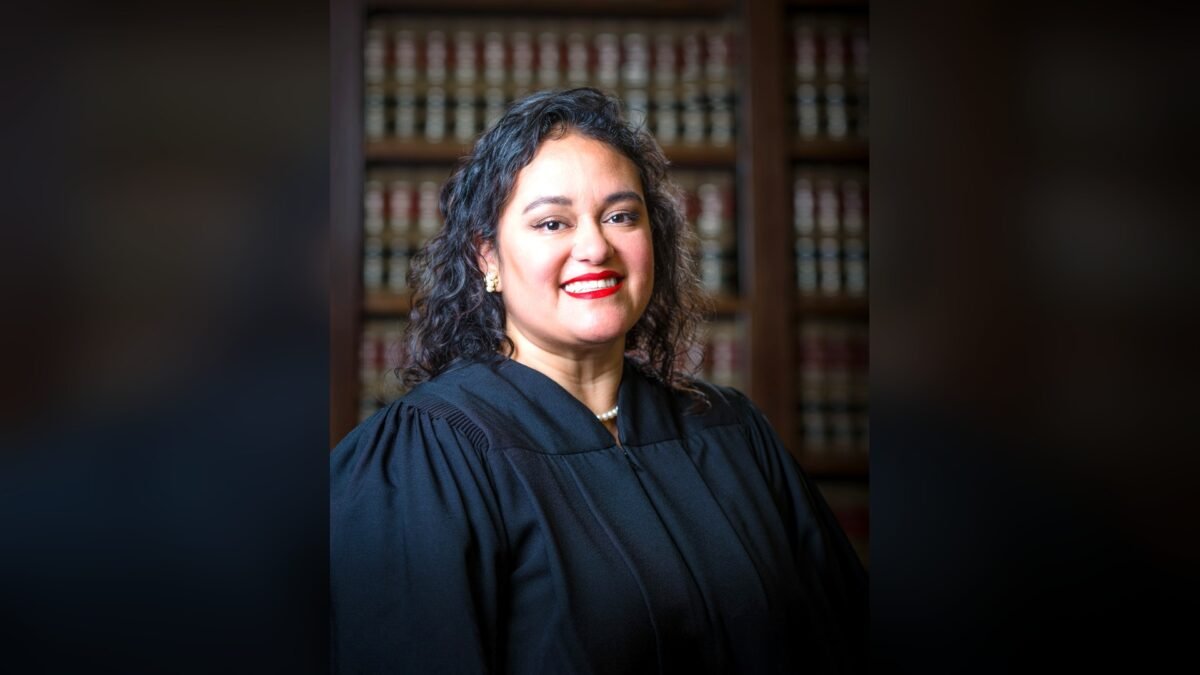
Twelve days before the 2026 midterm elections, a federal judge in California has curtailed the Department of Homeland Security’s pre-election campaign against suspected noncitizen voters, ruling that the operation rests on flawed data and amounts to voter intimidation barred by the Voting Rights Act.
In a 19-page order issued late on Wednesday, US District Judge Araceli Martínez-Olguín of the Northern District of California barred DHS agents from conducting field interviews and other investigative actions in nine states whenever they know, suspect, or reasonably should suspect that the person being targeted is a US citizen. The ruling also forbids agents from acting on nothing more than matching data compiled by US Citizenship and Immigration Services, without further investigation, according to CNN.
The nine states covered by the order are California, Connecticut, Georgia, Missouri, Nevada, New York, Pennsylvania, Washington and Wisconsin. The restrictions are due to take effect on Friday afternoon, giving the Trump administration time to appeal, and will remain in force until after polling day, which falls on 3 November this year. The order does not halt the investigation entirely: DHS may continue to pursue people it believes are genuine noncitizens, and it does not disturb criminal prosecutions already brought.
The judge, an appointee of former president Joe Biden, concluded that the crackdown likely violates the Voting Rights Act, which prohibits voter intimidation, and constitutes “ongoing intimidation” causing irreparable harm to legal voters. She wrote that the government’s interest in investigating unlawful voting did not outweigh the public’s interest in elections free from interference and intimidation.
At the heart of the ruling is the government’s own data. The court found that the target lists were built under an “Unlawful Voter Initiative”, put in place in August 2026, that directed USCIS staff to assemble lists of people to investigate. The source material, the judge found, included 48.2 million records obtained from independent sources of questionable provenance and another 50.6 million records from official state voter-roll data or unreliable commercial versions of it, according to a detailed legal analysis of the order.
Judge Martínez-Olguín described the data as “voluminous and unreliable”, widely known to inadvertently sweep in US citizens. She wrote that it “leaves citizens afraid that their name will be wrongly included in the hundreds of thousands identified for investigation”. There is no federal database of US residents’ citizenship, the court noted, and USCIS concedes that errors arise from similar names, incomplete records and outdated citizenship information.
A USCIS whistleblower who came forward last month alleged that staff had been rushed to match government records to build the target lists, and that the resulting list includes US citizens, the judge said. Staff were told to treat the data as presumptively valid, to complete at least 40 reviews each and to spend no more than 12 minutes on each person. The judge also found that DHS “enriches” the data through a system called iLab using unspecified artificial-intelligence tools.
The court paid particular attention to who ends up on the lists. It found that DHS policy is to target naturalised citizens specifically when the data suggests they voted before they naturalised. Immigration files record a person’s status at a point in time, so someone who held a green card in 2018 and took the citizenship oath in 2022 can look like a noncitizen voter to a matching programme that reads the older entry. As an attorney for Protect Democracy, the legal organisation that represents the groups that brought the case, told CNN: “This order is a serious protection: the current policy targets known naturalized citizens.”
In recent weeks, armed Homeland Security Investigations officers have carried out field operations and visited homes to interview people suspected of illegally voting as noncitizens, according to NPR reporting. Judge Martínez-Olguín pointed to the agency’s own social-media posts, including one showing agents handcuffing a California man accused of unlawfully registering to vote. She wrote that the combination of incomplete data and highly publicised arrests “lead to an objectively reasonable fear of law enforcement entanglements that intimidates citizens from urging or aiding others in exercising their right to vote”.
The plaintiffs in the case include the California Nurses Association, National Nurses United, the Voto Latino Foundation, the city of San Francisco and Santa Clara County. At an 19 October hearing, a Justice Department lawyer argued that the data-sharing and the deployment of agents are lawful investigative tactics and that any intimidation was merely “ancillary”, according to Courthouse News. DHS did not immediately respond to CNN’s request for comment.
The order lands in the final stretch of a midterm campaign in which President Donald Trump has for years claimed, without evidence, that noncitizen voting is widespread. DHS has been, in CNN’s description, a driving force behind the administration’s efforts to bolster those claims, aggressively expanding its efforts to investigate the issue. In reality, documented instances of noncitizens voting are exceedingly rare and have never occurred in numbers that could affect an election outcome. The Justice Department says 156 people have been charged with voting-fraud offences since the administration began, according to CBS News, a total that includes 28 California green-card holders charged on 19 October. The injunction does not touch those prosecutions.
Analysis: Why It Matters
The calendar is the ruling
Judge Martínez-Olguín did not merely rule on the merits of a data-matching programme; she ruled against the clock. The order takes effect on Friday afternoon and expires after polls close, which means its entire lifespan is the final, feverish stretch of the 2026 midterms. The judge acknowledged as much by giving the government a brief window to appeal — a courtesy that also exposes how she read the stakes. An investigation that arrives in a voter’s doorway, or on a voter’s feed, in the fortnight before an election does not need to end in a charge to do its work. The chill is the product. That is why the legal standard here is not “was anyone wrongfully convicted” but “would a reasonable citizen fear law-enforcement entanglement” — a standard built for precisely this kind of pre-election pressure.
Garbage in, knock on the door
The most damning pages of the 19-page order are not the legal analysis but the description of the plumbing. Forty-eight million records from “independent sources” of uncertain origin, 50 million more from voter rolls and commercial lookalikes, enriched by an AI system whose methods the court could not even identify, reviewed by humans given 12 minutes per person and instructed to presume the data valid. There is no federal citizenship database in the United States, which means any attempt to prove noncitizenship from administrative records is, at best, a guess wearing a badge. The court was unsparing about what follows: naturalised citizens flagged because an old green-card record sat in a file, and US-born voters — Los Angeles County found them in a sample of the federal list — swept in by names that merely resemble someone else’s. When a dragnet is this porous, the dragnet becomes the intimidation.
Naturalised citizens in the crosshairs
The detail that may do the most lasting damage to the programme’s public standing is the one Protect Democracy’s lawyer put plainly: the current policy targets known naturalised citizens. The mechanism is almost mechanical. USCIS databases are snapshots — a person’s file says “lawful permanent resident” on the date it was written, and if no later citizenship record is matched against it, the algorithm reads 2018 and ignores the oath ceremony of 2022. The result is a federal law-enforcement operation whose highest-probability targets are not fraudulent voters but immigrants who followed every rule and naturalised. There is a deep irony, and a deep political risk, in an election-integrity campaign that subjects the most law-abiding new citizens to door-knocks from armed agents. It is also the reason the order’s language — “know, suspect, or reasonably should suspect” the person is a citizen — reaches past the data to the design.
The Voting Rights Act meets immigration enforcement
The legal theory here is as old as 1965 and as new as this month. The Voting Rights Act bars intimidation, threats and coercion against anyone voting or assisting others to vote, and the judge applied it not to the familiar villains of the civil-rights era — the sheriff at the polling place, the menacing crowd outside — but to an immigration agency’s field operations. The Justice Department’s counter-argument, that the data-sharing is a lawful investigative tactic and any intimidation merely “ancillary”, asks the court to separate the investigation from its aura. The judge declined, finding that the aura is the point: armed agents, home visits, handcuffing photos posted for an audience, all in the weeks before voting, create exactly the “objectively reasonable fear” the statute was written to prevent. If the ruling survives appeal, it will be cited for years as the case where immigration enforcement collided with the franchise and the franchise won the first round.
A limited order with a long shadow
Strip away the drama and the order is modest: nine states, a few weeks, field operations only, genuine noncitizens still fair game, prosecutions untouched. The administration could appeal, and higher courts may narrow or stay the ruling before Friday. But the record the judge built — the whistleblower, the 12-minute reviews, the unnamed AI enrichment, the handcuffing video — will follow every appeal brief and every future hearing, and it will follow DHS into the next programme it builds. The deeper precedent being set is procedural: that a court will look inside a voter-integrity operation’s data engine before letting its agents knock on doors. For an administration that has made the hunt for noncitizen voters a central electoral narrative, the ruling is a rebuke not of the goal but of the method — and of the arithmetic that said hundreds of thousands of suspect names could be conjured from records the government’s own lawyers concede are full of citizens.
What to Watch Next
- The appeal window. The order takes effect on Friday afternoon; the Justice Department is expected to seek an emergency stay from the Ninth Circuit before then. How quickly, and on what grounds, will tell whether the administration treats this as a lost week or an existential fight over the programme.
- Whether DHS pauses quietly or redirects. The injunction allows continued investigation of suspected genuine noncitizens. Watch whether field operations simply shift into states not covered by the order, or whether the agency stands down until after 3 November.
- The 28 California cases. The green-card holders charged on 19 October remain prosecuted. Their charging documents will reveal what evidence DHS can produce without the flawed list-building — the real test of whether the programme can find fraud at all.
- The whistleblower’s evidence. The USCIS whistleblower’s account of rushed matching and 12-minute reviews underpins the order’s harshest findings. If those documents become public in the appeal, they could reshape the politics of the programme more than any ruling.
- Election-night conduct. The order expires after polls close, but the Justice Department’s election-monitoring posture on 3 November — observers, hotlines, further field activity — will show whether this dispute was about a programme or about the franchise itself.
Sources
- CNN: “Judge curbs Trump administration’s hunt for noncitizen voters in some states, citing flawed data”
- Democracy Docket: “Judge limits DHS voter intimidation efforts targeting alleged noncitizens in nine states”
- Immigration Analytics: “Noncitizen Voter Investigations: Judge Curbs DHS in 9 States” — detailed legal analysis of the 19-page order

About the Author — Abdul Mannan
Related Articles

Ilhan Omar Gives First Detailed Account of ‘Bizarre’ Predawn Federal Raid and Says She Must Move Out of Washington Home
Ilhan Omar has given her first detailed account of the October 12 predawn federal search of her Washington…
Democrats Sue Trump Administration Over Voter-Roll Pressure in Pre-Midterm Court Battle
Democratic leaders and election groups have sued the Trump administration in federal court, seeking to stop federal pressure…
Trump Praises Rally-Goers Who Struck Hecklers at Chaotic South Carolina Midterm Event
Donald Trump cheered from the stage as supporters struck hecklers during a chaotic midterm rally in South Carolina,…