
US Cuts Staff at Four Middle East Embassies as Intelligence Chief Warns Iran Plots Against Americans Reach ‘Advanced Stages’

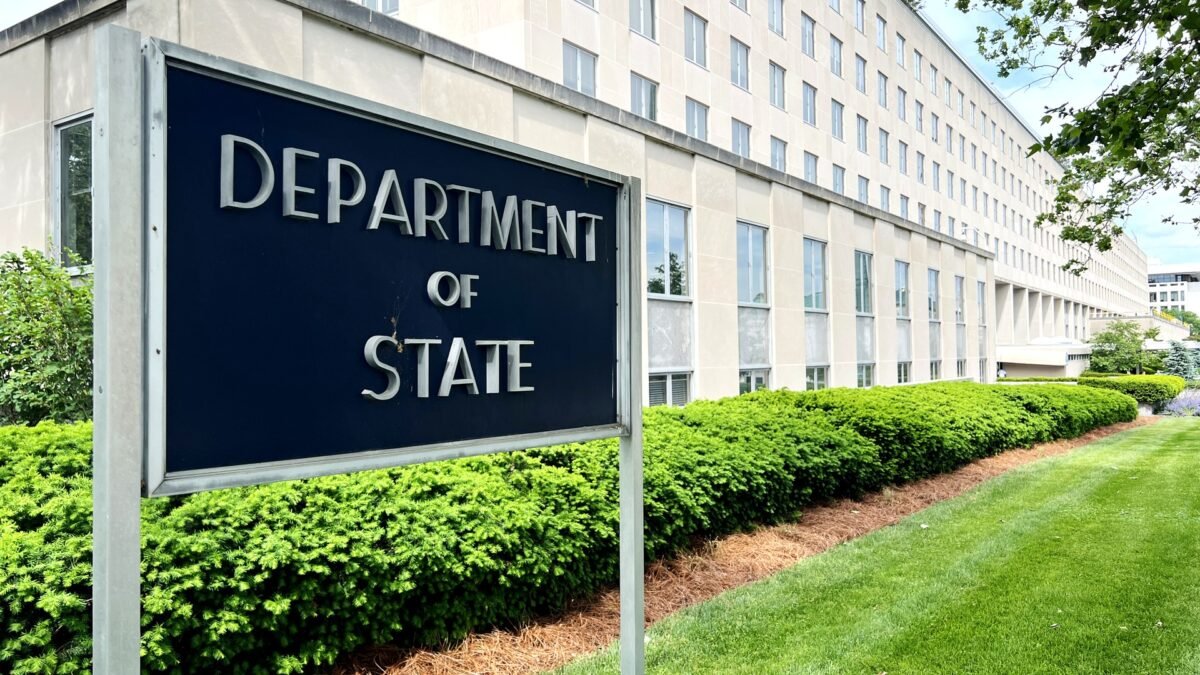
The United States is reducing staffing at four of its embassies in the Middle East after receiving intelligence that Iran has stepped up efforts to target American personnel in the region and beyond, according to the Associated Press, in the sharpest sign yet that Washington believes the threat to its diplomats is rising again eight months after its war with Iran.
In a memo sent on Friday to Secretary of State Marco Rubio, Director of National Intelligence Jay Clayton said his teams “have received intelligence that Iran has substantially increased efforts to target U.S. personnel,” according to the Associated Press, which obtained the memo. “The lethal plotting efforts by the Iranians against U.S. citizens have reached advanced stages in both the Middle East and certain other countries,” Clayton wrote.
The memo, first reported by Axios, was confirmed by three U.S. officials speaking on condition of anonymity because of the sensitivity of the matter, according to the Associated Press. The officials confirmed that Clayton sent the document to Rubio in his capacity as secretary of state and national security adviser.
The disclosure came shortly after the State Department announced it was reducing staff at the U.S. embassies in Jordan, Lebanon, Qatar and the United Arab Emirates, according to the Associated Press. The three officials said the threats from Iran and from Yemen’s Iranian-backed Houthi rebels are related to the staffing changes.
The memo: what U.S. intelligence says
What makes the memo striking is its bluntness. Intelligence warnings are usually couched in careful language about capabilities and intentions; this one describes plotting that has already reached an advanced stage, and it extends the geography beyond the Middle East to “certain other countries,” according to the Associated Press. The memo did not identify specific targets or locations beyond that broad framing, according to reports of its contents, and it did not say whether an attack was imminent.
Clayton also offered to make more of the intelligence available to the State Department, according to reports of the memo, so that personnel who might be at risk could be informed. The offer matters because it suggests the warning is not merely a general threat assessment: it is tied to information specific enough that the intelligence community believes named individuals or posts could benefit from seeing it.
The memo was shared with senior officials cleared to receive it, according to the Associated Press, and with CIA Director John Ratcliffe, according to other reporting of the document. Its emergence on Friday, two days after the Saudi departure order, turned what had looked like a country-specific security measure into something visibly regional.
Four embassies, and how this differs from Saudi Arabia
The four missions now reducing staff — in Amman, Beirut, Doha and Abu Dhabi — are all operating under what is known as “restricted operations” status, which has already reduced the size of their personnel footprints, according to the Associated Press. They will remain open. Crucially, unlike in Saudi Arabia, staff in the four countries are not compelled to depart: the move is a staffing reduction, not an evacuation order.
Saudi Arabia is different. On Wednesday, the State Department issued an ordered departure for non-emergency U.S. government employees and their family members in Saudi Arabia, covering the embassy in Riyadh and consulates in Jeddah and Dhahran, according to CNN. That order compels departure; it is the strongest tool in the department’s security repertoire short of closing a mission altogether.
State Department spokesperson Tommy Pigott initially stressed that the ordered departure applied to Saudi Arabia only, writing on X that reports of a broader evacuation across the Gulf were inaccurate, according to CNN and Reuters. The distinction has since blurred in practice: family members are leaving posts elsewhere in the region too, according to CNN, even where no formal departure order has been issued. The gap between the formal order and the facts on the ground is itself part of the story, and it is one reason the memo’s disclosure has drawn so much attention.
The Houthi front: airports and oil
The public case for the drawdown has rested heavily on the Houthis. Pigott said Iranian-supported Houthis “have increasingly engaged in hostilities against Saudi Arabia, including attacks on civilian airports and other critical infrastructure resulting in civilian casualties and severe travel disruptions,” according to CNN. The State Department also warned U.S. citizens in a security alert to be aware of potential attacks on airports and general travel disruption, and said U.S. government employees in Saudi Arabia require special authorisation from the chief of mission to use any airport in the kingdom following recent missile and drone attacks, according to CNN.
The attacks behind that warning have been deadly. On 10 October, Houthi missile strikes hit King Khalid International Airport in Riyadh, killing at least 12 people and injuring hundreds, according to The Wall Street Journal. On Wednesday, an attack on King Fahd International Airport in Dammam killed one person and injured eight others, according to Saudi Arabia’s General Authority of Civil Aviation, as reported by Reuters and The Wall Street Journal. The same day, two people were killed after Saudi air defences intercepted a drone targeting a facility at Saudi Aramco’s Shaybah oilfield, according to Reuters.
Houthi strikes and attempted strikes on Saudi Arabia more than doubled in a single week this month, according to the Armed Conflict Location and Event Data Project, as cited by the New York Post, with airports in Riyadh, Jizan, Najran, Dammam and Abha targeted since 5 October. Saudi-backed forces aligned with Yemen’s internationally recognised government have expanded operations against Houthi positions across multiple frontlines, according to CNN, while Saudi air power continues to provide military cover. The result is a two-way escalation in which civilian infrastructure — airports, oil facilities, maritime traffic — has become the most visible front line.
A second departure in eight months
For the diplomats and families involved, this is the second upheaval in less than a year. Many were ordered out of the region when the United States and Israel launched their war against Iran in late February, according to Reuters, and had only recently returned to their posts. Now they are leaving again, in circumstances that several described to CNN as chaotic and frustrating.
“To say it has been chaotic is an understatement,” one U.S. diplomat told CNN, explaining that the financial support offered so far does not cover the costs of moving an entire family from the region. Many families had scrambled earlier in the year to leave their homes in the Middle East and find new housing and schools for their children, according to CNN. “This echoes the chaos families experienced earlier this year. Some had barely settled back in before being told to leave again,” Nikki Gamer, the spokesperson for the American Foreign Service Association, told CNN. “They are understandably upset, confused, and angry.”
One U.S. official told CNN that staffing decisions are constantly reassessed against new information about the security environment. “The threat of Houthi attacks and of Iranian terror plots targeting U.S. officials are informing our decisions on staffing adjustments for embassies on RO Status in the region,” the official said, using the department’s shorthand for restricted operations. The comment is notable because it links, in a single sentence, the two threats — Houthi and Iranian — that the department’s public statements have tended to keep apart.
What Washington is saying — and not saying
That separation is deliberate, and it is worth examining. In announcing the staffing drawdowns this week, the State Department pointed specifically to increased threats from Yemen’s Houthi rebels and did not mention threats to U.S. personnel directly from Iran, according to the Associated Press. Officials have denied that the embassy reductions are connected to possible new strikes by the United States and Israel, according to other reporting. The public message, in other words, has been about protecting staff from an ongoing Houthi campaign, not about an Iranian plot.
The memo tells a different part of the story, and its leak — first to Axios, then to the Associated Press — has forced the two narratives together. It is possible to read the episode in two ways. One is that the department was managing a sensitive intelligence warning discreetly, adjusting staffing quietly to avoid alarming allies or tipping off adversaries, and the memo’s disclosure simply made that private reasoning public. The other is that the public emphasis on the Houthis understated the Iranian dimension, and that the leak corrected the record. Either way, the effect is the same: allies, adversaries and the American public now know that Washington assesses Iranian plotting against Americans to be at an advanced stage, and that assessment will shape expectations of what Washington does next.
Iran has not, in the reporting so far, responded publicly to the specific claims in the memo. Its Islamic Revolutionary Guard Corps has warned that if pressure on Iran continues, the conflict could extend to U.S. bases in the region, according to The Times. That warning, and the Houthi campaign it is linked to, form the backdrop against which any American response — diplomatic, military or both — will be judged.
Analysis: Why It Matters
A drawdown is a signal, whether Washington wants it to be or not
Embassy staffing decisions are administrative acts with diplomatic consequences. When a government pulls families out of a country, it tells its own citizens that the risk has crossed a threshold; it tells the host government that Washington doubts its ability, or willingness, to guarantee safety; and it tells adversaries that their threats are being taken seriously. None of that is necessarily intended as a message, but all of it is read as one. The fact that four more embassies are now thinning out, on top of the Saudi ordered departure, means the signal is regional, not local. It suggests Washington’s threat picture has changed across the Gulf and the Levant at once, not merely in one kingdom where airports are under attack. That breadth is what turns a security measure into a geopolitical event.
The Houthi campaign and the Iranian threat are now one story
For months, it has been possible to treat the war in Yemen and the confrontation with Iran as related but distinct problems: one a grinding regional conflict, the other a great-power standoff over nuclear and missile capabilities. The events of this week collapse that distinction. The same officials who link the staffing changes to both threats are, in effect, describing a single threat ecosystem in which Iranian intent and Houthi capability reinforce each other. The Houthis provide the visible violence — missiles over airports, drones over oilfields — while the intelligence warning supplies the invisible intent: plotting against Americans that has reached an advanced stage. Treating them separately made the drawdown look like a precaution; treating them together makes it look like a response to a coordinated pressure campaign. That framing will matter enormously if Washington has to decide whether, and how, to retaliate.
The messaging gap is a vulnerability in itself
Governments often separate what they say from what they know, and there are legitimate reasons for doing so: protecting sources, avoiding panic, giving diplomacy room. But when the gap becomes visible — when the public case rests on the Houthis while a leaked memo rests on Iran — it creates three problems at once. Allies wonder which account to believe. Adversaries can exploit the discrepancy, claiming either that Washington is exaggerating or that it is hiding something. And the American public, including the families being moved, is left to piece together its own picture from leaks. The diplomat who told CNN that the process has been chaotic was not only describing logistics; he was describing the human cost of a communication failure. In a crisis, clarity is not a luxury. It is part of protection.
Diplomatic presence is hard to rebuild once it thins
There is a practical cost that rarely makes headlines. Every diplomat withdrawn is a relationship paused: a contact in a host foreign ministry who no longer gets a call, a commercial negotiation that slows, a consular case that waits. Restricted operations status already limits what an embassy can do; further reductions compound the effect. And the damage is not easily reversed. Families who have moved twice in eight months will think twice about returning a third time. Experienced officers will seek postings elsewhere. Host governments, meanwhile, draw their own conclusions about American staying power. The United States has spent decades building the largest diplomatic footprint in the Middle East precisely because presence buys influence. Each drawdown spends some of that capital, and it is not refunded when the threat recedes.
The real question is what comes after the drawdown
A staffing reduction is a defensive move. It protects people, but it does not change the threat. The strategic question — the one the memo forces into the open — is what Washington intends to do about plotting it describes as advanced. The options are all difficult. A military response risks the wider war that the drawdown itself seems designed to hedge against. A diplomatic approach requires a counterpart willing to talk, and recent history offers little encouragement. Doing nothing, meanwhile, leaves the threat in place and invites the question of what the drawdown was for. The coming days will therefore be watched less for further departures than for the first sign of a strategy: a public warning with specifics, a private channel reopened, a military movement, or a deliberate silence. The drawdown has bought Washington time and safety. What it does with them is the story now.
What to Watch Next
- Whether staffing reductions at the four embassies harden into ordered departures, or whether new posts are added to the list — the difference between a reduction and an order is the clearest gauge of how the threat is evolving.
- Whether Iran responds publicly to the memo’s claims, and whether that response denies the plotting, ignores it, or answers it with fresh threats against U.S. bases in the region.
- The tempo of Houthi attacks on Saudi airports, oil infrastructure and Red Sea shipping, and whether Saudi and allied air operations against Houthi positions intensify in response.
- What the State Department says next about the safety of its personnel, and whether its public account converges with the intelligence picture described in the Clayton memo.
- Whether the drawdown affects the wider U.S. posture in the region, including military deployments and the diplomatic calendar, in the weeks ahead.
Sources
- Associated Press: “US is reducing staffing at 4 Middle East embassies over increased threats from Iran” (Matthew Lee)
- CNN: “US discreetly moves diplomats and families from multiple Middle Eastern countries as escalation fears grow”
- CNN: “US orders departure of some embassy staff and families from Saudi Arabia amid Houthi threat”
- Reuters: “US orders diplomats to depart Saudi Arabia amid Houthi strikes” (via Devdiscourse)

About the Author — Abdul Mannan
Related Articles
France Deploys 70,000 Police as Half a Million Protesters Take to the Streets
France has deployed some 70,000 police officers and banned or restricted protests in major cities ahead of a…

Magnitude-7.0 Earthquake Hits Tibet’s Nagqu, Killing 16 as Rescue Teams Battle Cold and Aftershocks
A magnitude-7.0 earthquake struck northern Tibet late on Thursday night, killing at least 16 people and injuring 65,…

Iran Has Drawn Up Detailed Plans to Hit Gulf Undersea Internet Cables if War Resumes, Reuters Reports
Iran has told Reuters it has detailed plans to target undersea communications cables in the Gulf if the…