
Iran Has Drawn Up Detailed Plans to Hit Gulf Undersea Internet Cables if War Resumes, Reuters Reports

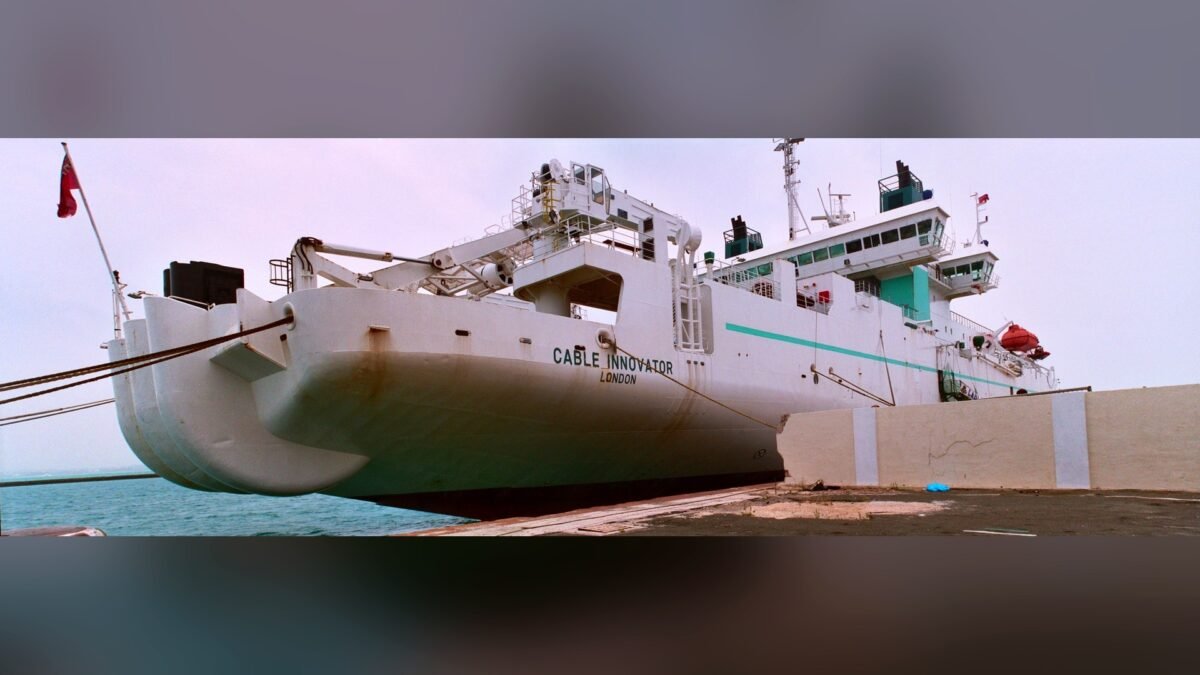
Iran has drawn up detailed plans to target undersea communications cables in the Gulf if the United States and Israel attack it again, two senior Iranian security officials have told Reuters, in the clearest sign yet that Tehran is preparing to widen any future conflict far beyond oil tankers and military bases.
The officials, speaking on condition of anonymity, said the plans would cover undersea cables across the Gulf and that Iran would aim not just to cut them but to prevent repairs afterwards, prolonging disruptions to communications, including internet connections. “If Iran is attacked, there will be no more red lines … from undersea cables to military bases, including covert ones,” one of the officials said, warning Washington not to “play with fire” and asserting that Iran had full access to the cables and could easily destroy them.
The revelations, published by Reuters on Friday, followed a week in which Iranian officials openly named subsea cables as potential targets if diplomacy with Washington collapsed. On Wednesday, Brigadier General Yadollah Javani, the deputy head of political affairs for the Islamic Revolutionary Guard Corps (IRGC), told Iran’s Arabic-language Al-Alam television that Iran could target seven major internet cables beneath the Strait of Hormuz if Iranian infrastructure came under attack. Days earlier, IRGC spokesman Hossein Mohebbi had described undersea cables running through the strait as “legitimate new targets” for any future confrontation, according to comments reported by The Telegraph.
Both the US Department of State and Iran’s Foreign Ministry declined to respond to Reuters’ requests for comment on the officials’ remarks, and there was no immediate comment from Gulf states.
According to Reuters, the cable plans reflect a conviction among Iran’s leadership that a renewed American military campaign would have to be met with what officials describe as a stronger response than the one Iran mounted earlier in the war. Top Iranian security official Mohsen Rezaei had already warned earlier in October that US-linked digital infrastructure across the Gulf, including data centres and artificial-intelligence facilities, could be targeted in a renewed conflict. In a pointed message to Washington’s partners, the second Iranian official told Reuters that Gulf governments had invested heavily in such infrastructure and that they “should hold Washington, not Tehran, responsible for any damage to undersea cables.”
The Strait of Hormuz, which separates Iran and Oman and links the Gulf to the Gulf of Oman and the Arabian Sea, is one of the world’s most consequential maritime chokepoints. Undersea cables carry around 99 per cent of global internet traffic, according to the International Telecommunication Union, a UN agency. But analysts cited by Reuters cautioned that the global impact of attacks in the strait itself could be limited: Alan Mauldin, research director at telecommunications research firm TeleGeography, noted that less than 1 per cent of international bandwidth passes through the Strait of Hormuz.
That statistic is double-edged. The damage to the global internet may be contained, but the damage to the region could be severe: multiple cable cuts could slow internet services and disrupt financial transactions, e-commerce and cloud computing, with the impact depending on how operators rerouted traffic and the capacity available on alternative connections, Mauldin said. Restoring connections during wartime could be difficult, experts said, and higher insurance costs and delays in obtaining permits to enter territorial waters could further complicate repairs — a problem Tehran appears keenly aware of, given its stated aim of preventing repairs to prolong outages.
Reuters also reported that the Red Sea could offer Iran a more significant target than the Strait of Hormuz, particularly if Tehran had support from its Houthi allies in Yemen, though it noted that Tehran has made no public statement indicating it plans to target cables there. Mauldin said the Red Sea carried data between Europe, East Africa and Asia, with capacity routed through it accounting for about 3 per cent of global international demand and around 10 per cent of traffic travelling between regions.
The cable threat is the latest escalation in a conflict that has already dragged digital infrastructure into the line of fire. Iranian strikes directly hit two Amazon Web Services facilities in the United Arab Emirates in March and damaged infrastructure near one of its facilities in Bahrain, according to Reuters. At the height of the war in March, the IRGC named US technology companies including Microsoft, Google, Apple and Nvidia as legitimate targets. Land-based connections can provide alternative routes for internet traffic, and Gulf states and US technology companies are investing in additional infrastructure to improve resilience — Microsoft plans to invest more than $400 million in subsea and terrestrial connectivity across the Middle East by 2030.
The timing of the revelations is hardly accidental. The New York Times reported earlier this week that US and Israeli militaries had drawn up specific plans for a renewed, short but intensive bombing campaign against Iran after the November 3 US midterm elections, targeting nuclear facilities, energy infrastructure and Iran’s missile and drone arsenal. President Donald Trump has said he will not order strikes before the midterms, while Israeli Prime Minister Benjamin Netanyahu — facing a parliamentary election on October 27 — has been pushing for military action sooner. In the Strait of Hormuz itself, Iran said on Thursday that seven oil tankers had caught fire or been damaged overnight after being hit or striking naval mines, a claim the Associated Press said it could not independently confirm. The United Kingdom Maritime Trade Operations monitor says October has seen the highest number of reported attacks on commercial shipping since March.
Analysis: Why It Matters
Tehran is threatening the thing Gulf rulers care about most
Iran’s escalating warnings are not really addressed to Washington — they are addressed to Abu Dhabi, Riyadh, Doha and Manama. Gulf governments have spent the last few years pouring money into technology as part of their drive to diversify beyond oil: data centres, cloud regions and artificial-intelligence hubs built in deep partnership with American technology firms. By threatening to cut the cables and strike the servers, Tehran is warning those governments that their national modernisation projects are hostage to American war plans. The Iranian official’s line — that Gulf governments should hold Washington, not Tehran, responsible for any damage — is a naked attempt to drive a wedge between the United States and its Gulf partners, and to make the economic cost of renewed war feel local before a single bomb falls.
This is deterrence by nightmare scenario
Alex Vatanka, director of the Iran programme at the Middle East Institute in Washington, told Reuters the cable threats were designed both to deter renewed conflict and to put pressure on Washington by making Gulf governments and US companies fear for their investments in the region. “Tehran wants Gulf states and corporate executives to press (US President Donald) Trump over the risks his policies pose to their investment plans,” Vatanka said. The logic is familiar from classical deterrence theory: you do not need to cut a single cable if the credible threat of doing so forces insurers to raise premiums, companies to delay investment and governments to plead with Washington for restraint. The uncertainty itself, as Iranian analysts have openly noted, has value — and each public warning, from Mohebbi’s “legitimate new targets” to the detailed Reuters disclosures, raises the price of inaction.
“No more red lines” marks a doctrinal shift
The phrase attributed to the Iranian official is worth pausing over. For decades, Iran calibrated its retaliation carefully — proxies, plausible deniability, targets that could be struck and then walked back. “No more red lines” signals, at least rhetorically, that the old restraint is gone. It echoes the broader posture Tehran has adopted since the war began in February: strikes on Gulf-based American corporate facilities, the naming of Microsoft, Google, Apple and Nvidia as legitimate targets, and now detailed planning against subsea infrastructure. Whether this reflects genuine doctrinal change or crisis bargaining, it tells adversaries to prepare for a wider war — which is precisely the point. The risk, as always with brinkmanship, is that a threat meant to deter can also harden resolve on the other side, giving hawks in Washington and Jerusalem evidence that Iran is an incorrigible aggressor that must be confronted.
The cable count matters less than the corridor
There is a telling discrepancy buried in the coverage: Iranian officials speak of seven major cables beneath the Strait of Hormuz, while the International Cable Protection Committee says five active cable-system segments traverse the strait and that less than 1 per cent of global bandwidth passes through it. The truth of the exact number is less important than the geography. The strait is not the global internet’s jugular vein — it is a regional one. Its cables serve the Gulf states themselves: the UAE, Qatar, Saudi Arabia, Oman and Bahrain, whose landing stations carry their financial traffic, cloud services and corporate communications. Iran would, in other words, be holding a knife to its neighbours’ throats — and to the very economies it has accused of backing Washington. Two cables even land in Iran itself, meaning sabotage in the strait could not be surgically limited to Iranian adversaries’ traffic. Tehran is advertising its willingness to burn the shared neighbourhood to save itself.
Elections on both sides are the hidden clock
The cable revelations arrive at a moment when two elections are dictating the war’s tempo. Netanyahu, facing voters on October 27 in Israel’s first election since the October 7, 2023 Hamas attack, has strong political incentives to look tough on Iran — one former Israeli intelligence analyst told the Associated Press this week that “Netanyahu wants to attack Iran, that’s not even a question.” Trump, facing midterms on November 3 with war-linked high prices angering voters, has ruled out strikes beforehand but has drawn up the post-election plans. Iran’s threat is aimed squarely at this calendar: make the prospect of war look so expensive — digitally, economically, regionally — that neither leader can afford to pull the trigger the day after voting ends. The cables are the lever; the elections are the fulcrum.
What to Watch Next
- The Israeli election, October 27: A clear Netanyahu victory would, in the assessment of analysts, make renewed strikes on Iran far more likely; an opposition-led government would probably focus on domestic issues first, changing Tehran’s calculus.
- Shipping incidents in the strait: With Iran claiming seven tankers hit this week and the UKMTO reporting the busiest month for commercial-shipping attacks since March, the next verified incident will test whether the shadow war is heating up ahead of the elections.
- Any US response to the Reuters report: Washington has not commented. A Pentagon or State Department statement — or pointed silence — will signal how seriously the US takes the “no more red lines” pledge.
- Gulf government reactions: Watch for private and public messaging from the UAE, Qatar and Saudi Arabia, whose data-centre investments are directly named in the threat. Their pressure on Washington may be the variable Tehran is really betting on.
- The Red Sea question: Reuters flagged the Red Sea as a potentially more significant cable target via Houthi support. Any Houthi statement or incident there would mark a major widening of the digital front.
Sources
- Reuters — Iran has detailed plans to hit Gulf undersea cables if war resumes, officials say
- The Telegraph, via Zotpaper — Iran calls Strait of Hormuz undersea cables “legitimate new targets”
- Associated Press, via Nagaland Post — Iran says 7 oil tankers attacked in Strait of Hormuz
- Associated Press, via Military.com — Iran says 7 oil tankers attacked in the Strait of Hormuz as fears grow of a return to war
- EA WorldView — Updates: US war on Iran, Day 239 — attacks on shipping in Strait of Hormuz highest since March

About the Author — Abdul Mannan
Related Articles

‘We Are Winning’: 150,000 Student Supporters Fill Belgrade Days Before Serbia’s Crunch Election
Around 150,000 supporters of Serbia's student-led movement rallied in central Belgrade ahead of Sunday's parliamentary election, seeking to…

Magnitude 7.0 Earthquake in Tibet Kills at Least 16 as Homes Collapse
A magnitude 7.0 earthquake struck Baqên county in northern Tibet late on 22 October, killing at least 16…
US and Israel Draw Up Plans for Renewed Iran Strikes After Midterms, NYT Reports
US and Israeli military planners have drawn up a short, intensive strike campaign against Iran for after the…