
Kenya Records Second Ebola Death as Regional Outbreak Spreads to Four Countries

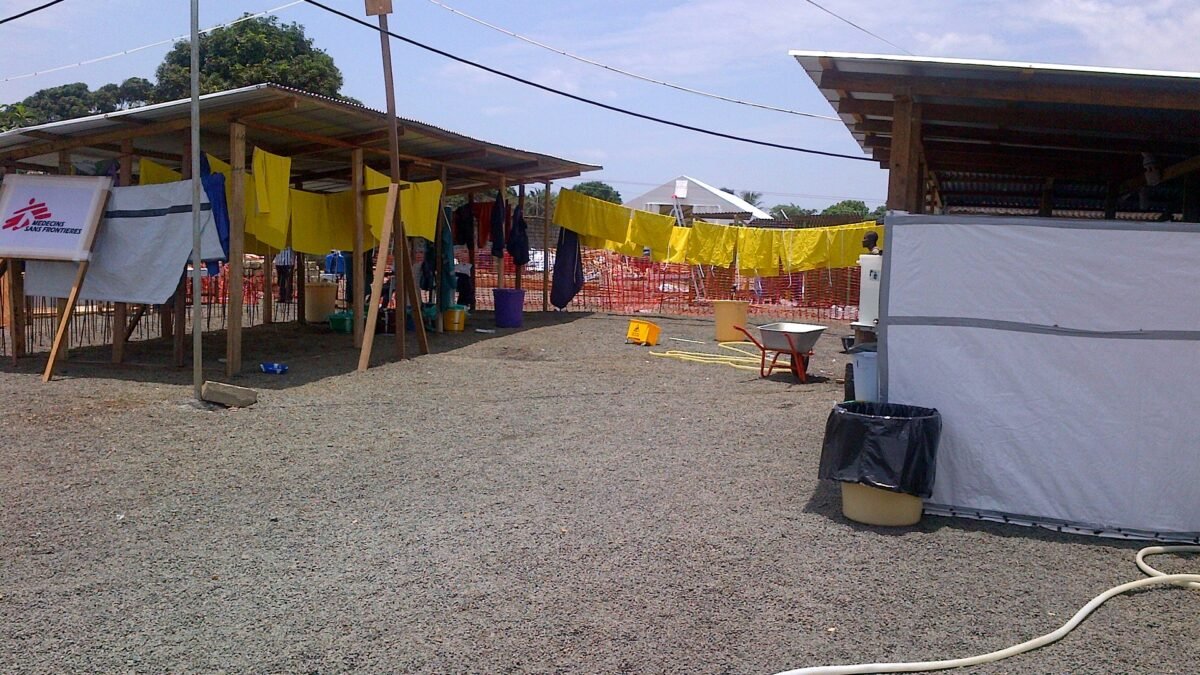
Kenya has recorded its second death from Ebola, its health ministry announced late on Friday, as a woman who had been quarantined as a close contact of the country’s first patient died in Nairobi after developing symptoms during her isolation period.
The 65-year-old woman was a close relative of the Kenyan man whose death earlier this month marked the country’s first-ever confirmed Ebola case, according to Reuters. She began showing symptoms ten days before her death and was treated at an infectious disease unit in the capital, where medical staff did everything possible to save her life, the ministry said.
“This loss brings the number of deaths to two among the nine confirmed cases,” the ministry said in its statement, according to Reuters. “The remaining seven patients continue to receive care in the two isolation facilities.” The ministry added that there was no evidence of community spread in the country.
Her family has been formally informed, the ministry said, and officials are working with relatives to arrange what it described as a safe and dignified burial in line with established public health protocols. The ministry also appealed to the public and the media to respect the family’s privacy as they mourn.
The death, announced on Friday evening, 23 October, is the latest development in an outbreak that began in the Democratic Republic of Congo in May and has now been reported in four African countries — the widest geographic spread of any Ebola outbreak on the continent to date, according to Reuters.
How Kenya’s cluster unfolded
Kenya announced its first-ever Ebola case on 6 October, after a 40-year-old Kenyan man who had been living in Congo travelled to Kenya via Uganda, arriving on 3 October, according to the Associated Press. He was driven by a relative to Nairobi Hospital, where he tested positive for Ebola on 5 October and died the same day.
From that single imported case, Kenyan authorities traced some 135 contacts, placing 118 of them in quarantine, according to the Associated Press. Eight of those contacts subsequently tested positive while in quarantine, including four health workers and close family members of the first patient. Together with the index patient, that produced the nine confirmed cases now on record.
The woman who died on Friday was among those quarantined contacts. According to Kenya’s Director-General for Health, Patrick Amoth, she had been placed under quarantine before developing symptoms on 13 October, and was later admitted to an infectious disease treatment unit, where she remained under medical care until her death on Friday evening.
The ministry said no new infections had been reported alongside the latest death, and that all confirmed infections remained within one cluster of known contacts. Contacts who completed the 21-day quarantine period without developing symptoms were due to be released starting on Saturday, 24 October, according to the Associated Press.
That containment picture — every Kenyan case traceable to a single imported infection, with no evidence of transmission beyond known contacts — is the fact on which the ministry’s reassurance rests. It is also the fact that the coming days will test, as quarantined contacts are released and the seven surviving patients continue treatment.
Internationally, the picture has already shifted. Late on Monday, the United States State Department advised Americans to reconsider travel to Kenya and raised its travel advisory level for the country because of health risks, according to Reuters. Kenya’s border points have been placed on high alert, and health officials have urged the public not to panic, saying systems are in place to manage the disease.
A four-country outbreak
The Kenyan cluster is one limb of a much larger epidemic. The outbreak, caused by the Bundibugyo species of Ebola virus, was declared in the Democratic Republic of Congo on 15 May 2026, and was designated a public health emergency of international concern by the World Health Organization two days later. Africa CDC subsequently declared it a public health emergency of continental security.
According to the World Health Organization, the virus continues to circulate at high levels in Congo, where transmission has spread across eight provinces and 66 health zones. As of 20 October, the country had recorded 9,704 confirmed cases and 4,687 deaths, according to figures reported by the World Health Organization — a case fatality rate of about 48 per cent, and the largest and deadliest Ebola epidemic ever recorded in Congo.
Uganda reported 20 cases in May and June, mostly imported from Congo, but the World Health Organization declared the country Ebola-free in August. On Friday, Uganda’s health ministry said the country remained Ebola-free but was tightening precautions, reinstating traveller locator forms for all arrivals and barring transit by travellers with a history of travel to Congo, according to Reuters.
Nigeria became the fourth affected country on Tuesday, 20 October, when officials confirmed its first Ebola case in more than a decade: a woman living in Abuja who had arrived in the Nigerian capital on 3 October after a two-week holiday in Uganda. She fell ill three days later but was not tested for Ebola until 19 October — a delay of 13 days that has alarmed public health officials, according to Reuters.
On Friday, Nigeria’s health minister, Muhammad Ali Pate, said genomic analysis showed the virus in Nigeria’s patient was closely related to the strain detected in Kenya’s index case, offering the first genetic link between the outbreaks, according to Reuters. Nigerian authorities said there was no evidence that the Kenya index case had travelled to Nigeria or had a direct connection to the Nigerian case, and the precise route of infection remains unresolved: Ugandan authorities have said the woman travelled to eastern Congo, while the Swiss government has said she and her husband did not travel to Congo, and the World Health Organization and Africa CDC have said they had not received confirmed information that she travelled there.
Nigeria has identified 44 contacts linked to its case so far, a number that Africa CDC Director-General Jean Kaseya has said is bound to rise. The late detection, he told Reuters, would complicate efforts to trace people the woman may have infected, because she had spent almost two weeks without being tested, coming into contact with health workers, family members and friends.
Why there is no vaccine for this strain
One fact shapes every response to this outbreak: the Bundibugyo species behind it has no approved treatment or vaccine. The existing Ebola vaccine, Ervebo, protects against the Zaire species only, and offers no protection against Bundibugyo.
That gap is now the focus of an accelerated research effort. According to Africa CDC, Phase Ib clinical trials of a candidate vaccine against Bundibugyo Ebola, ChAdOx1 BDBV, developed by the University of Oxford, began in Uganda on 6 October, following Phase Ia trials in Britain in July. A second candidate, developed by Moderna, received ethical approval for Phase Ib trials in Uganda on 7 October, after its own Phase Ia trials began in Canada in early August.
Kenyan authorities have also requested 10,000 vaccine doses from the World Health Organization and Africa CDC to strengthen protection for frontline health workers, according to reports of a World Health Organization briefing — a request that underlines how exposed health workers remain: four of Kenya’s confirmed cases are health workers.
Until a vaccine or treatment exists, the tools available are the oldest ones in outbreak control: early detection, isolation of patients, tracing and quarantining of contacts, safe burials, and supportive care. Ebola spreads only through direct contact with the bodily fluids of someone showing symptoms, according to Reuters, which is why quarantine of known contacts — the measure that caught every Kenyan case after the first — matters so much, and why a 13-day delay in testing, as in Nigeria, matters even more.
The disease itself can cause fever, vomiting and diarrhoea and, in severe cases, internal and external bleeding, according to Reuters. The World Health Organization has expressed particular concern that around six in every ten recent Ebola deaths in Congo occurred outside treatment centres, and that about a third of new cases there were detected only after death — figures that point to transmission continuing in communities beyond the reach of the formal health system.
Analysis: Why It Matters
Kenya’s cluster is contained — but containment is a process, not a verdict
The most encouraging sentence in Kenya’s announcement is also the most fragile: that there is no evidence of community spread. Every Kenyan case so far traces back to one imported infection and a known chain of contacts, which is exactly what a functioning surveillance system is supposed to produce. But “no evidence” is not the same as “no risk”, and the next fortnight will be the real test. Contacts are being released from quarantine, seven patients remain in treatment, and the ministry’s own figures show how quickly a single missed contact can matter — a lesson Nigeria is learning in real time.
The Nigeria case is the warning the whole region should heed
A patient who fell ill on 6 October and was not tested until 19 October, who passed through several health facilities, and whose travel history is still disputed between three governments, is a case study in how outbreaks escape. Africa CDC’s Jean Kaseya put it bluntly to Reuters: “We need to consider that no-one is safe today.” His point was not alarmism but arithmetic: in a region where people, trade and families move constantly across borders, surveillance that works only in the country where an outbreak started is surveillance that fails everywhere else. The genomic link between the Nigerian and Kenyan strains only sharpens the point — these are not separate national stories but one regional epidemic wearing different local faces.
The vaccine gap is a policy choice, not a scientific mystery
Bundibugyo Ebola was first identified in Uganda in 2007, nearly two decades ago, yet it still has no approved vaccine — while the Zaire species, which struck West Africa in 2014, does. Africa CDC’s leadership has blamed global neglect for that gap, arguing that a strain circulating mainly in African countries attracted a fraction of the research investment that a Western-facing threat would command. The unusually swift progression of two candidates into Ugandan trials this month shows what urgency can achieve; it also shows how much time was lost. Until one of those candidates proves itself, health workers in four countries are fighting a virus with protective equipment and supportive care alone — and four of Kenya’s nine cases are health workers.
Travel advisories and border measures cut both ways
The United States’ decision to raise its Kenya travel advisory, and Uganda’s move to bar transit by travellers with Congo travel history, illustrate the tension at the heart of every outbreak response. Such measures can slow movement and buy time, but they can also push travellers towards informal crossings, discourage honest reporting of symptoms, and damage economies that depend on travel and trade. Kenya’s earlier refusal to close its borders, on the grounds that closures drive people to illegal routes, reflected the World Health Organization’s long-standing advice against travel and trade restrictions in favour of targeted screening. The balance each country strikes in the coming weeks will reveal how much of that doctrine survives contact with a four-country epidemic.
What to watch next
- Whether Kenya reports any case outside its known contact cluster in the next 21 days — the full incubation window for contacts now being released from quarantine.
- The condition of the seven Kenyan patients still in treatment, and whether Nigeria’s 44 known contacts grow into further confirmed cases.
- The outcome of Africa CDC’s extraordinary virtual meeting of African health ministers on 28 October, convened to coordinate the regional response.
- Early results and safety data from the Oxford and Moderna Bundibugyo vaccine trials under way in Uganda.
- Whether the World Health Organization revises its assessment of community transmission in Congo, where most recent deaths have occurred outside treatment centres.
Sources
- Reuters — Kenya reports second death from Ebola
- Associated Press via Medical Xpress — Kenya announces 2nd Ebola death, a close relative of the first patient
- Reuters — Nigeria Ebola case linked to virus found in Kenya index case, health minister says
- Reuters — Late detection in Nigeria raises alarm as Ebola spreads across Africa

About the Author — Abdul Mannan
Related Articles

Deadliest on Record: Europe’s Summer Heat Killed an Estimated 50,000 People, Study Finds
A new study in Nature Health estimates 50,391 heat-related deaths across 854 European cities this summer — the…

FDA Approves GSK’s Hibsago, the First ‘Functional Cure’ for Chronic Hepatitis B
The FDA has approved GSK's Hibsago (bepirovirsen), the first antisense therapy for chronic hepatitis B — offering 19%…
A&E Doctors Warn of ‘Perfect Conditions for a Terrible Winter’ as Just 3% Say NHS Ready
A survey of 163 A&E clinical leads finds 91% worried about winter pressure and only 3% saying their…