
A&E Doctors Warn of ‘Perfect Conditions for a Terrible Winter’ as Just 3% Say NHS Ready

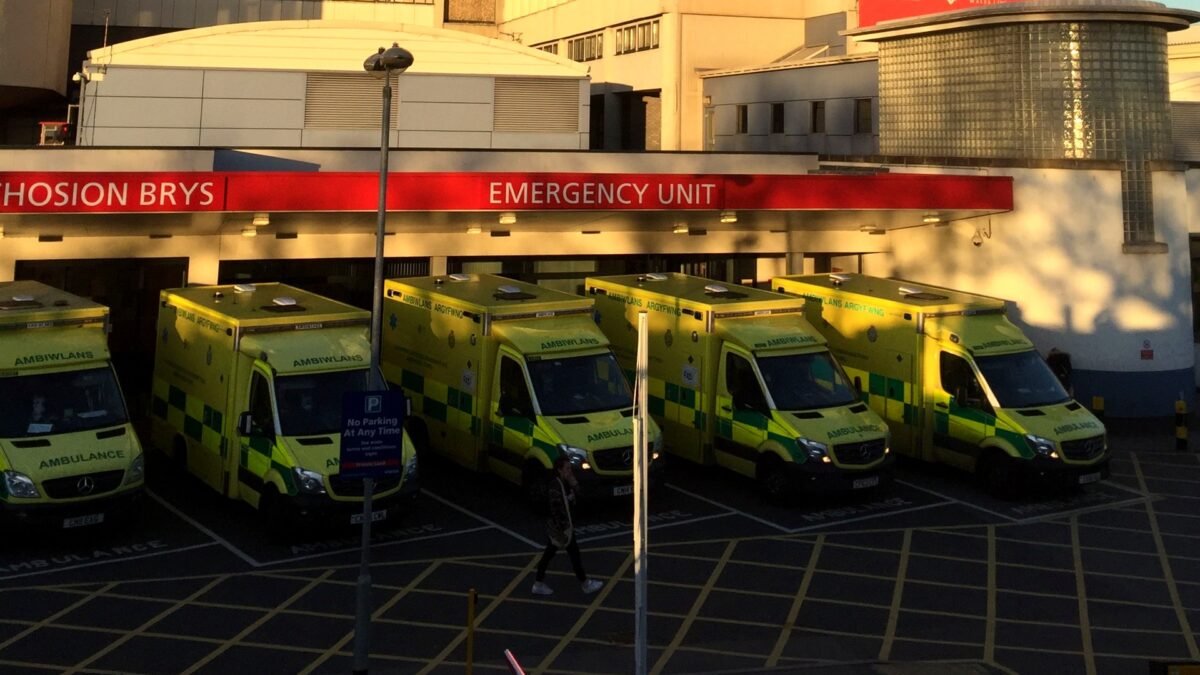
Nine in ten A&E leaders say their departments are not ready
The country’s top emergency doctors have delivered the starkest warning of the autumn so far about the state of the NHS: 91 per cent of the clinicians in charge of Britain’s accident and emergency departments say they are very or extremely worried about the pressure their departments will face this winter, according to a survey published on Tuesday 20 October by the Royal College of Emergency Medicine (RCEM).
The survey reached 163 emergency department clinical leads — the senior doctors responsible for running most of the UK’s A&E units — and found that just 3 per cent felt their department was well prepared for the cold months ahead.
According to the RCEM, the findings should serve as a stark reminder to the government that action is needed immediately to avert disaster. The college said the current plans — including the funding package for urgent care announced last weekend — “won’t cut it”.
“Overcrowding, corridor care, the impending surge of demand from winter, and lack of meaningful preparations, are creating perfect conditions for a terrible winter,” the RCEM president, Dr Ian Higginson, said in the college’s press release.
He continued: “Colleagues from across the four nations have been crystal clear: we are not managing now and we simply are not ready for winter. We have patients scattered all over our departments, many stuck in trolleys or on chairs for hours upon hours. The sickest and most injured among them can’t get into a hospital bed and end up staying with us, sometimes for days.”
“It’s a disgraceful state of affairs and I cannot believe it has been allowed to get this bad. Patients are dying unnecessarily every week whilst those with the power to make things better continue to focus on the wrong solutions,” Dr Higginson added.
A system already under extreme strain
The survey did not only ask about the winter ahead. It found that emergency departments are already operating at the edge of their capacity: more than nine in ten (92 per cent) of the clinical leads described current pressure on their department as high or very high, and 88 per cent said their department was under greater strain now than at the same point last year, according to coverage of the survey published this week.
In the England-only responses — 119 of the 163 — almost nine in ten described pressure as high or very high, 65 per cent said departments were under more pressure than a year ago, and 60 per cent described their emergency department as actively unsafe. Some 97 per cent warned that A&Es were not well prepared for winter.
The September NHS England performance data, published alongside the survey coverage, showed that 50,582 people waited more than 12 hours in A&E departments in England between a decision to admit and actually being admitted — up from 44,951 in August. An average of 3,310 patients a day received corridor care in September, also higher than the month before.
Corridor care — the practice of treating patients in corridors, waiting areas and other non-clinical spaces because no ward bed is available — has become one of the most controversial features of the modern NHS, with the RCEM and patient groups arguing it is unsafe and undignified.
RCEM leaders say hospitals are entering the winter with nearly 1,000 fewer beds than a year earlier, alongside recruitment freezes that limit the hiring of doctors and nurses needed to relieve the pressure, according to reports on the survey.
Government announces £140m for 14 urgent care schemes
The survey landed just days after the government announced what it called an early start to winter preparations. Health Secretary Yvette Cooper said on 18 October that the NHS in England faces a more challenging winter than normal and announced almost £140 million of funding for 14 urgent care schemes across England, according to the Department of Health and Social Care.
The schemes include new urgent treatment centres, same-day emergency care units, ambulance fleets and emergency department upgrades, with 25 further new or expanded urgent care sites announced in April due to be ready for winter. The government said Queen’s Hospital in Romford would receive the largest single award, at £42.1 million, to rebuild an emergency department designed for about 325 patients a day.
The announcement followed what the government described as the busiest summer in NHS history, with almost 7.3 million people attending A&E departments in England between June and August — the highest figure ever recorded for a summer period — after a season of multiple heatwaves. The King’s Fund warned of a “twin crisis”, with little time for the system to recover between peak periods.
Cooper said the government had been “preparing early” and was “investing in extra urgent care capacity to help get patients the care they need”. She also urged eligible people to get their flu vaccinations: more than 7.4 million flu jabs had been delivered in England by 11 October, with more children vaccinated at the same point in the season than last year, the department said.
Alongside the new capacity, the government has widened the Pharmacy First scheme so local pharmacies can treat more common conditions, and GP access has been expanded through evening, weekend and out-of-hours appointments over the colder months, according to government statements.
Note on the figures: the RCEM’s own press release describes the weekend announcement as £150 million, while the government’s official announcement puts it at almost £140 million — each attributed here as stated.
Doctors say the money is not in the right places
The RCEM welcomed the investment but maintained that the money is still not being spent where it would matter most. The college has written directly to the health secretary to set out its concerns and recommendations.
The warning drew support from elsewhere in the clinical world. Dr Vicky Price, president of the Society for Acute Medicine, backed the RCEM’s assessment, saying the concerns of A&E doctors were shared by those working in acute medicine — while cautioning that describing the situation as a “perfect storm” risks suggesting it was unexpected or unavoidable.
The Royal College of Nursing, responding to the funding announcement, welcomed the cash but described it as a short-term fix, according to reporting on the package.
The NHS enters this winter under unusual scrutiny: Cooper’s warning of a harder winter than usual, the record summer activity, the early flu pressures reported in hospitals, and now a survey in which the people actually running emergency departments say, in overwhelming numbers, that they do not feel ready.
Analysis: Why It Matters
The survey is the story
Winter warnings from the NHS have become an annual ritual, and it is tempting to treat them as such — noise that accompanies every cold season. But this survey is different in kind from a lobby group’s press release. Clinical leads are the people who stand at the front of the queue: they allocate the trolleys, make the corridor-care calls, and watch the ambulance handover queues build outside their doors. When 163 of them answer a survey in overwhelming numbers, the value is not rhetorical — it is managerial. These are reports from inside the system, not observations from outside it. A government can dismiss a union or a think tank; dismissing the verdict of the people it employs to run its emergency departments is a much harder political task.
Capacity, not cash, is the binding constraint
The government’s response — a funding package, announced early, for urgent care capacity — follows the conventional winter playbook: add capacity at the front door so fewer people arrive at A&E, or arrive less acutely. The RCEM’s complaint that the money is not being spent in the right places is really an argument about where the system binds. Emergency departments do not mostly fail because too many people walk in; they fail because admitted patients cannot leave. With nearly 1,000 fewer beds than a year earlier and recruitment freezes in place, the binding constraint is beds and staff, not entry points. Same-day emergency care units and urgent treatment centres are useful, but they add capacity to the wrong end of the bottleneck if the back door — discharge into social care and community services — stays jammed.
Corridor care is the canary
The most damning statistic in the survey’s wake is not the 91 per cent figure but the daily average of 3,310 patients receiving corridor care in September — and the 50,582 people who waited more than 12 hours from a decision to admit to an actual bed. Corridor care was once treated as an aberration, something to be apologised for and eliminated. Its persistence at this scale suggests it has become, in practice, an operating model: a way for hospitals to keep the front door open by moving the waiting list inside. The human cost is dignity — patients assessed, treated and deteriorating in spaces designed for transit — and the clinical cost is safety, with the sickest patients the hardest to monitor. When 60 per cent of English clinical leads call their own department actively unsafe, that is not a forecast of winter. It is a description of October.
Winter is the test of the state’s promise
There is a political dimension that runs underneath the clinical one. The government’s early announcement, the record summer figures, the flu-jab push — all of these are the actions of a government that knows winter performance has become the annual audit of the NHS, and therefore of its own competence. Ministers now publicly describe each winter as more challenging than the last, which risks normalising decline as weather. The RCEM’s framing pushes back: the pressure is year-round, it said, with “no spare capacity” left for the seasonal surge. In other words, winter is no longer an exceptional event that the system must prepare for; it is simply the season in which the system’s ordinary state becomes impossible to hide.
What recovery would actually look like
Neither side in this debate disputes the diagnosis — everyone agrees emergency departments are dangerously crowded. The disagreement is over the cure. The government is betting on front-door diversion: pharmacies, urgent treatment centres, same-day emergency care, expanded GP hours. The colleges are asking for beds, staff and social care capacity — the unglamorous back-door plumbing. The evidence of recent years favours the colleges: winters have not been saved by new entry points while the discharge bottleneck persisted. Until the number of beds rises and stays risen, and until social care can absorb the patients the hospitals need to release, the October warning will keep arriving on schedule, each year a little louder.
What to Watch Next
- Flu and respiratory virus surveillance: NHS leaders have urged eligible people to get flu jabs early. The rate at which flu, norovirus and other respiratory viruses circulate over the next six weeks will determine whether the clinical leads’ fears are realised.
- Monthly A&E performance data: the October and November figures for 12-hour waits, four-hour performance and corridor care will show whether the pressure curve is bending or breaking. September’s numbers were already moving in the wrong direction.
- The RCEM’s letter to the health secretary: the college says it has written directly to Yvette Cooper with recommendations. Her response — and whether any of it appears in winter planning — will signal how seriously the warning has been taken.
- Delivery of the 14 schemes and 25 sites: the £140 million package promises new capacity “ready for winter”. Whether those sites actually open on time, and whether they draw pressure away from A&E rather than simply adding it, is the practical test.
- Staffing and bed numbers: with recruitment freezes in place and beds down year on year, the two numbers that matter most are the hardest to move quickly. Any change in bed capacity or staffing levels before January would be significant.
Sources
- Royal College of Emergency Medicine — “‘Perfect conditions for a terrible winter’ for NHS as 90% of top A&E doctors worried about winter pressures” (press release, 20 Oct 2026)
- Department of Health and Social Care — “£140 million boost to urgent care to ease winter pressures on NHS” (gov.uk, 18 Oct 2026)
- Clinical Services Journal — “Perfect conditions for a terrible winter” (20 Oct 2026)
- AXY News Global (reporting via BBC Health) — “NHS Faces More Challenging Winter Than Normal, Health Secretary Warns” (18 Oct 2026)
- UK Politics Decoded — “£140 Million Urgent Care Boost Aims to Ease NHS Winter Pressure” (18 Oct 2026)

About the Author — Abdul Mannan
Related Articles

Kenya Confirms Eighth Ebola Case as DR Congo Outbreak Reaches Eighth Province
Kenya's Ebola tally rose to eight on Sunday as a 49-year-old patient attendant tested positive, while DR Congo…
Kenya Confirms Four New Ebola Cases, Including Three Health Workers; Total Rises to Seven
Kenya's health ministry has confirmed four new Ebola cases — including three health workers who treated the country's…

Ebola Outbreak Spreads to Eighth Congo Province as Kenya Confirms Second Case
Ebola has reached an eighth province of DR Congo, with two confirmed cases in North Ubangi near the…