
Storm Boelo Leaves 82,000 Homes Without Power as 84mph Gusts Flood Largs and Halt Travel Across Britain

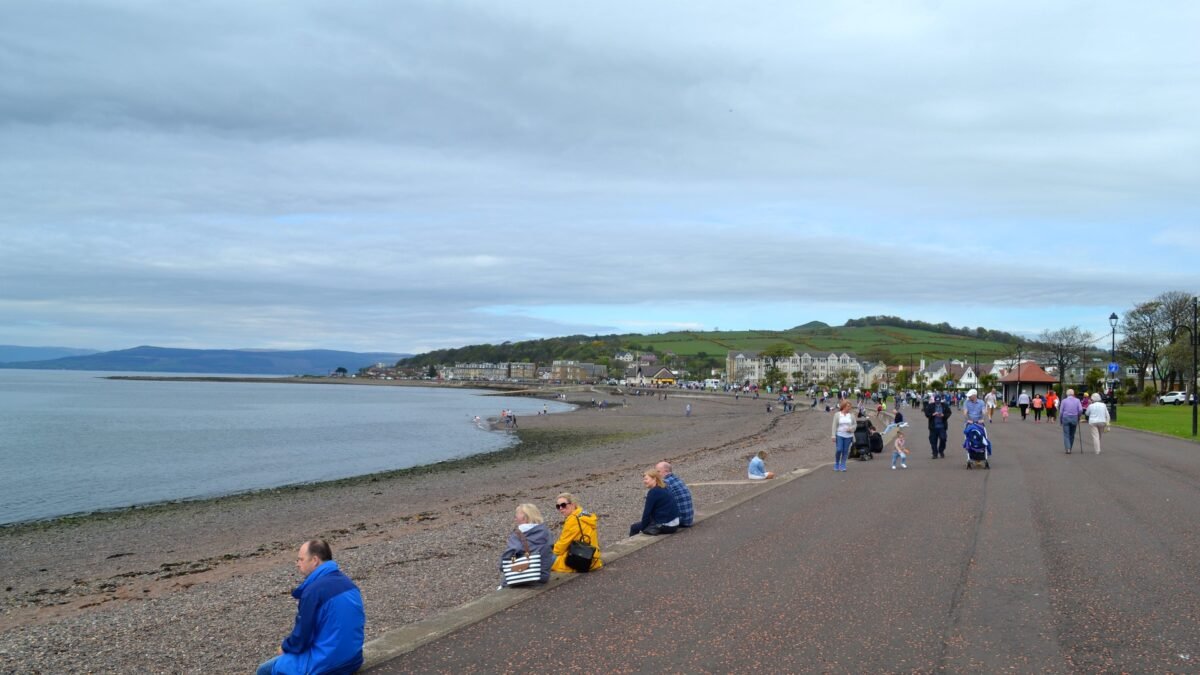
More than 82,000 homes were left without electricity and an amber “danger to life” weather warning remained in force until 9pm on Sunday as Storm Boelo, the second named storm to strike Britain in two days, battered Scotland, northern England, Wales and Northern Ireland with gusts of up to 84mph.
The storm, which struck overnight into Sunday 25 October, flooded the Ayrshire seaside town of Largs, turned a Glasgow railway station platform into a river, closed major bridges, grounded flights and forced the cancellation of a race meeting at Aintree. Engineers had reconnected 344,900 customers since the storms began on Friday, the Energy Networks Association said, but 82,600 were still without power on Sunday morning, with continuing severe weather limiting repair work in some areas.
The Met Office said gusts peaked at 84mph in Argyll and Bute, 83mph in Snowdonia and 82mph in the Inner Hebrides on Sunday morning, according to the Press Association. On the island of Tiree, winds reached 82mph at about 4am, while gusts of 62mph were recorded in the Glasgow region. The amber warning covered Scotland, parts of Northern Ireland and the far north of England, sitting inside a wider yellow wind warning that also ran until 9pm.
The forecaster warned that Storm Boelo brought a danger to life from flying debris and crashing waves, and urged people to stay indoors as much as possible. Police Scotland advised drivers to plan ahead and consider whether journeys were really necessary.
Largs under water
The Ayrshire coast bore the brunt of the flooding. Video shared online showed seawater surging through the coastal town of Largs, overrunning shops and businesses on the high street. Staff at the town’s Thai restaurant, Tha-Tien-Thai, shared footage of their kitchen overrun by water with the caption: “There is nothing left.” The restaurant said it had closed its doors for the foreseeable future “due to larger flood restoration than originally planned”.
Toni Dawson, who runs Geraldos on Largs Main Street, told local radio that she had to plead with emergency services for help as the tide came in. “The tide was coming so fast, we couldn’t possibly get anywhere near the shops,” she said. “We had to wait some time literally just watching what was happening, totally helpless.” She described the water as at its highest level ever. The nearby towns of Irvine and Saltcoats were also left under water as the storm battered the coast through the night.
In a separate and tragic development, a body was found on a beach in Largs on Sunday morning during the search for a missing 82-year-old man who had fallen overboard from a CalMac ferry bound for Arran. Police Scotland said formal identification had yet to take place, but the family of Jim Wither, who was reported missing from Johnstone, had been informed. The death is not being treated as suspicious and a report will be submitted to the Procurator Fiscal, the force said, according to the Scottish Sun and the Herald’s live coverage.
Rail, roads, bridges and airports disrupted
Network Rail Scotland said the storm had caused flooding and damage across Scotland’s railway, sharing photographs of flooding at Dalmarnock station in Glasgow, where water covered the platform, a flooded culvert at Craigendoran, fallen trees at Partick and damage to overhead wires at Bishopton. Speed restrictions were in place across Scotland and several sections of railway were closed, the operator said, warning passengers that “the storm will continue throughout the day”. It also posted photographs of a trampoline beneath a train and a shed beside the tracks, urging people living near lines to secure garden furniture firmly.
On the roads, collapsed trees, cables on carriageways, strong winds and damaged surfaces prompted closures to major routes in Scotland. The A77 at Lendalfoot was closed for more than 12 hours. Major bridges were hit by restrictions: the Tay Road Bridge was open only to cars and single-decker buses, the Forth Road Bridge and the Dornoch Bridge were closed to all vehicles, and the Skye Bridge and Clackmannanshire Bridge were closed to high-sided vehicles, with brief periods of complete closure possible on the latter.
In the air, flights were diverted from landing at Leeds Bradford Airport and others were cancelled, while at Belfast City airport departures for Edinburgh, Cardiff, Manchester and Kirkwall were cancelled on Sunday morning. At sea, two ferry services between Dover and Calais were cancelled because of the weather, according to the operator DFDS, and CalMac said its Ardrossan Port office would close from 3pm with sailings cancelled for the rest of the day. Volunteer lifeboat crews in Girvan were called out overnight to search for a person reported in the water near Ayr, but coastguards called off the search soon after launch and the crew returned safely to harbour.
Sport was affected too. High winds forced Aintree Racecourse to abandon its Halloween Family Day, featuring the William Hill Old Roan Chase. In Wales, the River Ely burst its banks near Cardiff, and flood warnings were in force across both England and Wales: the Environment Agency had issued six flood warnings and 50 flood alerts for northern England as of 1.45pm, while the Scottish Environment Protection Agency reported 17 flood warnings and 11 flood alerts active at the same time. More than 400 people were evacuated from a caravan park in Lancashire, according to local reports.
Second storm in two days
Storm Boelo followed Storm Austen, the first named storm of the season, which brought strong winds to southern parts of the UK on Friday. During Austen, gusts of 76mph were recorded at St Mary’s Airport in the Isles of Scilly, 74mph at Aberporth in south Wales and 71mph at Culdrose in Cornwall.
Met Office meteorologist Craig Snell said it was hard to compare one storm with another because they affect different areas. “If a branch falls on your car in one, then you’re probably going to feel like that one was the worst storm ever,” he said. He noted that storms often arrive in quick succession, pointing to Storms Bert, Conall and Darragh appearing within about a week in 2024, and said: “If the atmosphere is ripe for storm, it tends to mean it’s ripe for a couple of storms, so it is a fairly common thing.” For comparison, Storm Amy brought a gust of about 92mph and more than 100mm of rain to similar parts of the UK last year.
Forecasters are monitoring another low pressure system moving in on Monday and Tuesday. It does not appear as potent as Austen and Boelo and there are no current plans to name it, but it will bring further wet and windy weather, Mr Snell said, with a return to more dry and settled conditions expected afterwards. A yellow warning for wind will return on Tuesday, from 3am until midnight, for the north of England, Scotland and the north-east coast of Northern Ireland, according to Capital FM.
Analysis: Why It Matters
Two storms in two days is normal — and that is the point
It is tempting to read Storm Boelo as a freak event, arriving hard on the heels of Storm Austen. The Met Office’s own framing pushes the other way: when the atmosphere is primed for storms, it tends to produce several, and Britain has recent precedent in the Bert-Conall-Darragh sequence of 2024. That matters for how households and authorities prepare. A single storm is an incident; a sequence is a test of endurance. Power networks, drainage systems and transport operators do not get a recovery day between events, and damage from the first storm — weakened trees, saturated ground, debris — becomes the hazard of the second. The public conversation should therefore be less about whether any one storm was “the worst” and more about whether the country’s systems can absorb a run of them.
The power network fails where trees meet wires
The headline figure — 82,600 customers without power against 344,900 reconnected — tells a story of a system working hard but constrained by physics and safety. Most storm outages are caused by downed trees and falling debris hitting lines, and engineers cannot climb poles or operate cherry pickers safely in 80mph gusts. The Energy Networks Association’s statement that continuing severe weather was limiting opportunities to start restoration work, and that access to certain areas remained difficult, is the honest version of that constraint. The regional picture also shifted through the day as counts were updated, a reminder that outage figures during a storm are a moving snapshot, not a final toll. The deeper question, which will outlast Boelo, is how much of the network’s vulnerability is vegetation management and how much is the sheer exposure of overhead lines in the windiest parts of the country.
Largs shows why coastal flooding is Britain’s quiet emergency
Largs was not hit by a river bursting its banks in the conventional sense; it was the sea, driven by wind and tide, coming over the town’s defences and into its shops. Business owners describing the highest water they had ever seen, and a restaurant closing indefinitely for flood restoration, capture a pattern repeated around Britain’s coasts: high tides, storm surges and heavy rain arriving together overwhelm defences designed for one hazard at a time. Coastal towns like Largs, Saltcoats and Irvine combine homes, small businesses and tourist economies on low-lying ground, so the damage is simultaneously personal, commercial and civic. Each event also leaves a longer tail than the headlines suggest, in insurance claims, repairs and lost trading weeks.
Transport’s brittle edges
Boelo exposed how quickly disruption cascades across modes that are supposed to substitute for one another. When rail lines flood and bridges close to high-sided vehicles, road alternatives narrow; when airports divert flights and ferries cancel, there is nowhere else to go. The closure of the Forth Road Bridge and Dornoch Bridge to all vehicles, and the abandonment of a race meeting at Aintree, show that the disruption is not limited to one corridor or one operator. Transport Scotland’s warning that Monday “may not be quite back to normality” is the realistic coda: fallen trees, flooded culverts and damaged overhead wires are not cleared on a timetable, and the Monday commute will absorb the storm’s second-order effects even after the wind drops.
Warnings worked — but only where people heeded them
The amber “danger to life” warning, the police advice against unnecessary journeys and the flood alerts across three nations represent a warning system operating as designed. The fact that the worst outcomes were disruption and damage, rather than a wider loss of life, owes something to that system and to the public’s familiarity with it. Yet the search off Ayr and the body found at Largs are a sombre reminder that warnings cannot cover every individual risk, particularly at sea. The measure of a warning system is not whether it prevents all harm but whether it gives people the information to reduce it — and on that test, Boelo’s amber warnings, issued well in advance and sustained through the day, did their job.
What to Watch Next
- How quickly the remaining 82,600 customers are reconnected, and whether the Energy Networks Association’s figures fall steadily on Sunday evening or stall where access remains difficult.
- The Monday morning commute in Scotland and northern England, where Transport Scotland has warned conditions may not be back to normal, with rail repairs and road clearances still under way.
- The next low pressure system on Monday and Tuesday, which forecasters say will bring further wet and windy weather, followed by the yellow wind warning returning on Tuesday from 3am until midnight.
- Flood warnings and alerts from the Environment Agency and the Scottish Environment Protection Agency, particularly in northern England and along the Ayrshire coast, as rivers and coastal waters respond to the weekend’s rain.
- Confirmation of the formal identification of the man found on the beach at Largs, and any further statement from Police Scotland, handled with the sensitivity the family’s loss deserves.
Sources
- Press Association via Leigh Journal: More than 82,000 without power as Storm Boelo batters UK with 84mph gusts
- The Times: Power cuts, flooding and grounded flights as Storm Boelo batters UK
- Capital FM: Storm Boelo leaves tens of thousands of homes without power
- Hello Rayo: Ayrshire bears brunt of Boelo
- The Scottish Sun: Body found in search for missing man on Scots beach during Storm Boelo

About the Author — Abdul Mannan
Related Articles

Online Safety Laws Have Yet to Cut Children’s Exposure to Harmful Content, Ofcom Finds
Ofcom's first statutory review finds no significant fall in the share of children encountering harmful content in the…
Storm Austen Leaves Tens of Thousands Without Power as Storm Boelo Bears Down on the North
Storm Austen has left more than 31,000 homes in south-west England without power and torn part of Brighton's…

Healey to Inject £20.4 Billion into State-Backed Lenders in Pre-Budget Growth Push, FT Reports
Chancellor John Healey will use next week's Budget to inject £20.4 billion of fresh capital into the National…