
Reynolds Says UK and EU Are Discussing Free Movement as an Option for a Closer Future Relationship

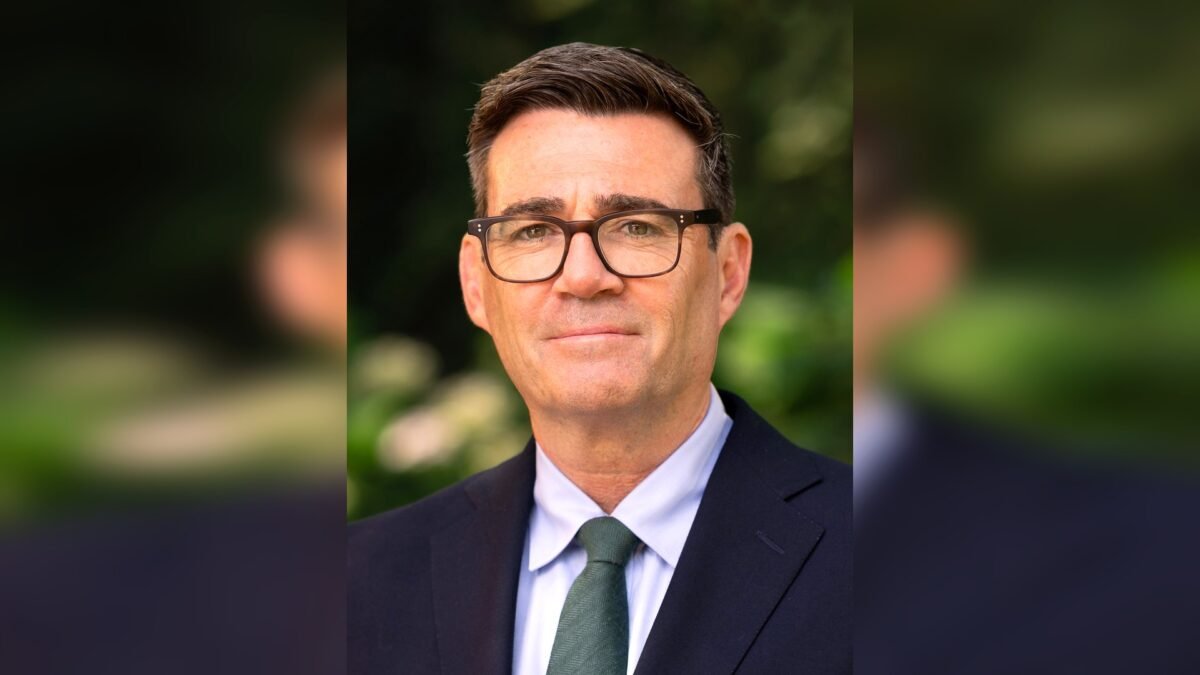
British officials are discussing with the European Union what the future options for the United Kingdom’s relationship with the bloc might be, including a possible return to free movement, Business Secretary Jonathan Reynolds said on Tuesday, 27 October 2026. The admission, made on BBC Radio 4’s Today programme, moved the debate about Britain’s long-term place in Europe from the realm of weekend speculation into confirmed, ongoing official discussion — while the government insisted that no decision had been taken, that nothing would change in this Parliament, and that voters would decide anything that followed.
According to the Guardian, which first reported Reynolds’s remarks, the Business Secretary said British officials had begun discussions with the EU about a long-term relationship that could include a return to free movement. Reynolds said the focus of the negotiations for now was a summit in November, where ministers hope to seal agreements easing some trading restrictions alongside a youth mobility deal. He added that Prime Minister Andy Burnham wanted a long-term and stable relationship with the bloc and would set out the options after the summit, being frank about the trade-offs involved.
Pressed on whether officials were talking, or planning to talk, to the EU about freedom of movement, Reynolds did not deny it. He said, according to the Press Association, that officials would be talking to their counterparts about what the future options for the relationship might be, but that the immediate focus should be the summit and the tangible improvements it was expected to deliver. He stressed that no assumptions had been made about what would come after that stage, and that Burnham wanted to set out the options to the British people so that existing tensions could be resolved.
Reynolds also addressed the question of democratic consent directly. According to the Guardian, he said no decision would be made without voters being given a say, although he did not specify whether that say would come through a general election or a referendum. In a short phrase that is likely to be repeated throughout the coming debate, he said the British people would decide the matter and were, in his words, the boss on the issue.
The intervention matters because of what it confirms, and what it carefully does not confirm. It confirms that free movement is no longer merely a subject raised by the Prime Minister in interviews. It is, on the government’s own account, one of the options being discussed between officials. It does not confirm that the government has adopted free movement as policy, that any agreement exists, or that any timetable for change has been set. The distinction between discussing an option and pursuing it is the ground on which the government is now standing, and it is also the ground on which its critics are attacking it.
What the summit in November is expected to deliver
The summit Reynolds referred to is due to take place in Brussels on 20 November, according to the Press Association and the Times, where Burnham is expected to meet European Commission President Ursula von der Leyen and other EU leaders. The two sides will seek to sign a new agreement on food and drink standards, as part of a sanitary and phytosanitary agreement, a youth mobility scheme, and a pact linking the UK and EU emissions trading systems. Burnham has also said he will raise concerns about the bloc’s proposed “Made in Europe” trade rules, amid fears among manufacturers that the rules could lock British firms, particularly in the automotive industry, out of European supply chains.
Each of those items has its own history. The food and drink agreement would reduce the checks and paperwork that have applied to agrifood trade since Britain left the EU’s single market and customs union, easing costs for farmers, food producers and retailers. The emissions trading pact would link the British and European carbon markets, aligning the price paid for emitting carbon dioxide and removing some of the friction that arises when the two systems diverge. The youth mobility scheme would create a dedicated route for young people to live, work, study or travel in each other’s territories for a limited period.
None of those three is free movement. That is precisely why Reynolds separated them in his remarks. The summit measures, he said, would make a significant difference in themselves. The longer-term discussion about the shape of the relationship is a separate track, to be set out after the summit. The government’s argument is that practical improvements can be delivered now, while the bigger constitutional questions are debated openly and decided by voters later. Its critics’ argument is that the two tracks cannot be separated so neatly, and that discussing the bigger questions while negotiating the smaller ones creates expectations — in Brussels and at home — that will be hard to manage.
Reynolds also pointed to changes on the European side that, in his telling, made a longer-term conversation unavoidable. According to the Guardian, he said Burnham had rightly noted that a series of policy changes in Europe would affect the United Kingdom, and that the country needed as little uncertainty as possible about how it would respond. The “Made in Europe” proposals are the most concrete example. If the EU moves to favour goods produced within the bloc, British manufacturers that sell into European markets will need to know whether the UK will align with the new rules, seek an exemption, or accept a competitive disadvantage. That is a trade question, but it bleeds quickly into questions about regulatory alignment, market access and, ultimately, the institutional relationship.
How Burnham opened the debate
Reynolds was responding to a debate that Burnham himself opened over the previous weekend. In an interview with the Sunday Times, the Prime Minister called for what he described as an honest discussion about a possible return to freedom of movement, making clear that staying out of it would no longer be treated as a red line in talks with the EU. According to the Guardian’s account of that interview, Burnham said freedom of movement had very significant challenges associated with it, which he had spoken about during his earlier time in Parliament, but that it represented a form of immigration that was perhaps not as difficult as the immigration Britain has experienced since leaving the EU. He described a pattern in which people came to Britain, worked for a period and then returned home, and said the balance of migration had changed since then.
On Monday, 26 October, Burnham went further in a television interview. Speaking on ITV’s Good Morning Britain, he said he would like to see Britain rejoin the EU in his lifetime, while insisting that he was not proposing rejoining in this Parliament and would not move ahead of the public. He said Britain had experienced a harder Brexit than the one proposed during the 2016 referendum campaign, and argued that leaving the EU had weakened the economy and weakened control of immigration, pointing to the continuing crisis of small boat crossings in the Channel as evidence that the post-Brexit settlement had not delivered the control that had been promised. Downing Street later described the rejoin remark as a personal view rather than a government position.
Burnham also left open the question of how any future change would be authorised. He suggested on Monday that a return to free movement would not come without a referendum, according to the Times, a position that Downing Street later distanced itself from, insisting that the Prime Minister was not leaning either way on the mechanism. The Guardian reported a further nuance: that Burnham believed rejoining the single market and accepting free movement could be done without another referendum if Labour put the proposal in its manifesto, whereas fully rejoining the EU would require another in-or-out poll. The distinction matters, because it determines whether the next general election, due by 2029, could itself serve as the mandate for a closer relationship, or whether a separate referendum would be needed.
Burnham ruled out an early election. According to Reuters, he told Good Morning Britain on Monday that there would be no election any time soon and that his mind was not on one, when asked when voters might see a manifesto setting out plans for closer ties with the EU. He also said, according to the Press Association, that he was not proposing any changes in this Parliament that would move away from the red lines in Labour’s 2024 manifesto, and that he respected what he had said to voters in Makerfield, the Leave-voting constituency whose by-election in June 2026 carried him into the House of Commons and, within weeks, into Downing Street. The message, repeated across the weekend and Monday, was consistent in its structure: the current settlement is not good enough, the options for improving it should be debated openly, but nothing will change until voters have had their say.
The red lines and the by-election promise
The sensitivity of the debate comes from the promises on which the current government was elected. Labour’s 2024 general election manifesto was explicit: there would be no return to the single market, the customs union or freedom of movement. That commitment was repeated in the government’s response to a parliamentary petition on rejoining the EU in January 2026, which said the UK would not be rejoining the EU and that the government’s mandate ruled out any return to the single market, customs union and freedom of movement. The Commons Library has recorded that the government referred in that response to the strategic partnership agreed at the UK-EU summit on 19 May 2025, and to commitments to negotiate a sanitary and phytosanitary agreement and to link the emissions trading schemes.
Burnham’s own route to No 10 sharpened the issue. He fought the Makerfield by-election, in a constituency that voted to leave the EU, with a promise not to re-run the Brexit arguments. The Press Association noted that his campaign was built on that assurance. Five months later, as the Guardian reported Nigel Farage pointing out on Tuesday, Burnham was opening precisely the argument he had promised not to reopen. The Prime Minister’s answer, in substance, is that he is not reopening the argument in order to impose an answer, but to have a factual debate about options that will only be decided by voters at a future election. His critics’ answer is that the distinction collapses in practice: once a prime minister says an option is on the table, officials discuss it, and a summit timetable is set, the debate has been reopened whatever the label attached to it.
The Labour backbenches are not united. Melanie Onn, the Labour MP for Great Grimsby and Cleethorpes, another constituency that voted heavily to leave, warned on the Today programme on Tuesday that reopening the debate risked damaging trust with voters. According to the Guardian, she said she was still affected by the divisive debate that followed the referendum, that the scars had not healed for many people, and that the conversation was unnecessary at this time. In an article for the Politics.co.uk website, reported by the Press Association, she quoted the 2024 manifesto’s words — that there would be no return to the single market, the customs union or freedom of movement — and argued that political trust was hard won and easily lost. Her warning was not that closer ties with Europe are wrong in principle, but that revisiting a settled promise, in communities that felt Westminster had stopped listening, carries a political cost that cannot be wished away by good intentions.
Reynolds, for his part, rejected any suggestion of a split with the Prime Minister. When challenged on Sky News on Tuesday about whether Burnham was adding to uncertainty for business, he said he did not disagree with the Prime Minister, according to Politico’s reporting, and framed the Prime Minister’s approach as an attempt to resolve tensions rather than to create them. The framing is important to the government’s internal politics. Reynolds had previously warned, at the Labour conference, that constantly revisiting constitutional questions caused uncertainty for business. His position on Tuesday was that setting out options openly, after the summit, would reduce uncertainty rather than increase it, by giving businesses and voters a clear picture of the choices rather than a series of leaks and denials.
The opposition response
The strongest criticism came from Reform UK. Its leader, Nigel Farage, told the Today programme on Tuesday that Burnham had no mandate to reopen the Brexit arguments, and that hearing that officials were already negotiating in Brussels was, in his phrase, very poor indeed. According to the Press Association, Farage said Burnham had told voters in Makerfield five months earlier that he would not reopen these arguments, and that a Labour government had won a large parliamentary majority two and a half years earlier on a promise not to re-enter the single market or the customs union or to open a debate on the free movement of people. Farage called on the Prime Minister to put his ideas to the public in a general election. On BBC Breakfast, he repeated the charge, saying Burnham had no mandate to be in Brussels negotiating any of this.
The Conservative response, reported over the weekend, followed a similar line, accusing Burnham of breaking the promises on which Labour was elected and of handing back control that voters had chosen to reclaim. The charge of betrayal, whether from Reform UK or the Conservatives, is politically potent because it does not depend on the merits of free movement itself. It depends on the promise. If voters were told in 2024, and again in a by-election in 2026, that the question was closed, then raising it again without a fresh mandate looks, to its critics, like a breach of faith even if the eventual decision is left to voters. The government’s counter-argument is that discussing options is not the same as breaking a promise, and that a manifesto commitment for one Parliament cannot bind the country’s choices for all time. Both arguments will be tested not in the abstract, but in how the debate is handled between now and the next election.
There were also voices within the broader debate urging a more evidence-based discussion. Burnham’s own framing — a factual, evidence-based debate about the trade-offs — has found support among pro-European campaigners and some business groups, who argue that the costs of the current settlement, in trade friction and labour shortages, have been under-discussed. The Times reported that the options being discussed with officials in Brussels were being tested through diplomatic channels before any formal announcement, with one source saying the conversation was happening and that discussions would take place before any big launch of the options. That reporting, if accurate, suggests a deliberate sequencing: test what Brussels could accept, then present the options to the British public, rather than presenting options that the EU would immediately reject.
A decade after the referendum
The debate is taking place a decade after the referendum of June 2016, in which 52 per cent of voters backed leaving the EU. Britain formally left the bloc in January 2020, and the Trade and Cooperation Agreement that has governed the relationship since then provides only limited mobility rights, mainly for specific categories such as short-term business visitors, intra-corporate transferees and certain service providers. It does not create a general right to live and work across borders. Individuals remain subject to domestic immigration rules, and businesses have faced higher administrative costs, tighter hiring pools and reduced flexibility, particularly for seasonal and junior roles.
The reset began under Burnham’s predecessor. At the first UK-EU summit in London on 19 May 2025, the two sides agreed a strategic partnership and a security and defence partnership, and set out a common understanding that included working towards a sanitary and phytosanitary agreement, linking the emissions trading schemes, a youth experience scheme and UK association with the Erasmus+ programme. The Commons Library has recorded that in December 2025 the UK and EU announced agreement on UK participation in Erasmus+, and said they were aiming to reach agreements on the sanitary and phytosanitary area, emissions trading and the youth experience scheme by the 2026 summit. The November summit is therefore not the start of the reset, but its next staging post.
The youth mobility idea has a longer history still. In April 2024, the European Commission proposed opening negotiations on a youth mobility agreement that would allow people aged 18 to 30 to stay for up to four years, with broad access to work and study. The Conservative government of the time rejected the proposal, on the grounds that it could be seen as a return to free movement. Labour initially shared those concerns, but shifted its position after the 2024 general election. At the May 2025 summit, both sides agreed in principle to work towards a reciprocal youth experience scheme, with terms to be mutually agreed, a dedicated visa path, and numbers acceptable to both sides. The scheme, as contemplated, differs from free movement in an important respect: admission would depend on defined eligibility conditions and immigration procedures, rather than on an automatic right. Whether voters and critics accept that distinction will shape the politics of the summit’s outcome.
Free movement itself, in its EU sense, is not a standalone policy that can be adopted in isolation. It is a precondition of membership of the EU’s single market, which allows goods, services, capital and people to move freely between member states under common rules. Accepting free movement would therefore raise questions that go far beyond migration: about regulatory alignment, about the role of the Court of Justice of the European Union in interpreting the rules being aligned to, about contributions to EU programmes, and about the institutional machinery through which disputes would be resolved. Burnham has said he could not imagine recommending joining the Schengen borderless area or abandoning the pound for the euro, according to the Press Association’s account of his Sunday Times interview. Those exclusions narrow the menu, but they do not resolve the central question: what, precisely, would a closer relationship require Britain to accept, and what would it gain in return?
The economic backdrop adds pressure in both directions. The government has argued that closer alignment could add to growth by reducing trade friction, easing labour shortages in health, hospitality, agriculture and construction, and giving businesses the certainty they need to invest. The Reuters commentary on this week’s budget noted that the International Monetary Fund had forecast UK growth of 1.3 per cent this year, stronger than many expected, while warning that the government risked leaving investors in the dark by deferring major spending decisions. Burnham has flagged plans from 2030 onwards, including on pensions, welfare and the case for rejoining the EU, while offering few detailed plans for the next three years. The Europe debate is therefore entangled with a wider question about the government’s growth strategy: whether closer ties with the EU are presented as part of a credible plan to raise living standards, or as a distraction from the immediate fiscal choices facing the Chancellor, John Healey, whose first budget is due on Wednesday.
Analysis: Why It Matters
The significance of Tuesday’s remarks lies less in any single sentence than in the shift they represent in how the government is talking about Europe. For two years, the official line was that the red lines were settled and the reset would proceed within them. Now the Prime Minister is saying the settlement is not good enough, the Business Secretary is confirming that officials are discussing options beyond it, and the timetable for setting out those options has been fixed to the weeks after the November summit. That is a deliberate escalation, and it has been undertaken in full knowledge of the political risks. Understanding why the government has chosen this moment, and what could go wrong, requires looking past the daily exchanges to the structure of the choice itself.
1. The denial that was not a denial
Reynolds’s handling of the Today programme interview was a study in how governments signal a change of direction without announcing one. He did not confirm a policy. He did not set out a proposal. He confirmed a process: officials talking about future options. In normal times, that would be unremarkable. In the context of a manifesto promise that ruled out free movement, it is the news. The reason is that governments do not normally instruct officials to discuss options they have ruled out. The discussion itself becomes evidence of intent, whatever the disclaimers attached to it. Reynolds understood this, which is why he paired the confirmation with repeated reassurances: no assumptions, focus on the summit, voters will decide. The reassurances are sincere as far as they go, but they do not undo the signal. Once officials are discussing free movement with Brussels, the question is no longer whether the government is thinking about it, but what it intends to do with the thinking.
This is also why the opposition’s charge of a lack of mandate has traction. A mandate is not only about the final decision. It is about the authority to open a negotiation. Farage’s argument — that Burnham told Makerfield voters he would not reopen the argument, and is now reopening it — works because it treats the opening of the discussion as the act that needed authorisation. The government’s argument — that only the final decision needs a mandate, and that voters will give or withhold it at the next election — works only if the public accepts that a prime minister may explore options without committing to them. Both positions are coherent. The public will decide which it finds more convincing, and it will decide on the basis of how openly the exploration is conducted. Secrecy would vindicate the critics. Openness, with the options and their trade-offs published, would vindicate the government. The test is therefore practical, not rhetorical.
2. A two-track negotiation, with the tracks connected
The government’s two-track structure — practical deals at the summit, constitutional options afterwards — is sensible as a negotiating tactic and fragile as a political strategy. As a tactic, it allows the summit to succeed on its own terms. Food standards, emissions trading and youth mobility are all valuable in themselves, and none requires the public to settle the free movement question first. As a strategy, it invites the charge that the summit is a staging post for something larger, and that voters are being asked to welcome the first step without being told where the road leads. Reynolds tried to manage this by insisting that the summit measures would make a significant difference in their own right. That is true, but it does not answer the question of whether the summit’s success would be used as evidence for the larger step. If the deals work well, the government will say closer alignment works. If they stall, the critics will say the EU cannot be trusted. Either way, the summit will be read through the lens of the larger debate, and the government cannot prevent that reading by insisting the tracks are separate.
There is a further complication. The options being discussed with Brussels, according to the Times, are being tested diplomatically before any public announcement, so that both sides can ultimately agree. That is normal diplomacy, but it creates a democratic awkwardness: the options that will be presented to the British people will already have been shaped by what Brussels will accept. The government will say this is realism, not pre-emption, and that presenting unachievable options would be worse. The critics will say the public is being offered a menu written in Brussels. The only way to resolve that tension is to publish the options with their full trade-offs, including the options that Brussels rejected and why, so that voters can see the negotiation rather than only its conclusion. Burnham’s promise to be frank about trade-offs points in that direction. Whether the promise is kept will determine whether the process is seen as honest discussion or managed consent.
3. The mandate question will not wait until the election
Both Reynolds and Burnham have said voters will decide. The unresolved question is when, and how. A general election manifesto that proposes a closer relationship would give the government a mandate to negotiate, but not necessarily a mandate to conclude an agreement without a further vote. A referendum on free movement or rejoining would give a direct mandate, but would reopen the divisive politics of 2016 and risk a result the government could not control. Burnham’s reported view — that single market membership could be sought on a manifesto mandate, while full EU membership would need a referendum — is an attempt to draw a principled line between the two, but it is a line that will be contested at every step. Opponents will argue that any return to free movement is a constitutional change of referendum magnitude, whatever the legal form. Supporters will argue that elections are the normal mechanism for such choices, and that a referendum would be an admission that the government does not trust its own manifesto.
The timing compounds the problem. The next election is due by 2029, and Burnham has ruled out an early one. That leaves three years in which officials will discuss options, a summit will produce deals, and the government will set out its vision, all without a fresh mandate. The government’s answer is that it is governing, and that governing includes preparing options. The critics’ answer is that three years of preparation creates facts on the ground — agreements signed, institutions built, expectations raised — that constrain the eventual choice. The history of British European policy suggests the critics have a point: incremental alignment has a way of becoming irreversible, not because anyone intended it to be, but because businesses adapt, supply chains reorganise and the cost of reversal rises. The government must therefore be clear, at each stage, about what is reversible and what is not, and must resist the temptation to present alignment as a technical matter when it is, in truth, a political choice.
4. Free movement is not a dial that can be turned up a little
One of the most persistent misunderstandings in the debate is the idea that free movement can be restored in a limited, controlled form that captures its benefits without its costs. The youth mobility scheme is sometimes presented in those terms, but it is not free movement, and the distinction matters. A youth scheme is time-limited, age-limited, capped and conditional. Free movement, in the EU sense, is a general right, exercisable by any citizen of a member state, to live, work, study and retire in any other member state, underpinned by common rules and enforced by a court. The two are different in kind, not only in degree. A government that promises a little free movement will be pressed, by Brussels and by its own supporters, to explain why it will not go further, and by its critics to explain why it has gone as far as it has.
This is why the question of the single market cannot be avoided. If Britain seeks single market membership, it will be expected to accept free movement, regulatory alignment and a role for the European Court of Justice. If it seeks a bespoke arrangement, it will need to explain what makes that arrangement acceptable to the EU, which has historically resisted cherry-picking, and what Britain will offer in return. The “Made in Europe” debate illustrates the point. British manufacturers want access to European markets on terms that do not disadvantage them, but access on those terms has always come with obligations. The government’s task is not to pretend those obligations do not exist, but to argue, with evidence, that they are worth accepting. That argument has not yet been made in full. Until it is, the debate will remain at the level of slogans: betrayal on one side, honesty on the other, with the substance somewhere in between.
Migration is the sharpest edge of the substance. Burnham’s argument, as reported, is that free movement produced a different kind of migration from the one Britain has experienced since Brexit: people who came for a period and returned, rather than people who settled permanently. That is a claim about the composition and duration of migration, and it deserves to be tested against the data rather than asserted or dismissed. It is also, on its own, insufficient. The public’s concern about migration is not only about numbers or duration, but about control: who decides, and whether the decision can be reversed. A system in which Britain cannot set its own immigration rules, even if the outcomes are benign, will feel different from a system in which it can, even if the outcomes are similar. The government must address the control question directly, rather than assuming that better outcomes will answer it.
5. The economics argument and the trust argument are both real
It would be a mistake to treat the debate as a choice between economics and sovereignty, as if only one could matter. Both matter, and both cut in both directions. Closer alignment could reduce trade costs, ease labour shortages and give businesses certainty, but it would also require Britain to accept rules it does not write and a court it does not control. Remaining outside the single market preserves formal sovereignty, but at the cost of trade friction, reduced market access and, on the government’s own account, weaker control of irregular migration, because Britain no longer has access to the EU’s data-sharing and returns arrangements. The honest debate Burnham has called for must hold both sets of costs in view at once, rather than presenting one side’s costs as the whole story.
Trust is the thread that connects the economics to the politics. Melanie Onn’s warning, that the scars of the referendum debate have not healed, is not a reason to avoid the debate for ever. It is a reason to conduct it differently from the last one. The 2016 campaign was fought, on both sides, with claims that did not survive contact with reality. A debate that repeats that pattern — exaggerated benefits on one side, exaggerated threats on the other — will deepen the very distrust it claims to address. A debate that sets out, in plain terms, what each option would require, what it would cost, what it would gain and what would be irreversible, could rebuild trust even among those who disagree with the outcome. The government has the opportunity to conduct the debate in that way. Whether it takes it will be judged by the quality of the options paper it publishes after the summit, and by whether it publishes the evidence that cuts against its own preferences as well as the evidence that supports them.
What to Watch Next
- The November summit itself. The deals on food standards, emissions trading and youth mobility, due to be sealed in Brussels on 20 November, will show whether the reset is delivering practical benefits, and whether the youth scheme is capped and time-limited in the way the government has suggested. The detail of the agreements, not the headlines, will determine their significance.
- Burnham’s options paper. The Prime Minister has said he will set out the long-term options after the summit and be frank about the trade-offs. The scope of that paper — whether it includes full EU membership, single market membership, a bespoke association agreement, or only closer alignment within the current framework — will define the debate for the next three years.
- The “Made in Europe” rules. How the EU’s proposed rules develop, and whether British manufacturers secure access, exemptions or alignment, will test Reynolds’s argument that European policy changes make a longer-term conversation unavoidable. It will also test whether the government can protect British industry without accepting the full single market package.
- The Labour backbenches. The reaction of MPs in Leave-voting constituencies, led by voices such as Melanie Onn, will show whether the government can hold its parliamentary party together while the debate is open. A backbench revolt, or even sustained public dissent, would constrain how far Burnham can go before the next election.
- The referendum-versus-manifesto question. Whether the government commits to a referendum for any return to free movement, or maintains that a manifesto mandate would suffice, will determine the constitutional stakes of the next election. Watch for Downing Street’s language on this point: every clarification, and every distancing, is a signal about which route the government intends to take.
- The opposition’s response. Whether Reform UK and the Conservatives can sustain a joint charge of broken promises, or whether they divide over what alternative relationship they would propose, will shape the politics. A credible alternative — not merely opposition to the government’s options — would change the debate from a referendum on trust into a choice between futures.
The debate that Reynolds confirmed on Tuesday is, in the end, about more than free movement. It is about whether Britain’s relationship with Europe is a settled question, to be managed within the lines drawn in 2024, or an open question, to be debated and decided again. The government has chosen to treat it as open. It has also promised that voters will decide. The next three years will test whether both halves of that promise can be kept at the same time — and whether the country, a decade after the referendum that was supposed to settle the question, is ready to have the argument again, this time with the facts on the table.
Sources
- The Guardian: UK officials discussing options including free movement with EU ahead of summit
- Press Association, via Wandsworth Times: Reynolds says ‘no assumptions’ on where EU talks will go after next month
- The Times: UK holding talks with EU about return to free movement
- Reuters: UK PM Burnham says election not coming ‘any time soon’

About the Author — Abdul Mannan
Related Articles
London’s Oxford Street Goes Traffic-Free as Buses and Taxis Are Banished From Its Busiest Stretch
Almost a kilometre of London's Oxford Street went permanently traffic-free on Monday, closing the stretch between Selfridges and…
Storm Boelo Leaves 82,000 Homes Without Power as 84mph Gusts Flood Largs and Halt Travel Across Britain
More than 82,000 homes were left without power as Storm Boelo battered Britain with gusts of up to…

Online Safety Laws Have Yet to Cut Children’s Exposure to Harmful Content, Ofcom Finds
Ofcom's first statutory review finds no significant fall in the share of children encountering harmful content in the…