
Israelis Vote in Record Numbers as Netanyahu Fights for Survival Against Eisenkot

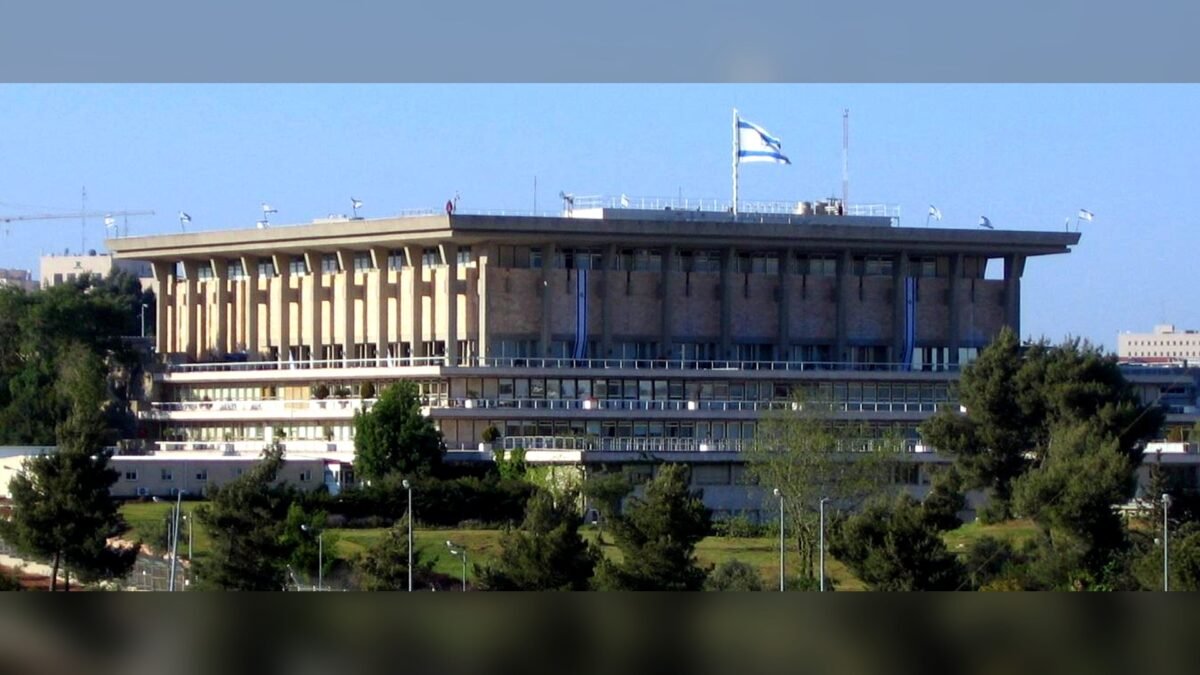
Israelis voted on Tuesday in the largest numbers seen at this stage of an election day in more than half a century, according to the country’s Central Elections Committee, turning the first general election since the Hamas-led attacks of 7 October 2023 into a test of stamina as well as of leadership. By 4 p.m. local time, 55.7 per cent of eligible voters had cast a ballot, the committee reported, compared with 47.5 per cent at the same hour in the November 2022 election. Two hours earlier, turnout had stood at 44.9 per cent, which the committee described as the highest figure recorded at that hour since 1973.
The surge arrived before a single vote had been counted. Polling stations opened at 7 a.m. and were due to close at 10 p.m. local time, when Israeli television channels were expected to broadcast exit polls giving the first indication of the outcome. The final tally is expected by 30 October, according to Reuters, with the official results formally published a week after the election, on 4 November. Until the exit polls appear, the turnout figures are the only hard numbers in the contest, and both camps were reading them for encouragement while urging their own supporters to keep coming.
Prime Minister Benjamin Netanyahu, Israel’s longest-serving leader, is fighting to remain in office against a challenge led by Gadi Eisenkot, a former chief of staff of the Israel Defense Forces whose centrist Yashar party led Likud in most of the final opinion polls published before the vote. Neither man’s bloc was projected to reach the 61 seats needed for a majority in the 120-seat Knesset, according to the final polls. That arithmetic, more than any single policy promise, has shaped the campaign: the election may decide who gets the first chance to build a government, without settling who can actually build one.
About 7.33 million Israelis were eligible to vote, according to figures from the Central Elections Committee dated 6 September and reported by the New York Post, an increase of 543,177 since the previous election four years earlier. The committee listed 12,018 regular polling stations across the country, including 6,208 accessible stations. Some 330,000 young Israelis were casting ballots for the first time, according to the committee. Election day in Israel is a national holiday, with schools, kindergartens and most workplaces closed, and voters choose party lists rather than directly electing a prime minister. A list must win at least 3.25 per cent of valid votes to enter the Knesset, a threshold that gives small parties an outsized role in deciding who governs.
A day of queues, from morning to late afternoon
The pace was set early. By 10 a.m., 16.68 per cent of eligible voters had cast ballots, according to the Central Elections Committee, representing more than 1.2 million people and the highest turnout at that hour since 1981, according to press reports of the committee’s figures. By noon, turnout had reached 31.5 per cent, compared with 28.4 per cent at the same point in 2022, and the committee said it was the highest noon figure in 53 years. By 2 p.m., the figure was 44.9 per cent, or about 3.29 million voters, against 38.9 per cent four years earlier. By 4 p.m., it was 55.7 per cent, with more than four million ballots cast.
Dean Livne, the committee’s acting director-general, was quoted in press reports as saying that the committee had surpassed all the records it holds for that stage of the day. “There hasn’t been such a nationwide voter turnout since 1973,” he said, according to reports of his remarks. The comparison needs care: the committee’s hourly records do not stretch back in identical form before the 1970s, and the figures describe the pace of voting during the day, not the final turnout. The final figure for 2022 was just above 70 per cent. What the hourly numbers establish, without ambiguity, is that Israelis arrived earlier and in greater numbers than at any comparable point in recent elections, and that election officials had to adapt during the day itself.
Eyewitnesses reported long queues outside polling stations in Tel Aviv and in Arab-majority areas, according to the dpa news agency’s reporting of the day. Officials issued instructions aimed at speeding up the process, including checking the identification of the next voter while the preceding voter was still casting a ballot, according to the Media Line’s account of the committee’s directions. Livne assured voters that polling stations would stay open beyond the scheduled closing time for anyone who had arrived by 10 p.m. “We promise, everyone will vote,” he said, according to reports of his remarks. “If there is a line at 10 p.m., the polling stations will continue to operate until everyone who arrived by 10 p.m. has voted.”
The weather did not help. Reports described rainy and blustery conditions in parts of the country, with a flood warning in some areas, yet queues formed regardless. Among serving soldiers, 48 per cent had voted by 1 p.m., compared with 44.4 per cent at the same stage in 2022, according to military figures reported in the press. Military voting had begun on 21 October at Israel Defense Forces bases and outposts, including in Gaza, Lebanon and Syria, according to the New York Post, with more than 850 polling stations, many of them mobile, deployed for service personnel. Eligible diplomats serving abroad and their family members had begun voting on 15 October.
The committee also warned during the day that rumours and misinformation could circulate online, and urged the public to check the source and context of reports, images and videos before sharing them, according to the New York Post. President Isaac Herzog and his wife, Michal Herzog, were among the early voters, according to press reports, as were the former prime minister Naftali Bennett, who voted in Ra’anana, and the national security minister, Itamar Ben-Gvir. Netanyahu voted in Jerusalem alongside his wife, Sara, according to the Algemeiner’s report of the day.
Two men, one question of trust
Netanyahu, 77, has served as prime minister for 19 years in total across several terms, making him Israel’s longest-serving leader. He campaigned on his wartime leadership and on his alliance with the United States president, Donald Trump, who endorsed him and joined Israel in waging war on Iran, according to Reuters. Netanyahu said on Sunday that Trump was prepared to act again to “finally” remove the Iranian threat, but only if Netanyahu remained in power, Reuters reported. His supporters present him as the experienced leader who guided Israel through multiple wars and defended its security; his critics accuse him of prolonging the war in Gaza, undermining judicial independence, and allowing ultra-Orthodox men to avoid compulsory military service.
Eisenkot, 66, is a former military chief of staff who entered party politics only last year with the creation of Yashar. His son Gal, a soldier, was killed in Gaza during the war, a loss that has given his campaign a personal weight that few campaign advertisements could carry, according to press profiles of the contest. Eisenkot has presented himself as a security hawk with backers on the right and in the centre, and his campaign has centred on accountability for the failures of 7 October 2023 and on the demand for an independent commission of inquiry. In a message posted on X just before the polls opened, he invoked the hour of the Hamas-led attacks, 06:29, and urged voters to replace what he called the government of 7 October, according to the ANI news agency’s report of his post.
The two men’s differences are real, but they are narrower on the largest questions of war and territory than the ferocity of the campaign might suggest. Eisenkot has said Israel should focus on destroying Iran’s nuclear and missile programmes and its regional proxy capabilities rather than making the overthrow of Tehran’s government an objective of war, according to i24NEWS reporting of his interview. “Making regime change an objective of war is not the right thing to do,” he said, according to that report. On Gaza, he has pledged that, if elected, he would either destroy Hamas or dismantle its military and governing capabilities within 18 months, according to the same reporting. Neither Netanyahu nor Eisenkot supports the establishment of a Palestinian state in the foreseeable future, according to press summaries of both men’s positions. The contest, in that sense, is less a referendum on the direction of Israel’s security policy in broad outline than on who can be trusted to conduct it, and at what cost to democratic institutions at home.
Eisenkot has accused Netanyahu of “relying on a campaign of fear-mongering, lies and threats”, according to Reuters, and said he was confident that Trump would work “in full cooperation with any leader chosen by the people”. Trump, for his part, called Netanyahu “an outstanding Warrior Prime Minister” in his endorsement, according to press reports. In his final message before the vote, Eisenkot wrote that Netanyahu would conclude his role immediately after the election results and the establishment of the next government, and that the people of Israel would elect a prime minister whose considerations would always be for the good of Israel, according to ANI’s report of the post. Such claims are campaign rhetoric, not constitutional fact: under Israel’s system, the president consults party leaders after the results and asks the member considered most likely to succeed to try to form a government, a process that can take weeks.
What the final polls said, and what they did not
The final opinion polls, published by Israel’s three major television networks on Friday, put Eisenkot’s Yashar ahead of Netanyahu’s Likud as the largest single party, but projected neither bloc at a majority. Surveys put Yashar at around 22 to 23 seats, against 19 to 21 for Likud, according to press summaries of the polls. Netanyahu’s coalition was projected at about 50 seats, while the main opposition bloc was estimated at 52 to 56 seats, according to the same summaries. An average of polls by Channels 11, 12 and 13, compiled by Haaretz on Friday, put Netanyahu’s bloc on 50 seats and the opposition bloc led by Eisenkot on 54, according to a report summarising that average. A separate average of nine polls published up to 23 October put Netanyahu’s bloc at about 52 seats and the main anti-Netanyahu Zionist parties at about 50, according to another press summary. The small differences between compilations are a reminder that polls are estimates with margins of error, not previews of the count.
Arab-led parties were projected to win another 14 to 16 seats, according to press summaries, a figure that could matter greatly in the days after the vote even though mainstream opposition leaders have ruled out formal coalition partnerships with Arab parties. Former prime minister Naftali Bennett, running at the head of the Together list formed with the former prime minister Yair Lapid, was projected at around 14 to 15 seats, according to the poll summaries, with the Democrats led by Yair Golan at about 9 to 10 seats and Avigdor Liberman’s Yisrael Beytenu at about 8 seats. Thirty-six parties appeared on the ballot, according to press reports, of which about 13 were tracked in opinion polls as capable of passing the 3.25 per cent threshold. The fate of parties hovering near that line could swing the final allocation of seats in ways that no bloc total can predict in advance.
Public mood, as measured before the vote, leaned against the prime minister. A Channel 12 poll this month found 58 per cent of respondents wanted someone other than Netanyahu to lead, against 35 per cent who wanted him to stay, according to a press summary of the poll. Yet Netanyahu has repeatedly defied polls that pointed towards his defeat, and Reuters noted in its election-day reporting that he remained a formidable survivor, with nationalist politics increasingly entrenched and Israel’s fragmented system potentially leaving him best placed to form a government even without the largest bloc. Polls can also miss late movement, small parties can rise or vanish at the threshold, and turnout itself changes the electorate that the polls attempted to model. Tuesday’s record pace of voting is therefore not a result, and it would be a mistake to read it as one.
The Iran row that shadowed the final days
The campaign’s final 48 hours were overshadowed by a reported confrontation between Netanyahu and the chief of staff, Lieutenant General Eyal Zamir, over orders for a military operation that could trigger an escalation with Iran. Channel 12 News, citing anonymous sources, reported on Monday that Zamir had resisted carrying out the action and had sought further deliberations as well as signed documentation from Netanyahu regarding legal authorisation, according to ANI’s and Devdiscourse’s reports of the Channel 12 account. The network gave no details of what the instructions were, although speculation in the reporting was that they concerned a fresh attack on Iran. Channel 12 quoted a military source as saying: “This relates to an action that could lead to a flare-up with Iran, at a sensitive and dramatic moment, creating this potential miscalculation.”
Netanyahu dismissed the allegations as “nonsense” in an interview with Channel 14, according to the Times of Israel as reported in the press. The defence minister, Israel Katz, described the reports of a rift as “completely baseless and false”, according to press reports of his remarks. The Israel Defense Forces said it was focused on its missions, in a statement dismissing the reports of a rift, according to Devdiscourse’s report of the military’s response. No official account has confirmed that any such order was given, what it contained, or whether any operation followed. The episode therefore remains, on the public record, a reported disagreement described by anonymous sources and denied by the prime minister and the defence minister, not an established fact about a military decision.
Avigdor Liberman, the former defence minister who leads Yisrael Beytenu and is part of the opposition bloc, nevertheless treated the report as grounds for a criminal complaint. On Monday morning he wrote to the attorney general, Gali Baharav-Miara, demanding the opening of a criminal investigation into Netanyahu on suspicion of treason, according to ANI’s report of his letter and his post on X. In the post, Liberman wrote that Netanyahu had, over the past month, been pressuring the heads of the security establishment to take steps that could create a miscalculation with Iran, and that attempting to drag Israel into war on the eve of elections, together with a willingness to sacrifice soldiers out of fear of losing the election, constituted treason against the state, its security and its soldiers, according to the translation of his post in press reports.
It is essential to be precise about what Liberman’s letter is and is not. A demand for an investigation is not an opened investigation, and it is not a finding of guilt. Press reporting of the letter noted that it lacked particular examples and that a criminal probe on that letter alone was considered highly unlikely, according to the Times of Israel as summarised in press coverage. No charges have been announced. Eisenkot also criticised the reported clash and warned Netanyahu against placing political interests above national security, according to press reports of his remarks. The attorney general has not, on the public record available on Tuesday, announced any response to Liberman’s request, and whether the complaint is treated as a live file or allowed to lapse after the vote is one of the questions that will follow the count.
The row matters beyond its unresolved facts because it crystallised the campaign’s central accusation: that Netanyahu would use the confrontation with Iran for political advantage, and the prime minister’s central reply: that his opponents were inventing a crisis to damage him before the vote. Netanyahu has said publicly that he instructed the IDF and the Mossad to work to topple the Iranian regime, according to press reports of an earlier television appearance. Eisenkot’s distinction, that degrading Iran’s nuclear, missile and proxy capabilities is the right objective while regime change as a war aim is not, offers voters a different version of toughness rather than a different view of Iran as a threat. Voters were therefore asked to choose less between confrontation and restraint than between two claims to responsible command of the same confrontation.
High turnout in Arab and Bedouin communities
One of the day’s most closely watched patterns was participation by Palestinian citizens of Israel, who make up about a fifth of the population and about 1.2 million of the eligible voters, according to press reports. Turnout was particularly strong in several Arab and Bedouin communities by late afternoon. By 4 p.m., approximately 61 per cent of eligible voters had participated in Rahat and Kafr Qassem, while turnout in the Bedouin communities of Lakiya and Kuseife reached approximately 63 per cent and 58 per cent respectively, according to the Media Line’s report of the committee’s local figures. Earlier in the day, the locality breakdown published at noon covered only about 500,000 voters rather than the full electorate, according to one live-updates report, so local figures from the first hours should be treated as partial. The later figures, however, pointed in the same direction: participation in these communities was running well ahead of 2022.
Ahmed Tibi, a Palestinian candidate, said voters in these communities were casting ballots in “unprecedented” numbers, according to Al Jazeera’s election-day reporting. Netanyahu, in a message more than five hours after the polls opened, urged his own supporters to vote, saying turnout was high among his opponents on the left and among Palestinian citizens of Israel. “We need it to be high too. You all need to stream to the polls,” he said, according to Al Jazeera’s report of the message. “This is a fateful moment.” He had campaigned under the slogan “the right or Palestine”, displayed on Likud billboards, according to press reports, seeking to mobilise his base by presenting the election as a choice between his right-wing coalition and a government dependent on Arab parties. Whether high Arab turnout helps or hurts either bloc will depend on how many of those votes go to Arab-led lists that other parties refuse to sit with, and how many go to lists inside the main blocs. A larger electorate also raises the effective number of votes a small party needs to cross the 3.25 per cent threshold, which can hurt the smaller parties inside Netanyahu’s coalition as well as those in the opposition.
Bennett, whose Together list sits inside the opposition camp, urged voters on election day to back any party in the anti-Netanyahu bloc, saying that being the largest party had “no significance”, according to a press summary of his remarks. The remark captured a structural truth of the Israeli system: seats matter, but blocs matter more, and a bloc that wins more seats in total can still fail if its component parties cannot agree on a prime minister or on the terms of a coalition. Eisenkot’s party has worked with other opposition parties on preparations for a possible government, although the parties have not settled how their candidate for prime minister would be chosen, according to press reports. That unresolved question will become the central negotiation of the coming weeks if the opposition bloc emerges ahead.
The wider region was watching, and waiting
The election took place against a regional backdrop that no Israeli government, of any composition, will be able to set aside. The war in Gaza that followed the Hamas-led attacks of 7 October 2023, in which more than 1,200 people were killed and 251 taken hostage, according to press summaries of the official Israeli figures, has continued in various forms alongside confrontations with Iran, Hezbollah in Lebanon and the Houthis in Yemen. Gaza’s health authorities say more than 74,000 people have been killed in Gaza, according to the same summaries, a figure that Israel disputes in its characterisation and that underpins accusations of genocide from a United Nations commission of inquiry and in a case at the International Court of Justice, both of which Israel rejects. The election campaign did not resolve those disputes; it offered voters a choice of leadership to manage them.
Regional diplomacy continued around the vote rather than pausing for it. On Monday, senior representatives from Saudi Arabia, Turkey and Pakistan met Iranian officials in Tehran in meetings aimed at promoting regional security, according to the New York Times as summarised in the Just Security early edition, while the Saudi-led coalition in Yemen said on Tuesday that it had intercepted ballistic missiles and drones launched by the Houthis towards Saudi Arabia, according to Reuters. Egypt’s parliament voted on Monday to authorise President Abdel-Fattah el-Sissi to provide Saudi Arabia with military support against the Houthis, according to the Associated Press as summarised in the same edition. None of those developments depended on the Israeli result, but all of them will shape the security environment in which the next Israeli government operates, and the next government’s approach to Iran will in turn shape the calculations of every other capital in the region.
Israel’s international isolation also featured in the campaign, though in different registers. Netanyahu’s critics argue that his government’s conduct of the war and its far-right partners, including Ben-Gvir and the finance minister, Bezalel Smotrich, both of whom have faced sanctions from some Western countries that accuse them of inciting violence against Palestinians, according to Reuters, have deepened that isolation. Netanyahu’s supporters argue that the isolation reflects hostility towards Israel rather than the failings of any one government, and that only a leader with his experience and his relationship with Trump can navigate it. Eisenkot’s promise is narrower: the same security posture, conducted by a leader with greater credibility abroad and at home, would restore trust without conceding on the substance of Israel’s security demands. Voters had to decide whether that distinction was real, and whether it was enough.
Analysis: Why It Matters
The record pace of voting matters for reasons that go beyond the excitement of a high-turnout day. Turnout is the one part of an election that cannot be spun after the fact: it is counted, published hour by hour, and compared with the same hour in previous elections. A surge of this size, sustained from 10 a.m. through 4 p.m., suggests an electorate that experienced the vote as urgent rather than routine. That urgency is itself a verdict on the past three years. Israelis have lived through the deadliest day in the country’s history, a war in Gaza, direct confrontation with Iran, the displacement and return of border communities, and a political crisis over conscription, the judiciary and the accountability of the government that was in office on 7 October 2023. A population that had grown indifferent would have stayed home. This one, on the evidence of the committee’s figures, did not.
1. Turnout is the story before the results, and it may not predict them
It is tempting to treat high turnout as good news for one side or the other, and both camps did so during the day. The evidence does not support a simple reading. High turnout in Arab and Bedouin communities could translate into a record number of seats for Arab parties, but those seats only change the government if the parties that win them can be part of, or lend support to, a coalition, and the main opposition leaders have ruled out formal partnerships with them. High turnout among ultra-Orthodox voters, whose parties sit inside Netanyahu’s coalition but are divided by new Haredi lists challenging the established parties, could fragment that bloc rather than strengthen it. High turnout overall raises the bar for every small party near the threshold, which punishes fragmentation wherever it occurs. The honest conclusion is that Tuesday’s turnout tells us that Israelis cared deeply about the outcome, and very little, by itself, about what the outcome will be. The exit polls, and then the count, will have to do that work.
2. The election is a judgement on trust, not a choice between war and peace
Strip away the slogans, and the two leading candidates agree on more than either campaign admitted. Both regard Iran’s nuclear and missile programmes as threats to be degraded by force if necessary. Both regard Hamas as an organisation whose military and governing power must be destroyed or dismantled. Neither supports a Palestinian state in the foreseeable future. The difference lies in method, in accountability and in the relationship between the political leadership and the military. Eisenkot’s insistence that regime change should not be a war aim, and his warning against placing political interests above security, are arguments about the limits of military power and the trustworthiness of the person ordering its use. Netanyahu’s insistence that only he can secure Trump’s support for decisive action against Iran is an argument about leverage. Voters were not choosing a destination so much as a driver, and the campaign’s bitterness reflects how much that choice matters when the vehicle is a country at war.
3. The Iran row exposed a civil-military question that will outlast the vote
Whatever the truth of the Channel 12 report, the fact that it was published, denied, and turned into a criminal complaint on the eve of an election reveals a breakdown of trust between parts of the political and security establishments that will not be repaired by a coalition agreement. A chief of staff who is reported to have demanded signed legal authorisation before carrying out an order, and a prime minister who is reported to have resisted that demand, are describing two different understandings of lawful command. If the report is wrong, the damage is to the credibility of the media and the opposition politicians who amplified it. If it is right in substance, the damage is to the working relationship at the top of the security establishment. Either way, the next prime minister will inherit a question that the election did not ask directly: how does a democracy at war ensure that military orders are lawful, deliberated and documented, without turning every disagreement into a criminal allegation? The attorney general’s handling of Liberman’s letter will be an early test of whether that question can be answered institutionally rather than politically.
4. Coalition arithmetic, not vote share, will decide the next government
Israel’s proportional system guarantees that the largest party rarely governs alone, and this election looks likely to confirm the rule. With neither bloc projected at 61 seats, the weeks after the count will be a negotiation over which parties can sit together, which red lines can be softened, and which leader the president believes can assemble a majority. The Arab parties, the ultra-Orthodox parties, the far-right parties and the new Haredi lists all hold pieces of the puzzle, and the threshold casualties among small parties could rearrange the board overnight. A strong showing for Eisenkot would not automatically make him prime minister, and a narrow victory for Netanyahu’s bloc would not automatically give him a stable coalition. The history of Israeli politics since 2019, when early elections became frequent, is a history of results that produced no government, governments that collapsed, and caretaker administrations that governed without a fresh mandate. Tuesday’s vote may break that pattern, or it may extend it. The turnout surge makes the result more legitimate; it does not make the arithmetic any easier.
5. The world will read the result as a signal about Iran, Gaza and the region
For the United States, for Iran, for Saudi Arabia, for Egypt and for the Palestinians, the identity of Israel’s next prime minister is not a domestic curiosity. It will shape whether the confrontation with Iran escalates, pauses or is channelled into negotiation; whether Gaza’s ceasefire arrangements hold or fray; whether the regional diplomacy visible in Tehran this week has an Israeli counterpart; and whether Israel’s relations with its Western partners stabilise or deteriorate further. Trump’s endorsement of Netanyahu, and Eisenkot’s confidence that Trump would work with any leader chosen by the Israeli people, both point to the same reality: the United States will deal with whoever forms the government, but the terms of that dealing will be set, in part, by the margin and the composition of the victory. A government that depends on far-right parties will face different pressures from Washington and from European capitals than a government built around the centre and the right. A government that cannot be formed at all will leave Israel in caretaker hands at a moment when the region is moving quickly. The world’s interest in Tuesday’s turnout is therefore not voyeuristic. It is a recognition that Israel’s domestic choice has regional consequences, and that those consequences will arrive whether or not the coalition talks succeed.
What to Watch Next
- Exit polls at 10 p.m.: Israeli television channels will air exit polls when voting ends, according to Reuters. Treat them as estimates: they have missed in the past, and the final allocation depends on small parties near the threshold and on the votes of soldiers, diplomats and prisoners counted later.
- The final tally by 30 October: Reuters reports that the final tally is expected by 30 October, with official results formally published on 4 November. Watch for changes between the exit polls and the count, particularly for parties hovering near 3.25 per cent.
- President Herzog’s consultations: After the final tally, the president will consult party leaders and ask the member considered most likely to succeed to try to form a government, according to Reuters. That nominee will have up to 42 days. Watch who Herzog taps, and on what stated basis.
- The attorney general and Liberman’s letter: Whether the attorney general responds to the demand for a criminal investigation into Netanyahu, and in what terms, will signal whether the pre-election Iran row becomes a legal matter or fades as a campaign episode. No charges have been announced, and the letter alone establishes nothing about the underlying report.
- Coalition red lines: Watch the statements of Bennett, Liberman, the ultra-Orthodox parties, the far-right parties and the Arab lists in the days after the result. Their willingness to sit together, or to support a government from outside it, will matter more than the order in which the parties finished.
Sources
- Reuters: Israel election: What happens after polls close?
- Reuters: Netanyahu’s political survival on the line as Israel votes
- New York Post: Israel election turnout on pace for highest in 50 years
- New York Post: Polls open in Israel for country’s first election since October 7 attacks
- Devdiscourse: “IDF is focused on its missions,” Israeli military dismisses reports of Netanyahu-Zamir rift over Iran

About the Author — Abdul Mannan
Related Articles
Saudi, Pakistani and Turkish Officials Meet Iran in Tehran in Bid to Halt Slide Back to War
Top officials from Saudi Arabia, Pakistan and Turkey met Iranian leaders in Tehran on Monday in the first…

More Than 2,670 Palestinians Displaced as Israeli Forces Seal Hebron in Four-Day West Bank Operation
More than 2,670 Palestinians have been forced from their homes in Hebron as a four-day Israeli military operation…
Trump Says US Could Strike Iran ‘Maybe Tomorrow’ as Tehran Claims It Downed an American Drone
President Donald Trump said on Saturday the United States could strike Iran as early as Sunday — or…