
Saudi, Pakistani and Turkish Officials Meet Iran in Tehran in Bid to Halt Slide Back to War

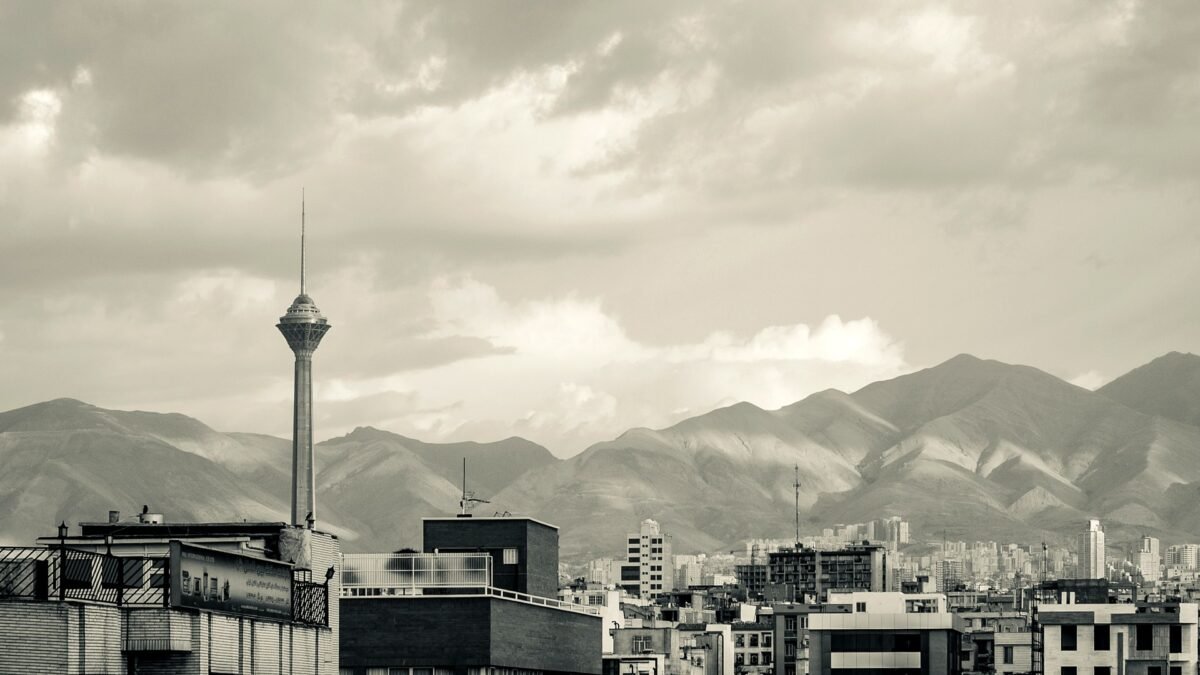
Top officials from Saudi Arabia, Pakistan and Turkey met Iranian leaders in Tehran on Monday in the first high-level contact between Iran and the three countries that signed the Mecca mutual defence pact in August, as a widening Middle East war threatens to return to full-scale fighting. The meeting, hosted by Iran’s top security official, was presented by all sides as an attempt to open a negotiating channel and prevent a further military escalation, according to Reuters.
Saudi Arabia was represented by Defence Minister Prince Khalid bin Salman, the younger brother of Crown Prince Mohammed bin Salman, Pakistan by army chief Field Marshal Asim Munir, and Turkey by intelligence chief Ibrahim Kalin, Saudi and Iranian officials said. On the Iranian side, President Masoud Pezeshkian, Foreign Minister Abbas Araghchi and Mohsen Rezaei, secretary of the Supreme National Security Council, attended the talks, according to Iranian state media.
The Saudi Foreign Ministry said the visit was intended to open negotiating channels to “prevent the return of military escalation”. The joint statement issued after the meeting was deliberately modest: the participants, it said, “agreed to continue the dialogue to strengthen cooperation amongst the four regional countries, including for peace and security in the region”. No ceasefire, no detailed agreement and no timetable for a follow-up meeting was announced.
The significance of the gathering lies less in what it produced than in the fact that it happened at all. The talks were the first high-level contact between Iran and the three Mecca pact nations since a war that began with United States and Israeli strikes on Iran spread to Saudi Arabia and Yemen, according to Reuters. The three visiting countries are bound together by a defence agreement under which, according to a text seen by Reuters, an armed attack on one member is considered an attack on all, with signatories committed to using “all necessary means” to eliminate threats to one another’s territorial integrity, sovereignty or internationally recognised borders.
The meeting had been proposed during Field Marshal Munir’s visit to Tehran the previous week, according to a senior Iranian official cited by Reuters. Iranian Foreign Ministry spokesperson Esmaeil Baghaei said the discussions would include what he described as Israel’s expansionist policies, developments in the Palestinian territories and Lebanon, and the repercussions of United States and Israeli military action against Iran. He said the meeting could be a first step towards establishing regional security mechanisms, a concept Tehran has promoted for decades under the label of “endogenous security” — security arrangements led by countries of the region itself rather than by outside powers.
A senior Pakistani security official told Reuters that the focus of Monday’s meeting was to build a regional non-aggression network. The agenda also included United States-Iran talks, Houthi attacks on Saudi Arabia, the Strait of Hormuz and a United States blockade of Iranian ports, the official said. An Iranian official said there would be no discussion of Iran’s nuclear programme at Monday’s meeting, and that the issue would not be addressed until Tehran’s demands for ending the war were met. Those conditions, according to Reuters, include ending a United States blockade of Iranian ports and lifting sanctions on Iranian oil exports. United States Vice President JD Vance has said Iran must reduce nuclear enrichment to end the war.
The talks took place against a background of sharply rising tension. President Donald Trump said on Friday that the United States may carry out another military operation against Iran, according to Reuters. Iranian security officials have told Reuters that Tehran has drawn up detailed plans to attack Gulf undersea cables if the United States and Israel attack again. The wider fighting has already restricted shipping through the Strait of Hormuz, the energy chokepoint through which a large share of the world’s traded oil passes, pushed up global oil and gas prices, left Gulf states facing missile and drone attacks, and caused a new humanitarian crisis in Yemen, according to Reuters.
Earlier efforts at mediation helped produce an interim peace agreement in June, according to Reuters, but fighting between Iran and the United States soon resumed. Conflict then flared between the Iran-aligned Houthis and United States ally Saudi Arabia, opening a new front. Pakistan and Qatar have led mediation efforts in the war, according to Reuters, and Qatari mediators were in Tehran on Sunday, an official told Reuters.
On the day of the Tehran meeting, the Houthis said they had attacked pumping stations on Saudi Arabia’s East-West pipeline as well as Riyadh airport, according to Reuters. Riyadh airport had said it resumed operations at two terminals a day earlier. There was no immediate Saudi confirmation of the Houthi attacks, Reuters reported. Saudi Arabia has intensified strikes against the Houthis since they captured strategic areas along Yemen’s Red Sea coast last month, advancing against Saudi-backed government forces, according to Reuters. The Houthis have hit Saudi airports, ports and oil installations, Reuters reported.
In a further sign of the conflict’s widening footprint, the parliament in Egypt, which is not a signatory to the Mecca pact, on Monday authorised the Egyptian military to help defend Saudi Arabia, a major financial and political partner for Cairo, according to Reuters. The pact’s members held an emergency meeting in Riyadh earlier in October and agreed to ensure the “rapid deployment” of military forces and capabilities in Saudi Arabia, according to Reuters. Efforts by Turkey’s parliament to ratify the agreement began last week and are still under way, while Pakistan approved the pact last week, Reuters reported.
The Tehran meeting therefore brought together, in one room, the core of a new regional security architecture and the country it was in part designed to confront. That paradox is the story of the day: a defence pact built around collective deterrence is now being used as a diplomatic channel to the very power whose actions it is meant to deter. Whether that channel can carry real negotiation, or merely serves as a pressure valve while all sides prepare for a wider war, is the question that will dominate the coming weeks.
Analysis: Why It Matters
1. A meeting that is itself the message
Diplomacy is often judged by its communiqués, and Monday’s joint statement was thin by any standard: a promise to keep talking. But in a war in which the main belligerents have spent months trading threats and strikes, the act of sitting down carries weight of its own. For months, the region’s diplomacy has run through intermediaries — Qatar shuttling between Tehran and Washington, Pakistan working its relationships on both sides — because direct contact was politically costly for everyone involved. A photograph of the Saudi defence minister, the Pakistani army chief and the Turkish intelligence chief in Tehran, hosted by Iran’s security chief, breaks that pattern. It signals to Washington, to Tel Aviv and to the Gulf capitals that a regional track now exists alongside the American one, and that the countries most exposed to a wider war are no longer content to wait for decisions made elsewhere.
That signal cuts in several directions at once. To Iran, it says that its neighbours are willing to talk even while they arm against it. To the United States, it says that a regional settlement may be pursued with or without American sponsorship. And to domestic audiences in Riyadh, Islamabad and Ankara, it says that their governments are doing something other than preparing for war. None of that guarantees peace, but it changes the information environment in which the next escalation decision will be made. Leaders who have publicly committed themselves to a diplomatic track face a higher political cost if they abandon it without warning.
2. The Mecca Pact moves from paper to practice
The Mecca Joint Defence Agreement, signed in August, has until now been more of a statement of intent than a functioning alliance. Its “attack on one is an attack on all” formula borrows the language of collective defence, but the pact has no integrated command, no standing force and, until this month, no tested decision-making procedure. The emergency meeting in Riyadh earlier in October, which agreed on the rapid deployment of forces and capabilities to Saudi Arabia, was its first operational step. The Tehran visit is its first diplomatic one, and the two together begin to define what the pact actually is.
What is emerging is something more flexible, and perhaps more useful, than a conventional military alliance. The pact’s members are not a bloc with identical interests: Saudi Arabia is the country under Houthi attack, Pakistan is the mediator with the deepest relationship to both Riyadh and Tehran, and Turkey is the member whose parliament has not yet ratified the agreement at all. That diversity, which might look like weakness in a military alliance, is an asset in diplomacy. It allows the pact to present itself to Tehran not as a hostile coalition but as a group of neighbours with different stakes in de-escalation. Pakistan’s role is particularly important here: the meeting was proposed during Field Marshal Munir’s own visit to Tehran the previous week, which suggests that Islamabad is acting as the pact’s bridge to Iran rather than merely as one of its soldiers.
The test of the pact will come not in Tehran but in its own capitals. Turkey’s ratification debate, still under way, will show whether Ankara’s political class is willing to bind itself to a collective defence commitment that could one day require it to act. Pakistan’s approval last week shows that Islamabad has already crossed that line. And Egypt’s decision to authorise military support for Saudi Arabia without joining the pact shows that the region’s security politics are reorganising well beyond the pact’s formal membership. A widening circle of countries is now making concrete military and political commitments around the Saudi position, even as the pact’s own members sit down with Iran.
3. Why the non-aggression idea matters — and its limits
The most interesting phrase to emerge from Monday’s meeting was not in the joint statement at all. It came from a senior Pakistani security official, who told Reuters that the focus was to build a “regional non-aggression network”. That is a modest ambition compared with a peace treaty, and its modesty is its strength. A non-aggression understanding does not require any party to resolve the underlying disputes — over Iran’s nuclear programme, over the Houthis, over the Strait of Hormuz, over the American military presence in the Gulf — that have driven this war. It requires only that the parties agree not to widen it, and that they create channels through which misunderstandings can be corrected before they become strikes.
History offers both encouragement and warning here. Non-aggression arrangements have often served as the first rung on the ladder out of a regional war, precisely because they ask so little of their signatories. But they are also fragile, because they leave every underlying grievance intact. The Tehran meeting’s own agenda illustrates the problem: the nuclear programme, the central issue in the United States-Iran confrontation, was explicitly excluded from discussion, with Tehran insisting that its demands on port blockades and oil sanctions be met first. A regional non-aggression network that does not touch the nuclear question can reduce the risk of a Saudi-Iranian or Houthi-Saudi escalation, but it cannot by itself end the war with the United States. It is a regional firebreak, not a settlement, and it should be judged as one.
The “endogenous security” language used by Iranian officials points in the same direction. Tehran has argued for decades that Gulf security should be managed by Gulf countries, without outside powers. That argument has historically been received with suspicion in Riyadh and Abu Dhabi, where American security guarantees have been the foundation of defence planning. Monday’s meeting does not resolve that tension, but it does show that the language of regional ownership is now being spoken by both sides of the divide. If the Mecca pact countries and Iran can agree even on the principle that regional countries should talk to each other first, that is a shift in the region’s diplomatic grammar, whatever happens next.
4. The war’s widening map: Yemen, Hormuz and Egypt
Monday’s news was not only about a meeting in Tehran. It was also about a war that is visibly spreading. The Houthi attacks claimed on Monday, the Egyptian parliament’s authorisation of military support for Saudi Arabia, the pressure on Strait of Hormuz shipping and the reported Iranian plans to target Gulf undersea cables all point in the same direction: a conflict that began as a confrontation between Iran and the United States and Israel is becoming a regional war with multiple fronts.
Yemen is the most dangerous of those fronts. The Houthis’ capture of strategic areas along the Red Sea coast last month, and Saudi Arabia’s intensified strikes in response, have turned a long-running civil war into a direct Saudi-Houthi confrontation. The Houthis’ claimed attacks on the East-West pipeline and Riyadh airport, whether or not they are confirmed, are designed to show that Saudi Arabia’s economic heartland is within reach. That is the logic of escalation: each side demonstrates that it can impose costs on the other’s most valuable assets, in the hope of forcing a negotiation. The risk is that demonstration becomes miscalculation, and that a strike on an airport or a pipeline is read as an attack that demands a larger response.
Egypt’s entry into the picture adds another layer. Cairo is not a party to the Mecca pact, but its parliament’s decision to authorise military support for Saudi Arabia ties the Arab world’s most populous country to the defence of the Gulf kingdom. That decision reflects the depth of the financial and political relationship between Cairo and Riyadh, but it also widens the potential geography of the war. A conflict that draws in Egypt, even in a supporting role, is harder to contain than one confined to the Gulf. It also raises the stakes for the Suez Canal, one of the world’s most important shipping arteries, which would be directly affected by any wider regional fighting.
The Strait of Hormuz remains the conflict’s great lever. Restrictions on shipping through the strait have already pushed up oil and gas prices, according to Reuters, and any further disruption would transmit the war’s costs to every oil-importing economy in the world, including the countries whose leaders sat in Tehran on Monday. That shared economic vulnerability may be the strongest incentive for de-escalation: the countries around the Gulf are the first to suffer when Hormuz shipping is threatened, whatever their political positions. It is no coincidence that the meeting’s agenda, according to the Pakistani security official, included both Hormuz and the blockade of Iranian ports. Those are the two chokepoints through which the war’s economic pressure flows, and any serious de-escalation will have to address them both.
5. What the silence on the nuclear question tells us
The most revealing feature of Monday’s meeting may be what was not discussed. Iran’s nuclear programme, the issue at the centre of the American-Iranian confrontation, was kept off the table, with Tehran insisting that its demands on port blockades and oil sanctions be met before the subject is raised. That sequencing matters. It suggests that Tehran sees the regional track and the American track as separate negotiations, to be conducted on different timetables and with different preconditions. The regional track can proceed on the basis of non-aggression and dialogue; the nuclear track, in Tehran’s view, requires concessions from Washington first.
That separation may be tactically sensible for Iran, but it limits what the Tehran meeting can achieve. A regional non-aggression understanding cannot substitute for an agreement on enrichment, on sanctions relief or on the American military presence, and the United States has shown no sign of accepting a regional settlement that leaves those questions open. Vice President Vance’s insistence that Iran must reduce enrichment to end the war sets a bar that Monday’s meeting did not attempt to meet. The danger is that the regional track and the American track diverge: the region’s countries make progress towards coexistence while Washington and Tehran remain locked in a confrontation that could still produce the strikes everyone in Tehran was trying to prevent.
There is, however, another way to read the separation. By keeping the nuclear question off the regional table, the participants may have been protecting the regional track from the fate of previous negotiations, in which a single intractable issue collapsed an otherwise promising dialogue. If the four countries can build habits of consultation, a non-aggression understanding and a shared interest in keeping Hormuz open, they will be better placed to influence the American-Iranian negotiation when it resumes. Diplomacy often works this way: not by solving the hardest problem first, but by building a framework in which the hardest problem becomes easier to solve. Monday’s meeting, judged by that standard, was a beginning, not a breakthrough — and beginnings are worth reporting honestly as such.
What to Watch Next
- Whether a follow-up meeting is announced: The joint statement promised continued dialogue but named no date, venue or format. A concrete next step — a second four-way meeting, a working group on Hormuz shipping, or a joint statement on non-aggression — would show that Monday’s talks were more than a photo opportunity.
- Houthi attacks and the Saudi response: The Houthis’ claimed strikes on the East-West pipeline and Riyadh airport, and Saudi Arabia’s response to them, will test whether the Tehran meeting has any restraining effect on the Yemen front, or whether that front continues to escalate independently of the diplomacy.
- Turkey’s ratification debate: With Turkey’s parliament still considering the Mecca pact, the progress of ratification will reveal how far Ankara is willing to commit itself to collective defence — and whether the pact’s diplomatic role strengthens or complicates that debate.
- Egypt’s military support in practice: Parliament’s authorisation is a political signal; what matters next is what form Egyptian support takes, and whether it draws Cairo deeper into a conflict it has so far watched from a distance.
- The American track and the 3 November midterms: With the United States midterm elections on 3 November, and Washington’s rhetoric about further military action continuing, the interaction between the regional diplomatic track and American domestic politics will shape whether de-escalation gets the time it needs.
Sources
- Reuters, “Saudi defence pact countries hold talks in Iran as Houthis launch more attacks”, 26 October 2026 (via Devdiscourse)
- Reuters, “Officials from Mecca pact countries to meet Iranian officials in Tehran on Monday”, 26 October 2026 (via Devdiscourse)
- Press TV, “Iran, Pakistan, Turkey, Saudi Arabia hold security meeting in Tehran”, 26 October 2026
- Associated Press reporting, via The Russell Record, “Saudi, Turkish and Pakistani officials meet Iran in bid to avert renewed regional war”, 26 October 2026

About the Author — Abdul Mannan
Related Articles
More Than 2,670 Palestinians Displaced as Israeli Forces Seal Hebron in Four-Day West Bank Operation
More than 2,670 Palestinians have been forced from their homes in Hebron as a four-day Israeli military operation…
Trump Says US Could Strike Iran ‘Maybe Tomorrow’ as Tehran Claims It Downed an American Drone
President Donald Trump said on Saturday the United States could strike Iran as early as Sunday — or…
Riyadh Airport Reopens After Two-Week Houthi Shutdown as Rebels Warn It Will ‘Never Be Safe’
Riyadh's King Khalid International Airport resumed flights on Sunday after a two-week closure, hours before Yemen's Houthis renewed…