
Two Men Charged Over Alleged Iran-Linked Plot at RAF Fairford as Court Hears of Petrol-Filled Vans

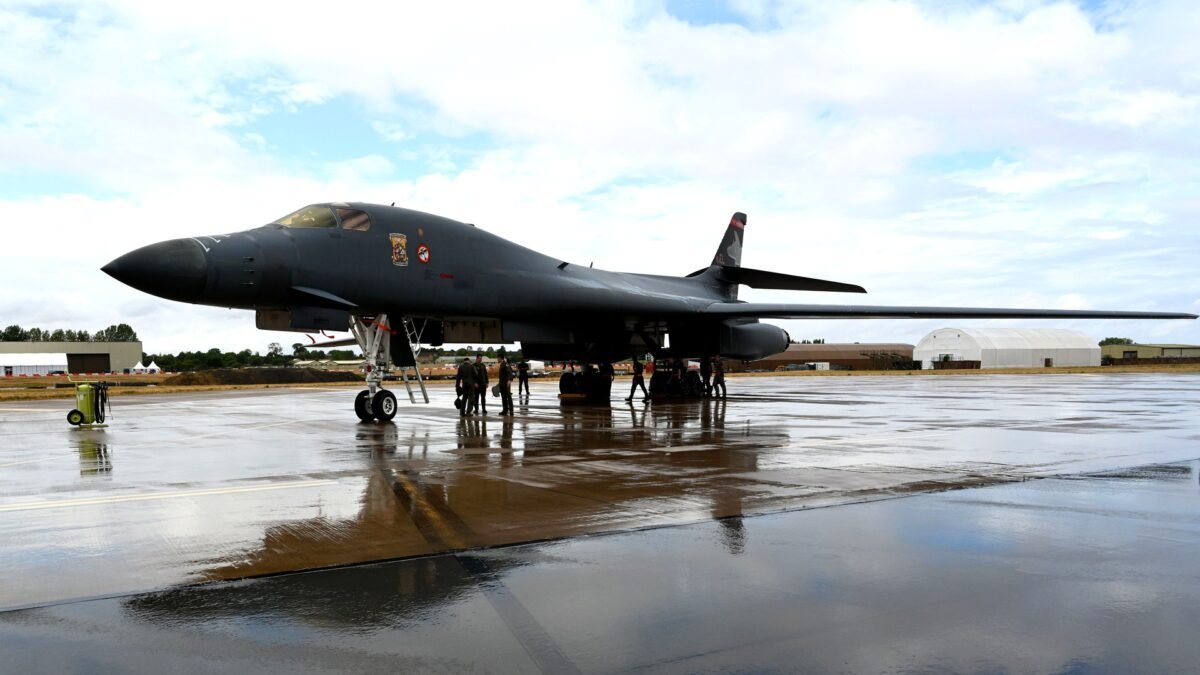
Two men have been charged under the National Security Act 2023 over an alleged plot involving RAF Fairford, the Gloucestershire airbase used by United States bombers during the war with Iran, after prosecutors said the case centred on vans loaded with petrol, a handler believed to be working for Iran, and a reconnaissance visit to the base weeks earlier. The men appeared at Westminster Magistrates’ Court in London on Tuesday 27 October 2026, where the prosecution set out its case in outline and the court sent the case to the Old Bailey for a hearing on 20 November.
The Crown Prosecution Service (CPS) announced the charges on Tuesday, according to its own statement. Mohmed Abdulkarim, 24, of London, was charged with engaging in conduct likely to materially assist a foreign intelligence service, an offence under section 3(2) of the National Security Act 2023, covering the period from 31 August to 28 September 2026. Nouman Essghir, 24, also of London, was charged with one offence under section 4(1) of the same Act, of entering a prohibited place for a purpose prejudicial to the safety or interests of the United Kingdom, in relation to 22 August 2026. The CPS said the first hearing would take place at Westminster Magistrates’ Court on Tuesday 27 October, and it reminded all concerned that the proceedings were active and that the defendants had the right to a fair trial, according to the CPS statement.
Frank Ferguson, Chief Crown Prosecutor for the CPS Special Crime and Counter Terrorism Division, said in the CPS statement: “The Crown Prosecution Service has decided to prosecute two individuals with National Security Act offences following a Counter Terrorism Policing investigation into a high-profile incident involving RAF Fairford.” He added: “We will continue to work closely with our partners as this complex investigation continues.” Reuters, reporting on the CPS announcement on Tuesday, said British prosecutors had charged the two men and that police believed the foreign intelligence service involved was Iran’s. The Associated Press, in its own report of the charges, likewise said the two men had been charged under the National Security Act over the incident at the United States-run base.
At Westminster Magistrates’ Court, the two defendants spoke only to confirm their names, dates of birth and home addresses, according to The Times, which reported the hearing on Tuesday. The court heard that Abdulkarim appeared in a wheelchair. Chief Magistrate Paul Goldspring formally sent the case to the Central Criminal Court, the Old Bailey, where both men must appear on 20 November, according to reports of the hearing by The Times and The Sun. Abdulkarim was granted conditional bail, including conditions on residence and the surrender of his passport, while Essghir was remanded in custody, according to The Times and the PA news agency’s court reporting. No pleas were reported, and nothing in the reporting of the hearing suggested that either man had entered a plea at this stage. The charges remain allegations, and the case has yet to be tested at trial.
What prosecutors told the court
Prosecutor Louise Gray told Westminster Magistrates’ Court that the alleged operation was co-ordinated by a handler known only as “Ali”, who police believe was abroad and acting in the interests of the Iranian state, according to The Times and PA reporting of the hearing. Prosecutors alleged that Abdulkarim acted as an intermediary for Ali, that he arranged for a group of five men to drive vans to the airbase, and that he acquired equipment for the mission and received payments totalling around £70,000 from Ali, according to the same court reporting. Those are allegations made by the prosecution in court; they have not been proved, and Abdulkarim has not yet had the opportunity to answer them at trial.
According to the prosecution account reported from the hearing, the five men were instructed by Ali to drive three white vans loaded with metal oil drums containing petrol, hard plastic water butts and internet-enabled dashcams to RAF Fairford. Prosecutors said £300 worth of petrol had been put into the drums before the journey, according to PA reporting. The men were allegedly told over the telephone, once they had arrived, to park the vans and walk away. Prosecutor Gray was reported as saying: “Shortly thereafter the message was received that there was a bomb in the vehicles and one of them called the police.” Police attended, found the three vans and arrested five men. No explosives or improvised explosive devices were found in the vans, the court heard, although a quantity of petrol was seized, according to The Times and PA reporting. The precise purpose of the vans, and what, if anything, was intended to happen after they were parked, remains a matter for the investigation and for the courts, and the reporting of the hearing did not present a concluded finding on that question.
Essghir’s charge relates to a different date and a different alleged act. Prosecutors told the court that Essghir had filmed the perimeter of RAF Fairford on 22 August, about five weeks before the incident at the base, at Ali’s request, in what was described as a reconnaissance mission, according to The Times and PA reporting. Essghir was among the five men arrested near the base on 27 September, and he was re-arrested on 20 October, according to the same reporting. His charge, as set out by the CPS, concerns entering a prohibited place on 22 August, not the driving of the vans on 27 September. As with Abdulkarim’s charge, the allegation is unproved until it is tested in court, and the court reporting did not record any response from Essghir to the substance of the allegation beyond the formal confirmation of his identity.
Assistant Commissioner Laurence Taylor, head of National Counter Terrorism Policing in the United Kingdom, said police believed the country Abdulkarim was assisting was Iran, according to Reuters and CNN. Taylor said: “We have seen a range of incidents in recent months that we believe have been directed by the Iranian state, and as the director general of MI5 said just the other week, we are working together to intervene, identify and respond to that threat,” according to Reuters. He urged members of the public to report anything that worried them, and he defended investigative decisions that, in his words, could sometimes appear illogical from the outside. Taylor said, according to The Times: “We know that decisions made during our investigations can sometimes appear illogical to those on the outside, but I want to make it very clear that there will always be good reason or rationale behind them. We will always ensure that, should we identify any ongoing threat, we will manage that as part of the investigation.” He added that some circumstances surrounding the incident remained unclear and that the investigation was continuing.
The night of 27 September
The charges follow an incident in the early hours of Sunday 27 September 2026, when armed police officers and army bomb-disposal specialists were deployed to the area around RAF Fairford after reports of suspicious vehicles near the base. Five men were arrested on suspicion of preparation of a terrorist act and explosives offences, and dozens of residents were evacuated from their homes while searches and security checks were carried out, according to the Associated Press. CNN reported that the base had been used by United States B-1 bombers to carry out strikes on Iran, and that the bombers were withdrawn on security grounds shortly after the five arrests. Reuters reported the same sequence: the arrests outside the base in south-west England, followed by the withdrawal of the bombers.
According to reporting by Agence France-Presse, police were called after a local farmer reported a group of men with several vans engaged in suspicious activity. The scare prompted a counter-terrorism investigation and the evacuation of 85 homes near the airbase, AFP reported, and investigators found no explosives in the vans but recovered a quantity of petrol. The five men arrested that night were released on bail, a decision that attracted public questions at the time and was later addressed by Taylor in his statement on the day of the charges. Other men arrested during the wider investigation also remain on police bail, according to CNN and Reuters, and the investigation has not closed with these two charges. A 25-year-old dual British-Iranian national, arrested on 1 October on suspicion of preparation of terrorist acts and re-arrested on 20 October on suspicion of assisting a foreign intelligence service, was released without charge in relation to that arrest but remains on police bail in connection with the earlier investigation, according to PA and CNN reporting. No further charges beyond the two announced on Tuesday had been reported at the time of writing.
RAF Fairford itself is a Royal Air Force station in Gloucestershire that has long served as a forward operating location for the United States Air Force, and it remains the forward operating base for United States Global Strike Command, according to The Times. Heavy bombers arrived at the base in March 2026 after permission was granted for defensive operations connected with Iran, according to court reporting. The base has hosted B-1B Lancer, B-2 Spirit and B-52 Stratofortress aircraft over the years, and it is one of a small number of European airfields able to sustain sustained operations by the largest United States strike aircraft. That operational role is central to understanding why an incident on a quiet country road near Fairford drew a counter-terrorism response, the attention of two governments, and, within a week, the removal of an entire bomber deployment.
The bombers leave
On Sunday 4 October 2026, the Pentagon confirmed that all United States bombers deployed to RAF Fairford had been redeployed to their home stations in the United States. A Pentagon official said, according to Reuters: “While operational security precluded us from confirming the movement of our assets and forces in real-time, we can acknowledge now that all US bombers that were deployed to RAF Fairford have re-deployed to their home stations in the United States.” Air & Space Forces Magazine counted 12 B-1 bombers leaving the base, according to reporting of the withdrawal, and plane spotters recorded the departures through the day. United States Secretary of State Marco Rubio expressed confidence in the security of American bases, according to AFP, and said Washington had worked closely with London on the investigation.
The New York Times reported, citing United States and British officials, that the bombers had been withdrawn after commanders received new information about a potential drone attack ordered by Iran’s Islamic Revolutionary Guard Corps against the base. That account, attributed by the newspaper to officials, has not been confirmed in those terms by the British Government in a public statement, and it should be read as officials’ briefing rather than as an established finding. What is established, from the Pentagon’s own confirmation, is that the withdrawal happened, that it was unusually hurried for an allied base in peacetime, and that it followed the arrests by a week. The decision to move aircraft rather than to reinforce the base in place was itself a signal: whatever the precise threat picture, commanders judged that the risk to aircraft and personnel at Fairford outweighed the operational cost of flying the bombers home.
Prime Minister Andy Burnham had said earlier in October that there were strong indications that Iran was involved in the Fairford incident, according to Reuters reporting, and Iran has denied involvement. Iran’s ambassador to Britain denied the allegation, according to the same reporting, and Tehran summoned the British ambassador to demand evidence for the claim, according to the Associated Press. The diplomatic exchange matters because it shows the gap between two different kinds of judgement that often run in parallel in state-threat cases: the public attribution made by a government on the basis of intelligence, and the criminal case that must be proved in court with admissible evidence. The first can be stated in broad terms; the second must survive cross-examination, disclosure and the presumption of innocence.
The wider pattern Britain describes
The Fairford charges arrived two weeks after the head of MI5, Director General Sir Ken McCallum, used his annual threat speech on 13 October 2026 to warn that Iran was stepping up its efforts on British soil and shifting its attention to harder targets. McCallum said, according to the Associated Press: “The other major shift this year has been Iranian ambitions to come at harder targets, like military sites.” He said the Fairford incident was “not unique” and that similar examples had been encountered in Britain and elsewhere, according to the Associated Press. McCallum also said Iran continued to use criminal proxies to intimidate dissidents, Iranian media organisations and Israeli sites, and that British authorities had made 50 arrests over the previous 12 months in connection with Iran-linked operations, according to USA Today’s report of the speech. He described a wave of arson and sabotage incidents targeting Jewish communities, according to the same report, and he placed Russia as the leading state adversary while warning that state threats overall had quadrupled over the past decade.
McCallum did not name the Fairford suspects or set out evidence in his speech, and he was careful to say that live investigations and the need to avoid prejudicing future prosecutions limited what he could say, according to USA Today. His remarks nevertheless provided the public context in which the charges landed: a security service arguing, in general terms, that the threat had moved from intimidation of individuals to the targeting of military infrastructure, and a criminal investigation that would now have to prove, in a specific case, that two named men had done the acts alleged. The distinction between those two levels of claim is one the courts will insist upon, and it is one that reporting of the case should preserve.
Britain had already taken steps against Iranian state activity before the Fairford incident. Reuters reported that Britain said there had been 20 credible Iranian-backed threats to kill or kidnap individuals based in the United Kingdom in the previous year, and that in July 2026 Britain used new powers to ban support for the Islamic Revolutionary Guard Corps and a linked group, Harakat Ashab al-Yamin al-Islamiya, which had claimed responsibility for attacks earlier in the year at locations linked to Jewish and Israeli communities and Persian-language media, according to the same Reuters reporting. Those measures were part of a wider hardening of the British response to state threats, and they form the policy background to the National Security Act charges. The Act, passed in 2023, replaced older Official Secrets Act provisions for espionage and introduced new offences covering assistance to foreign intelligence services, entering prohibited places, and foreign interference. The Fairford case is among the most prominent tests of those offences to reach a criminal court.
Analysis: Why It Matters
1. Charges turn an incident into an alleged state-directed operation
For a month, the public knew the Fairford episode as an incident: vans, petrol, evacuations, arrests, bail, and bombers leaving. The charges change its character. By charging assistance to a foreign intelligence service, prosecutors are alleging not merely suspicious behaviour near a base but a relationship between the conduct and a foreign state. That is a heavier claim, and it carries a heavier burden. The prosecution will need to show not only what was done, but that the conduct was likely to materially assist a foreign intelligence service and that the defendant knew, or ought reasonably to have known, that it would do so. The court reporting suggests the prosecution’s answer to that question runs through the handler, Ali, and the payments and instructions attributed to him. If that chain holds, the case becomes a story about direction from abroad. If it does not, the case narrows to what two men can be shown to have done on the ground. The gap between those two outcomes is where the trial will be fought, and it is why the language of allegation matters more than usual in this case.
2. The intermediary model is the point, and also the difficulty
The prosecution account, as reported from court, describes a familiar pattern in modern state-threat cases: a handler abroad, an intermediary at home, and a group of men recruited for a single task who may know little about the wider plan. That structure, if proved, serves the handler’s purpose, because it creates distance between the state and the act, and it complicates the work of investigators, who must reconstruct the chain from payments, messages, equipment and movements. It also creates a difficulty for prosecutors, because the intermediary’s knowledge and intent become central. The court will need to distinguish between a man who knowingly assisted a foreign intelligence service and a man who was used, misled or merely present. The reporting of the hearing does not resolve that question, and it would be wrong to treat the prosecution’s outline as a finding. What the outline does establish is the shape of the case the jury, in due course, will be asked to decide.
3. Fairford mattered before anything exploded, and that is the lesson
No explosives were found, no aircraft was damaged, and no one was reported injured in the September incident. Yet within a week, the United States had removed its bombers from the base. That sequence shows how the strategic effect of an attack, or an alleged attack, does not depend on destruction. A credible threat to a bomber base forces commanders to choose between accepting risk and losing capability, and either choice carries a cost. The withdrawal protected aircraft and personnel, but it also removed, at least temporarily, the forward bomber presence that had been built up since March. For an adversary, forcing that choice may be enough. For Britain and the United States, the lesson is that the protection of a handful of airfields has become a central task of national security, not a routine matter of perimeter fencing and patrols. The charges, if they lead to convictions, would confirm that the threat was real; even without that confirmation, the operational response already showed how seriously it was taken.
4. Bail first, charges later: the sequence that tested public trust
The most politically uncomfortable part of the Fairford story, before the charges, was the release on bail of the men arrested on 27 September. To a public audience, and to some political leaders, the sequence looked backwards: terrorism suspects arrested, then freed, then bombers withdrawn. Taylor’s statement on the day of the charges was an attempt to answer that discomfort directly, by arguing that the investigative decisions had produced swifter progress, better evidence and, ultimately, charges. Whether that explanation satisfies the public will depend on what emerges at trial, and on whether the investigation produces further charges or a fuller account of the handler and the network. The episode illustrates a recurring tension in counter-terrorism work: the tactics that best protect an investigation are not always the tactics that best reassure the public in the moment, and the police must carry both burdens at once. The charges help the second burden, but they do not erase the first month of questions.
5. A legal test for a new law, and a diplomatic test for attribution
The National Security Act 2023 was written for cases of this kind, and the Fairford prosecution will be read, by lawyers, security officials and foreign governments, as a measure of how the new offences work in practice. A conviction would show that the assistance and prohibited-place offences can be proved against individuals operating, allegedly, at the direction of a foreign handler. An acquittal, or a collapse of part of the case, would raise questions about the gap between intelligence assessments and courtroom proof. At the same time, the diplomatic dispute with Iran will continue on a separate track, governed by different evidence and different standards. Iran’s denial and its demand for evidence will not be settled by the criminal trial, and the trial will not be settled by diplomatic statements. Both tracks matter, but they should not be confused. The court will decide what two men did. Governments will decide what the incident means for relations, sanctions and deterrence. Keeping those judgements distinct is essential to a fair trial and to honest reporting.
What to Watch Next
- The Old Bailey hearing on 20 November: whether both men appear, whether any further directions are given, and whether a trial timetable is set. Reporting of that hearing will be constrained by the active-proceedings rules, and no commentary should be published that could prejudice the trial.
- Further charges or bail decisions: whether any of the other men arrested in the investigation are charged, released without charge, or remain on bail, and whether the investigation identifies or seeks the handler referred to in court as Ali.
- The prosecution’s disclosure and the defence case: what evidence is relied upon for the alleged payments, instructions and reconnaissance, and how the defence responds when the case is formally put. Until then, the court outline remains an allegation, not a verdict.
- Bomber basing and base security: whether United States bombers return to RAF Fairford, under what security arrangements, and what changes are made to the protection of the base and other military sites identified in the MI5 warning.
- The diplomatic track with Iran: whether Britain publishes further attribution or evidence, whether Iran responds beyond its denial, and whether the incident affects wider negotiations or measures concerning Iranian state activity in Britain.
Sources
- Crown Prosecution Service — CPS announces two men charged with National Security Act offences following RAF Fairford incident (27 October 2026)
- Reuters — UK prosecutors charge two men with National Security offences over airbase incident (27 October 2026)
- CNN — Two British men charged with helping Iran over Fairford airbase incident (27 October 2026)
- The Times — Iranian handler ‘sent vans carrying petrol barrels to RAF Fairford’ (27 October 2026)
- Hello Rayo / PA court reporting — Two men appear in court over suspected terror plot at RAF Fairford (27 October 2026)

About the Author — Abdul Mannan
Related Articles

Reynolds Says UK and EU Are Discussing Free Movement as an Option for a Closer Future Relationship
Business Secretary Jonathan Reynolds has confirmed UK and EU officials are discussing future options for the relationship, including…
London’s Oxford Street Goes Traffic-Free as Buses and Taxis Are Banished From Its Busiest Stretch
Almost a kilometre of London's Oxford Street went permanently traffic-free on Monday, closing the stretch between Selfridges and…
Storm Boelo Leaves 82,000 Homes Without Power as 84mph Gusts Flood Largs and Halt Travel Across Britain
More than 82,000 homes were left without power as Storm Boelo battered Britain with gusts of up to…