
At Least 30 Killed as High-Speed Trains Collide Near Toledo in Spain’s Second Rail Disaster This Year

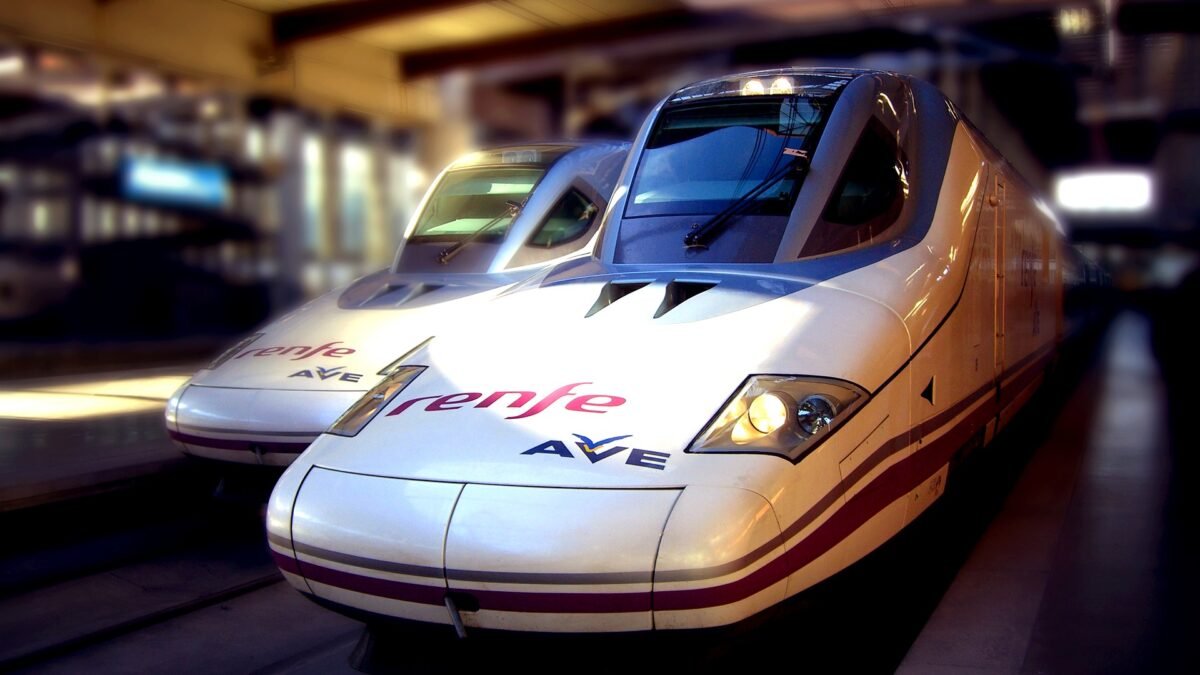
At least 30 people were killed and about 80 others were injured on Wednesday morning when a high-speed train struck the rear of another high-speed train that had stopped on the track near Urda in the province of Toledo, in central Spain, according to regional officials. The collision derailed two carriages, sent wreckage down a railway embankment and suspended high-speed services between Madrid and Andalusia on one of Spain’s busiest rail corridors.
The president of the Castilla-La Mancha region, Emiliano García-Page, said at least 30 people had died and warned that the death toll could rise further, according to the Associated Press. He added that at least 80 people were injured. Reuters reported the same floor figure of at least 30 dead in its live coverage of the crash, and The Times, citing Agence France-Presse, later reported at least 31 confirmed dead. That difference matters, and it should be stated plainly: the figure that officials had confirmed at the time of writing was at least 30, with the toll expected to climb as rescue teams reached the most badly damaged parts of the wreckage. Readers should treat any higher figure circulating in early Spanish media reports as unconfirmed until the regional government or the national authorities confirm it.
According to García-Page, 24 of the dead were on the Renfe train and six were on the Iryo train, the Associated Press reported. Health Minister Mónica García told the state broadcaster TVE that emergency workers were concentrating on rescuing survivors and recovering bodies from the two most severely damaged carriages, and that the injured were being taken to hospitals in the surrounding area. “It was a high-speed impact, so we are expecting this to be a tragedy,” she said, according to the Associated Press.
The crash happened on Wednesday morning, 28 October 2026, on the Madrid to Seville high-speed line, between the towns of Urda and Los Yébenes in Toledo province, about 140 kilometres south of Madrid, according to Spain’s rail infrastructure manager, Adif. Esther Padilla, a spokeswoman for the Castilla-La Mancha regional government, told TVE that the two trains were travelling in the same direction, from Madrid towards Seville in south-western Spain, when one ran into the tail of the other, which had stopped. The impact knocked two carriages off the track. Padilla said the cause of the crash was not known.
The scene, as described by the Associated Press from official accounts and early reporting, was a flat stretch of countryside surrounded by fields. One carriage was torn apart, with twisted metal and debris scattered down a gravel slope. Two carriages fell down an embankment. Firefighters, civil protection teams, rescue helicopters and mobile intensive care units were sent to the site, according to DPA reporting. The mayor of Urda, Manuel Galán, told TVE that civil protection authorities had asked the town hall to prepare a sports pavilion to receive people affected by the crash.
Official figures put the number of people on board at 544 in total, according to The Times. Padilla told TVE that the Renfe train was carrying 397 passengers and the Iryo train was carrying 147 passengers, including a baby. The trains involved were a service operated by Renfe, Spain’s state-owned railway company, and a service operated by Iryo, the private operator that is majority-owned by Italy’s state-owned Trenitalia. Spanish media reported that it appeared the Renfe train had struck the Iryo train from behind, although officials had not confirmed a sequence of events at the time of writing.
One survivor, Miguel Angel Perez, told the national broadcaster RTVE that survivors escaped by breaking train windows, according to The Times. “It’s terrible, beyond words,” he said. “With the violent impact and jolting, we started holding on to our seats. We managed to get out of the carriage by breaking the windows.” That account, like every survivor account in the first hours, describes one person’s experience of one carriage. It does not, on its own, explain how the collision happened, and it should not be read as evidence about speed, signalling or any decision taken in a control room.
Official response and the suspension of services
Prime Minister Pedro Sánchez wrote on X that he was shocked by the serious train accident in Toledo, according to the Associated Press and other reporting of his message. He said emergency services were working on the ground to assist those affected and to ensure their safety, in coordination with all the administrations involved, and he offered affection, solidarity and support to all the victims and their families. Sánchez cleared his diary for the day, The Times reported. Transport Minister Óscar Puente went to Adif’s control centre at Atocha in Madrid to follow the rescue operation, according to reporting in El País cited by other outlets.
García-Page travelled to the crash site. In a briefing reported by The Guardian’s live coverage, he confirmed the figure of 30 dead, 24 on the Renfe service and six on the Iryo service, and said authorities expected the number to rise further because emergency services had yet to reach the most affected parts of the wreckage. The Wall Street Journal quoted him telling RTVE: “Sadly, we expect more fatalities.” That warning, repeated by officials throughout the day, is the reason this article uses “at least” in its headline and in every reference to the toll. In a disaster of this kind, the first confirmed number is almost never the last, and publishing a higher number before officials confirm it would risk turning a feared figure into a reported fact.
Adif said rail services were suspended between Madrid, Ciudad Real and Andalusia, according to the Associated Press. Renfe said high-speed service from Madrid to Andalusia was suspended, and the suspension applied in both directions on the affected section. For passengers, that meant one of Spain’s main north-south arteries was closed without warning on a weekday morning, with knock-on disruption for services that use the same corridor. Renfe offered free changes and cancellations for affected tickets and activated its assistance plan for victims and their families, including a helpline for relatives, according to early reporting of the company’s response. The line would remain closed while rescue work continued and investigators examined the site, and no reopening time had been announced at the time of writing.
The political response was immediate, and it unfolded in the middle of an election campaign. Spain’s general election is due to take place on 29 November, according to The Times. Sánchez cleared his diary, and the opposition People’s Party cancelled all campaign events, a spokesman told The Times. The Wall Street Journal reported that the governing and main opposition parties said they would suspend planned political events on Wednesday. The leader of the far-right Vox party, Santiago Abascal, took a different position, according to The Guardian’s live coverage: he continued campaigning and criticised the prime minister, rejecting calls to suspend the campaign. His argument, as reported, was that suspending campaigning would exploit grief to silence complaints about infrastructure. That disagreement is part of the public record of the day, and it is reported here as a political position, not as a finding about the crash.
In Britain, Andy Burnham, opening Prime Minister’s Questions in the House of Commons, said his thoughts were with everybody in Spain affected by the devastating crash, according to The Times. He said he had been in touch with Sánchez to relay condolences and to offer any support Britain could provide. The Royal Spanish Football Federation suspended all 24 Copa del Rey first-round matches scheduled for Wednesday, saying the decision was taken as a sign of respect and solidarity with the victims of the tragic train accident in Toledo province. The federation said it would announce a revised schedule and definitive kick-off times in the coming days, and that the Spanish football family stood united in grief and offered its support to the authorities.
What is known, what is reported, and what is not yet established
The distinction between those three categories is the most important discipline in covering a disaster in its first hours, and it is worth applying it explicitly here. What is known, because officials have said it, is that two high-speed trains collided on the Madrid-Seville line near Urda on Wednesday morning, that at least 30 people died and about 80 were injured, that 544 people were on board the two trains, that two carriages derailed, and that services on the line were suspended. What is reported, but not yet officially established, is a sequence in which a signalling fault left trains halted and a manual instruction then allowed the Renfe train to proceed. What is not yet established is why the Iryo train stopped, why the collision was not prevented, and who, if anyone, bears responsibility.
The reported sequence comes from El País, citing government sources, as summarised by The Times. According to that account, the line’s main automatic safety system, known as LZB, failed on Wednesday morning, causing about eight trains in the area to come to a halt. The safety system is automated, but when it fails it switches to manual mode. Later, according to the initial assessments reported by El País, an operator at the Atocha control centre in Madrid mistakenly gave the Renfe train permission to continue, despite the fact that the Iryo train was blocking the track. The Renfe train then collided with the Iryo train from behind, at a speed that had yet to be determined. A separate account, summarised in early reporting, said Adif had told RTVE that, because of the LZB fault, trains on the section were running under a back-up system in which the driver follows trackside signals. ABC, citing Transport Ministry sources, also pointed to human error by an Adif operator, according to the same early reporting.
None of that has been confirmed as an official finding, and it must not be presented as one. El Mundo reported that the Iryo train had flagged a failure in its LZB signalling system shortly before the crash, but that the train behind did not receive the information, according to a summary of The Guardian’s live coverage. Paula Pinho, the European Commissioner for transport, told reporters: “It’s too early, absolutely too early, to draw any conclusions,” according to The Times. That caution applies with full force to every theory about signalling, manual operation and human error. A formal investigation has been launched, according to Railway Gazette, and the Civil Guard has sent a specialist disaster investigation team to the scene. Investigators will need to establish, from signalling records, train data recorders, control-room communications and the physical evidence at the site, what systems were active, what instructions were given and received, and whether operating procedures were followed. Until that work is done, the honest formulation is that early reporting points to a possible signalling and human-error chain, while officials have said the cause is not known.
The same restraint applies to the casualty figures. The day began with an official confirmation of 10 deaths, with Padilla warning that the number would almost certainly rise. Within hours, the confirmed floor had tripled to at least 30. Some Spanish media reports, citing emergency services, put the figure higher still, at 46 feared dead, and other outlets later reported 50 dead and 179 injured. Those higher figures were not the figures confirmed by García-Page or by Reuters and the Associated Press at the time of writing, and this article does not adopt them. The gap between a feared figure, a media report citing unnamed emergency sources, and an official confirmation is not a technicality. For families waiting for news, and for a public record that will be read long after the rescue phase ends, the difference between “feared” and “confirmed” is the difference between speculation and fact. This article will be updated if officials confirm a higher toll, and the update will say so explicitly.
The January disaster at Adamuz
The Toledo crash is the second major rail disaster on Spain’s high-speed network in less than a year, and the second on the Madrid-Andalusia corridor involving the same two operators. On 18 January 2026, at 19:43 Central European Time, an Iryo high-speed train derailed near Adamuz in the province of Córdoba and collided with an approaching Renfe service, according to the established account of that disaster. Forty-six people were killed and 292 others were injured, including 15 in critical condition. The Iryo train was running from Málaga to Madrid and the Renfe train was travelling from Madrid to Huelva. Close to 300 people were travelling on the Iryo service and 184 on the Renfe service, according to reporting at the time.
A preliminary investigation by the Civil Guard found that the rail breakage at Adamuz was likely due to a poor weld stemming from the use of an improper kit, compounded by poor data collection practices, inexperienced track inspectors and overly conservative programming of track-circuit-connected alert systems, according to a summary of the preliminary findings. Investigators later concluded that the tragedy was caused by a break in the rail, ruling out faults with either of the trains involved, according to reporting of a Civil Guard report submitted to a judge in Montoro. The line reopened for service on 17 February 2026 after a month of repairs and testing. The formal investigation into Adamuz remains ongoing, according to Railway Gazette, and the Spanish government has confirmed long-standing plans to restructure the bodies responsible for investigating transport accidents, replacing the CIAF, which led the Adamuz inquiry, with a new multimodal investigation authority.
Adamuz was Spain’s worst railway disaster since the Santiago de Compostela derailment in July 2013, in which 79 people were killed, and it was the first crash with deaths on Spain’s high-speed network since the first line opened in 1992, according to the background to the Adamuz account. The comparison that government sources made on Wednesday, as reported by El País, was that the Toledo crash was feared to be very serious and could be worse than Adamuz. That comparison explains why the Toledo crash has landed with such force in Spain: Adamuz was already, in January, the worst disaster in the history of the high-speed network, its investigation was still open, and questions about infrastructure maintenance and railway safety raised by Adamuz had not been settled. None of that proves that the two disasters share a cause. On the accounts available so far, they do not: Adamuz is described as a rail-break derailment, while Toledo is described in early reporting as a rear-end collision involving a stopped train and a possible signalling failure. Treating them as the same failure would be a category error, even though they share a corridor, two operators and a calendar year.
The wider context is a network of extraordinary scale. Spain has laid some 2,400 miles of high-speed track over more than three decades for a population of 49 million, according to The Times, and only China, with 28,000 miles, has more. The Madrid-Seville line was Spain’s first high-speed line, opened in 1992 to coincide with the Seville Expo. Spain has recently opened its rail network to private companies to compete with Renfe, and Iryo started operating in Spain in 2022, jointly owned by Italian and Spanish companies, with Italy’s Trenitalia holding a 51 per cent share, according to The Times. That liberalisation is part of the background to both disasters, because both involved a Renfe service and an Iryo service, but it is not, on the evidence available, an explanation for either one. The investigation into Toledo will have to answer a narrower set of questions: what happened on that section of track on Wednesday morning, in what order, and under whose authority.
Analysis: Why It Matters
1. A floor, not a final toll, and why the distinction protects families
The most consequential editorial decision in the first hours of a disaster is often the least visible: which number to put in the headline. “At least 30” is not a hedge. It is the number officials had confirmed, and it carries within it the warning that the number will rise. The progression on Wednesday, from 10 confirmed dead in the morning to at least 30 by the afternoon, with warnings throughout that the toll would climb as teams reached the most damaged carriages, is a familiar pattern in rail disasters, where the condition of the wreckage dictates the pace at which the dead can be recovered and identified. Publishing a higher, unconfirmed figure as fact would not have helped a single family. It would have risked telling relatives that a loved one was dead on the basis of a media report citing unnamed sources, and it would have made the eventual official figure harder to trust. The restraint shown by Reuters and the Associated Press, which stuck to the confirmed floor while reporting the warnings that it would rise, is the standard this article follows. When officials confirm a higher figure, it should be reported immediately, with the source named and the earlier figure acknowledged as superseded.
2. Two disasters on one corridor do not prove one cause, but they do create one question
It is tempting, after Adamuz and Toledo, to write about a single crisis in Spanish rail safety. The temptation should be resisted as an explanation, and accepted as a question. The two disasters differ in their reported mechanisms: a broken rail and a derailment in January, a stopped train struck from behind in October, with early reporting pointing to a signalling fault and manual operation. Different mechanisms can still share underlying conditions, such as maintenance practice, inspection capacity, investment priorities or the handling of degraded operation, and the Adamuz preliminary findings did raise questions about maintenance, data collection and inspection. But those are questions for investigators, not conclusions for a news report on the day of the second crash. What the pairing does create, legitimately and immediately, is a single public question: what has changed on the Madrid-Andalusia corridor since January, what was learned from Adamuz, and whether any of those lessons bear on what happened near Urda. The government, Adif, Renfe and Iryo will all have to answer that question, separately and in public, and the credibility of their answers will depend on how much of the investigation they publish and how quickly.
3. The manual-mode question goes to the heart of high-speed safety
High-speed rail safety rests on a simple principle: trains travelling at high speed cannot stop in the distance a driver can see, so separation between trains must be enforced by systems, not by eyesight. When an automatic system fails and operation switches to manual mode, the safety margin depends entirely on procedures, communications and human decisions made under pressure. That is why the El País account, if confirmed, would be so serious: it describes not a single error but a chain, in which a fault halted trains, a control centre switched to manual operation, and a train was then given permission to proceed onto a section occupied by another train. Each link in that chain will need to be examined, including whether the Iryo train’s reported signalling problem was communicated, whether the Renfe driver received a clear instruction and a clear signal, and whether the back-up system in use provided any automatic protection. The alternative account, that trains were running under a back-up block system in which the driver follows trackside signals, raises the same underlying issue in a different form: what protection remains when the primary system is unavailable. Pinho’s warning that it is too early to draw conclusions is not a refusal to investigate. It is the correct starting position for an investigation whose findings will determine whether the failure was technical, procedural, human, or, as is most often the case in complex accidents, a combination of all three.
4. A disaster in an election campaign tests institutions, not just politicians
The timing of the crash, five weeks before a general election, guarantees that it will be fought over politically, and the first day already showed how. Sánchez and the People’s Party suspended campaigning. Abascal did not, and used the disaster to attack the government’s record on infrastructure. Both responses are political, and both are legitimate subjects of reporting, but neither is evidence about the crash. The institutional test is different, and it will play out over weeks rather than hours: whether the investigation is allowed to proceed without political interference, whether its interim findings are published, whether Adif and the operators cooperate fully, and whether the government resists the temptation to announce conclusions before investigators have reached them. Spain’s decision to replace the CIAF with a new multimodal investigation authority, confirmed earlier this year, will also come under scrutiny. A new body investigating its first major disaster, on a line where the previous disaster’s investigation is still open, will be judged on transparency and independence as much as on technical competence. Voters, in an election campaign, are entitled to ask those questions. They are also entitled to answers that are grounded in evidence rather than in campaign rhetoric.
5. Confidence in high-speed rail is built over decades and can be shaken in a morning
Spain’s high-speed network is a source of national pride and a practical necessity for millions of passengers, linking Madrid with Seville, Málaga, Valencia, Barcelona and other cities on services that compete with air travel on time and comfort. Its safety record, until January, was a central part of that reputation: no deaths on the high-speed network since the first line opened in 1992. Two fatal disasters in ten months change that record, and they change it in a way that cannot be undone by assurances. Passengers will reasonably ask whether the network is safe, operators will have to answer with evidence rather than slogans, and the answers will need to cover maintenance, inspection, signalling, degraded-mode procedures and the handling of private competition on shared infrastructure. The suspension of Copa del Rey matches and the messages of condolence from across Europe, including Burnham’s offer of support from Britain, show how widely the shock was felt. Restoring confidence will require more than reopening the line. It will require a published account of what happened, a clear statement of what will change, and a demonstration, over time, that the changes have been made. Until then, the most honest message to passengers is the one officials themselves gave on Wednesday: the cause is not known, the toll is not final, and the investigation has only just begun.
What to Watch Next
- The confirmed casualty figures. Watch for the next briefing from García-Page and the Castilla-La Mancha government, and for any statement from the national government, confirming the number of dead and injured, the breakdown between the two trains, and the progress of identification and notification of families. Treat any figure that does not come from an official briefing as unconfirmed, however widely it is repeated.
- The formal investigation’s first findings. Watch for statements from the investigation authority and the Civil Guard team on what has been recovered, including signalling records, train data recorders and control-room communications, and whether investigators confirm, qualify or reject the early reporting about a signalling fault and manual operation. Interim findings, if published, will matter more than speculation.
- Reopening of the Madrid-Andalusia line. Watch for Adif’s announcements on when the section near Urda can be repaired, tested and reopened, and what interim services, replacement transport and ticket arrangements Renfe and Iryo put in place. The length of the closure will indicate the scale of the damage to track and infrastructure, not just to rolling stock.
- Statements from Renfe, Iryo, Adif and the Transport Ministry. Watch for separate, detailed accounts from each body of what it knew, when it knew it and what it did, and for any announcement of immediate safety measures, inspections or changes to degraded-mode procedures while the investigation continues.
- The political and public response. Watch for any declaration of mourning, memorial arrangements and parliamentary debate, for how the election campaign handles the disaster in the coming days, and for whether the government commits to publishing the investigation’s findings in full. The handling of those decisions will shape public trust as much as the technical findings themselves.
Sources
- Reuters — Spain train crash live: At least 30 dead after two high-speed trains collide near Toledo
- Associated Press, via the Washington Examiner — At least 30 dead in crash between 2 trains in central Spain
- The Wall Street Journal — High-Speed Train Crash Kills at Least 30 in Spain
- The Times — Spain train crash live: at least 31 dead in high-speed collision in Toledo province
- Railway Gazette — Investigation launched into second fatal accident on Madrid–Andalucía high speed line this year

About the Author — Abdul Mannan
Related Articles

Netanyahu Leads Partial Israel Count but Neither Bloc Reaches a Majority as Deadlock Deepens
Partial results put Netanyahu's bloc on 54 seats and Eisenkot's on 47, with Arab-led parties on 19 —…
Oleshky’s Silence: When the Guns Paused, Humanity Spoke — And Why One Small Town Matters
At 3 a.m. on 27 October 2026, the guns fell silent in Oleshky, Ukraine, so food, medicine and…
Oleshky Ceasefire Takes Effect as Aid and Evacuation Open for Trapped Town
Russia and Ukraine confirmed a localised ceasefire in Oleshky on Tuesday, opening a window for aid deliveries and…