
Oleshky’s Silence: When the Guns Paused, Humanity Spoke — And Why One Small Town Matters

Have You Ever Heard Silence After Years of Noise?
Have you ever stood where the noise suddenly stops, and the silence itself feels loud? That is what happened, for a few hours at least, in Oleshky. At three in the morning, Kyiv time, on Tuesday, 27 October 2026, the guns in one small town on the Dnipro fell silent. Not across Ukraine. Not across the whole front. In one town, for one purpose: to let bread, medicine and clean water reach people who had been waiting, and to let old men and women who could no longer walk through minefields be carried, at last, toward safety.
History does not always arrive with trumpets. Sometimes it arrives quietly, at 3 a.m., in a town most of the world could not find on a map a week ago. Stay with Oleshky for a few minutes, reader. Not because Oleshky will decide the war. It will not. But because Oleshky will decide, in miniature, what kind of people we still are.
A Town Reduced to Its Oldest People
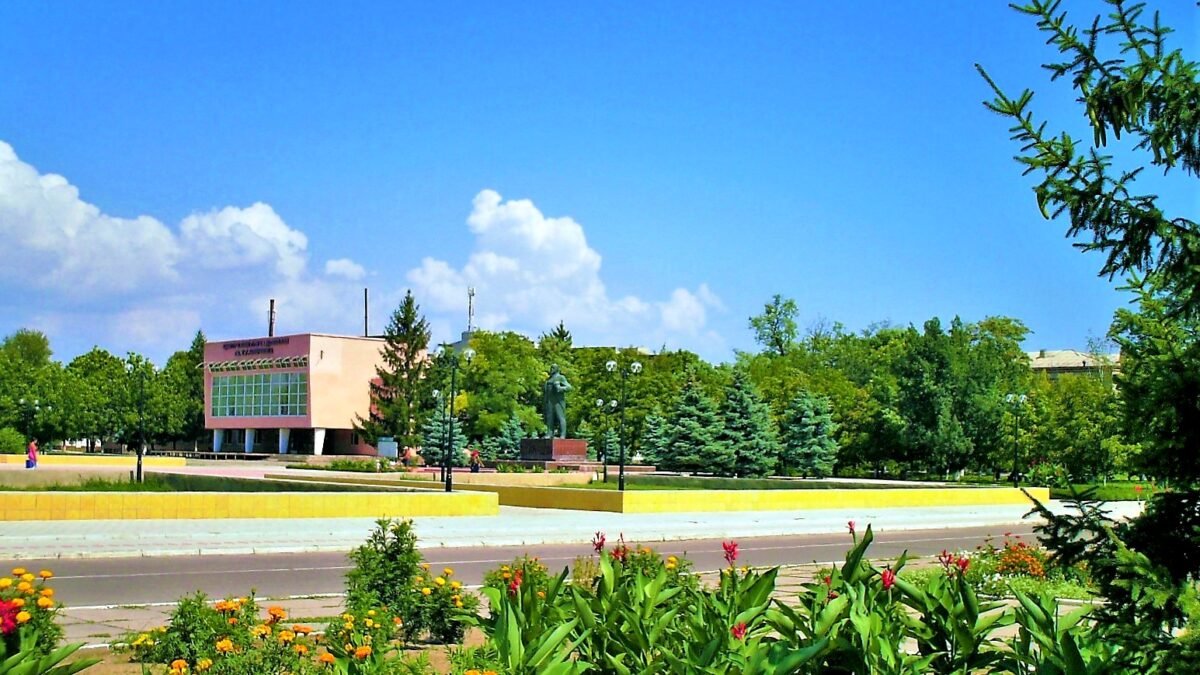
Oleshky sits on the left, eastern bank of the Dnipro in the Kherson region, across the water from the city of Kherson, held by Ukrainian forces. Russian troops seized Oleshky in the first days of the full-scale invasion in February 2022 and have controlled it ever since. Before the war, about 24,000 people lived there. Today the estimates vary, and I will not pretend to a precision the fog of war does not allow: the White House put the remaining population at roughly 1,700 to 2,000, and the United Nations has said up to 2,000 remain. What every serious account agrees on is who remains. They are, overwhelmingly, elderly people. The White House said about 50 children were among them; the head of the United Nations Human Rights Monitoring Mission in Ukraine, Danielle Bell, was reported as putting the number of children at 47 among some 1,700 residents. Old age and childhood — the two ages that cannot run, cannot hide quickly, and cannot survive long without medicine, food and clean water.
For months those people have lived in what Ukrainian officials have called a humanitarian blockade. Roads were mined. Drone attacks made movement lethal. According to the United Nations, residents could not leave because of explosive mines and drone attacks. Food and medicine grew scarce; electricity and running water failed. Then, in June 2023, the destruction of the nearby Kakhovka Dam sent floodwater across the region; the White House said about 90 per cent of Oleshky was flooded. Picture one house: an old woman, alone, with tablets counted like treasure, a kettle that cannot be filled, and a road outside that may kill her if she steps on the wrong patch of earth. That is not a metaphor. That is Oleshky.
The Truce That Arrived Two Days Early
On Friday, 23 October, the White House announced that a localised ceasefire had been secured for Oleshky. First Lady Melania Trump was identified as the central intermediary — in the White House’s words, acting as the exclusive intermediary — who, with her representative, had worked directly with Russian and Ukrainian leaders to define the terms. Both countries, the White House said, had agreed to temporarily suspend military action in Oleshky so that aid could enter and civilians could be evacuated through a designated safe passageway.
The first date given was Thursday, 29 October. The guns stopped earlier. At 3 a.m. Kyiv time — 4 a.m. Moscow time — on Tuesday, 27 October, both sides confirmed the pause had begun, two days ahead of schedule. Melania Trump announced that the timing had been accelerated to protect civilians and speed aid, and that the area had been expanded beyond Oleshky into surrounding parts of the Kherson region to give safe passage to convoys. Russia’s Defence Ministry confirmed a “regime of silence” in the Kherson sector. Ukraine’s human rights commissioner, Dmytro Lubinets, who led Ukraine’s team alongside Russia’s human rights commissioner, Yana Lantratova, confirmed Kyiv was honouring its commitments.
Do not miss the modesty of the language. A “regime of silence.” Not peace. Not victory. Silence. And yet, in Oleshky, silence is a revolution. Silence means a convoy can move, a demining team can clear a road, a doctor can knock on a door. The plan, as described by the White House, was staged: halt the fighting, clear access routes, deliver supplies, then evacuate. Civilian representatives would visit residents at home to assess needs, and those who wished to leave would be taken to their preferred destination — some, the First Lady said, might wish to go to Russia, others to Ukraine. The mission was expected to begin on 29 October, with the ceasefire reported to last through Saturday, and one senior Ukrainian official putting its expiry at 1 November. I do not know, writing on 28 October, whether every convoy will get through. A window was opened. Windows of this kind stay open only if both sides keep choosing, hour by hour, not to fire.
While One Town Paused, Kyiv Was Struck
Here is the fact that must not be softened. While the ceasefire took effect around Oleshky, the wider war did not stop. The Associated Press reported that minutes after 3 a.m., ballistic missile explosions shook Kyiv and air alerts sounded across parts of the country. Late on Monday, Russian ballistic missiles had damaged the grounds of a university in Kyiv, killing one person and leaving 10 injured, according to city officials; in Kharkiv, attacks late on Monday killed two people and injured four. President Volodymyr Zelenskyy said the attacks had hit civilian infrastructure and demonstrated, in his words, Russia’s desire to continue the war.
A column that only celebrates the pause would be a lie. The ceasefire is local. The suffering is not. And yet the very narrowness of the truce is what makes it morally enormous. It was not negotiated as a grand settlement. It was negotiated as a corridor — a small thing on a map, a line, a road, a few kilometres of agreed silence. But to the person walking that road, a corridor is the whole world. Grand strategies are argued in capitals. Corridors are walked by feet.
1914: When Soldiers Remembered They Were Men
History, as I have always argued in these columns, is a mirror. Hold Oleshky up to that mirror, and another winter rises: Christmas 1914. Late on Christmas Eve 1914, men of the British Expeditionary Force heard German troops in the trenches opposite them singing carols. They saw lanterns and small fir trees along the enemy trenches. The following day, British and German soldiers met in No Man’s Land. They exchanged gifts, took photographs, played impromptu games of football, buried their dead, and repaired trenches. The Imperial War Museum records that the truce was not observed everywhere — elsewhere fighting continued, and casualties occurred even on Christmas Day — and that after Boxing Day the meetings dwindled. The high commands then tried to prevent any truce on a similar scale from happening again.
Pope Benedict XV had pleaded for a Christmas truce that year. The generals ignored him. The soldiers, in many sectors, did not. The order to stop killing did not come down from headquarters. It came sideways, from one cold, frightened young man to another, across thirty yards of frozen mud: tomorrow, you do not shoot, and we do not shoot.
Now look at Oleshky, 112 years later, and notice the echo. Pope Leo XIV, too, pressed for a pause. According to the Holy See Press Office, he spoke to President Vladimir Putin and expressed deep concern about the grave humanitarian situation in Oleshky, calling for a ceasefire to allow food and medical assistance and the voluntary and safe evacuation of civilians; he also spoke with President Volodymyr Zelenskyy. The architecture is different, but the moral shape is the same. Someone with authority had to say, first, that the old and the sick matter more, for a few days, than the next advance.
There is a harder echo. The Christmas Truce did not end the First World War. Within days, the war recommenced. A truce is not peace. It is a question put to the future: having remembered, for a day, that the enemy is human, can you forget it again quite so easily? In 1914, the answer, tragically, was yes. Oleshky asks us the same question, and we do not yet know our answer. Will this corridor be remembered as the first corridor, or as the only one? History does not answer. Men answer. Indifference is also an answer.
What the Law Says — and What It Cannot Do Alone
Law is the memory of civilisation written down so that we do not have to reinvent mercy in every war. The International Committee of the Red Cross explains that the Fourth Geneva Convention, adopted in 1949 after the Second World War, established legal protections for civilians — anyone not belonging to armed forces or armed groups — and that civilians under the power of enemy forces must be treated humanely in all circumstances, without discrimination, and protected against all forms of violence and degrading treatment. The protection extends to those trying to help civilians: medical personnel and humanitarian organisations providing food, clothing and medical supplies, whose access the warring parties must give. Women and children, the elderly and the sick are singled out as highly vulnerable. Forced displacement by intimidation, violence or starvation is prohibited.
The elderly and the sick are not an afterthought in the law of war. They are named. Oleshky’s remaining population is the very population the law was written to shield. A humanitarian corridor is not a favour granted by the generous. It is the practical expression of an obligation: let relief through; let the vulnerable move; do not use hunger as a weapon. But law cannot walk a road by itself. The ICRC describes corridors as agreements between the parties to a conflict to allow safe passage for a limited time in a specific area. No outside body can declare a corridor into existence and expect it to hold. Every party with a weapon along the route must agree not to use it. That is the fragility at the heart of Oleshky: the corridor exists only as long as good faith exists, and good faith, in war, is the scarcest currency of all. The law gives Oleshky a right. Only sustained political will gives it a road.
The Question Oleshky Puts to Every Capital
To the capitals that claim to speak for civilisation: do not applaud Oleshky and then look away. A pause that is applauded and abandoned becomes a precedent for abandonment. If this corridor works — if food arrives, if the sick are carried out, if families choose their destinations freely and are seen to choose them — then the same method must be demanded, immediately, for the next town, and the next. If it fails, do not file its failure away as inevitable. Ask, in public, who fired, who blocked, who mined the road after promising silence. Corridors fail in darkness. They succeed in daylight.
To those who say humanitarian pauses only help the enemy regroup: an old woman’s medicine does not regroup an army. A child’s evacuation does not redraw a border. A doctor’s visit does not decide sovereignty. What a pause does decide is whether, when this war is finally written, the victors — whoever they are — will be able to say they did not let children starve while they argued about maps. And to you, my reader: do not let Oleshky become a headline you scrolled past. The people of Oleshky cannot lobby, cannot march, cannot trend. They can only wait for the silence to hold until the trucks come. Your attention, sustained past the first day, is part of the pressure that keeps silence from becoming a rumour. Geopolitics is never only about capitals and summits. It is about whether a grandmother in a town you have never visited gets her medicine on Thursday. If our politics cannot answer that question, it has failed at its first task.
Silence Is Not Peace — But It Is a Beginning
At 3 a.m. on 27 October, in one town, the guns stopped. In Kyiv, they did not. The war went on. And yet, for the people of Oleshky, those first hours of silence were not nothing. They were the sound of a road being cleared, of a door being knocked on, not kicked in, of a possibility: that enemies who have spent more than four and a half years trying to destroy each other can still agree, for a few days, to let life pass through.
The Christmas Truce ended, and the war returned, more terrible than before. That is the warning history hands us. But history hands us something else, too: the memory that ordinary soldiers, given half a chance, chose carols over cannon fire, and that their choice is still remembered, more than a century later, when the names of a hundred generals have been forgotten. What is remembered is not the order to kill. What is remembered is the refusal, however brief, to kill.
Oleshky’s refusal is brief by design. It runs, on present reporting, through Saturday, perhaps to 1 November. If we treat a few days of mercy as a curiosity, it will pass like a curiosity. If we treat it as a standard — the minimum civilisation demands, and the first step toward the maximum peace requires — then Oleshky will have proved that even in the hardest war, humanity can still negotiate a road. May the trucks get through. May the mines be lifted. May the old walk out holding a grandchild’s hand, and may they choose, freely, where home will be next. And may the silence that began at 3 a.m. in Oleshky not be the last silence this war ever hears, but the first of many — until, one day, silence is no longer a pause in the fighting, but the fighting’s end.
Sources & References
Reuters — “Melania Trump secures Oleshky ceasefire between Russia, Ukraine, White House says,” 23 October 2026.
USA Today — “Melania Trump announces humanitarian pause for war-torn Ukrainian city,” 23 October 2026.
Associated Press, via WKYU-FM — “Local ceasefire brokered by Melania Trump starts in southern Ukraine,” 27 October 2026.
Al Jazeera, via Europe Says — “Russia halts strikes on Ukraine’s Kherson as Oleshky ceasefire takes effect,” 27 October 2026.
Le Monde — “In the occupied city of Oleshky, Ukrainians are surviving under ‘desperate conditions’,” 10 October 2026.
People — “White House Says Melania Trump Forged Localized Ceasefire in Russia-Ukraine War,” 23 October 2026.
Imperial War Museum — “The Real Story of the Christmas Truce of 1914.”
International Committee of the Red Cross — “Protected persons: Civilians.”
Wikipedia, “Blockade of Oleshky” — background and chronology used only for context and cross-checking; factual claims rest on the primary reporting above.

About the Author — Abdul Mannan
Related Articles
Oleshky Ceasefire Takes Effect as Aid and Evacuation Open for Trapped Town
Russia and Ukraine confirmed a localised ceasefire in Oleshky on Tuesday, opening a window for aid deliveries and…
Xi Opens China’s Fifth Plenum With Discipline Drive Aimed at Securing His Fourth Term
China's Communist Party has opened its fifth plenum in Beijing, a four-day closed-door session on party discipline that…
Student List Wins Serbia Election as Vučić Concedes, Ending 14 Years of SNS Rule
Serbia's student-led opposition has won a snap parliamentary election after President Aleksandar Vučić conceded defeat, ending 14 years…