
Netanyahu Leads Partial Israel Count but Neither Bloc Reaches a Majority as Deadlock Deepens

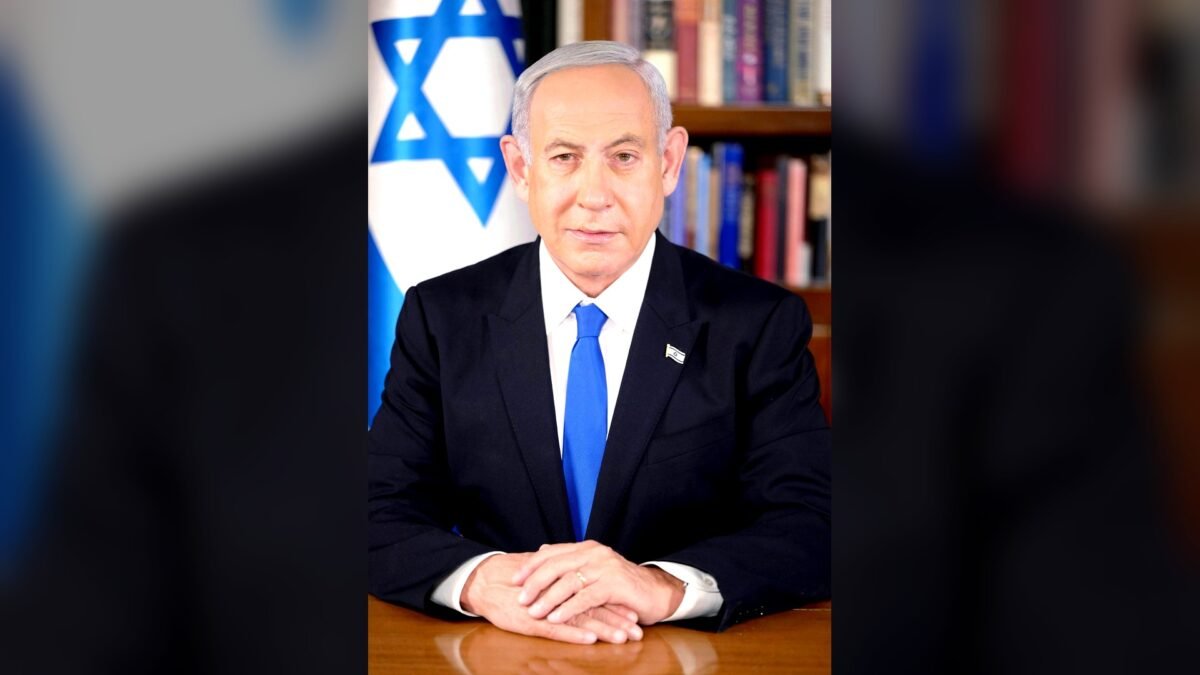
Israel’s election has produced a lead, but not a government. With more than three quarters of ballot boxes counted on Wednesday morning, Prime Minister Benjamin Netanyahu’s bloc stood ahead of the opposition led by former military chief Gadi Eisenkot, yet neither side was close to the 61 seats needed for a majority in the 120-seat Knesset, according to partial results published by the Central Elections Committee and reported by The Times of Israel.
The snapshot, taken with 76.8 per cent of ballot boxes processed shortly before 11 a.m. local time, put Mr Netanyahu’s bloc on 54 seats, Mr Eisenkot’s bloc on 47 seats and the two Arab-led lists on a combined 19 seats, according to the same reporting. Reuters, working from an earlier stage of the count at 70.7 per cent of votes tallied, reported the identical 54–47–19 forecast. The agreement between those two snapshots on the headline numbers matters, because the count was still moving. Earlier exit polls had told a different story, and the votes still to be counted — including more than half a million double-envelope ballots cast by soldiers, hospital patients and others voting away from their home polling stations — could still move a seat or two in either direction.
That distinction, between a lead and a mandate, is the whole story of this election so far. Likud, Mr Netanyahu’s party, remained the largest single party, on 27 to 28 seats in the partial results reported by The Times of Israel and The Jerusalem Post, ahead of Mr Eisenkot’s Yashar party on 20 to 21 seats. But in Israel’s proportional system, the largest party does not govern on its own. A prime minister must assemble a coalition that can command the Knesset, and on the numbers available on Wednesday morning, no ready-made coalition reached that line.
The election, held on Tuesday 27 October, was the first national vote since the Hamas-led attack of 7 October 2023 and the war in Gaza that followed. Turnout reflected the stakes voters attached to it. Final turnout reached 77.7 per cent, the highest since 1999 and 7.1 percentage points above the 2022 election, according to figures reported by NBC News and The Jerusalem Post from the Central Elections Committee. About 7.33 million citizens were eligible to vote, and nearly 5.7 million cast ballots, according to the same reporting. Arab voter turnout was also reported to have risen sharply, with Channel 12 putting it at around 80 per cent.
Both leaders addressed supporters in the early hours of Wednesday, and both spoke as though the night had vindicated them. Neither claimed outright victory, and the arithmetic explained why. Mr Netanyahu, speaking to Likud supporters at the party’s election headquarters in Jerusalem after 3 a.m., called for the formation of “a strong, right-wing national government”, according to Reuters. Mr Eisenkot told his supporters: “We made history! The public has voted for change,” according to NPR’s reporting from Tel Aviv. Each man was describing a different part of the same result: Mr Netanyahu’s bloc had recovered from the exit polls to lead the count, while the opposition as a whole, including the Arab-led parties, had taken more votes than his bloc.
The count, the exit polls and why they differed
The gap between the exit polls and the partial count is itself part of the political argument now unfolding. Exit polls broadcast when voting ended on Tuesday evening had the two main blocs effectively tied. Kan 11 and Channel 13 put both blocs on 51 seats, while Channel 12 gave Mr Netanyahu’s bloc a narrow 52–49 edge, according to Reuters. Those polls also put the Arab-led parties on 17 to 18 seats.
As real ballots were counted, Mr Netanyahu’s bloc moved ahead, reaching 54 seats in the snapshots reported on Wednesday morning, while the Arab-led lists rose to 18 or 19 seats. That movement is not, on its own, evidence of anything improper. Exit polls interview voters leaving polling stations and can miss voters who cast ballots in particular places or at particular times, and Israeli exit polls have in past elections underestimated Likud. The double-envelope ballots, which are counted later and have historically favoured Mr Netanyahu’s camp, had not yet been fully included in the Wednesday morning snapshots. Reports put the final count at around 30 October, with official results due by 4 November, and the count of double-envelope ballots was reported to run from around midnight on Wednesday into Thursday evening.
Readers should therefore treat every seat figure in this article as a dated snapshot of a partial count, not as a final result. The responsible way to describe Wednesday’s position is this: with roughly three quarters of the regular ballot boxes counted, Mr Netanyahu’s bloc led, Mr Eisenkot’s bloc trailed by about seven seats, the Arab-led parties held the balance in purely numerical terms, and nobody held a majority. Any claim stronger than that would run ahead of the evidence.
The smaller-party picture reinforces the sense of a fragmented Knesset. Far-right religious parties led by Itamar Ben-Gvir and Bezalel Smotrich were projected to take a combined 13 seats within Mr Netanyahu’s bloc, with no major gains for either, according to Reuters. Two smaller parties, Yoaz Hendel’s Reservists party, on 2.6 per cent, and Ofer Winter’s People of Israel party, on 1.7 per cent, were below the 3.25 per cent electoral threshold in the partial results reported by The Times of Israel and The Jerusalem Post, and therefore on course to win no seats. In a system where a single seat can decide whether a coalition is possible, parties falling below the threshold still matter: their votes do not translate into seats, and the seats they might have won are redistributed among the parties that clear the line.
Two rival claims, one caretaker prime minister
Mr Netanyahu’s overnight speech looked beyond the coalition arithmetic to the region. He highlighted Israel’s military successes and raised the prospect of renewed joint action against Iran alongside the United States, according to Reuters. “Israel faces a singular historical opportunity, together with our partner President Trump, to remove the existential threat of Iran once and for all. But ulterior motives must not divert us from this sacred mission,” he said, as reported by Reuters. The language was a reminder that, for Mr Netanyahu, this election was never only about who forms the next government in Jerusalem. It was also about who speaks for Israel in the weeks when decisions about Iran may be taken in Washington.
Mr Eisenkot answered with a different framing. He acknowledged that Mr Netanyahu remained in office as caretaker prime minister, but said the prime minister had lost public support and urged him to retire from politics, according to Reuters. He also warned that Mr Netanyahu might use security for political ends, and called on the security establishment to stand firm against any attempt to put political interests ahead of Israel’s security, according to reporting by the Associated Press. In NPR’s account, Mr Eisenkot, a centre-right former chief of staff who has promised more diplomacy and less extremism, told supporters that the public had voted for change, while NPR noted that the large turnout indicated Israelis had turned out in their numbers to express dissatisfaction with the government.
President Donald Trump, who endorsed Mr Netanyahu during the campaign, was asked about the election after a campaign trip to Texas and said he had heard Mr Netanyahu did pretty well. “You know, it’s pretty close … I think when the endorsement went out, it helped him a lot, but I actually heard he did pretty well,” Mr Trump said, according to the Associated Press. “It might be winning or tie. The tie is sort of considered a win in that case because it’s a big chess match.” The remark captured, perhaps unintentionally, the strategic value of a deadlock to an incumbent: a tie in a system that leaves the incumbent in place is not the same as a tie in a system that clears the field.
That is the immediate constitutional reality. Until a new government is formed and wins a confidence vote, Mr Netanyahu remains prime minister in a caretaker capacity. He has served as prime minister for nearly 19 of the past 30 years, according to the Associated Press, and at 77 he is fighting to extend a political career that began in the 1990s. At the height of his current coalition’s strength, his bloc held 68 seats. The partial count put it at 54. That is a substantial loss of parliamentary strength even if it proves enough, with manoeuvring, to keep him in office.
The Arab parties and the arithmetic nobody wants to use
The most striking feature of the night, beyond the deadlock itself, was the performance of the Arab-led parties. The two lists — the socially conservative United Arab List, known as Ra’am, and the left-wing Joint List — were forecast to win a combined 18 to 19 seats, their strongest showing in years, according to the partial results reported by The Times of Israel and Reuters. Arab citizens make up about 20 per cent of Israel’s population, according to NPR, and the high turnout among Arab voters helped drive the overall turnout to its highest level in a generation.
In purely numerical terms, either main bloc could reach a majority with Arab support. The opposition bloc and the Arab-led lists together held more seats than Mr Netanyahu’s bloc, and Democrats leader Yair Golan wrote that “Netanyahu lost” when the opposition and Arab-led lists were counted together, according to The Times of Israel. But politics is not pure arithmetic, and both main blocs have, in this campaign, ruled out forming a government that depends on Arab parties. Mr Netanyahu has gone further, telling The Times’ live coverage that such a coalition would “endanger Israel”. Mr Eisenkot has all but ruled out forming a government with the Arab-led parties as well, according to Reuters, a position that complicates his own path to power even as it reflects the political constraints he campaigned under.
The result is a paradox that will dominate the coming weeks. The parties holding the balance of power are the parties both leading candidates have said they will not govern with. That does not make Arab support irrelevant. A minority government can take office in Israel if abstentions leave it with more votes in favour than against in a confidence vote, and parties outside a coalition can still shape its survival vote by vote. But a stable majority built openly on Arab participation, of the kind Ra’am provided in the governing coalition formed in 2021, looks politically remote on the basis of the campaign positions taken by both camps. Whether those positions survive contact with the arithmetic is one of the first questions the coalition negotiations will answer.
France’s response illustrated how quickly the outside world was adjusting to a prolonged process rather than a decisive outcome. Foreign Minister Jean-Noel Barrot said France would continue to push for a two-state solution regardless of whether a coalition led by Mr Netanyahu or Mr Eisenkot claimed victory, according to The Times’ live coverage. “Our course will not change,” he told France 2 television, adding: “What we want is security for Israel, but also the prospect of two states living side-by-side, recognised, respected in their rights, and at peace.” France and Israel have had a strained relationship since President Emmanuel Macron recognised a Palestinian state a year ago, and Mr Barrot’s remarks suggested Paris expected continuity in that tension, whichever government eventually emerges.
What happens next in Jerusalem
The formal process now moves to President Isaac Herzog. Within seven days of the announcement of the election results, the president consults with all of the elected Knesset parties and assigns the task of forming a government to the member of the Knesset who, in the president’s view, has the best chance of doing so, according to the Association for Civil Rights in Israel. That person is usually, but not always, the leader of the largest party. The chosen candidate then has 28 days to form a government, and the president may extend that period by up to 14 additional days.
If the first candidate cannot form a government, the president must decide within three days whether to assign the task to another member of the Knesset, who would then have 28 days with no possibility of an extension, according to the same guidance. If that attempt also fails, a majority of Knesset members may ask the president to assign the task to a member who has agreed to take it on, with 14 days to try. If every route fails, new elections are held within 90 days. The outgoing government remains in office until a successor takes over, which is why Mr Netanyahu’s caretaker position could last for weeks or, in the extreme case, until another election in 2027, as Reuters noted in its analysis of the vote.
Israel has been here before. Between 2019 and 2020 the country held three consecutive elections amid legislative gridlock, followed by a short-lived power-sharing agreement that collapsed over budgetary disputes. The memory of that period will weigh on negotiators, because it shows both that deadlock can persist and that the political system eventually finds a way through it, even if the way through is another election. The difference this time is the regional context. Coalition talks will run alongside, and may be overtaken by, decisions about Iran, Gaza and the United States timetable.
The Iran question hanging over the count
The election took place against a fast-moving regional backdrop, and the count’s first full day coincided with a major report about American planning. The Wall Street Journal reported on Tuesday that the United States had told several Gulf Arab countries to be prepared for a short, intense military campaign against Iran after the American midterm elections on 3 November, citing people briefed on the conversations. The messages were conveyed through diplomatic and military channels, according to the Journal, and were described as among a growing number of indications that the United States and Israel were readying a new round of heavy combat operations against Iran, with the stated aim of degrading Tehran’s strength and pushing it towards negotiations.
It is important to be precise about the status of that report. It rests on the Journal’s sourcing, and no American, Israeli, Gulf or Iranian official had commented on the record about the reported plans at the time of writing. The White House declined to comment on “sensitive military plans that may or may not exist” and said President Trump kept all options on the table to ensure Iran could never have a nuclear weapon, according to reporting that summarised the Journal’s account. The report should therefore be read as a report of warnings said to have been given, not as confirmation that a decision to strike has been taken. The Journal itself reported that Mr Trump had not decided to go ahead but was leaning towards a large post-election attack that could target Iranian infrastructure and nuclear sites, citing people familiar with his thinking, and that diplomatic efforts by regional mediators continued but had yet to bear fruit.
The Journal also reported a series of military movements said to accompany the warnings: an additional Patriot missile-defence system being sent to Israel from Texas, according to flight-tracking data and two officials with knowledge of the movement; troops moved off bases in the Middle East where they were considered vulnerable; American forces restocking munitions, with bomber aircraft and jet fighters preparing for strikes; and an additional aircraft-carrier strike group and Marine expeditionary unit poised to join an armada of roughly 20 other warships operating in the Middle East next month, although some ships could rotate out. The war, in its eighth month, was estimated to have cost 47.1 billion dollars as of mid-October, according to estimates shared with lawmakers and reported by the Journal, with about 60 per cent of that figure — 29 billion dollars — attributed to munitions such as Tomahawk and Patriot missiles.
Markets reacted to the report before any official confirmation. Brent crude was trading at 115 dollars a barrel at 1100 GMT on Wednesday, up 1 per cent, according to Reuters, while the Journal’s markets coverage put West Texas Intermediate up 1.8 per cent at 101.73 dollars a barrel. TradingView’s news coverage, reporting the Journal’s account, also noted a claim by Yemen’s Houthi militants that they had targeted Saudi Arabia’s Ras Tanura refinery with a ballistic missile, while noting that Saudi authorities had not confirmed the claimed strike or any damage. That claim remains unverified and should not be treated as established fact, but its circulation alongside the Journal report helped explain why oil traders were pricing in a higher risk premium.
The diplomatic backdrop added to the uncertainty. The director general of the International Atomic Energy Agency, Rafael Grossi, told a United Nations Security Council meeting that there had been no indication Iran had tried to repair or reconstruct nuclear facilities damaged in American and Israeli strikes, and urged Iran to give inspectors access to all nuclear sites, according to reporting by the Associated Press. The agency has not been able to verify the status of Iran’s stockpile of near weapons-grade uranium since the United States bombed its sites last year, according to the same reporting. Regional mediation has continued in parallel: officials from Saudi Arabia, Pakistan and Turkey met Iranian counterparts in Tehran earlier in the week in an effort to halt a slide back to war, a meeting covered in this site’s earlier reporting. None of those threads, on its own, determines what happens after 3 November. Together, they describe a region in which military preparation, diplomatic effort and political uncertainty in Jerusalem are all proceeding at the same time.
Analysis: a verdict without a winner
1. The voters delivered a judgement, not a government
The most useful way to read this result is to separate two questions that are often confused. The first is whether voters wanted change. On the evidence of turnout and of the combined opposition and Arab vote, a large part of the electorate voted against the continuation of Mr Netanyahu’s rule. Mr Eisenkot’s claim that “the public has voted for change” has real support in the numbers, and the loss of roughly 14 seats from the high point of Mr Netanyahu’s bloc is a material political fact. The second question is whether that desire for change can be converted into a governing majority. On the numbers available on Wednesday, it cannot, at least not without breaking one of the campaign’s central taboos. That gap — between a judgement and a government — is where Israeli politics will now live for weeks.
This is not a failure of the electoral system in any narrow sense. Proportional representation is designed to prevent a minority from governing unchecked, and it does that job by forcing negotiation. But the system assumes that negotiation is possible, and this campaign narrowed the space for it. Both leading camps ruled out the partners whose seats would make a majority straightforward. When every route to 61 requires either a partner a leader has rejected or a rival a leader has ruled out serving under, the system produces delay by design. Delay, in this case, is not neutral. It leaves a caretaker government in charge of security decisions during a period when the regional timetable is set elsewhere, in Washington and Tehran.
2. The Arab parties paradox will not resolve itself
The rise of the Arab-led parties to 18 or 19 seats is the single most consequential structural change in this election, and it is also the change both main camps are least prepared to use. High Arab turnout, reported at around 80 per cent by Channel 12, suggests that Palestinian citizens of Israel voted in large numbers precisely because they understood the stakes. Their reward, in parliamentary terms, is real leverage. Their reward, in political terms, is less clear, because the leaders who need their seats have campaigned on not needing them.
There are three ways this paradox could break. The first is a formal change of position: one camp accepts Arab support, openly or through abstention, and pays the political price with its own base. The second is an informal arrangement: Arab parties abstain or support a minority government from outside, without joining it, allowing a government to take office without a formal coalition. The third is that neither happens, and the deadlock leads to another election, in which Arab voters would be asked, again, to turn out in record numbers for a result that the system then refuses to use. Each path carries a cost, and the cost of the third — cynicism about whether voting changes anything — may be the highest in the long run, even if it is the easiest to reach in the short run. The analysis that treats Arab seats as a mathematical curiosity, rather than as the expressed will of a fifth of the population, will miss the central democratic question of this election.
3. Caretaker power is power, and it favours the incumbent
It is tempting to describe Mr Netanyahu, after losing his majority, as weakened. In parliamentary terms he is. In practical terms, for the next few weeks, he remains the prime minister, with the authority that office carries, while his rivals negotiate from outside government. Reuters made the point explicitly: the deadlock could work in Mr Netanyahu’s favour, leaving him in office as caretaker during prolonged negotiations or even until another election. That is not a technicality. A caretaker prime minister still receives intelligence briefings, still speaks for the state internationally, and still sits at the centre of any security decision that cannot wait for a new government.
Mr Eisenkot’s warning that Mr Netanyahu might use security for political ends should be read in that light. It is a political charge, made by a rival, and it should not be treated as established fact. But it identifies a real structural risk: when the timetable for a possible regional escalation is measured in days and weeks, and the timetable for forming a government is measured in weeks and months, the incumbent’s advantage grows. The longer the coalition talks take, the more decisions will be taken by the government voters have just declined to re-endorse with a majority. That tension, between democratic legitimacy and governmental continuity, is inherent in caretaker arrangements. It becomes acute when the decisions at stake involve war.
4. The Iran clock does not wait for coalition talks
The Wall Street Journal’s report, if accurate, sets a clock that runs independently of Jerusalem’s coalition negotiations. The American midterm elections fall on 3 November, official Israeli results are due on 4 November, and the Journal reported that Mr Trump was leaning towards a large post-election attack. Whether or not that report proves accurate in its details, the sequence it describes is plausible enough to move oil prices and to focus minds in Gulf capitals. Gulf states, which would bear the first consequences of any Iranian retaliation, were reportedly warned through diplomatic and military channels. Their position — exposed, anxious, and without a vote in either the American or the Israeli election — is the sharpest reminder that the consequences of these decisions will fall on people who did not make them.
The difference between the two Israeli leaders on Iran is real but narrower than the campaign rhetoric sometimes suggested. Mr Netanyahu has spoken of removing the Iranian threat “once and for all”, together with President Trump, and has long treated regime change as a legitimate objective. Mr Eisenkot, by contrast, has said he would pursue the destruction of Iran’s nuclear and missile programmes and its regional proxies, but has rejected making regime change itself the stated objective of military action, according to reporting of his campaign positions. He has also favoured a lasting, verifiable resolution of the nuclear threat, with American-enforced restrictions and covert action against missile capabilities if diplomacy fails. On Gaza, the difference is sharper in presentation: Mr Eisenkot pledged to end Hamas rule within 18 months, either through Mr Trump’s ceasefire framework or through military operations, and accused Mr Netanyahu of strategic failure after three years of war. But on the core question — whether Iran’s nuclear and missile capabilities must be confronted by force if diplomacy fails — the two men are closer than their supporters admit. The election will therefore shape how, and with what political backing, Israel approaches the Iran question, more than whether it approaches it at all.
That convergence matters for the Gulf states and for the wider region. If the next Israeli government, whatever its composition, supports a post-election campaign, Washington will be able to present it as an allied consensus. If the next government is divided, or if a caretaker government takes decisions that a future coalition would not endorse, the legitimacy of those decisions will be contested from the start. The Journal’s report, the IAEA’s warnings about unverified stockpiles, and the continued mediation efforts all point in the same direction: the period between the American midterms and the formation of an Israeli government is a window of maximum uncertainty, and windows of that kind are when miscalculation is most likely.
5. Turnout was the message, and it cuts both ways
A turnout of 77.7 per cent, the highest since 1999, is a democratic achievement in any circumstances, and it is a particular achievement after three years of war and political division. It suggests that Israeli voters, including Arab voters, still believe that voting can change the direction of the country. The danger is that a prolonged deadlock, followed by another election, will be read as proof that it cannot. Political systems can survive one inconclusive election. They struggle to survive a pattern in which high participation repeatedly produces no government, because participation without outcome breeds the cynicism that turnout, this time, seemed to overcome.
The counter-argument is that turnout itself is a form of mandate, even without a majority. The voters who turned out in record numbers, on all sides, sent a clear signal that the status quo — a government without a majority, a war without a settled end, a society divided over accountability for 7 October — is not acceptable. Coalition negotiators who treat the result as a mere puzzle to be solved by clever arithmetic, without addressing the underlying questions of accountability, the future of Gaza, the ultra-Orthodox draft and the cost of living, will miss the substance of what voters actually said. Mr Eisenkot’s campaign centred on accountability for 7 October, including a state commission of inquiry, and on reforming military service and easing the cost of living. Mr Netanyahu’s campaign centred on security achievements and on finishing the confrontation with Iran. Neither agenda commands a majority on its own. Both will have to be negotiated, and the negotiation will be the real election, conducted not at the ballot box but in the rooms where coalitions are built.
Why It Matters
This election matters beyond Israel for three reasons. First, it determines who leads Israel at a moment when the United States may be about to decide on a new round of strikes against Iran. A government with a clear majority can make, and be held accountable for, that decision. A caretaker government, or a fragile coalition built on contradictory promises, cannot provide the same clarity, and ambiguity in such circumstances is itself a risk. Second, it tests whether a deeply divided democracy can translate record participation into stable government. If it can, the lesson will travel. If it cannot, the lesson will travel too, and it will be a discouraging one for democracies facing their own polarisation. Third, it will shape the future of Gaza and of the Palestinian question. Mr Eisenkot has opposed a Palestinian state and formal annexation of the West Bank, while opposing construction in the E1 area and pledging to crack down on settler violence. Mr Netanyahu’s bloc includes parties that favour a harder line. The coalition that eventually forms, if one forms, will have to choose between those positions, and the choice will affect millions of people who did not vote in this election at all.
For readers in Pakistan and across the region, the stakes are not abstract. A new round of strikes against Iran would affect oil prices, shipping through the Strait of Hormuz, and the security calculations of every state in the Gulf and beyond. The Brent crude price of 115 dollars a barrel on Wednesday, up 1 per cent on the day, is an early, market-based measure of that exposure. The diplomatic efforts by Saudi Arabia, Pakistan and Turkey in Tehran earlier in the week show that regional states understand the risk and are trying, however uncertainly, to reduce it. Their efforts will be harder if Israel’s political leadership is in flux, and easier if a government with a clear mandate emerges quickly. That is why the coalition talks in Jerusalem, which might otherwise seem like a purely domestic affair, deserve the close attention of the whole region.
What to Watch Next
- The double-envelope count: More than half a million double-envelope ballots remain to be counted, with the count expected to run into Thursday evening and a nearly final result expected around 30 October. Watch whether those ballots move any party across the threshold or shift a seat between blocs, and whether the 54–47–19 snapshot holds.
- President Herzog’s consultations: Once official results are published, due by 4 November, the president will consult party leaders and assign the task of forming a government. Watch who he chooses, and whether he picks the leader of the largest party or the leader judged most likely to assemble a majority.
- The Arab parties’ position: Watch whether Ra’am and the Joint List maintain their refusal to be counted as automatic partners for either bloc, and whether either main camp softens its position on governing with Arab support, formally or through abstention.
- The American timetable: The midterm elections on 3 November are the hinge of the Wall Street Journal’s report. Watch for any official American statement, any further troop or naval movements, and any change in oil prices that would suggest markets believe a decision has been taken.
- Iran’s response and the IAEA: Watch whether Iran gives inspectors the access Mr Grossi has requested, whether regional mediation produces any verifiable progress, and whether any claimed strike or retaliation is confirmed by an official source rather than circulating as an unverified claim.
This article is based on partial results reported on 28 October 2026. Seat figures are provisional snapshots from an incomplete count and may change as counting continues. The Wall Street Journal’s account of warnings to Gulf states is attributed to that newspaper’s sourcing and had not been confirmed on the record by officials at the time of writing.
Sources
- Reuters — Netanyahu, Eisenkot stake rival claims to lead Israel after deadlocked vote
- Reuters Breakingviews — Israel’s vote prolongs Middle East instability
- NPR — Partial results from Israel’s contentious election show no clear winner
- The Times — Israel election results live
- The Wall Street Journal — U.S. Warns Gulf of Possible Short, Intense Renewal of Iran War After Midterms
- Association for Civil Rights in Israel — After the Elections: FAQ (government formation process)

About the Author — Abdul Mannan
Related Articles

At Least 30 Killed as High-Speed Trains Collide Near Toledo in Spain’s Second Rail Disaster This Year
At least 30 people were killed and about 80 injured when a Renfe high-speed train struck a stopped…

Oleshky’s Silence: When the Guns Paused, Humanity Spoke — And Why One Small Town Matters
At 3 a.m. on 27 October 2026, the guns fell silent in Oleshky, Ukraine, so food, medicine and…

Oleshky Ceasefire Takes Effect as Aid and Evacuation Open for Trapped Town
Russia and Ukraine confirmed a localised ceasefire in Oleshky on Tuesday, opening a window for aid deliveries and…