
Persecuted and Forgotten? 220 Million Christians and the Silence the World Must Answer

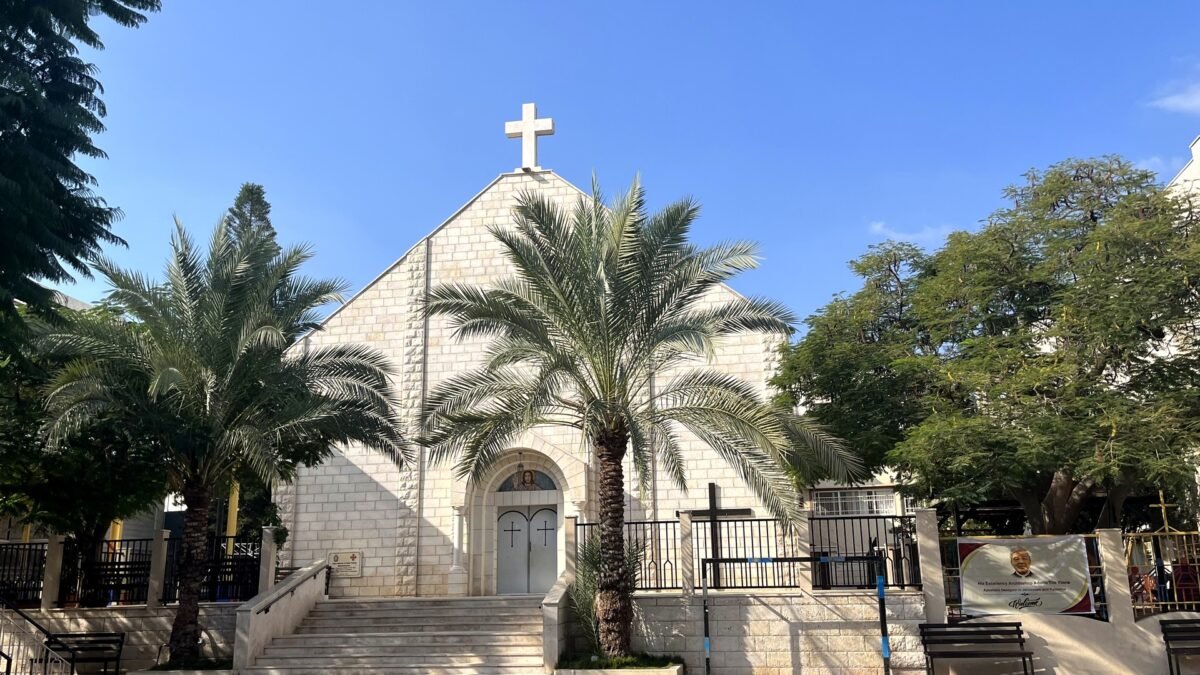
When did we learn to scroll past a burning church?
I ask you this plainly, reader, because the question will not leave me alone. On Tuesday, 27 October 2026, a report was published that should have stopped the world in its tracks. It did not. It arrived, it was noted, and the great machine of our attention moved on to the next quarrel, the next market, the next celebrity. And yet the report said something so large that our language almost fails to carry it: in more than half of the countries it studied, the condition of Christians grew worse. In not one single country did it grow better. Not one.
Read that again, slowly. Aid to the Church in Need, the pontifical foundation that has spent decades standing beside suffering Christian communities, examined eighteen countries where violations of religious freedom are considered particularly grave, covering August 2024 to June 2026. Its report, Persecuted and Forgotten? A Report on Christians Oppressed for Their Faith 2024–26, found that conditions worsened in 55 per cent of those countries. None recorded an overall improvement. Some 413 million Christians live in countries where serious violations of religious freedom occur, and around 220 million Christians worldwide are directly exposed to persecution. Behind those numbers, the report insists, are faces, people, families. I have spent my life believing that history is a mirror, and I tell you now: this mirror is showing us our own face, and we are looking away.
The Old Mirror: Rome Knew This Story First
History does not repeat itself, the old saying goes, but it rhymes — and sometimes the rhyme is so exact that it frightens. When the Emperor Diocletian turned the full machinery of Rome against the Christians in the year 303, his edict ordered churches destroyed, scriptures burned, and believers stripped of rank and right. The empire believed, as every persecuting power has believed since, that faith could be legislated out of existence, that a people could be frightened into forgetting God. Rome discovered what every persecutor discovers: the Church did not die in the fire. It learned to pray in the catacombs, to bury its dead in secret, to keep its memory alive when its buildings were gone. Within a generation, the persecuted faith had outlived the empire that tried to erase it.
I think of that whenever I read of a church burned in our own century, because the pattern is unmistakable. In 1915, as the Ottoman Empire collapsed into war and ruin, Armenian Christians — men, women, children, priests, whole villages — were driven from their homes in marches of death that historians estimate claimed up to a million and a half lives. The world knew. Diplomats wrote reports. Newspapers printed the horror. And the world, busy with its own war, largely moved on. The survivors carried their memory the way the early Christians carried theirs: in whispered names, in photographs kept in drawers, in a refusal to let the dead be forgotten twice — once by the sword, and once by silence.
That is why the title of this new report wounds me so deeply. Persecuted and Forgotten? The question mark is the whole argument. Persecution is terrible. Forgetting is the second death. And forgetting, my friend, is a choice. It is made every day, in every newsroom, in every parliament, in every comfortable living room where a headline about distant suffering is treated as background noise. You and I are making that choice, or refusing it, right now.
Three Storms, One World
The report does not speak in vague generalities. It names three patterns, and I want you to hold all three in your mind at once, because together they explain why this persecution is not a single local tragedy but a condition of our age.
The first pattern is extremist violence, and its epicentre, in the report’s stark phrase, is sub-Saharan Africa. Six of the ten countries most affected by terrorism in the 2026 Global Terrorism Index are in Africa, according to data cited by the report. In northern Mozambique, where an Islamist insurgency has devastated communities in Cabo Delgado since 2017, reports cited by Aid to the Church in Need indicate that around 1,000 Christians have been killed, in attacks that included beheadings, kidnappings, and the destruction of churches and homes. In Burkina Faso and Mali, where Islamist groups control or operate in much of the country, some Christian communities have been forced to abide by Islamic dress and social codes, while others have suffered killings and displacement. The violence, the report warns, is raising a terrible question: whether displacement on this scale will permanently change the religious composition of whole regions. A village emptied of its Christians does not simply lose people. It loses its memory, its songs, its graves. It loses centuries.
The second pattern is authoritarian repression — the state itself turning against belief. In Iran, arrests of Christians nearly doubled in a twelve-month period covered by the report. In Nicaragua, the government’s confrontation with the Catholic Church has continued, with the arrest and exile of clerics, restrictions on ordinations, the seizure of Church institutions, and authorities preventing people carrying Bibles from entering the country. Think about that last detail for a moment. A book, carried in a bag, treated as contraband. There is something profoundly revealing about a regime that fears a book more than an army. It knows what Diocletian learned too late: you can burn the building, but the word travels in a pocket, in a memory, in a whispered prayer at night.
The third pattern is religious nationalism, and it wears a different face in different lands. In India, more than 700 incidents of anti-Christian violence were recorded in 2025, which the report links to a rise in social hostility and the expansion of so-called anti-conversion laws that, according to Christian organisations, are increasingly being used to repress minority communities. In Pakistan, the same logic appears in its most extreme form: the radical Islamist influence that the report identifies, and blasphemy laws under which a Christian can be sentenced to death. Only weeks before this report appeared, Pakistan’s Supreme Court upheld the death sentence of the Christian Qaisar Ayub while acquitting his brother Amoon, after the two men had spent more than a decade in prison. One brother walked free. The other remains condemned. A family cut in half by a single judgment. Hold that image, reader. It is not a statistic. It is a home with one empty chair.
Nigeria: The Name Behind the Numbers
If Africa is the epicentre, then Nigeria is its beating, bleeding heart. The report describes displacement on a scale that numbs the imagination: at least one million Christians in Nigeria are counted among the more than 3.5 million Nigerians internally displaced by conflict. Behind that sentence stands a young man whose name we should learn. Solomon Ako, a 33-year-old Christian from northern Nigeria, was abducted when militants attacked his village. His captors demanded that the hostages convert, and beat them when they refused. “They whipped us with whips. They chained our legs,” he recalled. And then he said something that I will carry with me for the rest of my life: every night, when the kidnappers slept, the hostages prayed, knowing they were not alone, knowing that people around the world were praying for the persecuted Church. “That was what kept us strong then,” he said, “and that is what keeps us strong now.”
Do you hear what he is saying to you? He is saying that prayer is not a private comfort. It is a lifeline thrown across continents. He is saying that your attention — yours, sitting wherever you are reading this — is not nothing. It is the difference between a man in chains believing he has been abandoned by the world, and a man in chains believing the world still remembers his name.
The Nigerian story carries a particular horror that the report forces us to confront honestly. On the night of 13 June 2025, militants stormed Yelewata, in Benue State, a town sheltering families already displaced by earlier attacks. Initial reports put the death toll at at least 100 people; the foundation for justice, development and peace of the Diocese of Makurdi later estimated 200 dead. Families were burned in the buildings where they slept, or cut down as they fled. Pope Leo XIV prayed publicly for the rural Christian communities of Benue, whom he described as unceasingly victims of violence. I do not ask you to settle, here, every argument about land, herding, ethnicity and crime in Nigeria’s Middle Belt — the report itself cautions against attributing all of this violence to religion alone, and notes that ethnicity, political instability, poverty and competition for land and resources often overlap with religious identity. I ask you only to notice what the report also insists upon: that the religious dimension is too often underestimated, especially outside the affected countries, and that when gunmen choose a church, or a Christian town full of refugees, religion is not a side issue. It is the point. And I ask you to notice something else, something the honest record demands: Muslims, too, are killed and displaced in Nigeria’s violence in large numbers, and the same extremists murder Muslims who reject them. This is not a story of one faith against another. It is a story of extremism against humanity — and of a humanity that must refuse to be divided by the very hatred it condemns.
The Ancient Heartland, Emptying
Perhaps the most sorrowful passage in the report concerns the Middle East, the ancient heartland of Christianity itself. Upheaval there, the report warns, has renewed fears among Christian communities about whether their future in the region is sustainable. The ongoing civil war in Syria, Islamist violence in the Levant, and the ramifications of Israel’s response to the Hamas attack of 7 October 2023 are all named as forces pressing upon communities that have worshipped in those lands since the apostles walked them.
In Gaza, the Holy Family and Saint Porphyrius churches served as sanctuaries for Christians fleeing the violence. On 17 July 2025, a strike on Gaza’s only Catholic church, the Holy Family, killed three people, the Latin Patriarchate of Jerusalem said, while Israel said it never targets religious sites and expressed regret for any harm to civilians. Israeli operations against Hezbollah, the report adds, emptied Christian towns along the Israel–Lebanon border, and at least one million people were displaced across Lebanon. In Iraq, the Christian population has already dwindled from nearly one million to about 187,000 over the past decade of political upheaval and war, and Iran’s attacks on United States bases there have raised fears of a new mass exodus. In Sudan, the civil war has damaged or destroyed more than 100 churches.
Reader, pause here and consider what it means for a faith to lose its birthplace. Christianity was born in the Middle East. Its first churches, its first martyrs, its first theologians belong to that soil. If the Christian presence in the land of its birth becomes a museum exhibit — a few guarded shrines, a few elderly priests, a few tourists — then something irreplaceable will have been lost, not only for Christians but for the whole human family. A civilisation that cannot protect its oldest communities has forgotten how to protect anything at all. History’s mirror is merciless on this point: empires that drove out their minorities did not grow stronger. They grew emptier, and then they fell.
The Pope in the Square: Faith Must Become Culture
And here, as if in answer to the report, came a voice from St. Peter’s Square. On Wednesday, 28 October 2026 — the very day after the report’s publication — Pope Leo XIV held his weekly general audience and continued his teaching on Gaudium et Spes, the Second Vatican Council’s pastoral constitution on the Church in the modern world. His subject was faith and culture, and his warning was precise: Catholics must not live their faith in a spirit of opposition or hostility towards the world. “The authentic relationship between faith and culture is rooted in the Incarnation,” he said. “Faith, therefore, enriches and brings to fulfilment every culture it encounters, and is itself called to become a culture that is shaped by Christ.” Quoting St. John Paul II, he added the measure by which all of this must be judged: “A faith that does not become culture is a faith not fully accepted, not entirely thought out, not faithfully lived.”
I have turned those words over in my mind since I read them, because they answer a question the report leaves hanging in the air. What does it mean for faith to become culture? It means that belief cannot hide in a private room while the public square is given over to cruelty. It means that a culture worthy of the name protects the weak, honours the conscience, and refuses to treat any human being as disposable. The Pope spoke of education — of the Church’s historic role in founding universities, of overcoming illiteracy, of expanding access to higher education, especially for women — and he urged Christians to deepen their scientific and cultural knowledge alongside their faith. A mature synthesis of faith and culture, he said, is a necessary condition for persevering in the Christian vocation and for bearing credible witness.
Now set that teaching beside the report, and you will see the two halves of a single truth. Where faith has become culture — where it has shaped laws, schools, hospitals, habits of mercy — persecution finds it harder to take root, because the culture itself pushes back. Where faith is driven out of culture, where it is treated as a private hobby or a foreign import, persecution finds open ground. The persecutors in this report understand this perfectly. That is why they burn churches and close schools, why they seize institutions and ban books, why they force communities to dress, speak and worship according to someone else’s code. They are not merely attacking people. They are attacking the culture those people carry. And the answer to that attack is not hostility in return — the Pope is explicit about this — but a deeper, more credible, more generous engagement with the world. Not retreat. Not rage. Presence.
There is another honesty in the Pope’s week that I will not pass over. The Vatican also announced that during his apostolic journey to Uruguay, Argentina and Peru from 6 to 17 November, Pope Leo XIV will hold several meetings with victims of clerical sexual abuse, expressing his closeness to those who have suffered and continue to suffer. A Church that asks the world to notice the wounds of its persecuted members must also face the wounds inflicted by its own. Credibility is not inherited. It is earned, wound by wound, apology by apology, reform by reform. I note this because the moral courtroom in which I write this column tries every witness, including the Church itself — and a Church willing to sit with its victims is a Church learning, however painfully, to deserve the hearing it asks for.
The Wider Witness: 388 Million
Aid to the Church in Need does not stand alone in its warning. Open Doors International’s World Watch List 2026, published earlier this year, found that more than 388 million Christians — more than one in seven believers worldwide — face high levels of persecution and discrimination for their faith, an increase of more than eight million on the previous year. It recorded 4,849 Christians killed for faith-related reasons in its reporting period, 4,712 detained, and 3,632 churches or Christian properties attacked or closed. Of those killed, 3,490 were in Nigeria. North Korea remains, for the twenty-fourth consecutive year, the harshest country in which to practise the Christian faith. These are different methodologies, different reporting periods, different organisations — and they point in the same direction. When two independent witnesses agree, the wise man listens twice.
And yet, and yet. I must also tell you what the numbers cannot tell you, because it is the heart of the matter. Persecution has never, in two thousand years, succeeded in its aim. The Church in China grows under pressure. The Church in Iran grows under pressure. The Church across Africa grows under pressure. The blood of the martyrs, Tertullian wrote in the second century, is the seed of the Church — and history has confirmed his terrible, hopeful sentence again and again. The persecutors build their power on fear, and fear is a wasting asset. Faith builds its power on something fear cannot touch: the conviction that a human life has a worth no government, no militia, no mob can grant or revoke. That is why Solomon Ako prayed in chains. That is why the displaced families of Yelewata gathered again to bury their dead and rebuild. That is why a church in Gaza opened its doors to Muslim and Christian neighbours alike and became, in the truest sense, a sanctuary.
What, Then, Is Asked of Us?
So I come to you, reader, with the question this report places in our hands, and I will not soften it. What will you do with the knowledge that 220 million of your fellow human beings are directly exposed to persecution for their faith, and that the trend is getting worse?
First, refuse the forgetting. Learn a name. Solomon Ako. Qaisar Ayub. The families of Yelewata. The Christians of Cabo Delgado, of the Sahel, of Nicaragua, of Gaza’s Holy Family parish. A name remembered is a person restored to the human family. A number forgotten is a grave without a marker.
Second, refuse the simplification. Do not let this report be stolen by those who would turn it into hatred of Muslims, or of any other faith. The extremists who murder Christians also murder Muslims. The authoritarians who jail Christians also jail dissidents of every creed and none. Religious freedom is indivisible: defend it for one, and you defend it for all; deny it to one, and you have licensed its denial to everyone. The report’s own caution honours this truth — ethnicity, poverty, land and power are tangled in these conflicts, and honesty requires us to say so, even as we refuse to let complexity become an excuse for silence.
Third, refuse the despair. The Pope’s teaching this week gives us the programme: faith must become culture — not by force, not by hostility, but by the patient work of education, charity, truth-telling and presence. Support the organisations that stand beside the persecuted with food, shelter, legal aid and witness. Press your representatives to make religious freedom a real condition of friendship between nations, not a slogan for election season. Speak, in your own circle, the simple sentence that the persecuted most need to hear: we see you, and you are not forgotten.
History is watching us, as it watched Rome, as it watched 1915, as it watches every generation that must decide whether it will be a bystander or a witness. The early Christians, hunted and despised, left us a legacy written not in marble but in endurance: they kept the faith when keeping it cost everything, and their endurance became the foundation of a civilisation. The question before us is whether our civilisation, grown comfortable and distracted, still has the moral strength to keep faith with them — to keep faith with Solomon Ako praying in the dark, with the mother in Yelewata who buried her children, with the priest in Gaza who opened his church to strangers while the bombs fell.
I end where I began, with a question, because some questions must not be answered with a summary but with a life. When did we learn to scroll past a burning church? And when, by the grace of God, will we unlearn it?
Sources & References
Aid to the Church in Need (ACN) — “Christian persecution worsens in much of the world, according to new ACN report,” 27 October 2026: Persecuted and Forgotten? A Report on Christians Oppressed for Their Faith 2024–26 (August 2024–June 2026, 18 countries; worsened in 55%, none improved; 413 million / 220 million figures; Mozambique, Burkina Faso, Mali, Iran, Nicaragua, India, Solomon Ako testimony).
The Christian Post — Jon Brown, “Christian persecution worsening in countries of concern: watchdog,” 28 October 2026 (Middle East, Gaza churches, Iraq population, Sudan churches, Nigeria displacement, Open Doors comparison).
Catholic News Service, via The Catholic Sun — “Catholics must engage with modern culture, not reject it, pope says,” 28 October 2026 (Pope Leo XIV general audience on Gaudium et Spes, faith and culture, St. John Paul II quotation).
Baptist Press — “World Watch List 2026: Christian persecution at all-time high in 15 nations,” on Open Doors International’s World Watch List 2026 (388 million Christians; 4,849 killed, 3,490 in Nigeria; North Korea).
Catholic World Report / Catholic News Agency — “Up to 200 displaced Nigerian Christians killed in ‘worst’ attack yet,” 16 June 2025 (Yelewata, Benue State, 13 June 2025; ACN reporting; Makurdi diocese estimate).
EWTN Vatican — “Pope Leo XIV to meet with abuse victims during his trip to Latin America,” 28 October 2026 (Vatican announcement of meetings during the 6–17 November apostolic journey to Uruguay, Argentina and Peru).

About the Author — Abdul Mannan
Related Articles
When the Pontiff Became the Patient: Pope Leo XIV, Cancer, and the Great Equalizer
Five days after surgeons removed the lower lobe of his right lung, Pope Leo XIV stood at his…
Assisi 2026: Forty Years After John Paul II, the World’s Religions Pray Together Again
On 27 October 2026, Pope Leo XIV returns to Assisi exactly forty years after St John Paul II…

When the Classroom Becomes a Battlefield: Texas, the Prophet, and the War Over History
The Texas State Board of Education has voted to teach students that the Prophet Muhammad led "brutal" military…