
When the Pontiff Became the Patient: Pope Leo XIV, Cancer, and the Great Equalizer

What is a pope, when he cannot breathe?
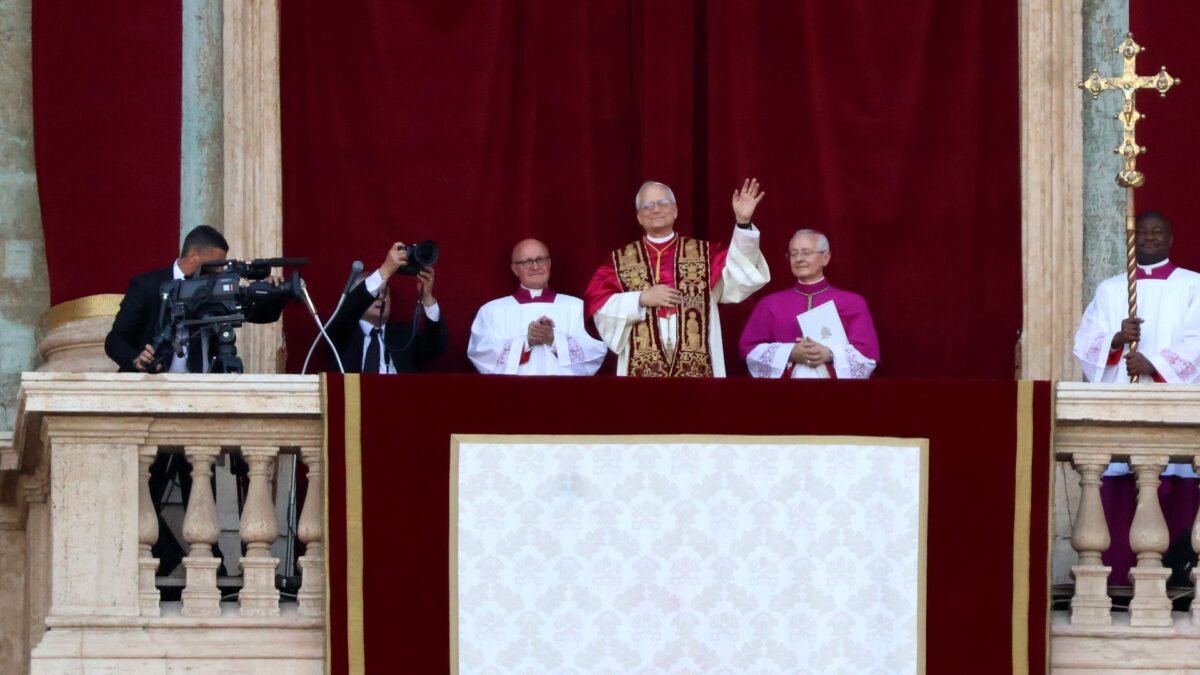
Think about that question for a moment, because on Sunday, October 18, the whole world was thinking about it. At noon, a window opened in the Apostolic Palace overlooking St. Peter’s Square, and out stepped a 71-year-old man in white — five days after surgeons had cut into his chest and removed the lower lobe of his right lung. He stood there without support, smiling, waving at the thousands below, and spoke in a voice his doctors described, with professional caution, as “firm.” The crowd cheered. The cameras of the world rolled. And the most powerful pulpit on earth, which has faced down emperors, schisms, reformations, and revolutions across two thousand years, did something it has rarely done in all that time: it bowed to something stronger than itself — the frailty of the human body.
Pope Leo XIV is alive, recovering, and — by his own account — grateful. “I would like to thank everyone who has been praying for me these past few days,” he told the square. “I have truly felt your support.” And then the sentence that will outlive this news cycle: “This experience made me feel a special sense of closeness to those who are battling illness and living with a disability.” The Vicar of Christ, speaking as a patient.
A Diagnosis Announced from the Balcony
Consider how we learned of it. There was no leak, no paparazzo’s long lens, no palace intrigue. A week before the surgery, during his regular Sunday Angelus prayer, the Pope himself stood at that same window and told the faithful that doctors had found a small growth on his lung and that he would undergo surgery. He announced his own illness the way a family patriarch tells his household bad news — plainly, face to face. It was, in its quiet way, a revolution in how power behaves.
He was admitted to Rome’s Gemelli Hospital on Tuesday evening, October 13. During the operation, surgeons confirmed what the scans had suggested: lung adenocarcinoma, the most common form of lung cancer, and removed the lower lobe of his right lung. The Times reported that doctors had initially expected a week-long hospital stay; instead, he walked out unaided on Saturday afternoon, October 17 — shaking hands with the medical staff and joking, with the gallows humor of every patient, that he hoped they had not left anything inside him. Before leaving, he celebrated Mass in a small chapel on the hospital’s tenth floor, and on his way out he stopped to speak with a 13-year-old Ukrainian girl who had herself recovered from cancer. She gave him a photograph of a previous meeting between them. The discharge followed blood tests and a chest X-ray that morning, reviewed by his personal physician Dr. Luigi Carbone and thoracic surgery director Professor Stefano Margaritora.
By Sunday he was leading the Angelus again. The Vatican has cancelled his public audiences until Tuesday, October 20, and his planned twelve-day visit to Uruguay, Argentina and Peru, beginning November 6, will still go forward. The machinery of the papacy pauses; the papacy itself does not.
History Watches from the Window
But I did not write this column to give you the news. You have the news. I wrote it because history is standing at that window too, and it is asking to be noticed.
Once, the illness of a pope was a state secret. The Vatican’s health bulletins read like weather forecasts for another planet — precise, bloodless, designed to reveal nothing. The body of the pontiff belonged to God and the Curia, in that order; the faithful were informed on a need-to-know basis, and the faithful never needed to know.
That began to change at this very hospital. The Gemelli Polyclinic is where John Paul II was rushed after the 1981 assassination attempt, and where he returned again and again in the long twilight of his Parkinson’s disease. While Leo XIV lay inside that building this month, a faithful was photographed praying before the statue of John Paul II outside its entrance — one pope’s marble ghost keeping vigil over another pope’s living body. John Paul II turned his decline into a global, televised sermon: the world watched his hands tremble at the altar, and a generation learned that suffering could be a form of teaching. He made weakness visible before visibility was a strategy.
Then came 2013, and Benedict XVI did the unthinkable. On February 11, in Latin, before a room of cardinals who thought they had come for an ordinary consistory, the 85-year-old pontiff announced he would resign at the end of the month — the first pope to step down in nearly six hundred years, since Gregory XII in 1415. His reason, given with a scholar’s precision, was that his strength of mind and body had deteriorated to the point where he could no longer adequately exercise the Petrine ministry. The Associated Press reported the stunned Vatican that morning; the world spent weeks decoding a sentence that needed no decoding. The chair itself had admitted it was too heavy for frail shoulders.
And now the third chapter. Leo XIV — the first American-born pope in history, 71 years old — announces his own cancer from the balcony, submits to the knife, and returns to thank the prayers of strangers. Do you see the pattern? Each generation of the papacy has moved one step further from the pedestal and one step closer to the pew. Secrecy, then surrender, then — this. A pontiff who treats his flock not as subjects to be managed but as a family to be leveled with.
I am not a Catholic, and perhaps that is why the grammar of this moment feels so familiar to me. It is the oldest story in the book of power. The Quran and the Bible tell it a dozen ways: the king who forgets he is dust. Nebuchadnezzar, who ate grass like an ox until he learned that heaven rules. Pharaoh, whose dreams were warnings. Every throne is a temporary arrangement with biology, and biology always collects.
The Great Equalizer Has No Favorites
Let us be clinical for a moment, because the clinical facts are what make the spiritual ones land. Lung adenocarcinoma is the most common type of lung cancer. And lung cancer, according to the International Agency for Research on Cancer’s GLOBOCAN 2022 estimates, is the most commonly diagnosed cancer on the planet — nearly 2.5 million new cases a year, one in every eight cancers — and the leading cause of cancer death, some 1.8 million deaths annually. The IARC’s global burden report lays it out in the cold language of epidemiology: behind every one of those numbers is a family sitting in a hospital corridor, exactly like the ones at the Gemelli this month. The Pope’s case is not an exception but an illustration — his diagnosis is shared, in its essentials, with millions of households that will never see a camera. What was different was only the scale of the response.
A video of the Pope leaving the hospital, published by Rome Reports, drew tens of thousands of reactions within hours; the comment sections filled with prayers and blessings in a dozen languages. Viewers shared their own cancer stories and argued gently about whether he should rest more — and the overwhelming tone, in that rare miracle of the internet, was tenderness. Muslims prayed for him. Protestants prayed for him. People who pray to no one wished him well. For one weekend, the most divided species on the planet spoke a single dialect, and it needed no translation: get well.
And then there is the detail I cannot stop returning to: the 13-year-old Ukrainian girl. Picture it — a war-scarred child who has already beaten cancer, handing a photograph to a 71-year-old man who has just begun to fight it. Two survivors, one in white, one thirteen. If you want to know what the Church means when it talks about the communion of saints, do not look for it in a catechism this week. Look at that hospital corridor.
So I ask you directly, reader: when did you last pray for a stranger? Millions did this week, without being asked, for a stranger in white on another continent whose name they learned from a headline. Whatever you believe about the theology, do not miss the anthropology. Prayer, it turns out, is the last truly universal language — the one thing the powerful and the powerless still say to each other without an interpreter.
Render Unto Caesar
There is one more detail, and it may be the most revealing of all. For his first Angelus after surgery — his first public words as a recovering patient — Pope Leo chose to reflect on one of the most famous sentences ever attributed to Jesus: “Give therefore to the emperor the things that are the emperor’s, and to God the things that are God’s.” His theme, as reported by Fox News, was integrity — urging Christians to live without hypocrisy.
Think about that choice. A man whose own body has just been opened and stitched chooses to preach about integrity. A leader who has looked at his own mortality in a pathology report speaks about honesty with an authority that no press conference can manufacture. Hypocrisy is the luxury of those who believe they will never be found out; the hospital bed finds everyone out. “As always with God’s help and your prayers,” he said of his gradual return to duties — and in that sentence, the most theologically loaded office in Christendom reduced itself, willingly, to the oldest human posture there is: please pray for me.
Power usually performs strength. This week, power performed gratitude. Remember the difference; it is rarer than you think.
The Verdict of the Hospital Bed
And so we come to the verdict, because every column must end where it began — with a question.
The hospital bed is the most honest pulpit in the world. Thrones end; biology does not negotiate. Emperors have learned this in every century, and popes are learning it in public now, one generation at a time. The arc from secrecy to resignation to a balcony announcement is not just the story of one institution growing up; it is the story of power itself being slowly, painfully taught its place.
Here is what I want you to carry away from this week, long after the headlines have moved on — and they will move on. If the Vicar of Christ, the heir of Peter, the man a billion Catholics call Holy Father, can be brought to his knees by a cluster of his own misbehaving cells — if his schedule, his travel, his audiences, his very breath can be rearranged by something the size of a coin — then what excuse remains for the rest of us, for our arrogance, our certainty, our performance of invincibility?
Illness is the last democracy. It admits no VIP entrance, respects no title, and accepts no bribes. It took a pope this week, and it will take the rest of us in turn, and the only question — the only one that has ever mattered — is what we do with the borrowed time between the diagnosis and the discharge.
Pope Leo stood at his window on Sunday, one lobe of lung lighter, and thanked the prayers of strangers in a hundred languages. The mightiest religious institution on earth found, in the end, nothing stronger than those prayers. Remember the white figure at the window. And the next time you pass a hospital — any hospital, in any city — remember who else is lying inside, breathing carefully, learning the same lesson. We are all, every one of us, patients in waiting. The wise ones say their thank-yous early.
Sources & References
- The Times — “Pope Leo leads prayers at St Peter’s days after cancer surgery” (Oct 18, 2026): details of the Angelus appearance, the Pope’s quotes, surgery facts and the discharge.
- Fox News — “Pope Leo welcomed back as he delivers Angelus prayer days after lung cancer surgery” (Oct 18, 2026): Angelus theme of integrity, gradual resumption of duties.
- USA Today — “Pope Leo XIV promises slow return to papal duties post-surgery” (Oct 18, 2026): cancellation of audiences, South America trip Nov 6–17 proceeding.
- The Trent / EFE — “Pope Leo XIV Discharged After Lung Cancer Surgery in Rome” (Oct 17, 2026): discharge details, blood tests and X-ray, Mass on the hospital’s 10th floor.
- Religion Media Centre — “Religion news 19 October 2026”: round-up of the Pope’s discharge, Angelus appearance and cancelled audiences.
- WAMC / Associated Press — “Vatican announces pope’s retirement” (Feb 11, 2013): Benedict XVI’s resignation, first in nearly 600 years since Gregory XII (1415).
- IARC / WHO — “New report on global cancer burden in 2022”: lung cancer the most diagnosed cancer (~2.5M cases, 12.4%) and leading cause of cancer death (~1.8M, 18.7%).
Featured image: Pope Leo XIV on the loggia of St. Peter’s Basilica following his election, May 8, 2025. Photo: Edgar Beltrán / The Pillar, via Wikimedia Commons (freely licensed; identity verified on the file’s VRT-reviewed page).

About the Author — Abdul Mannan
Related Articles
Assisi 2026: Forty Years After John Paul II, the World’s Religions Pray Together Again
On 27 October 2026, Pope Leo XIV returns to Assisi exactly forty years after St John Paul II…

When the Classroom Becomes a Battlefield: Texas, the Prophet, and the War Over History
The Texas State Board of Education has voted to teach students that the Prophet Muhammad led "brutal" military…