
Liverpool Beat Chelsea 6-5 on Penalties After 1-1 Draw to Reach Carabao Cup Quarter-Finals

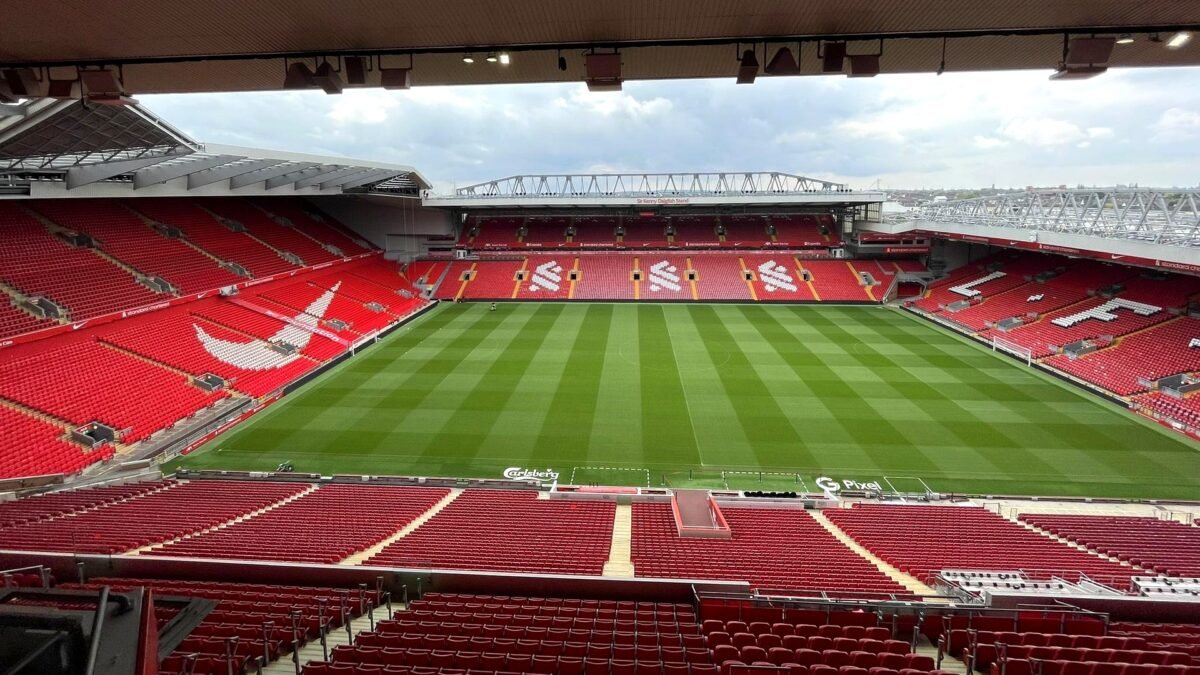
Liverpool reached the Carabao Cup quarter-finals on Wednesday 28 October 2026 after beating Chelsea 6-5 in a penalty shoot-out at Anfield, following a 1-1 draw in normal time in which both goals came from the penalty spot late in the first half. According to Liverpool FC, Joe Gomez scored the decisive penalty before Wesley Fofana blazed his effort into the Kop, sending the home side into the last eight of the competition in front of a crowd of 60,214.
The result extended a remarkable pattern in this fixture. According to Liverpool FC, the clubs had met in four previous penalty shoot-outs and Liverpool had won all of them, including the Carabao Cup finals of 2022 and 2024. This was a fifth successive shoot-out success against the same opponents, and it was achieved in a tie that, for long periods, offered very little separation between two heavily changed sides. Neither team scored from open play, yet the evening still produced a full range of cup drama: two penalties within three minutes, two goalkeepers making important saves in the second half, a missed chance to win the shoot-out, a save when Chelsea had the chance to win it, and finally a miss that ended it.
Chelsea took the lead late in the first half. According to Liverpool FC, the visitors were awarded a penalty when Moises Caicedo went to ground under a challenge from Ryan Gravenberch, and Morgan Rogers converted from the spot. Reports of the match put the goal in the 40th minute. Jordan Henderson, the former Liverpool captain now playing for Chelsea, picked up the ball amid boos from the home supporters and handed it to Rogers, who sent goalkeeper Giorgi Mamardashvili the wrong way. Liverpool’s response was immediate. Moments later, according to Liverpool FC, the home side were awarded a penalty of their own when Fofana handled the ball in the area at a corner, and Cody Gakpo converted with a powerful low finish to level the score. Reports put Gakpo’s equaliser three minutes after Rogers had scored, and Liverpool FC described the two goals as coming just before half-time.
The first half had been quiet before that sudden burst of action. According to Liverpool FC, neither goalkeeper had been tested in the opening half-hour, although Maxence Lacroix made an important recovery to prevent Gakpo from getting a clear shot from a pass by Lewis Koumas, and Virgil van Dijk was required to intervene at the other end when Danny Welbeck looked to reach a pass from Fofana. Gakpo then forced a save from Chelsea goalkeeper Mike Penders with a drive from outside the area in a frantic finish to the half. Lacroix, according to reports of the match, went off injured before half-time and was replaced by Levi Colwill, an early disruption for a Chelsea side already without the suspended Cole Palmer and the injured Joao Pedro.
The second half belonged largely to the goalkeepers. According to Liverpool FC, Mamardashvili was needed to palm away a shot from Rogers in the early moments of the second period and then to pluck a curling shot from Pedro Neto out of the air. At the other end, Penders saved a powerful close-range header from Ronald Araujo and then kept out an effort from substitute Bradley Barcola, who had come on with Florian Wirtz just before the hour. The most important save of normal time came late in the game, when Mamardashvili produced a one-handed stop to divert a sweep from substitute Marco Palestra towards the near bottom corner. In the same passage of play, according to Liverpool FC, last-ditch defending in the six-yard box frustrated Wirtz and Barcola. With no extra time in this competition, the tie went straight to penalties at 1-1.
The shoot-out, according to Liverpool FC, finished with both teams having scored five penalties from seven attempts each before Gomez’s finish and Fofana’s miss settled it. Reports of the shoot-out agree on the decisive sequence. Valentin Barco hit the post for Chelsea, and Kostas Tsimikas then had the chance to win the tie for Liverpool but blazed his effort over the bar. Henderson scored to keep Chelsea alive, Penders saved from Gravenberch, and Mamardashvili saved from Emmanuel Emegha when Chelsea had the opportunity to win. Gomez then scored, and Fofana, whose handball had given Liverpool their first-half penalty, sent his kick over the bar. According to reports, Liverpool’s successful penalties included Alexis Mac Allister, Alexander Isak, Gakpo, Wirtz, Barcola and Gomez, while Chelsea scored through Neto, Rogers, Romeo Lavia, Henderson and Colwill.
Liverpool head coach Andoni Iraola had made seven changes from the side that beat Brighton in the Premier League the previous weekend, according to Liverpool FC, with only Araujo, Gakpo, Gravenberch and Van Dijk retaining their places. Trey Nyoni, who started in midfield, was voted Liverpool’s player of the match by supporters, according to Liverpool FC, and Iraola praised the young midfielder afterwards for handling the pressure of a cup tie against a strong team. Chelsea head coach Xabi Alonso had made four changes from the team beaten 2-0 at home by Tottenham on Saturday, according to reports, with Henderson starting in the absence of Palmer and Joao Pedro. Alonso was returning to Anfield, where he had enjoyed great success as a Liverpool player, and reports noted that this was his third defeat in three visits to the ground as a manager.
The draw for the quarter-finals, made after the fourth-round ties on Wednesday night, gave Liverpool another home tie. According to Sky Sports, Liverpool will host Bournemouth, Manchester City will host Bradford City, Crystal Palace will host Sunderland, and Fleetwood Town will host the winners of Thursday’s tie between Everton and Newcastle United. According to Sky Sports, the quarter-finals will be played in the week commencing 14 December. Bournemouth reached the last eight with a 3-0 win against Aston Villa, according to Sky Sports, while Manchester City needed penalties to beat Brighton 4-3 after a 2-2 draw at the Etihad Stadium, with goalkeeper Geronimo Rulli saving twice in the shoot-out. Fleetwood, a fourth-tier side, had knocked out Premier League champions Arsenal on penalties on Tuesday, according to Sky Sports, in one of the biggest shocks of the competition.
Analysis: Why It Matters
This was not a classic in the ordinary sense. For much of the ninety minutes, the game felt like two teams feeling their way through a crowded fixture list, protecting players, testing combinations and hoping that a single moment would spare them a shoot-out. Yet the ending gave the tie exactly what cup football is supposed to provide: a test of nerve that no amount of tactical preparation can fully control. Liverpool passed that test for a fifth time against Chelsea, and that history now matters in its own right. When a shoot-out begins between these clubs, one side carries the memory of repeated success and the other carries the memory of repeated failure in the same situation. That does not decide any individual kick, but it shapes the atmosphere in which each kick is taken, and it gives the team with the better record a small but real advantage before a ball is struck from twelve yards.
1. A shoot-out is a skill, a habit and a story
It is tempting to describe penalty shoot-outs as a lottery, but the evidence of this fixture argues against that description. Liverpool have now won five shoot-outs in a row against Chelsea, across finals and fourth-round ties, and they have done so with different players, different managers and different stakes. That consistency suggests something more durable than luck: a club culture in which penalties are practised, goalkeepers are trusted to make a decisive contribution, and players are prepared for the specific pressure of sudden death. Mamardashvili’s save from Emegha was the clearest example on the night. Chelsea had the chance to win the tie, and the goalkeeper who had already made important saves in normal time made another when it mattered most. Gomez then had to score under the knowledge that a miss would hand Chelsea a second opportunity, and he finished emphatically. Fofana’s miss, by contrast, came after a difficult evening in which he had already conceded the penalty that brought Liverpool level. The shoot-out did not create that story; it completed it.
2. Rotation worked, but only just
Both managers used this tie to rotate, and both had good reasons to do so. Liverpool were playing the third game in a sequence of four consecutive home matches, with another important league fixture to follow on Sunday, while Chelsea were coming off a league defeat and managing injuries and a suspension. Iraola’s seven changes still produced a team strong enough to dominate periods of the second half and to win the shoot-out, and the performances of younger players such as Nyoni, and of squad players given a chance to impress, will have strengthened the manager’s options for the months ahead. At the same time, the performance showed the limits of rotation. Liverpool needed a penalty to score, Chelsea needed a penalty to score, and neither side created enough clear chances from open play to settle the tie in normal time. Rotation keeps a squad fresh, but it can also break the rhythm that produces fluent attacking football. The balance Iraola struck was good enough on the night, and the late introduction of Mac Allister and Isak, with penalties in mind, was a sensible piece of planning that the manager himself acknowledged afterwards. In a competition where the margin is so fine, that kind of detail can be the difference between progress and elimination.
3. The goalkeepers decided a game the outfield players could not
When two teams cancel each other out for ninety minutes, the contest often comes down to the two players whose mistakes are most visible and whose saves are most valuable. Mamardashvili and Penders both justified their selection. Penders, who had endured a difficult afternoon in Chelsea’s defeat by Tottenham, responded with saves from Araujo and Barcola and a shoot-out save from Gravenberch. His performance was a reminder that a goalkeeper’s form should be judged over more than one match, and that confidence can be rebuilt quickly in a cup tie. Mamardashvili, meanwhile, was Liverpool’s most important player across the whole evening. His saves from Rogers and Neto kept Liverpool level early in the second half, his late stop from Palestra prevented Chelsea from winning the tie in normal time, and his save from Emegha prevented Chelsea from winning it in the shoot-out. A goalkeeper who saves penalties has a particular value in this competition, because the Carabao Cup goes straight to penalties without extra time. Liverpool’s investment in that strength was repaid in full.
4. Chelsea’s margins are getting thinner
For Chelsea, this defeat will hurt for reasons that go beyond a single cup exit. Alonso’s side lost a league game at home to Tottenham on Saturday, travelled to Anfield without two important attacking players, lost a defender to injury before half-time, led the game, and then lost it on penalties after having a chance to win the shoot-out. That sequence captures a team that is competitive in difficult away games but is not yet converting competitive performances into results. Alonso’s post-match message, as reported by TNT Sports, was that penalties are open to anything and that the Premier League is the main focus, and there is sense in that framing. A cup exit in October does not define a season. But the pattern of narrow defeats can affect confidence if it continues, and Chelsea will need to show in the league that they can turn close games in their favour. The performance of Penders, the contribution of Rogers, and the resilience shown in taking the tie to penalties are genuine positives. The challenge is to carry those positives into league matches where the pressure is different but the need for a decisive moment is the same.
5. Bournemouth will be a much harder quarter-final than the draw suggests
The quarter-final draw has given Liverpool a home tie, but it has also given them one of the most difficult opponents remaining in the competition. Bournemouth beat Aston Villa 3-0 to reach the last eight, according to Sky Sports, and Iraola admitted afterwards that Bournemouth were the one team he did not want to draw. That admission was honest and revealing: Iraola knows the club, its players and its methods better than any other manager in the draw, and he also knows that familiarity works in both directions. Bournemouth’s players know Iraola’s ideas, his expectations and his weaknesses, just as he knows theirs. The tie will therefore be as much a psychological contest as a tactical one. Liverpool will be favourites at Anfield, and they will have the advantage of another home game in a competition they have won more often than any other club. But Bournemouth arrive in good form, with nothing to lose and with a manager in Marco Rose whose side have been scoring freely. The December tie should be treated as a genuine test, not as a formality on the way to the semi-finals.
The wider quarter-final draw also tells a story about this season’s Carabao Cup. Fleetwood’s victory over Arsenal and Bradford’s run to the last eight show that the competition still produces shocks, and that lower-league clubs can use home ties and penalty shoot-outs to reach the latter stages. Manchester City, the holders, survived a scare against Brighton and will be expected to beat Bradford, but they too needed penalties and a goalkeeper in inspired form. Crystal Palace against Sunderland is an all-Premier League tie with no clear favourite. Liverpool’s path to Wembley is open, but it is not straightforward, and the Bournemouth tie will demand a stronger performance than the one that was enough to beat Chelsea.
What to Watch Next
- Liverpool’s team selection on Sunday: Iraola said Liverpool have another big home game to finish a run of four at Anfield. Whether the players who impressed against Chelsea, including Nyoni, earn further opportunities, and whether the senior players rested for this tie return refreshed, will shape the weekend.
- Chelsea’s response in the Premier League: Alonso has framed the league as the main focus. Chelsea’s next league performance will show whether the narrow cup defeat damages confidence or sharpens the determination to turn close games into wins.
- Goalkeeper choices in future cup ties: Mamardashvili and Penders both strengthened their cases. Their performances will influence selection when the quarter-finals arrive in December, when penalties may again decide a tie.
- The Bournemouth reunion in December: Iraola against his former club, at Anfield, with a semi-final place at stake. Form, fitness and the Christmas fixture schedule will all matter by the week commencing 14 December.
- The final quarter-final place: Everton against Newcastle United on Thursday decides the last tie. Fleetwood, who beat Arsenal, will host the winners, and the result will complete a quarter-final line-up full of contrasting stories.
Sources
- Liverpool FC — Match report: Liverpool beat Chelsea on penalties on dramatic night at Anfield
- Liverpool FC — Andoni Iraola press conference: Chelsea shootout, drawing Bournemouth and Liverpool’s togetherness
- Sky Sports — Carabao Cup quarter-final draw: Liverpool host Bournemouth as Bradford and Fleetwood get home ties
- TNT Sports — Carabao Cup quarter-final draw: Fleetwood Town to face Newcastle United or Everton while Bradford City visit Manchester City
- Manchester City — City to play Bradford City in Carabao Cup quarter-final

About the Author — Abdul Mannan
Related Articles
Fleetwood Town Stun Arsenal on Penalties in Carabao Cup Shock at Highbury
Fleetwood Town, 84 places below Arsenal in the English football pyramid, won 5-3 on penalties after a 1-1…
Harry Kane Wins Ballon d’Or, Ending England’s 25-Year Wait Ahead of Mbappé and Yamal
Harry Kane has won the 2026 Ballon d'Or in London, becoming the first Englishman to claim football's top…
Bournemouth Thrash Manchester United 3-0 at Old Trafford as Carrick’s Future Hangs in the Balance
Bournemouth beat Manchester United 3-0 at Old Trafford on Sunday, with goals from Rayan, Marcus Tavernier and Evanilson…