
Harry Kane Wins Ballon d’Or, Ending England’s 25-Year Wait Ahead of Mbappé and Yamal

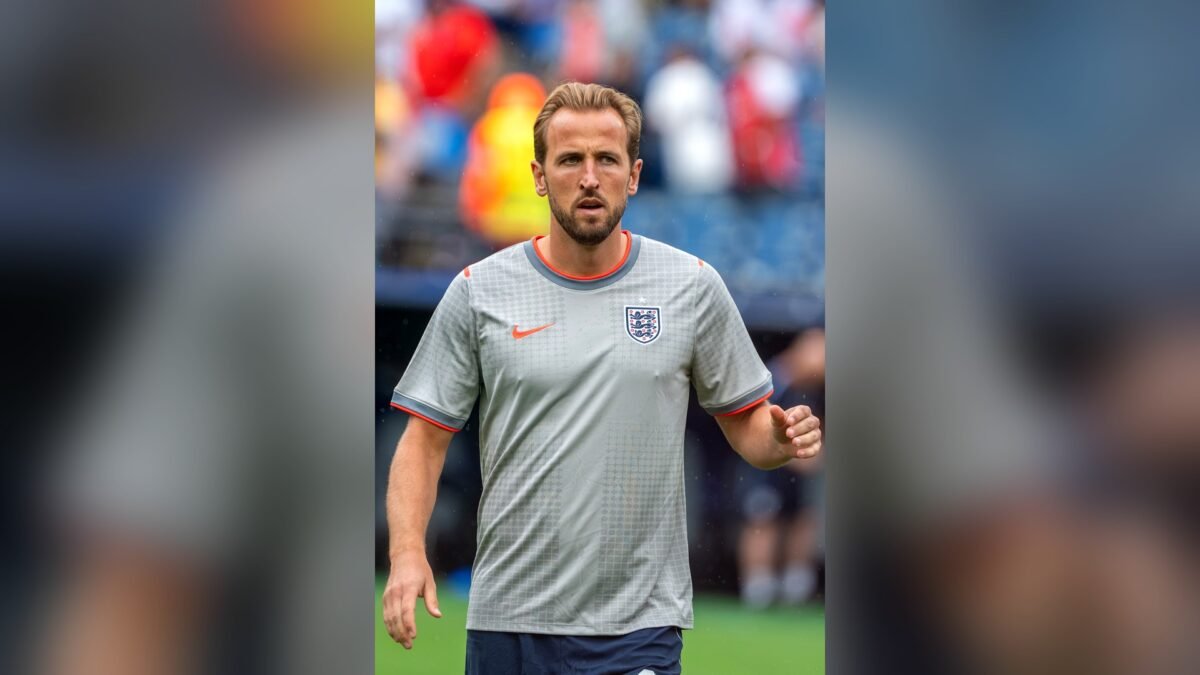
Harry Kane has won the 2026 Ballon d’Or, becoming the first Englishman to claim football’s most prestigious individual honour since Michael Owen in 2001. According to Reuters, the England captain was crowned the winner on Monday at a ceremony at the London Palladium, after a season in which his goalscoring reached a level that no other contender could match across a full campaign for club and country.
The award, organised by France Football magazine and voted for by 100 specialist journalists, recognised a 2025-26 season in which Kane scored 73 goals in 65 competitive matches for Bayern Munich and England, according to the Associated Press (AP). For Bayern alone, he scored 61 goals in 51 games in all competitions, Reuters reported, as the German club completed a domestic league and cup double. He also led England to the semi-finals of the World Cup, scoring six goals, and then helped his country finish third, the team’s best placing at the tournament in 60 years, according to AP.
Kane, 33, finished ahead of Real Madrid and France forward Kylian Mbappé in second place and Barcelona and Spain winger Lamine Yamal in third, CNN reported. The result ended a 25-year wait for an English winner and made Kane only the fifth Englishman to win the men’s award, following Stanley Matthews, Bobby Charlton, Kevin Keegan and Owen. It was the 70th edition of the Ballon d’Or, and the first time the ceremony had been held in London, at the historic Palladium Theatre.
“It being here in London as well has made it extra special,” Kane said after winning his first Ballon d’Or, according to CNN. He was cheered onto the stage by chants of “Harry, Harry” from a home crowd, CNN reported, and thanked those who had voted for him in an emotional speech. “Thank you very much. Thank you to everyone who voted for me. I can imagine it was really tough this year – some incredible players I was up against,” he said.
Speaking to young players, Kane returned to the theme of persistence that has defined his career. “Anything is possible with hard work, when no one else is watching, to go through the ups and downs, to learn through resilience, determination and self-belief,” he said, according to AP. He added that his journey had not been straightforward, that he had experienced setbacks and had to fight his way to the top, and said he hoped that could inspire young players.
He also thanked his teammates, coaches, parents and children, and his wife Kate, whom he described as his best friend and biggest supporter, AP reported. England manager Thomas Tuchel said he was delighted by the win and described it as a huge honour, according to BBC Sport reporting, while Prince William called Kane a brilliant captain and a remarkable player. To mark the occasion, the arches at Wembley Stadium were lit up in gold on Monday night, BBC Sport reported.
A season built on volume and consistency
The numbers behind Kane’s victory were, in the words of several reports, difficult to argue with. The split between his club and international goals tells the story of a season in which there was barely a quiet month. According to Reuters, his 61 goals for Bayern came in 51 appearances across all competitions. AP’s combined figure of 73 goals in 65 matches for club and country, which includes 12 goals for England, made him Europe’s leading scorer for the season.
BBC Sport reporting broke the Bayern total down further: Kane was the Bundesliga’s top scorer with 36 goals, 17 clear of the next player, scored 14 goals in the Champions League, 10 in the German Cup and one in the German Super Cup. The cup tally included a hat-trick in the 3-0 win over Stuttgart in the final, according to AP, as Bayern secured the league and cup double. The club also won the Franz Beckenbauer Supercup, completing a domestic treble, according to UEFA’s account of the season cited in reports of the award.
That output also set a Bayern record. According to BBC Sport, Kane’s 61 goals in a single campaign were the most ever scored by a Bayern player in one season, and his previous best finish in Ballon d’Or voting had been 10th place. His 61 goals were also the most by any player in Europe’s top five leagues in a single season since Cristiano Ronaldo also reached 61 for Real Madrid 11 years earlier, BBC Sport reported.
For England, the World Cup provided the second half of the case. Kane scored six times at the tournament, according to AP, passing Gary Lineker as England’s all-time leading scorer at World Cups. England lost their semi-final to Argentina, AP reported, but beat Mbappé’s France in the third-place play-off to finish third, the country’s best World Cup placing since winning the tournament in 1966. The run gave Kane something his club season alone could not: a major international tournament in which he was central to a deep run, even though England did not reach the final.
It is worth stating plainly what Kane did not win. Bayern reached the Champions League semi-finals but did not reach the final, and England did not win the World Cup. BBC Sport noted that Kane had won the award despite not lifting either of football’s biggest prizes last season. That fact matters, because it frames the rest of the night: voters rewarded a full season of production and two domestic trophies, rather than a single defining night in a final.
The closest of contests
The margin of victory, it emerged after the ceremony, was remarkably small. Vincent Garcia, the editor-in-chief of France Football, told L’Équipe that the points gap between Kane and Mbappé was smaller than the 41-point gap between Rodri and Vinícius Júnior in 2024, according to Le Monde. Garcia said there had been several serious contenders and that, for the two closest players, “it really came down to very little this year”.
According to Sports Illustrated’s account of Garcia’s comments, Mbappé had led the voting for much of the voting period, and Kane “came back strongly” to overtake him. The detailed points breakdown had not yet been published in full when the result was announced, with France Football expected to publish the full vote in its magazine, Sports Illustrated reported. Each of the 100 voters, one journalist from each of the top 100 nations in the FIFA rankings, ranks 10 players, with 15 points for a first-place vote falling to one point for 10th, according to reports of the voting system.
Mbappé’s case was formidable on its own terms. Le Monde reported that he finished as the top scorer in La Liga and in the Champions League in 2026, and that at the World Cup he became the tournament’s all-time leading scorer, ahead of Lionel Messi. He won the World Cup Golden Boot with 10 goals, according to reports of the tournament, but won no major title with Real Madrid or France, Le Monde noted. It was the highest Ballon d’Or finish of his career so far, and the second place left him still searching for a first win.
Yamal, 19, finished third after a season in which he won La Liga with Barcelona and the World Cup with Spain, CNN reported. He was the only teenager in the top three, and had finished second in 2025. He did, however, leave London with an award of his own: he was named Young Talent of the Year for a third successive year, CNN reported. Garcia suggested that votes recognising Spain’s World Cup triumph may have been divided between Yamal and his Spain teammate Rodri, who finished fourth, according to Football Today’s account of his comments. That explanation, offered by the organiser rather than established by the published vote, should be treated as one reading of a close contest until the full breakdown is available.
The rest of the top 10, as published after the ceremony, was Rodri in fourth, Messi in fifth, Khvicha Kvaratskhelia sixth, Ousmane Dembélé seventh, Erling Haaland eighth, Michael Olise ninth and Fabián Ruiz 10th. Dembélé, who won the award in 2025, was succeeded by Kane, while Rodri had won it in 2024. Messi, the record eight-time winner, remained in the leading group at 39, an age at which few players feature in Ballon d’Or voting at all.
Putellas completes a Spanish night
The women’s award went to Spain midfielder Alèxia Putellas, who won the Ballon d’Or Féminin for the third time, CNN reported, after previous victories in 2021 and 2022. Putellas, 32, captained Barcelona Femení to a quadruple of trophies – the league title, two domestic cups and the Women’s Champions League – before signing for the London City Lionesses in England in the summer, CNN reported. She finished ahead of Ewa Pajor and Khadija Shaw in the women’s voting, according to reports of the ranking.
Putellas thanked the other nominees and winners in her acceptance speech, according to CNN, and said that having so many Barcelona players nominated reflected the season the club had enjoyed. She described it as an honour to have captained the side.
The wider list of winners underlined how much of the night belonged to Spain and Barcelona. CNN’s full list recorded Paris Saint-Germain as Men’s Club of the Year and Barcelona Femení as Women’s Club of the Year; Vicky López as Women’s Young Talent of the Year for a second successive year; Spain manager Luis de la Fuente as Men’s Coach of the Year after his World Cup success and Barcelona Femení manager Pere Romeu as Women’s Coach of the Year; Unai Simón and Cata Coll as the men’s and women’s Goalkeepers of the Year; Bukayo Saka as the winner of the Sócrates Award for humanitarian actions; and Kane himself as Men’s Striker of the Year, with Charlyn Corral taking the women’s striker award.
The ceremony itself, held at the London Palladium, was delayed by a rainy and traffic-logged night in the capital, CNN reported. Hundreds of young fans damaged security barriers and climbed buildings to get a better view of players arriving, CNN reported, a reminder of the scale of attention the event now draws when it leaves its traditional Paris home. Yamal drew one of the loudest reactions on the red carpet, CNN reported, even before the main award was announced.
A long road to the top of the voting
Kane’s victory also closed a chapter that had followed him for most of his career: the gap between individual recognition and team success. He came through Tottenham Hotspur’s academy and became the club’s all-time leading scorer, with 213 Premier League goals, second only to Alan Shearer in the competition’s history, according to reports of his career. He was the Premier League’s top scorer three times, but lost the 2019 Champions League final with Tottenham and the European Championship finals with England in 2020 and 2024, according to the same reports.
He joined Bayern Munich from Tottenham in August 2023 for a fee reported at more than €100 million, a club record, and scored 36 Bundesliga goals in his debut season, winning the European Golden Shoe, according to reports of his move. Bayern finished that first campaign without a major trophy. The breakthrough came in 2024-25, when Bayern won the Bundesliga and Kane, then 31, lifted the first major senior team trophy of his career, according to reports of that season.
The 2025-26 campaign then more than doubled his career trophy total in one season, BBC Sport noted, with the league title retained and the German Cup added. He also became England’s all-time leading men’s goalscorer in 2023, surpassing Wayne Rooney, and won the Golden Boot at the 2018 World Cup, according to reports of his international career. In that sense, the Ballon d’Or did not arrive as a sudden coronation. It arrived after the one objection that had been raised against him for years – that his goals had not yet been matched by major team honours – had been answered, first in Munich and then, in a different form, by England’s run to third place at the World Cup.
He is also the first Bayern Munich player to win the Ballon d’Or since Karl-Heinz Rummenigge in 1981, according to BBC Sport, and the first player from a German club to win it since Matthias Sammer, of Borussia Dortmund, in 1996. The distinction matters: German clubs have produced winners before, but none wearing a Bayern shirt for 45 years. For a club of Bayern’s standing, that gap is itself a measure of how rarely individual voting and club dominance have lined up in the same season.
Analysis: Why It Matters
1. Voters chose a season, not a single night
The most instructive feature of this result is what Kane did not need in order to win. In many years, the Ballon d’Or has followed the winner of the Champions League or the World Cup almost as a matter of course, because those tournaments supply the images and the narratives that dominate a voting window. Kane had neither. Bayern fell in the Champions League semi-finals. England fell in the World Cup semi-finals. What he had instead was a season without a fallow period: 61 goals for his club, 12 for his country, a domestic double, a cup-final hat-trick, and six goals at a World Cup.
That is a significant statement about how the 100 voters weighed the evidence. It suggests that, faced with three credible but imperfect cases, they preferred the candidate whose claim rested on the largest body of work over the longest period. Mbappé had the most spectacular individual peaks, including a record-breaking World Cup scoring run, but no team trophy to anchor them. Yamal had the biggest team prizes, a league title and a World Cup, but a far smaller goalscoring return. Kane sat between them and, crucially, ahead of both on the one measure that voters could count without argument: goals, week after week, in every competition he entered. The award has sometimes been criticised as a prize for the best story. This year, it looks more like a prize for the most complete season.
2. A tiny margin should change how the result is read
Garcia’s disclosure that the gap was smaller than 41 points, and that Mbappé led for much of the voting, deserves more attention than the headline result alone. It tells us that this was not a coronation but a contest that turned late, and that the published top three conceals a genuine disagreement among voters about what the award should reward.
That matters for two reasons. First, it cautions against treating Kane’s win as a settled verdict on who was the best player in the world in 2025-26. A margin that small, in a system where a single first-place vote is worth 15 points, can turn on a handful of ballots. Second, it explains why the arguments for Mbappé and Yamal will not disappear. Both have legitimate grievances grounded in the same season: Mbappé in individual scoring records, Yamal in team success at the highest level. When the full points breakdown is published, it will be worth reading not only for the gap at the top but for where the support for each candidate came from. Until then, the honest description of this result is that Kane won a genuinely open race by a very small distance, not that he dominated it.
3. A late peak in an award that usually rewards early brilliance
Kane was 33 when he won, and his previous best Ballon d’Or finish had been 10th. That combination is unusual. The award’s recent history is full of players who arrived at the top in their early or mid-twenties and stayed there: Messi won his first at 22, Cristiano Ronaldo his first at 23, and Yamal, at 19, has already finished second and third. Kane’s path was the opposite. He was loaned to four clubs as a teenager, was not regarded as a prodigy in the usual sense, and spent the first decade of his senior career building a reputation goal by goal rather than announcing himself with a single breakthrough season.
There is a temptation to treat that as a heartwarming footnote. It is more than that. It is evidence that the modern game still has room for a player whose peak arrives in his thirties, provided the body and the scoring instinct hold. Kane is not the oldest winner – Messi was 36 when he collected his eighth award in 2023 and Karim Benzema was 34 when he won in 2022 – but he is the clearest recent example of a player winning the award as the culmination of a long career rather than as confirmation of an early promise. His own speech leaned into exactly that point, and it is the part of the night most likely to be quoted back to young players: the work done when no one is watching, the setbacks absorbed, and the refusal to accept that a career without an early trophy must remain without recognition.
4. England’s wait ends, but the collective question remains
For English football, the symbolism is powerful. Twenty-five years without a winner is a long time for a country that regards itself as one of the game’s leading nations, and the fact that the wait ended in London, with the Wembley arches lit gold, will make the night feel like a homecoming. Kane joins a short and distinguished list, and he does so as England captain, which gives the honour a weight beyond his own career.
Yet the result also highlights a tension. England’s best World Cup finish since 1966 is a genuine achievement, and third place should not be dismissed. But it is still third place. England have now reached the latter stages of major tournaments repeatedly under different managers without winning one, and an individual Ballon d’Or does not change that record. The danger for English football would be to treat Kane’s award as proof that the system is working, when it is more accurately proof that one exceptional player has transcended it. The award honours Kane. Whether it marks a turning point for England will depend on what the next generation, including the young players who were photographed climbing barriers outside the Palladium, go on to win as a team.
5. This three-way rivalry is only beginning
Finally, the top three should be read as the start of a rivalry rather than the end of one. Mbappé, still without a Ballon d’Or, now has the added motivation of knowing how close he came and of having led the voting for a long stretch. Yamal, at 19, has time on his side that neither of his rivals can match, and a World Cup winner’s medal already in his possession. Kane, for his part, must now defend a position he has only just reached, at an age when every season invites questions about how long the scoring rate can be sustained.
That dynamic is healthy for the award. A one-horse race produces a predictable ceremony. A three-way contest, decided by fewer than 41 points, with each candidate representing a different idea of what greatness looks like – relentless scoring, spectacular individual peaks, or precocious team success – gives voters a real choice and gives the public a real argument. The argument will resume next season, and it will be sharper for the fact that this year’s result was so close. None of the three can claim to have settled it.
What to Watch Next
- The full vote. France Football is expected to publish the detailed points breakdown in its magazine. The gap at the top, and the distribution of first-place votes, will show whether Kane’s late surge was broad-based or concentrated, and whether the split of Spain’s support between Yamal and Rodri really did shape the outcome.
- Kane’s club season. Bayern’s defence of the Bundesliga title and their next Champions League campaign will test whether a 73-goal season was a peak or a new standard. Voters remember the most recent season best, and Kane’s next campaign begins with the burden, and the freedom, of being the reigning winner.
- Mbappé’s response. Real Madrid’s season, and France’s next fixtures, will show whether Mbappé converts the disappointment of a second-place finish into the team trophies his case lacked this year. A league or European title would remove the principal weakness in his candidacy.
- Yamal’s development. At 19, Yamal has already won a World Cup and finished second and third in Ballon d’Or voting. The question now is whether his goalscoring output grows to match his influence on games, and whether Barcelona can give him the club platform to challenge again.
- Putellas in England. The women’s winner’s move to the London City Lionesses puts a three-time Ballon d’Or winner in the Women’s Super League. Her performances in England, after a quadruple-winning season in Spain, will be watched closely as the next women’s award cycle takes shape.
Sources
- Reuters: England and Bayern forward Kane crowned 2026 Ballon d’Or winner
- CNN: Harry Kane and Alèxia Putellas win men’s and women’s Ballon d’Or awards
- Associated Press (via NPR): Harry Kane becomes first Englishman in 25 years to win Ballon d’Or
- Le Monde: Mbappé misses out on Ballon d’Or again, finishing behind Kane

About the Author — Abdul Mannan
Related Articles
Bournemouth Thrash Manchester United 3-0 at Old Trafford as Carrick’s Future Hangs in the Balance
Bournemouth beat Manchester United 3-0 at Old Trafford on Sunday, with goals from Rayan, Marcus Tavernier and Evanilson…
The Night the Invincible Fell: Seattle’s Wall Breaks Kansas City’s Perfect Season
The defending champion Seattle Seahawks handed the previously unbeaten Kansas City Chiefs their first loss of the 2026…
Antonelli Wins United States Grand Prix to Stand One Step From Youngest-Ever Formula One Title
Kimi Antonelli won the United States Grand Prix in Austin on Sunday to move to within two points…