
Everton Beat Newcastle 3-1 Without Dropped Grealish to Reach Carabao Cup Quarter-Finals

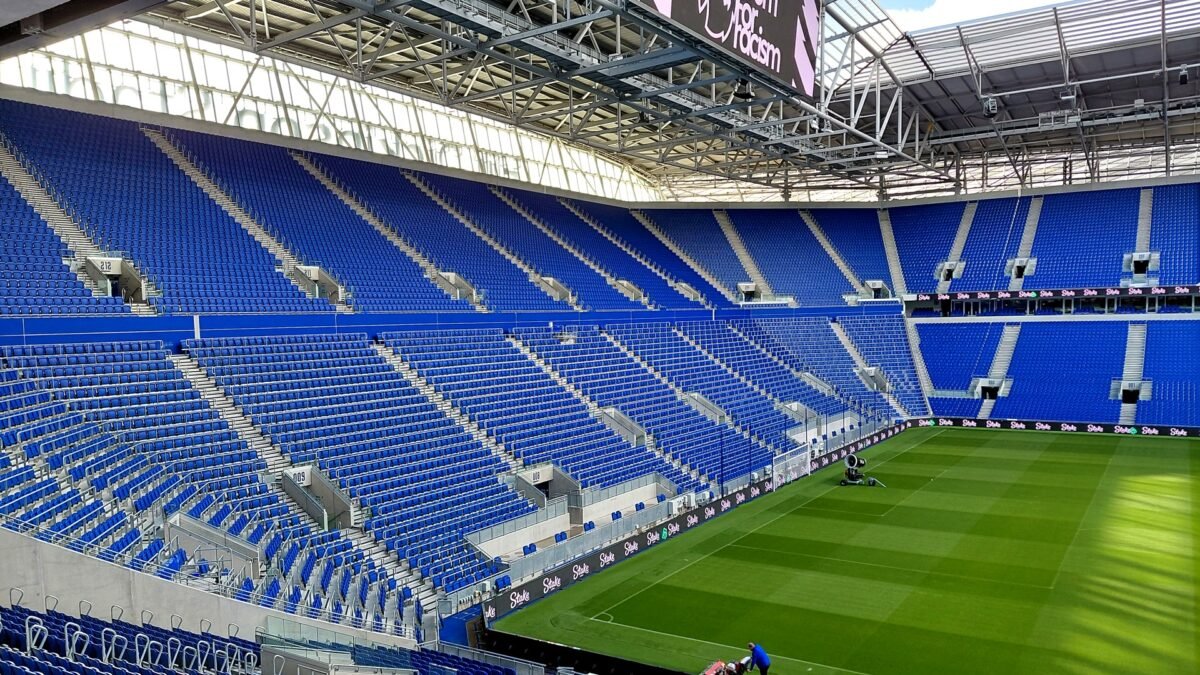
Everton reached the Carabao Cup quarter-finals with a 3-1 victory over Newcastle United at the Hill Dickinson Stadium on Thursday, winning comfortably on a night when their most talked-about player was not in the squad at all, according to Reuters.
James Garner, Hayden Hackney and Thierno Barry scored the goals that settled the fourth-round tie, with Dan Burn replying late for Newcastle, according to Reuters. The result set up a quarter-final away to Fleetwood Town, the League Two club that had knocked out Premier League champions Arsenal earlier in the week, according to Reuters.
Everton did it without Jack Grealish. Before kick-off, the club said the winger, who is on loan from Manchester City, was unavailable for selection “due to a breach of club discipline”, according to Sky Sports. Manager David Moyes declined to elaborate after the match, describing the decision in restrained terms and praising the players who had taken the club through instead.
The win ended a three-match winless run for Everton, according to Fox Sports, and it arrived in a competition the club has never won. It also gave Everton a strikingly clear route towards the semi-finals: beat a fourth-tier side away from home in December, and a place in the last four is theirs. That sentence is easy to write and much harder to earn, as Fleetwood’s defeat of Arsenal demonstrated only two nights earlier. But on Thursday’s evidence, Everton have the depth and the discipline to take the opportunity seriously.
How Everton took control before half-time
Newcastle had the better of the early exchanges, according to FotMob’s match report. Harvey Barnes was heavily involved in the first half, seeing an early header kept out by Jordan Pickford, dragging a half-volley past the post and having a penalty appeal waved away after a challenge by Kiernan Dewsbury-Hall, according to the same report. For a spell, the visitors looked the likelier side to open the scoring.
Everton’s opener arrived in the 34th minute and it came from pressing rather than patience. According to the Press Association’s match report, Tyrique George harried Amar Dedic into a poor clearance which deflected into the path of Hackney, who slipped the ball inside for Garner to pick out the far corner from the edge of the box. FotMob’s account agrees on the essentials: Garner curled a finish into the far corner from just inside the area after Hackney had pounced on loose play from Dedic. It was Garner’s first goal since January, according to the Press Association report, and it changed the shape of the tie.
The second goal arrived on the stroke of half-time, and it was the product of speed and a referee’s willingness to let play continue. According to FotMob, Pickford found Dewsbury-Hall with a quick punt forward, Jacob Ramsey appeared to bring him down in full flight, and referee Farai Hallam played advantage as Barry crossed from the left for Hackney to volley home. It was Hackney’s first goal for Everton since his close-season move from Middlesbrough, according to Fox Sports, and it gave the home side a commanding lead at the interval.
That two-goal cushion mattered. Newcastle pushed for a route back at the start of the second half, with Yoane Wissa and Burn unable to take headed chances, according to FotMob. Everton, instead of retreating, found a third. In the 69th minute, Garner slid Dewsbury-Hall into the left-hand channel and, after Dewsbury-Hall centred, Barry made no mistake, according to FotMob. At 3-0, the tie was beyond reasonable doubt.
Burn scored Newcastle’s consolation two minutes from time, nodding Joe Willock’s deep cross beyond Pickford, according to FotMob, but the closing minutes passed without any further chances of consequence. Everton had done the difficult part early, and they had done it without the player whose absence dominated the pre-match conversation.
The Grealish decision
Grealish had missed Everton’s defeat at Arsenal on Saturday because of illness, according to Sky Sports, having started the club’s previous three Premier League matches against Ipswich, Hull City and Chelsea. His absence on Thursday was different in kind: a disciplinary matter, announced by the club in a single, carefully worded sentence.
What exactly happened behind that sentence has not been confirmed by the club. Sky Sports News reporter Keith Downie said his understanding was that Grealish had failed to show for a training session in the build-up to the cup tie, according to Sky Sports. The Press Association understood the matter to have been an unauthorised absence from training, according to DAZN’s report of the story. Those accounts agree with each other, but neither the club nor Moyes has publicly confirmed the specific reason beyond the breach of discipline itself, and this article does not treat the reported training absence as a confirmed club statement.
Moyes was asked about the decision after the match and kept his answer short. “It was a club decision. I support the decision. It’s something I don’t really want to speak too much about,” he said, according to DAZN and the Press Association. Asked whether the issue risked distracting his squad, he turned the question into a statement about standards. “I think the one thing about Everton and what they’ve got is they’ve got really good values behind it,” Moyes said, according to DAZN. “All the players stand up to the values, accept the values that we put out there, what we want from them on the pitch and off the pitch. And from that point of view I think the players have done a brilliant job tonight, they really did.”
That is the language of a manager who wants the episode closed quickly and the performance remembered instead. It is also, whether Moyes intended it that way or not, a public reminder that no player at Everton is exempt from the club’s expectations. Grealish is 31, an England international, and one of the most recognisable players in the squad. Dropping him for a cup tie against Premier League opposition, rather than quietly managing the matter around a less important fixture, made the standard visible.
Jarrad Branthwaite also remained unavailable for a second successive game as he continued to follow concussion protocols, according to Sky Sports, so Everton’s selection was shaped by more than one absence. The team that took the field, however, did not play like a side weakened by disruption. If anything, the opposite was true: the players who came in, and the players already in form, produced one of Everton’s more complete performances of the season.
Fleetwood await, and the rest of the draw
Everton’s reward is a trip to Highbury to face Fleetwood Town. Fleetwood, who sit in League Two, knocked out Arsenal on penalties on Tuesday after a 1-1 draw, winning the shootout 5-3, according to multiple reports of the tie. It was the first time Fleetwood had reached the quarter-finals in the club’s history, according to Football Today, and the draw handed them another home tie against Premier League opposition.
The full quarter-final draw, confirmed before Thursday’s match, is Fleetwood Town against Everton, Manchester City against Bradford City, Crystal Palace against Sunderland, and Liverpool against Bournemouth, according to USA Today and other reports of the draw. The ties are scheduled for the week beginning 14 December, according to Reuters. Everton will travel, rather than host, and they will do so knowing that Fleetwood have already beaten the reigning Premier League champions at the same ground.
For Everton, the historical context adds weight to the opportunity. The club have never won the League Cup, losing their two final appearances in 1977 and 1984, according to Fox Sports. Their most recent trophy of any kind was the FA Cup in 1995, according to Fox Sports. A cup run of this kind therefore carries a meaning at Everton that goes beyond a convenient run of fixtures: it is a chance to end a long wait, and to give a first season at a new stadium a landmark moment. The new home, the Hill Dickinson Stadium, has already hosted its share of firsts; a cup semi-final place would be another.
Newcastle, meanwhile, leave the competition with only the league and other commitments to focus on. Their late goal will not soften the result. They were second best for long stretches, they conceded twice before half-time, and they could not turn early promise into a lead when they had the chance. Cup exits are rarely fatal to a season in October, but they do remove a route to silverware, and they invite questions about squad depth and consistency that only league results can answer.
Analysis: Why It Matters
1. Discipline, handled in public, became a strength rather than a story
Football clubs usually prefer to keep disciplinary matters private, and for good reason: speculation fills every gap a club leaves open. Everton chose a different route, announcing the breach in plain terms before kick-off and then letting the result do the talking. That is a gamble. Had Everton lost, the Grealish story would have dominated the aftermath, and every question would have been about the missing player rather than the match. Instead, the 3-1 win reframed the episode entirely. Moyes could speak about values and collective performance because his players had just demonstrated both. The lesson is not that dropping a star player always works; it is that a clear standard, backed by a convincing performance, is far easier to defend than the same standard defended with excuses. Everton now have a reference point they can return to: the night they won without Grealish, and nobody in the squad treated his absence as an excuse.
2. The goals were shared, and that matters more than any single scorer
Garner opened the scoring, Hackney doubled the lead, and Barry sealed the win. Three different scorers, three different kinds of contribution: a midfielder arriving to finish, a new signing scoring his first goal for the club, and a striker converting a team move in the second half. Dewsbury-Hall was involved in the build-up to two of the goals, according to FotMob’s account, and Pickford’s quick distribution started the move for the second. That spread is significant for a club that has often leaned heavily on individual moments. It suggests a team in which responsibility is distributed, and in which players signed to refresh the squad are beginning to repay the investment. Hackney’s goal, in particular, will matter for confidence: a first goal for a new club, scored in a cup tie the team went on to win, is the kind of moment that settles a player. Barry’s finish, calm and decisive at 2-0, showed a striker doing exactly what he was bought to do.
3. The draw has opened a door, but Fleetwood have already proved what happens to favourites
On paper, Everton against Fleetwood is the most favourable quarter-final draw available. In practice, it is also the most dangerous kind of tie in English football: a Premier League club travelling to a lower-league ground where the home side have nothing to lose and recent proof that a shock is possible. Fleetwood beat Arsenal on penalties after holding the champions over 90 minutes, and they did it at home, in front of their own supporters, with the confidence that comes from already having achieved something historic. Everton cannot treat December as a formality. The advantage of the draw is real — one win from a semi-final, against fourth-tier opposition — but it will only count if Everton approach the tie with the same intensity they showed against Newcastle. Moyes will know this. His players will know it too, because the Arsenal result was the story of the week before their own match. The cup has a habit of punishing complacency, and Fleetwood are precisely the opponent designed to punish it.
4. Grealish’s future at Everton now depends on his response, not his reputation
Grealish returned to Everton hoping to rebuild momentum after an injury disrupted his first spell on Merseyside, according to recent reporting on his second loan. A stress fracture in his foot, suffered during Everton’s victory over Aston Villa in January 2026, brought that first spell to an early end and required surgery, according to the same reporting. He had contributed two goals and six assists before the injury, and his return this season was presented as a chance to build on that impact. The disciplinary episode interrupts that narrative, but it does not end it. What happens next will be decided by the quiet work of the coming weeks: training, availability, and performance when selected. Everton now have genuine competition in the attacking positions, with Tyrique George, Brennan Johnson and Tyler Dibling among the alternatives identified in recent reporting, and Dewsbury-Hall occupying a central role Grealish could also fill. Reputation alone will not guarantee a starting place, and Thursday’s result proved the team can win without him. That is not a verdict on Grealish’s ability. It is a reminder that at a club trying to establish new standards, the response to a setback is part of the assessment. If Grealish answers with application and form, this week will be remembered as a brief interruption. If he does not, it will be remembered as the moment the balance shifted.
5. For Newcastle, the exit sharpens a familiar question about priorities
Newcastle’s early promise in the match — Barnes’s chances, the penalty appeal, the energy of the opening spell — makes the final score harder to explain, not easier. They had opportunities to take the lead and did not take them, and once Everton scored, the tie moved away from them quickly. Cup competitions offer a different kind of pressure from the league: a single bad half can end a campaign. Newcastle now have one fewer competition in which to build momentum, and their season will be judged increasingly on league consistency. That is not a crisis in late October, and it would be wrong to present it as one. But it does raise the stakes of the weeks ahead. Teams that exit cups early often benefit from a lighter schedule later in the season; they also lose the habit of winning knockout matches, and the confidence that comes with reaching the latter stages. Newcastle’s task is to make sure Thursday is remembered as a bad night in a cup tie, rather than the start of a pattern. The quickest way to do that is to win the next league match convincingly, and to show that the early chances at the Hill Dickinson Stadium were a sign of quality rather than a false dawn.
What to Watch Next
- Grealish’s return to the squad: Whether Grealish is available for Everton’s next match, and how Moyes handles his selection, will show whether the disciplinary matter is fully closed or still being managed. Watch the team news, not the speculation, for the answer.
- The Fleetwood tie: The exact date and kick-off time for the quarter-final at Highbury, and Everton’s approach to selection for a tie they are expected to win, will reveal how seriously Moyes is taking the cup route. A strong side would signal intent; heavy rotation would signal risk.
- Hackney and Barry: Whether Hackney builds on his first Everton goal and Barry adds to his tally in the league will show whether Thursday was a one-off cup performance or the start of a productive run for two players Everton need to deliver.
- Newcastle’s response: Newcastle’s next league performance will matter more than any post-match inquest. A convincing win would put the cup exit in context; another flat display would invite harder questions about consistency.
- The December schedule: With all four quarter-finals set for the week beginning 14 December, the fixture list around that week — and any television selections that follow — will determine how much preparation each club can give to a tie that could define their season.
Sources
- Reuters — Everton beat Newcastle to set up League Cup quarter-final with Fleetwood
- Sky Sports — Grealish dropped by Everton after breaching club discipline
- 101 Great Goals — ‘Club decision’ to drop Grealish says Moyes as Everton march on
- USA Today — Carabao Cup quarterfinal draw: Liverpool vs Bournemouth, Man City gets Bradford City
- Fox Sports — Everton defeat Newcastle, EFL Cup, Jack Grealish suspension, disciplinary reasons
- FotMob — Everton 3-1 Newcastle United: No Grealish, no problem in comfortable EFL Cup win

About the Author — Abdul Mannan
Related Articles
Bears Go All-In for Jeffery Simmons in Blockbuster Trade with Titans for Two First-Round Picks
The Chicago Bears have agreed to acquire All-Pro defensive tackle Jeffery Simmons from the Tennessee Titans for two…
Liverpool Beat Chelsea 6-5 on Penalties After 1-1 Draw to Reach Carabao Cup Quarter-Finals
Liverpool beat Chelsea 6-5 on penalties after a 1-1 draw at Anfield to reach the Carabao Cup quarter-finals,…
Fleetwood Town Stun Arsenal on Penalties in Carabao Cup Shock at Highbury
Fleetwood Town, 84 places below Arsenal in the English football pyramid, won 5-3 on penalties after a 1-1…