
Bears Go All-In for Jeffery Simmons in Blockbuster Trade with Titans for Two First-Round Picks

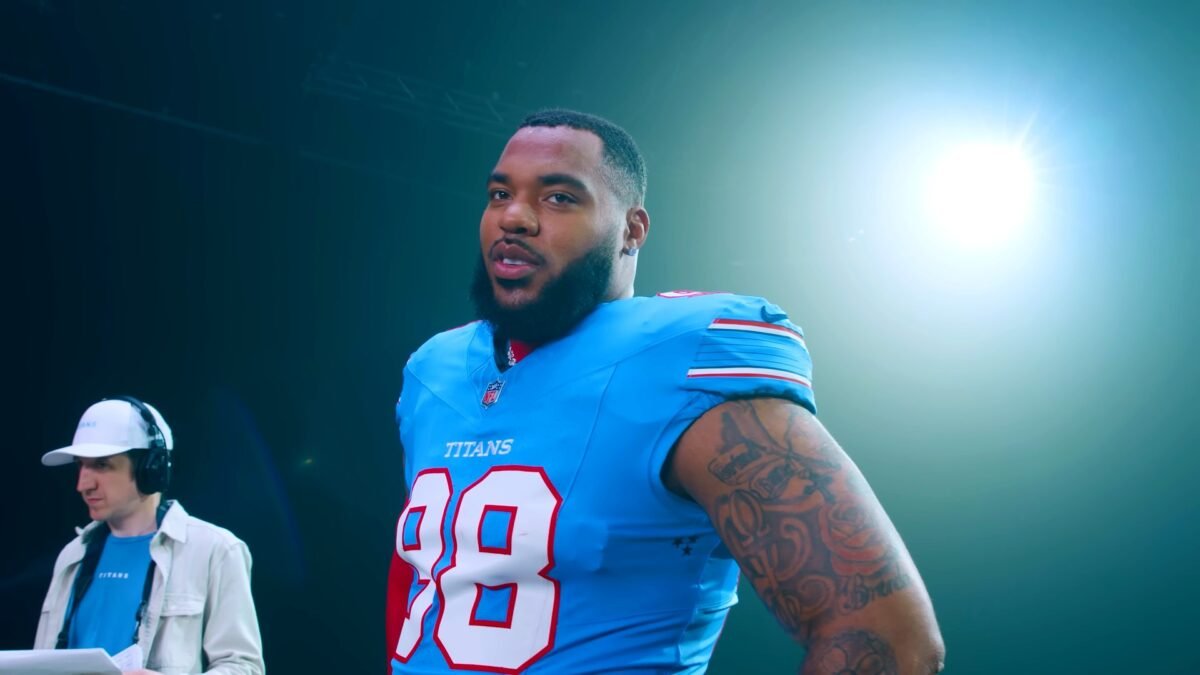
The Chicago Bears have agreed to acquire All-Pro defensive tackle Jeffery Simmons from the Tennessee Titans in the boldest trade of the National Football League season so far, according to the Titans, in a deal that sends two first-round draft picks to Tennessee and gives Chicago a proven interior pass rusher for a push towards the Super Bowl. The Titans confirmed on Thursday, 29 October 2026, that the two clubs had agreed terms on the trade compensation, subject to Simmons passing a physical examination. That condition matters. Until the medical check is complete, the move is agreed rather than final, and both clubs described the position in those careful terms. The care is understandable, because the price is historic and the player at the centre of it is one of the most disruptive defensive tackles in the league.
Under the agreed terms published by the Titans, Tennessee will receive Chicago’s first-round pick in 2027, its fourth-round pick in 2027 and its first-round pick in 2028. Chicago will receive Simmons and a fifth-round pick in 2028. The exchange was first reported on Thursday morning by Tom Pelissero and by Adam Schefter of ESPN, according to reports of their reporting carried by USA Today and other outlets, before the Titans published their own announcement confirming the compensation. The Titans’ statement said the two teams had agreed terms on Thursday morning, pending a physical. The Bears had not, at the time of the Titans’ announcement, published a separate statement of their own in the material reviewed for this article, and no new Bears statement is asserted here.
Simmons, who is 29, has spent his entire professional career with Tennessee since the Titans selected him with the 19th overall pick in the 2019 NFL Draft from Mississippi State. He arrives in Chicago, subject to the physical, with a record that explains why the Bears were willing to pay a price no team has paid for a defensive tackle in the modern draft era. According to career statistics published alongside his player record, Simmons had recorded 414 tackles, 46.5 sacks, 72 tackles for loss, nine forced fumbles and seven fumble recoveries in 106 games, including 104 starts, up to Week 7 of the 2026 season. Those figures, reported by Field Level Media and reflected in his updated career record, describe a player whose production has been sustained over eight seasons rather than concentrated in a single campaign.
The most recent season is the clearest evidence of that point. In 2025, Simmons recorded a career-high 11 sacks, together with 17 tackles for loss and 21 quarterback hits, according to Reuters and Field Level Media reporting. He was named a first-team All-Pro for the first time, and he was also selected for the Pro Bowl. His honours now include four Pro Bowl selections and two second-team All-Pro selections in 2021 and 2022, according to his career record. In the current season, through seven games, all of them starts, Simmons had four sacks, 38 tackles, six tackles for loss and nine quarterback hits, according to Field Level Media, and TSN reported that his four sacks, six tackles for loss and four passes defended all led Tennessee. He has, in other words, remained Tennessee’s most productive defensive lineman in a season in which the team around him has struggled badly.
The Titans’ controlling owner, Amy Adams Strunk, paid tribute to Simmons in a statement published by the club. She said there were few people like Simmons, thanked him for what he had given the team and the city of Nashville, and said his presence on the field had been surpassed only by what he had done away from it. She referred in particular to his Give ’Em A Reason Foundation, which she said had changed lives in Middle Tennessee and in Mississippi, and said she had no doubt it would continue wherever he went. The statement closed with a direct thank you for how he had played, led and represented the team. It was the language of a club parting with a player it valued, rather than a club seeking to move a problem on. That tone is consistent with everything else known about the timing of the deal, which appears to have come together very quickly and at Chicago’s initiative rather than after a long period in which Tennessee had offered Simmons around the league.
Titans general manager Mike Borgonzi explained that sequence in comments reported by The Tennessean. Borgonzi said Bears general manager Ryan Poles had called him on the evening of Wednesday, 28 October, with the first serious trade offer for Simmons. Borgonzi said he had not been shopping Simmons up to that point. He then spoke to Titans head coach Robert Saleh that evening and to Adams Strunk on Thursday morning before making the decision. Borgonzi was quoted as saying that the record was what it was, at 1-6, and that the club had to be realistic about where it stood and about how it would be better next year and the year after. He described the decision in terms of a three-year window for a roster, judged by the players under contract, and said the club felt the trade was the best decision for moving forward, however hard it was, because it would accelerate that process. Those remarks frame the trade, from Tennessee’s side, as a deliberate choice about timing rather than a reaction to a single defeat.
The speed of the sequence also explains the most striking detail of the week. On Wednesday, Simmons had spoken to reporters in the Titans’ locker room about the trade speculation surrounding him, and he had said, in substance, that he did not worry about things he could not control, that he had heard nothing from his agent or from the organisation, and that, as far as he knew, he was going to remain in Tennessee. The Titans’ own announcement reproduced those remarks, including his line about waking up each day with the goal of being where his feet were and of staying in the moment. Within about a day, the position had changed completely. There is no suggestion in any of the reporting reviewed here that Simmons had asked for a trade. The account given by Borgonzi is that Chicago made the approach, Tennessee considered it overnight, and the deal was agreed the following morning. Simmons’ Wednesday words therefore read, in hindsight, as an honest description of what he knew at the time, and as a reminder of how quickly a player’s future can change in the days before a trade deadline.
For Chicago, the context is almost the opposite of Tennessee’s. The Bears are 5-2 and in second place in the NFC North, trailing only the 6-0 Minnesota Vikings, according to reporting by theScore and USA Today. They are, according to Bleacher Report, the reigning NFC North champions, and they are in the second season under head coach Ben Johnson, with third-year quarterback Caleb Williams continuing to improve, according to NBC Sports Philadelphia. USA Today noted that Chicago had not reached a Super Bowl since the 2006 season and had not won the Lombardi Trophy since the celebrated 1985 team. The Simmons trade is, on its face, an attempt to close that gap now, while the team’s present core is young and while its quarterback is still on a rookie contract. Bleacher Report, in its assessment of the deal, put the cap point directly: Williams counts for 10.8 million dollars against the salary cap at present and 12.6 million dollars for the 2027 season, according to that report, and even a fifth-year option in 2028 would cost less than the market value of an upper-tier quarterback. Chicago, on that argument, will never have more flexibility to build around Williams than it has now.
The need Chicago is addressing is specific. The Bears’ defence has been strong in several respects this season. NBC Sports Philadelphia reported that the unit ranked eighth in yards allowed and third best against the run. USA Today described Simmons as joining an eighth-ranked defence. Yet the pass rush from the interior of the line has been a persistent concern since Dennis Allen was hired as defensive coordinator in 2025, according to TSN. TSN reported that Chicago’s standard pass rush, using four or fewer rushers, had produced a pressure rate of 25 per cent over the past two seasons, which it described as the fourth lowest by any defence in that period. USA Today, using a different measure, put Chicago’s pressure rate this season at 37.9 per cent, ranking 12th in the league. The two figures measure different things over different periods, and they should not be combined into a single claim, but they point in the same direction: Chicago has not generated consistent pressure without sending extra rushers, and interior pressure in particular has been in short supply.
That shortage became sharper when Chicago traded defensive tackle Gervon Dexter Sr. to the Atlanta Falcons in late August, according to USA Today, which reported that Dexter later signed a large extension with Atlanta. The Bears had since relied on a rotation that included Kentavius Street, Neville Gallimore and Jordan van den Berg alongside veteran Grady Jarrett, according to Essentially Sports. Simmons is expected, on the reporting reviewed here, to slot alongside Jarrett and to give Chicago two established interior defenders, rather than leaving the position to depend so heavily on less proven rotation players. The precise snap distribution will be a matter for Allen and for the medical and coaching staff once Simmons arrives, and it is not asserted here that Simmons simply replaces any named teammate. The point that can fairly be made is that Chicago now has a proven, high-volume interior rusher to pair with the experience already on the roster.
Simmons also reunites with a familiar face. Montez Sweat, the Bears’ edge rusher, has just returned from a two-game suspension, according to USA Today and Flashscore, and Sweat and Simmons were teammates at Mississippi State and were both first-round picks in the 2019 draft. Flashscore reported that Sweat’s suspension had been for violating the league’s performance-enhancing substance policy. The reunion is a secondary detail, but it is a useful one, because defensive lines depend on coordination as much as on individual talent. A player who already understands a teammate’s timing, habits and communication can settle more quickly than a stranger, and Chicago will want Simmons settled quickly. The Bears’ next game, according to WSMV reporting, is a Monday night visit to the 4-3 Seattle Seahawks, a prime-time test in which a new interior presence would be examined immediately. The Titans, by contrast, return to action on Sunday at the 4-2 Cincinnati Bengals, according to the same report, without the player who had led their defensive line in several categories this season.
The contract Simmons brings with him is a central part of the story, and it cuts both ways. In June 2026, the Titans signed him to a three-year extension worth 105.8 million dollars, with 100 million dollars guaranteed, running through the 2030 season, according to Reuters, Field Level Media and other reporting. The average annual value of 35.27 million dollars made him, at the time of the agreement, the highest-paid defensive tackle in NFL history, surpassing the Kansas City Chiefs’ Chris Jones at 31.75 million dollars a year, according to the Reuters report of the extension. The Titans announced the extension on 19 June 2026, and photographs published by the club showed Simmons signing the contract at the Vanderbilt Health Football Center in Nashville on that day. Simmons said at the time, in a statement carried by Reuters, that Tennessee had become a second home, that the organisation had believed in him from the first day, and that his job was not finished. Borgonzi said then that Simmons was the premier defensive tackle in the league and that teams won with players like him. It was the second extension Simmons had signed with Tennessee, after a four-year deal worth 94 million dollars agreed in 2023, according to reporting of that earlier agreement carried in a contemporary newspaper account.
That history makes the trade more, not less, remarkable. Chicago is not acquiring a player on an expiring deal, or a veteran on a short-term arrangement designed to fill a gap for a few weeks. It is acquiring a 29-year-old under contract through 2030, at a very high annual cost, and it is paying two first-round picks for the privilege. The cost figures reported for the remaining years of the deal vary by source and by the treatment of guarantees, bonuses and cap accounting, and they should be treated with care. Heavy, citing figures from Spotrac analyst Mike Ginnitti, reported a year-by-year cash picture of 7.9 million dollars for 2026, 26.9 million dollars for 2027, 29.8 million dollars for 2028, 28 million dollars for 2029 and 32 million dollars for 2030. Those figures are reported here only as Spotrac figures carried by Heavy, not as an official club statement, and the cap consequences will depend on how Chicago structures the remaining deal and on future extensions for young players. The broader point, which does not depend on any single year’s figure, is that Poles will have to manage extensions for Williams and other young players, including Colston Loveland and Luther Burden III, in the coming years, according to Heavy’s assessment of the roster. The Simmons deal therefore commits Chicago not only in draft capital, but in future salary-cap planning as well.
For Tennessee, the return is draft capital on a scale that changes the club’s planning horizon. The Tennessean reported that Tennessee now has two extra first-round picks and four first-round picks in total over the 2027 and 2028 drafts. Those picks, the report said, would be key variables in building a roster from the ground up, with the face of the franchise now in Chicago. Borgonzi’s three-year-window language points to the same conclusion. Tennessee is 1-6 in its first season under Saleh, according to USA Today, after finishing 3-14 in 2025, according to WSMV, and USA Today noted that the club had not won consecutive games since 2022. A team in that position can reasonably conclude that even an outstanding individual player, however valued, cannot by himself change the trajectory of a rebuild, and that converting that player into multiple high picks gives the club more chances to find several contributors. That is a judgement about probability and about time, and it will be tested over the next two drafts rather than in the next two games.
Tennessee may not be finished at the trade deadline either. Flashscore reported that running back Tony Pollard, cornerback Alontae Taylor and defensive end Jermaine Johnson III were also reported trade candidates in Nashville ahead of the deadline on 10 November. That report is noted here only as reporting about other names in circulation, not as a confirmed intention by the club, and no further move is asserted. The deadline itself is 12 days after the Simmons agreement, according to USA Today, so there is time for further dealing, and the Simmons trade may encourage other clubs to test Tennessee’s willingness to move further players. Equally, the trade may encourage other selling clubs to hold out for higher prices, now that a benchmark has been set for a proven player at a premium position.
The historic character of the price deserves to be stated precisely. According to ESPN Research, cited by TSN and USA Today, Simmons is the first defensive tackle in the common draft era, since 1967, to be traded for multiple first-round picks. Adam Schefter added, according to theScore, that the deal marked the first time Chicago had traded away multiple first-round picks since acquiring edge rusher Khalil Mack in 2019. Those are two different records, and both matter. The first describes the market for defensive tackles across the whole league over nearly six decades. The second describes Chicago’s own history and the scale of the commitment Poles has now made. Bleacher Nation noted that Poles had never previously paid more than a second-round pick for a player before this deal, and Action Network made a similar point, that Poles had never traded multiple first-rounders before. Those assessments, from specialist Bears coverage, underline that this is not a routine deadline move by this front office. It is a change of approach, made in the belief that the present team is close enough to justify it.
Simmons’ background helps explain why Tennessee valued him so highly for so long, and why Chicago has now valued him in the same way. He was a five-star prospect at Noxubee County High School in Mississippi and committed to Mississippi State over Alabama and Ole Miss, according to his career record. At Mississippi State, from 2016 to 2018, he was twice named first-team All-Southeastern Conference. His route to the NFL was interrupted in February 2019, when he tore the anterior cruciate ligament in his knee while training for the draft, according to his career record. He nevertheless remained a first-round selection, signed a four-year rookie contract worth 12.66 million dollars with a 7.23 million dollar signing bonus, and began the 2019 season on the reserve and non-football injury list while he recovered, according to the same record. He was activated in October 2019, made his debut the next day against the Los Angeles Chargers, and recorded his first sack on Philip Rivers in a 23-20 victory. He finished his rookie season with 32 tackles and two sacks in nine games, and the Titans reached the AFC Championship Game.
His later career included the less glamorous work that does not always appear in sack totals. In 2020, he was named AFC Defensive Player of the Week for a performance against Chicago in which he recorded three tackles, a pass deflection, a fumble recovery and a forced fumble that was returned for a touchdown, according to his career record. In 2023, he scored his first career touchdown on a two-yard reception from Will Levis after being declared an eligible receiver, according to the same record, and career statistics credit him with two receiving touchdowns in total. Those details do not change the analysis of the trade, but they complete the picture of a player who has been used creatively, who has stayed on the field for a very high share of snaps, and who has been trusted in leadership roles. USA Today reported that Simmons had been on the field for nearly 90 per cent of Tennessee’s snaps this season, a workload that underlines both his importance to the Titans and the physical demands Chicago will now place on him.
The wider market context also matters. Yardbarker reported that Chicago had also shown interest in DeForest Buckner, but that Buckner had been traded from the Indianapolis Colts to the San Francisco 49ers on Tuesday. That report is included here only to show that Chicago’s search for interior help was not confined to Simmons, and that the club had been active in the market before Poles called Borgonzi on Wednesday evening. The Chairshot’s NFL roundup for 29 October also reported wider movement around the league, including a trade request from Colts receiver Josh Downs, the signing of former Baltimore kicker Justin Tucker to the Kansas City practice squad, and a season-ending injury for Washington receiver Terry McLaurin. Those items are not directly connected to the Simmons deal, but they illustrate a league in the middle of a busy pre-deadline period, in which several clubs are simultaneously reassessing rosters, injuries and cap positions. In such a period, the first major deal often sets the terms for the deals that follow, and the Simmons price is now the reference point other clubs will cite.
Analysis: Why It Matters
The Simmons trade matters for reasons that go beyond a single player changing teams. It is a statement about how two clubs, at opposite ends of the standings, read the same league at the same moment. Chicago reads its 5-2 record, its young quarterback and its defensive foundation as a window that may not stay open. Tennessee reads its 1-6 record, its new head coach and its draft position as a reason to convert present talent into future opportunity. Both readings can be reasonable at the same time. The trade is interesting precisely because it does not require one club to be foolish for the other to be wise. It requires only that the two clubs value time differently, and the rest of the league will now watch to see which valuation proves correct.
1. A win-now signal, not a rental
The most important feature of this deal is its length. Chicago has not rented a pass rusher for the final weeks of a season. It has acquired a player under contract through 2030, at the peak of his powers, and it has paid for him as if the next several seasons matter as much as the next several weeks. That distinction changes how the trade should be judged. A rental can be judged by whether the team wins a play-off game in January. A long-term acquisition must be judged by whether the player remains productive, healthy and well integrated for several years, and by whether the draft picks given up would have produced players of comparable value. The Bears’ front office, on the evidence of the price, believes Simmons will do that. The risk is not that Simmons is the wrong type of player. The risk is that the price assumes a level of sustained health and production that even outstanding defensive tackles do not always deliver into their early thirties, and that Chicago will have fewer cheap, young players to surround him with in the years when his cap cost is highest. The reward, if the judgement is right, is a defensive centrepiece who allows the rest of the defence to function as Allen designed it, and who gives a young quarterback a margin for error while the offence continues to develop.
2. Interior pressure changes the maths for a defence
Defensive football is often described in terms of edge rushers, because sacks from the outside are visible and dramatic. Interior pressure is quieter, but it can be more disruptive, because a quarterback who can step forward into a clean pocket can escape an edge rush, while a quarterback whose pocket collapses from the middle has nowhere to go. That is why the figures cited in the reporting matter, even though they use different measures. A standard four-man rush that produces pressure only a quarter of the time forces a coordinator to choose between sending extra rushers, which leaves coverage exposed, and accepting that the quarterback will have time. Simmons, who led all defensive tackles in one measure of pass-rush win rate cited by XFN Football, at 27 per cent, while Chicago ranked 23rd as a team in that measure, offers a direct answer to that problem. If he commands double teams in the middle, as outstanding interior rushers usually do, the edge rushers around him should face more one-on-one matchups, the secondary should have to cover for shorter periods, and the run defence, already strong, should become harder to scheme against. The effect, if it materialises, will not be visible only in Simmons’ own sack total. It will be visible in the sack totals of his teammates, in hurried throws, and in the number of times Allen can trust a four-man rush on third down. That is the calculation Chicago has made, and it is a sound one in principle. The test will be whether Simmons, in a new scheme and with new teammates, reproduces the disruption he produced in Tennessee, where he was the focal point of the defensive front and where opponents planned specifically for him.
3. The price is historic because proven interior rushers are rarely available
It is tempting to ask whether any defensive tackle is worth two first-round picks. The market’s answer, over nearly sixty years, has been that no team had previously been willing to pay that price. That history does not prove the price is wrong. It proves that players of Simmons’ calibre, at his age, under a long contract, are almost never traded. Teams that draft an outstanding defensive tackle usually keep him, extend him, and build around him, as Tennessee did twice, in 2023 and again in June 2026. The rarity of the transaction therefore tells us something about supply, not only about Chicago’s enthusiasm. When a player of this type does become available, the buying club cannot wait for a cheaper alternative, because there may not be one. The comparison with the Khalil Mack trade in 2019 is instructive. Mack was an edge rusher, a different position with a different market, but the logic was the same: a proven, elite defender in his prime, acquired at a price that looked steep at the time, in the belief that draft picks are uncertain and proven production is not. The Mack deal did not, by itself, deliver Chicago a Super Bowl, and that history should temper any claim that the Simmons deal guarantees one. What it does show is that Chicago’s front office, under different leadership then and now, has repeatedly been willing to pay a premium for a defensive difference-maker when it believes the team is close. The judgement in this case is bolder, because the price is higher relative to the position, and because the team must now live with the cap consequences for several years. Boldness is not the same as recklessness, but the distinction will only become clear with time.
4. Tennessee chose time over talent, and the three-year window is the test
From Tennessee’s perspective, the trade is best understood as a decision about time. Borgonzi’s language about a three-year window was not a slogan. It was a description of how a general manager must think when a roster is 1-6, when a new head coach is in his first season, and when the club has not won consecutive games since 2022. In that situation, a single outstanding player can improve individual games without changing the club’s overall trajectory, and his salary can make it harder to add the several good players a rebuild requires. Converting Simmons into four first-round picks over two drafts, including two extra picks, gives Tennessee more opportunities to find those players, and more flexibility to move in future trades. The risk is obvious. Draft picks are not players. They are chances, and some of them will fail. Tennessee has also lost its defensive leader, its most productive lineman and a player who embodied the club’s identity in Nashville and in Mississippi, through his foundation work and his community presence. The club will be judged, fairly, on whether the picks it now holds become contributors, and on whether the culture that Simmons helped to sustain survives his departure. The trade also places a particular responsibility on Saleh and Borgonzi to show that the rebuild has a clear direction, because supporters who accepted a difficult season on the promise of a plan will reasonably ask what the plan now is, and when it will produce a competitive team. The Simmons deal buys Tennessee time and capital. It does not, by itself, buy it a better team. That work remains to be done, and it will be done under closer scrutiny because the club has traded its best player to do it.
5. The physical, the fit and the adjustment remain unknowns
Two qualifications should be kept firmly in mind, and neither should be treated as a footnote. The first is the physical examination. The Titans’ announcement was explicit that the agreed terms were pending a physical, and no responsible assessment can treat the deal as complete until that check is passed. Simmons has a history that makes the point more than formal. He tore his anterior cruciate ligament in February 2019 while training for the draft, and he began his rookie season on the non-football injury list. He recovered fully and built a durable, high-volume career, but a club paying two first-round picks and assuming a contract of this size is entitled to be thorough, and the process should be allowed to run its course. The second qualification is fit. Simmons was the centrepiece of Tennessee’s defensive front. In Chicago, he will be one part of a more balanced unit, playing alongside Jarrett and with Sweat returning on the edge, in a scheme designed by Allen that has, so far, produced strong run defence but inconsistent interior pressure. The adjustment is not automatic. New teammates, new calls, new responsibilities in run fits and in pass-rush games all take time, and the Bears’ schedule does not allow much of it, with a Monday night game in Seattle as the immediate test. None of this suggests the deal will fail. It suggests only that the most interesting questions about it have not yet been answered, and that the first few games should be watched for how Simmons is used, how often he is doubled, and how quickly the players around him benefit, rather than only for his individual statistics.
Taken together, the analysis points to a trade that is rational for both clubs, risky for both clubs, and genuinely significant for the league. Chicago has declared that its window is now, and it has paid the price that declaration requires. Tennessee has declared that its window is later, and it has accepted the pain that declaration involves. The rest of the season, and the next two drafts, will show which declaration was better timed. For now, the most honest summary is that the Bears have acquired one of the best defensive tackles in football, the Titans have acquired the capital to rebuild, and the league has a new benchmark for what a proven interior defender is worth when a contending team decides it cannot wait.
What to Watch Next
Five developments will show, in the coming days and weeks, whether the trade delivers what both clubs expect from it.
1. The physical examination and the official confirmation. The first step is the medical check on which the Titans’ announcement made the deal conditional. Watch for confirmation from either club that the physical has been passed and the trade is final, and for any change in language about the terms. Until that confirmation appears, the deal should continue to be described as agreed, pending a physical, as the Titans described it.
2. Simmons’ debut and his role in Chicago’s front. The Bears’ next game is the Monday night visit to Seattle, according to WSMV reporting. Watch how many snaps Simmons plays, whether he starts, how often he is double-teamed, and whether the edge rushers and the secondary benefit from the attention he draws. His own sack total in the first game will be less informative than the pressure rate of the defence as a whole.
3. Tennessee’s response without its defensive leader. The Titans play at Cincinnati on Sunday, according to the same report, without the player who led their defensive line in sacks, tackles for loss and passes defended this season. Watch who takes those snaps, whether the run defence holds up, and how Saleh and Borgonzi describe the plan for the line in the weeks ahead. The response on the field will be an early, if incomplete, guide to the cost of the trade.
4. Further movement before the 10 November deadline. The Simmons deal was agreed 12 days before the trade deadline, according to USA Today, and Flashscore reported other Titans players as reported trade candidates. Watch whether Tennessee makes further moves, whether other selling clubs cite the Simmons price in their own negotiations, and whether Chicago, having spent its first-round capital, makes smaller additions at other positions.
5. The draft capital and the cap consequences over the next two years. Tennessee now holds four first-round picks over the 2027 and 2028 drafts, according to The Tennessean, and Chicago must manage a large contract through 2030 alongside extensions for its young core. Watch how Tennessee uses, or trades, those picks, and how Chicago structures its cap in the coming off-seasons. Those decisions, more than any single game, will determine the final judgement on this trade.
Sources
USA Today — Bears land DT Jeffery Simmons in blockbuster trade, send Titans two first-round picks
TSN — Report: Bears acquire All-Pro DT Simmons for two first-round picks in blockbuster with Titans
The Tennessean — Titans GM says Jeffery Simmons trade is about ‘3-year window’ with roster
Reuters — Titans make Jeffery Simmons highest-paid DT in NFL history

About the Author — Abdul Mannan
Related Articles
Liverpool Beat Chelsea 6-5 on Penalties After 1-1 Draw to Reach Carabao Cup Quarter-Finals
Liverpool beat Chelsea 6-5 on penalties after a 1-1 draw at Anfield to reach the Carabao Cup quarter-finals,…
Fleetwood Town Stun Arsenal on Penalties in Carabao Cup Shock at Highbury
Fleetwood Town, 84 places below Arsenal in the English football pyramid, won 5-3 on penalties after a 1-1…

Harry Kane Wins Ballon d’Or, Ending England’s 25-Year Wait Ahead of Mbappé and Yamal
Harry Kane has won the 2026 Ballon d'Or in London, becoming the first Englishman to claim football's top…