
UN General Assembly Backs End to US Cuba Embargo Again, but Support Falls to Lowest Level in 20 Years

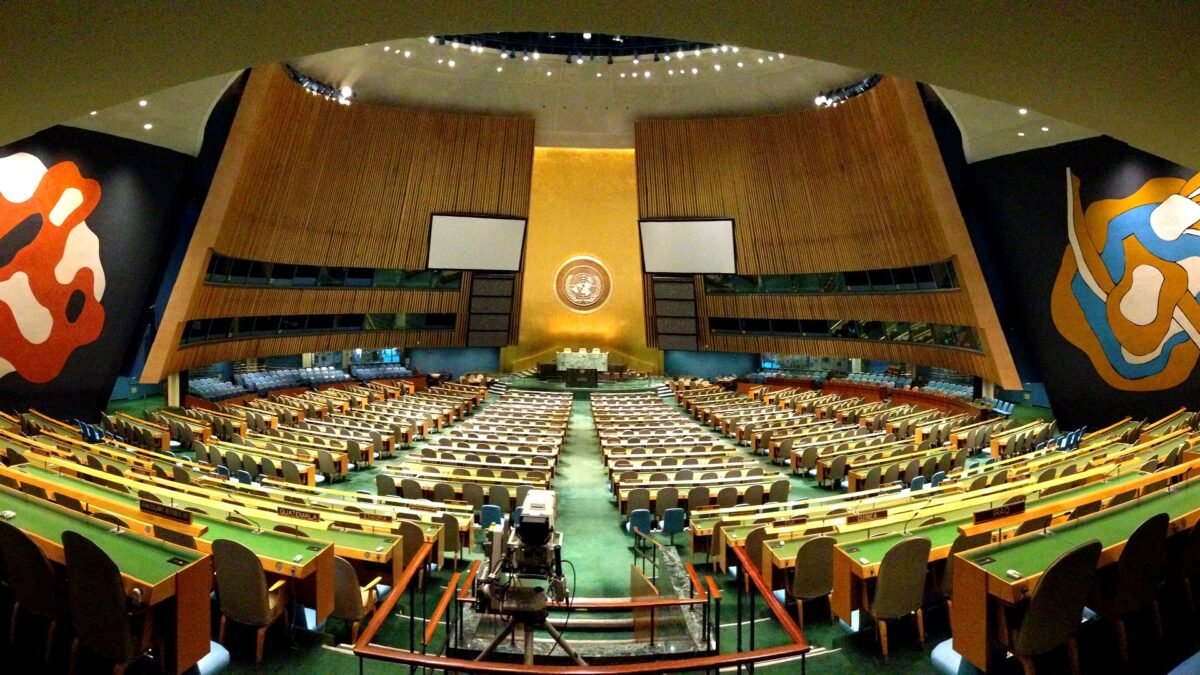
The United Nations General Assembly called for the 34th time for an end to the United States economic, commercial and financial embargo on Cuba on Wednesday, 28 October 2026, but with the weakest backing for the resolution in two decades, according to UN News. The text passed by 130 votes in favour to 17 against, with 25 abstentions, according to UN News and Reuters. Last year the same resolution was adopted by 165 votes to seven, with 12 abstentions, according to UN News. The fall in support — 35 fewer votes in favour, 10 more against, and more than twice as many abstentions — was the story of the vote, even though the resolution itself passed by a large majority and changed nothing in American law.
The shift was the product of an American lobbying campaign, according to Reuters, which reported that a United States push led several countries to oppose the resolution or abstain for the first time in years. Several Western countries, including Germany and Italy, abstained for the first time in many years, according to Reuters. The Associated Press reported that Germany, Italy and Latvia were among the Western countries that abstained for the first time in 34 years, and that Bosnia, Colombia, Costa Rica, Ecuador, Lithuania, Morocco, North Macedonia, Paraguay and Slovenia were among the states that voted against the resolution, most of them for the first time. The United States and Israel were also among the 17 voting against, according to Reuters and the Associated Press. The vote is not legally binding, according to both agencies, and only the United States Congress can lift the embargo, which has been in place for more than 60 years.
The debate that preceded the vote was unusually confrontational, even by the standards of an annual ritual that has been staged at the United Nations for more than three decades. On Tuesday, 27 October, United States Ambassador Mike Waltz and Cuban Foreign Minister Bruno Rodríguez Parrilla clashed on the floor of the General Assembly, shouting over each other after the Cuban delegation demanded a point of order during Mr Waltz’s speech, according to CNN and Reuters. The confrontation continued into a dispute over filming, in which a Cuban diplomat swatted away a telephone being used to record the scene, according to CNN. On Wednesday, Mr Waltz accused that diplomat, Richard Tur de la Concepción, first secretary at Cuba’s United Nations mission, of assaulting an American diplomat, according to Reuters, and said he would be expelled from the United States. Secretary of State Marco Rubio had signed the paperwork to eject him, Mr Waltz told Fox News, according to CNN, and a State Department spokesperson told CNN on Wednesday that the diplomat had left the country. Cuba lodged a complaint with Secretary-General António Guterres about the American diplomat involved in the incident, according to Reuters, and denied the United States account of the confrontation, according to CNN’s reporting of the Cuban position. The expulsion and the vote together describe a relationship in which diplomacy at the United Nations has become a theatre of confrontation rather than a channel for negotiation, and in which the annual embargo resolution is now fought over as a contest of influence as much as a statement of principle.
A vote that passed, and a campaign that worked
Mr Waltz welcomed the shift in the tally after the vote. “I’m satisfied that so many countries now, including major economies like Korea, like Germany, and others have shifted their position,” he told reporters, according to Reuters. “Diplomacy takes time, but now that we’ve had a tripling of countries that have shifted, we expect that to only to continue to grow,” he said, according to Reuters. The arithmetic supports his satisfaction, if not his projection. The number of states voting against the resolution more than doubled, from seven to 17, and the number abstaining more than doubled, from 12 to 25. The combined number of states unwilling to vote in favour rose from 19 to 42. That is still a minority in a 193-member Assembly — 21 states did not vote in favour, against or abstain in a way captured by the three published figures, a reminder that the published tally of 172 votes does not account for every member — but it is a minority large enough to change the political meaning of the result. A resolution adopted 165–7 reads as near-unanimity. A resolution adopted 130–17, with 25 abstentions, reads as a contested question.
Mr Rodríguez presented the opposite reading. He said on X after the vote that the United States government was once again isolated in its attempt to continue strangling the Cuban people and subjecting them to an act of collective punishment and genocide, according to Reuters. That language is Cuba’s long-standing framing, and it should be reported as Cuba’s argument, not as an established legal finding. No international court has ruled the embargo to be genocide, and the resolution itself does not use that word. What Mr Rodríguez’s statement does capture is Havana’s insistence that the result, however reduced, still represents a majority of the world’s states calling for the embargo to end, and that Washington’s success in moving votes does not amount to international acceptance of the policy. Both readings can be true at once: the resolution passed, and the campaign against it worked. That duality is the central fact of the 2026 vote.
The resolution, presented by Cuba, cites the principles of the United Nations Charter — sovereign equality, non-interference in internal affairs, and freedom of trade and navigation — according to UN News. It names the United States 1996 Helms-Burton Act, whose extraterritorial reach affects companies and individuals in other countries, and urges states with similar laws to repeal them, according to UN News. It also says the tougher measures applied since 2017 have reversed the easing of 2015 and 2016, according to UN News. The text is, in substance, the same kind of text the Assembly has adopted for 34 years. Its novelty this year lay not in its wording but in its reception: in the number of governments that, for the first time in a generation, declined to support it, and in the circumstances — a fuel blockade, blackouts, and a diplomatic expulsion — in which the debate took place.
“There is no blockade”
Mr Waltz rejected the premise of the debate outright, according to UN News, arguing that Cuba’s troubles came from its own government. “There is no blockade,” he said, according to UN News. He pointed to more than $876 million in United States exports to the island in the first eight months of 2026, as well as shipments from Canada, Spain, Mexico, China, Russia, the European Union and United Nations agencies, according to UN News. The country’s wealth had not vanished, Mr Waltz said, but had “changed hands” from ordinary Cubans to a ruling elite, according to UN News. He accused the military-run business monopoly of hoarding resources, according to UN News. A vote against the resolution, he told delegates, was “the only thing standing between the communist kleptocratic regime and another propagandistic victory at the expense of the Cuban people,” according to UN News.
Mr Rodríguez responded with an on-screen counter showing what the embargo had cost since the debate opened on Tuesday: more than $22.9 million, according to UN News. He blamed the embargo for strangling Cuba’s health system, according to UN News. He said infant mortality had doubled and tens of thousands of surgeries had been delayed or cancelled, according to UN News. Cancer medicines could not get in, he said, and Cuban-made treatments for Alzheimer’s and dementia could not get out, according to UN News. Mr Rodríguez also said the United States was in the hands of a plutocracy and had no standing to talk about democracy, according to UN News. “What Cuba demands is to be left in peace,” he said, according to UN News. “Cuba is not a threat, the blockade is.”
Both presentations should be read with care. Mr Waltz’s export figure, if accurate, shows that trade between the United States and Cuba has not ceased, and that the embargo, as a legal regime, contains exceptions — notably for food and medicine, which have been explicitly excluded since 2000, according to historical accounts of the embargo. It does not, by itself, disprove Havana’s argument, which is about the cost and difficulty of that trade: about financing restrictions, shipping penalties, the deterrent effect of secondary sanctions on third-country banks and companies, and the price of fuel and other essentials when suppliers fear American penalties. Mr Rodríguez’s health claims, meanwhile, are Cuba’s government figures and arguments, presented in a political debate. They are consistent with reporting by United Nations agencies and by the House of Commons Library that more than 100,000 patients, including more than 10,000 children, were waiting for surgeries delayed by fuel shortages and power outages in 2026, and that blackouts lasting up to 20 hours had forced hospitals to suspend non-emergency operations. But the specific figures Mr Rodríguez cited in the chamber — the doubling of infant mortality, the number of delayed surgeries — are attributed here to him, as they were by UN News, and are not independently verified in this article. The reader should hold both sets of claims in the form in which they were made: as arguments by governments with opposing interests, in a debate whose purpose was to persuade other governments, not to settle a factual dispute.
What is not in dispute is the human context in which the debate took place. The vote came as Cuba struggled with a severe energy crisis exacerbated by a United States fuel embargo, according to UN News. The Trump administration has been stepping up pressure on the island’s government since January, when it imposed a de facto fuel blockade on Cuba, according to Reuters. Fuel imports dropped precipitously and blackouts now regularly span days, even in the capital, Havana, alongside shortages of fuel, food and water that have brought Cuba to the brink of humanitarian crisis, according to Reuters. United Nations experts have repeatedly called the United States fuel blockade and associated sanctions a violation of international law and the human rights of all Cubans, according to Reuters. United States officials have said the punishing sanctions are necessary to upend Cuba’s communist-run government, which the United States calls a corrupt dictatorship, according to Reuters. Cuba has long denied those allegations, according to Reuters. A Havana resident, Luis Manuel Cepero, told Reuters he had little interest in the political theatrics at the United Nations. The vote raised awareness among people who did not understand what the embargo was about, he said, according to Reuters: how it affected the Cuban people in their day-to-day lives, what they were going through, and how they suffered. “To me, that is what’s most important — far beyond political views or any kind of ideology,” he said, according to Reuters.
The shouting match and the expulsion
The confrontation on Tuesday began during Mr Waltz’s speech, in which he attacked Cuba’s leadership, reaching back to Fidel Castro’s rise to power, and showed photographs of Cuban officials with luxury watches while accusing them of a lavish lifestyle, according to reporting of the debate. Members of the Cuban delegation struck their tables and called for the speech to be interrupted, according to the same reporting. Mr Rodríguez walked to the lectern, called Mr Waltz a liar, and the session was briefly suspended, according to reporting of the debate. Videos from Tuesday showed members of the Cuban delegation hitting a table and the foreign minister shouting for a point of order as Mr Waltz spoke, according to CNN. Mr Rodríguez approached the podium, and the two began shouting over each other, according to CNN. “This individual needs to back away from this podium. He’s not going to intimidate me in the United States of America like he tries to intimidate political prisoners,” Mr Waltz yelled from the podium, according to CNN.
The filming dispute that followed is described differently by the two sides, and both descriptions are reported here. Another video shared by Mr Waltz’s account on X showed a Cuban diplomat swatting away the telephone taking the video, with that diplomat saying the person filming was violating his personal space, according to CNN. Later on Tuesday, the Cuban Mission to the United Nations sent a letter to the Secretary-General expressing deep concern about the incident, according to CNN. In the letter, the Cuban mission said an American diplomat had invaded the Cuban diplomat’s personal space to film him and put the videos on social media with the intention of damaging his reputation, according to CNN. Mr Waltz’s account was that the Cuban diplomat had shoved and tried to assault an American diplomat, according to CNN and Reuters. The diplomat was identified by Cuban media as Richard Tur de la Concepción, according to the New York Post’s reporting, and as first secretary of Cuba’s Permanent Mission, according to Reuters and CNN. Mr Waltz said on Fox News that Mr Rubio had signed the paperwork to eject him, and that he would be on a plane to Havana within 24 hours, according to CNN. A State Department spokesperson told CNN on Wednesday that the individual had left the country, according to CNN.
The expulsion matters beyond the individuals involved because it removes a channel. A first secretary at a United Nations mission is not a ceremonial figure. He is part of the working staff through which a government communicates, negotiates and monitors proceedings. Expelling him, in the middle of a General Assembly debate on that government’s signature resolution, is a signal that the United States is willing to use the host-country prerogative — the power to declare a diplomat unwelcome and require departure — as an instrument of the wider pressure campaign. Cuba’s complaint to the Secretary-General is, in turn, a signal that Havana intends to contest the expulsion in the forum where it believes the rules favour it. Neither move changes the embargo. Both moves make it harder to imagine a negotiation in which either side concedes anything without appearing to retreat under pressure.
Three decades of votes, and a changing tally
The yearly tally has tracked the changing relationship between Washington and Havana, according to UN News. When the Assembly first voted in 1992, 59 countries backed the resolution, three opposed it and 71 abstained, according to UN News. Support peaked at 191 votes in 2015 and 2017, during and just after the thaw under President Barack Obama, according to UN News. In 2016, the United States abstained for the first time, according to UN News and Reuters, as Washington and Havana forged a closer relationship. The Assembly has adopted the resolution annually for more than three decades, except for 2020 during the Covid-19 pandemic, according to Reuters, to little effect on American law.
The history behind the vote is the history of the embargo itself. The United States embargo has prevented American businesses and citizens from conducting trade or commerce with Cuban interests since 1960, according to historical accounts, and is described as the most enduring trade embargo in modern history. The United States government first launched an arms embargo in 1958, targeted energy and agricultural sectors in 1960, and imposed a total embargo on Cuban trade, with exceptions for food and medicine, after the Cuban government seized American economic assets, including oil refineries, according to historical accounts. The embargo was loosened during the Cuban thaw from 2015 to 2017, but was tightened sharply again thereafter, according to the same accounts. It is enforced mainly through the Trading with the Enemy Act of 1917, the Foreign Assistance Act of 1961, the Cuban Assets Control Regulations of 1963, the Cuban Democracy Act of 1992, the Helms-Burton Act of 1996, and the Trade Sanctions Reform and Export Enhancement Act of 2000, according to historical accounts. The Helms-Burton Act reinforced the embargo and penalised foreign companies doing business in Cuba, according to those accounts, and its extraterritorial reach — the feature the General Assembly resolution criticises — is the reason the vote is followed closely by governments far from Havana and Washington. A company in Berlin, Madrid or Riga that trades with Cuba must consider not only Cuban law and its own law, but American law as well.
The 2026 vote should therefore be understood as two votes in one. The first is the vote on the text: 130 states said the embargo should end. The second is the vote on alignment: 42 states declined to say so, in a year when the United States made clear that it was counting, lobbying and, in the case of the expulsion, willing to act. The first vote preserves the Assembly’s position. The second vote suggests that the position is becoming more expensive to hold, at least for some governments, in a year when American pressure is at its most intense in decades. Whether that expense is a temporary response to a particular administration’s campaign, or a structural shift in how governments weigh the Cuba question against their bilateral relationship with Washington, is the question the 2027 vote will begin to answer.
The fuel blockade and the crisis on the island
The most important context for the 2026 vote is not in New York but in Havana, where the consequences of the fuel blockade are felt daily. In 2026, the humanitarian situation in Cuba worsened following the imposition of a fuel embargo by the Trump administration, according to historical and contemporary reporting, with fuel shortages having severe and far-reaching consequences for the civilian population. Between January and July 2026, the country experienced four total blackouts, two in March and two within a single week in July, according to that reporting, with the most recent outage, on 10 July, leaving the island without electricity for the second time in five days. The House of Commons Library reported in 2026 that Cuba was confronting, in the assessment of the International Crisis Group in March 2026, its most acute humanitarian crisis and the greatest threat to its political status quo in decades, following the United States effectively severing the island’s access to imported oil. The Library also reported that the United Nations Office for the Coordination of Humanitarian Affairs and the World Health Organization said in May 2026 that more than 100,000 patients were waiting for surgeries delayed by fuel shortages, and that blackouts lasting up to 20 hours had forced hospitals to suspend non-emergency operations.
These are not abstract figures. They describe a power system on which hospitals, schools, water distribution and food preservation depend, and a population for which a blackout is not an inconvenience but a disruption of every basic service at once. The Cuban government’s figures for the cost of the embargo — including a claim, reported before the vote, of $8.083 billion in damages between March 2025 and February 2026 — are Cuban government figures, and should be treated as such. But the direction of the underlying facts is not seriously contested: fuel is scarce, power is unreliable, and the health system is under strain that United Nations agencies have themselves documented. The American argument is that this strain is the fault of the Cuban government’s economic management and political choices, and that sanctions are the instrument to force a change of government. The Cuban argument is that the strain is the intended product of the sanctions, and that the sanctions are therefore a form of collective punishment. The General Assembly vote does not resolve that argument. It records, once a year, which of the two arguments commands the support of a majority of states. In 2026, the majority held, but it was smaller, and the argument in favour of sanctions was, for the first time in a generation, able to move a significant number of votes.
It is also worth noting what did not happen in New York. No state proposed an alternative resolution. No state proposed a compromise text that would condemn the embargo while also condemning the Cuban government’s human rights record. No negotiation produced a revised draft. The Assembly voted on Cuba’s text, as it has for 34 years, and the United States campaigned against it, as it has for most of those years. The absence of a middle text is itself a finding: on Cuba, at the United Nations, there is no centre ground that either side is currently willing to occupy. The vote is binary, and the campaign is binary, and the result is therefore read in binary terms, even when the underlying reality — a humanitarian crisis, a political system that represses dissent, a sanctions regime with extraterritorial effects, a government that has survived six decades of American pressure — is anything but binary.
Analysis: Why It Matters
1. The tally is now a measure of American influence, not just of opinion on Cuba
For most of its history, the Cuba embargo vote was a low-cost way for governments to express a view. Voting in favour cost little, because the resolution was non-binding and the United States, while displeased, did not make the vote a test of bilateral relations. The 2026 vote suggests that calculation has changed. When Germany, Italy and Latvia abstain for the first time in 34 years, and when nine other states vote against for the first time, the vote has become a test, and governments are answering it with their relationship with Washington in mind. Mr Waltz’s post-vote satisfaction, and his prediction that the shift would continue to grow, should be taken seriously as a statement of intent: the United States will campaign again, and will expect the tally to move further. The question for the governments that shifted is whether they moved because they changed their minds about the embargo, or because they calculated that the cost of opposing Washington in this year, on this issue, was too high. If it was the latter, the tally may move back when the pressure eases. If it was the former, the Assembly’s near-consensus on Cuba, which held for three decades, has genuinely broken. The distinction matters, and it cannot be resolved from the tally alone. It will require watching what those governments say and do on Cuba in other forums, and whether they defend their abstentions or votes against as principled positions or as tactical ones.
2. Non-binding does not mean inconsequential
It is easy to dismiss the General Assembly vote because it changes no law. That dismissal misses the vote’s function. The resolution is the one annual, global, public record of how the world views the longest-running embargo in modern history. It is cited by Cuba in every forum, by United Nations experts in their reports, and by governments that want to signal, without taking a bilateral step, that they regard the embargo as illegitimate. Its value to Havana is not legal but political: it allows Cuba to say, every year, that it is not isolated, and that the United States is. The 2026 vote weakens that claim without destroying it. A 130–17 result still allows Havana to claim a majority. It does not allow Havana to claim near-unanimity. For Washington, the value of the campaign is the reverse: it allows the United States to say that the world is beginning to see the embargo as Cuba’s government sees it — as a problem of governance, not of sanctions — even though the majority still votes the other way. Both sides will use the same tally to tell opposite stories, and both stories will be, in their way, true. The tally is a fact. Its meaning is a contest, and the contest will continue in every capital that has to decide, next year, how to vote.
3. The expulsion signals a new willingness to use host-country power
Expelling a diplomat is not a routine step. It is a deliberate escalation, and it is notable that it was taken in the middle of a General Assembly debate, in response to an incident on the Assembly floor, and announced on television before it was confirmed through diplomatic channels. The message is not only to Cuba but to every mission in New York: that the host country will act, publicly and swiftly, against conduct it regards as an assault on its diplomats, and that the usual courtesies of multilateral diplomacy will not restrain it. The risk of that message is that it invites reciprocity, or at least resentment, from governments that regard the United Nations headquarters as a space governed by agreement rather than by host-country discretion. The benefit, from Washington’s perspective, is deterrence: that no diplomat will again feel free to interfere with an American official’s filming, or with an American ambassador’s speech, without consequence. Whether the expulsion deters or merely antagonises will depend on how it is received in Havana and in other capitals, and on whether Cuba responds with a reciprocal expulsion or with a complaint that keeps the issue alive at the United Nations. Either way, the incident has added a bilateral dispute to a multilateral debate, and the bilateral dispute may prove harder to resolve than the multilateral one.
4. The humanitarian crisis is now the centre of the argument, not the background
In earlier years, the embargo debate was often framed as a legal and political argument about sovereignty, non-interference and the Charter. In 2026, it was framed, by both sides, as an argument about who is responsible for suffering. Mr Waltz argued that the suffering was the fault of a corrupt regime that hoarded resources. Mr Rodríguez argued that the suffering was the product of a blockade that strangled the health system. The shift in framing reflects a shift in reality: the fuel blockade has made the crisis visible, daily and island-wide, in a way that the broader embargo, with its exceptions and its slow effects, did not. That visibility changes the politics of the vote. Governments that might have been comfortable voting against an embargo in principle may be less comfortable voting in a year when the consequences are blackouts and delayed surgeries, and governments that might have been comfortable supporting Cuba may be less comfortable doing so when Washington is actively lobbying and when the Cuban government’s own human rights record is part of the American case. The humanitarian crisis does not simplify the argument. It intensifies it, and it makes the vote a judgement on competing explanations for suffering, rather than a judgement on a legal text. That is a harder judgement to make, and a harder one to defend, which may be one reason so many governments chose, this year, not to make it at all, and abstained instead.
5. The embargo’s future will be decided in Washington, but its legitimacy will be decided elsewhere
Only the United States Congress can lift the embargo, as Reuters and the Associated Press both noted. No General Assembly vote, however large, can change that. The embargo’s legal future is therefore a domestic American question, dependent on American politics, on the balance of power in Congress, and on the views of a Cuban-American community and a wider electorate for whom Cuba policy is both a foreign policy and a domestic issue. The embargo’s legitimacy, however, is an international question, and it is decided, year by year, in the General Assembly, in the reports of United Nations experts, and in the positions governments take in other forums. The 2026 vote shows those two questions moving in different directions: the legal position is unchanged and, if anything, the American administration’s pressure campaign is intensifying, while the international position, though still a majority in favour of ending the embargo, is less secure than it has been in 20 years. That divergence cannot hold indefinitely. Either the international pressure will, over time, contribute to a change in American law, as it has contributed, in other cases, to changes in sanctions policy, or the American position will, over time, reshape international opinion, as the 2026 tally suggests it may be beginning to do. Which of those happens will depend less on the annual vote itself than on the facts on the island — on whether the fuel blockade produces a political change in Havana, a humanitarian catastrophe that forces international action, or a stalemate in which suffering continues and the vote becomes, year by year, a smaller and smaller majority for a position that changes nothing.
What to Watch Next
- Whether Cuba responds to the expulsion of its first secretary with a reciprocal step, a formal complaint that proceeds at the United Nations, or a quiet replacement — and whether the incident is raised again when the Assembly next meets on Cuba.
- How Germany, Italy, Latvia and the other governments that shifted their votes explain their positions in national statements, and whether they maintain those positions in other votes on sanctions and sovereignty.
- Whether the fuel blockade and blackouts ease, worsen or stabilise in the coming weeks, and what United Nations agencies report about hospitals, water and food supplies on the island.
- Whether the United States takes further steps against Cuba’s access to fuel, finance or technology, or signals any willingness to negotiate, and how Havana responds to any such step.
- Whether the 2027 General Assembly vote continues the trend toward a smaller majority, stabilises at the 2026 level, or reverses — and whether any government proposes a revised or compromise text.
Sources
- UN News: “Backing for UN call to end Cuba embargo falls to 20-year low”
- Reuters, via KWSN: “US sways more countries to oppose UN resolution condemning its Cuba embargo”
- Associated Press, via Military.com: “UN Condemns US Economic Embargo of Cuba Though Some Nations Sit Out After Trump Administration Push”
- CNN: “Trump administration kicks out Cuban diplomat from US as tensions rise”
- House of Commons Library: “Frequently asked questions: Cuba’s humanitarian crisis and US tensions in 2026”

About the Author — Abdul Mannan
Related Articles

Erin Patterson Loses Appeal and Will Spend Life in Prison Without Parole Over Mushroom Murders
Victoria's Court of Appeal dismissed Erin Patterson's challenge to her triple-murder convictions and removed her 33-year non-parole period,…
North Korea Fires About 10 Short-Range Ballistic Missiles as Landmine Row with South Korea Deepens
North Korea fired about 10 short-range ballistic missiles from near Wonsan on Thursday, South Korea's military said, as…

Hungary Keeps Orban-Era US Nuclear Deal as Magyar Government Seeks a New Footing with Washington
Hungary's Magyar government has asked parliament to make legally binding a US civilian nuclear cooperation agreement signed under…