
Trump Restores Kansas and Iowa Rallies Days Before Midterms as Tight Senate Races Threaten Republican Majority

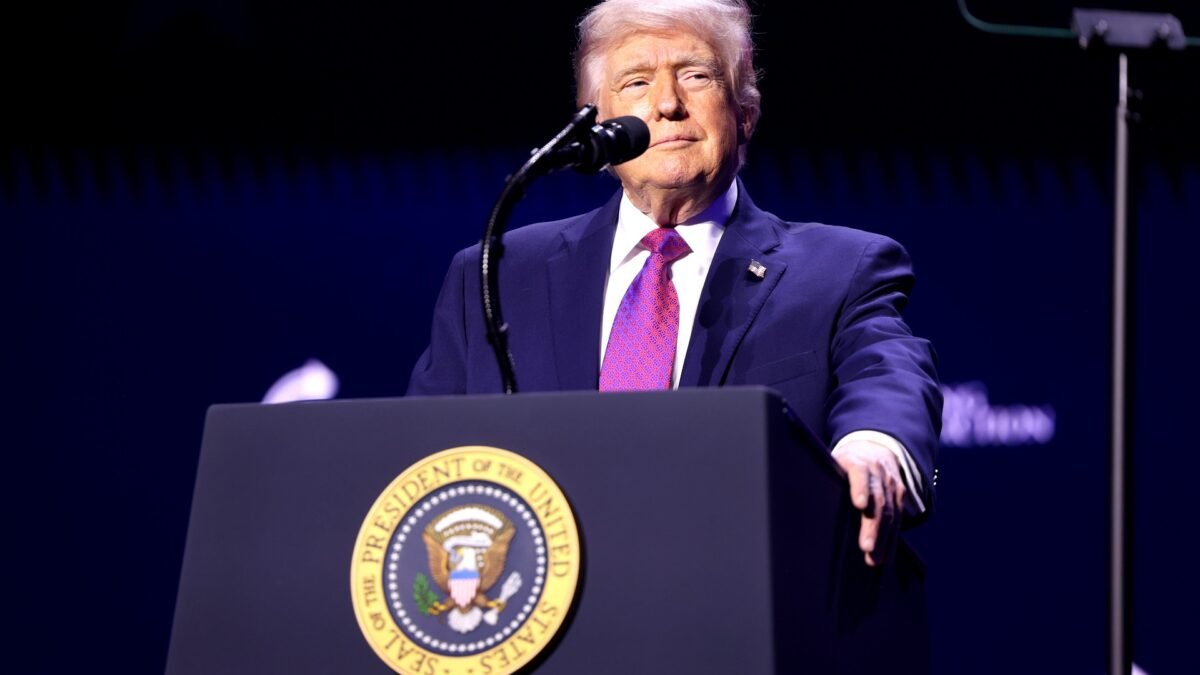
President Donald Trump has restored two campaign rallies in Kansas and Iowa that his team cancelled less than a day earlier, sending him back on the road this Sunday, two days before midterm elections in which two unexpectedly tight Senate races could help decide control of the chamber.
A White House official confirmed the reversal to Reuters on Friday, saying: “Rallies are BACK ON! President Trump loves his supporters, and in addition to nearly 20 tele-rallies, he will hold back-to-back rallies in Kansas and Iowa on Sunday.” The official spoke on condition of anonymity, according to Reuters.
The about-turn came barely 24 hours after the Republican National Committee announced on Thursday that both in-person events were off and that Mr Trump would instead address voters by telephone. On Thursday, the president himself had sounded relaxed about skipping Kansas, telling reporters he did not “feel like I have to go to Kansas” because Republican Senator Roger Marshall was “doing very well”. “We are going to have a strong Tuesday night,” he added, according to Reuters.
By Friday afternoon, the plan had changed again. The two rallies were back on, rearranged, the White House official said, to fit around the dozens of tele-rallies recently added to the president’s schedule. Mr Trump was due to campaign in Daytona Beach, Florida, on Friday, spend Saturday at his Mar-a-Lago resort conducting a run of telephone rallies, and then fly to the Midwest for the two in-person events on Sunday.
The whiplash, compressed into a single day, captures the nervousness inside the Republican campaign as the midterms reach their final weekend. With voting on Tuesday, 3 November, the party is defending a 53–47 Senate majority and, according to polling averages, is fighting unexpectedly hard for seats in states it has long taken for granted.
The 24-hour reversal
Mr Trump’s original plan for the closing weekend had him in Salina, Kansas, on Saturday to campaign for Mr Marshall, and in Dubuque, Iowa, on Sunday for Republican Senate candidate Ashley Hinson. The events were announced in early October as part of a wider pre-election tour, which included an earlier Iowa rally in Sioux City on 22 October, according to the Des Moines Register.
On Thursday, 29 October, organisers abruptly changed course. The Republican National Committee said the president would not travel to either state and would instead hold a series of virtual rallies in more than a dozen states. The Salina Airport Authority confirmed at the time that “all Salina events are canceled”, according to the Associated Press.
The party presented the switch as a deliberate choice rather than a retreat. The tele-rallies were described as a 72-hour sprint aimed at “maximising opportunities” to speak to voters across the country, the Associated Press reported, allowing the president to reach far more states in the limited time left before polls close than a pair of arena events would allow.
But the cancellation immediately set off speculation. Word that the rallies had been scrapped prompted fevered discussion about the fate of the Republican Senate candidates in the two Midwestern states, with polls showing Democrats running strong races against both Mr Marshall and Ms Hinson, the New York Post reported. Within hours, the decision was reversed.
According to the Associated Press, it remained unclear on Friday whether the Dubuque venue — the Five Flags Center — was still the plan, and no new Kansas location or timing had been announced. The Des Moines Register reported that the Dubuque event page listed doors opening at 10:30 a.m., the event beginning at 12:30 p.m. and Mr Trump scheduled to speak at 2 p.m. on Sunday, 1 November.
Mr Trump’s schedule for the rest of the weekend underlines the pace of the closing days. After flying to South Carolina on Thursday to headline what CNN reported was his 25th midterm rally of the month, he was due in Florida on Friday for a rally at the Ocean Center in Daytona Beach, one of his final scheduled in-person arena rallies of the cycle. He is expected to spend part of the weekend at Mar-a-Lago, where an annual Halloween party is planned, according to CNN. Including Sunday’s two events, he will have headlined 28 rallies since the start of October, CNN reported, citing Associated Press data.
Alongside the in-person events, the president is scheduled to hold 19 tele-rallies on Saturday alone, the New York Post reported, dialling into events for Republican candidates in state after state while remaining at his Florida resort.
Two races the Republicans did not expect to fight
The reason the two rallies matter is the state of the two Senate races they are meant to rescue.
In Kansas, Mr Marshall is seeking re-election against Democrat Adam Hamilton in a contest that polls show to be unusually close for a seat Republicans have held for decades. The state has not sent a Democrat to the Senate since 1932, yet the RealClearPolitics polling average had Mr Marshall down by 0.2 points as of Thursday night, the Washington Examiner reported. A Washington Post poll released on Friday put Mr Hamilton ahead by 52 per cent to 43 per cent among likely voters, a CNN poll found Mr Hamilton up by four points, and an Emerson College poll found Mr Hamilton at 49 per cent to Mr Marshall’s 45 per cent, according to Reuters.
Mr Trump last campaigned for Mr Marshall in person on 19 October in Park City, outside Wichita, according to the Associated Press. That he is returning less than two weeks later, after first cancelling and then restoring the trip, is itself a measure of how seriously the campaign now takes the race.
In Iowa, Republican Representative Ashley Hinson faces Democratic state Representative Josh Turek for the open seat of retiring Senator Joni Ernst. Mr Trump has endorsed Ms Hinson. The RealClearPolitics polling average shows the race in a dead heat, with Ms Hinson down by 0.5 points, the Washington Examiner reported.
The two contests sit inside a wider Senate map that has turned against the Republicans in the final days. The RealClearPolitics polling averages showed Democrats leading in six of eight toss-up Senate races as of Thursday night, according to the Washington Examiner. If that pattern held on Tuesday, the Republican majority — and with it the party’s ability to confirm the president’s nominees and set the Senate’s agenda — would be in genuine danger.
More than 43 million Americans had already cast their ballots before the final weekend, according to early-voting figures reported this week, meaning that much of the electorate had already made up its mind before Mr Trump’s restored rallies take place. The remaining prize is the smaller pool of voters still to decide, and the turnout of each side’s supporters on the day itself.
A campaign built on rallies
The rally has been Mr Trump’s signature campaign instrument since he first ran for president a decade ago, and the 2026 midterms have been no exception. The sheer volume of events — 25 rallies in October alone before the final weekend, according to Associated Press data cited by the New York Post — reflects a deliberate strategy: the president himself is the party’s most powerful turnout machine, and his presence in a state is meant to energise the Republican base and lift down-ballot candidates who might otherwise struggle to draw attention.
The tele-rally, by contrast, is a newer and less tested tool. A telephone rally can reach voters in many states at once, at almost no cost in travel time, and it allows the campaign to touch races in places the president could never visit in person. But it cannot reproduce the spectacle of an arena event — the crowds, the cameras, the local news coverage — and it asks voters to listen to a disembodied voice rather than to stand in a room with the president.
The events of Thursday and Friday suggest the campaign itself is unsure which tool to trust in the final 72 hours. First it chose reach, cancelling two arena rallies in favour of the tele-rally sprint. Then, within a day, it chose presence, restoring both events while keeping the tele-rallies as well. The result is a schedule that tries to have both: a president who is everywhere by telephone and, on Sunday at least, in person in two of the states where his party is most vulnerable.
The Florida stop on Friday adds another note of caution. Mr Trump won Florida handily in 2024, but Reuters reported that early voting in the state has tilted toward Democrats, prompting the president to campaign there in person rather than treat it as safe. It is, Reuters noted, his latest stop in a state Republicans usually expect to win, following campaign events earlier in the week in Mississippi and South Carolina.
Analysis: Why It Matters
1. The whiplash is the story
Campaign schedules change constantly in the final days of an election, and a single altered weekend would normally be a footnote. What makes this one significant is the speed and the direction of the change. A rally is cancelled on Thursday with the president publicly insisting he does not need to go; it is restored on Friday with an official announcement in capital letters. That is not the behaviour of a campaign confident in its position. It is the behaviour of a campaign that received new information — polling, early-voting data, or pressure from the candidates themselves — and decided, within hours, that the risk of staying away was greater than the cost of going. The reversal tells voters in Kansas and Iowa, and donors and activists watching from elsewhere, that the party’s own internal picture of these races is worse than its public statements suggest.
2. Kansas and Iowa are bellwethers, not outliers
It would be easy to treat the two races as local curiosities. Kansas has not elected a Democratic senator in 94 years; Iowa was a state Mr Trump carried comfortably in his presidential campaigns. But that is precisely why they matter. If Democrats are competitive in Kansas and tied in Iowa, the Republican position is weaker than the national map would suggest. The Washington Examiner’s finding that Democrats lead in six of eight toss-up Senate races points in the same direction: the problem is not one candidate or one state, but a broad pattern of erosion in places the party assumed were secure. A party that has to spend its president’s final weekend defending Kansas has less time and energy for the genuinely marginal seats that will decide the majority.
3. The tele-rally gamble reveals a deeper tension
The original decision to replace the rallies with telephone events was defensible on its own terms. With three days left, a president can speak to voters in 19 states by phone, but can only stand in two or three arenas. Yet the speed with which the decision was reversed suggests the campaign discovered, or was reminded, that the rally does something a phone call cannot: it creates a visible, local event that dominates a state’s news for a day. Mr Marshall and Ms Hinson do not only need their supporters to vote; they need their races to feel important, and a presidential visit confers importance in a way a dial-in cannot. The compromise now in place — tele-rallies on Saturday, in-person rallies on Sunday — is an attempt to keep both advantages, but it also means the president will arrive in Kansas and Iowa after a day spent on the telephone, with less rest and less preparation than a dedicated trip would have allowed.
4. The affordability backdrop has not gone away
The rallies are taking place against an economic backdrop that has dominated the final weeks of the campaign. Energy costs have surged as war in the Middle East and attacks on Russian refineries have pushed oil prices sharply higher, and diesel and petrol costs have become, by several accounts, among voters’ biggest frustrations heading into Tuesday. The president’s closing argument has leaned heavily on his record and on attacking Democratic policies, but the cost-of-living question is the one his opponents have pressed hardest, and it is the issue most likely to move the undecided voters who remain. A rally crowd is a friendly audience; the voters who will decide Kansas and Iowa are, by definition, less friendly, and many of them have already voted.
5. The final 72 hours will be decided by turnout, not persuasion
With more than 43 million ballots already cast, the scope for changing minds is narrow. The remaining contest is largely about mobilisation: which side’s supporters actually turn out on Tuesday, and whether the president’s final-weekend appearances can lift Republican enthusiasm enough to offset the Democratic advantage visible in the early-voting figures. The restored rallies are, in that sense, a turnout operation dressed as a campaign event. Their success will not be measured in the size of the crowds on Sunday, impressive as those may be, but in whether the voters who attend — and the larger audience that sees the coverage — are moved to vote on Tuesday. If the rallies work, the party may hold both seats; if they do not, the president will have spent his final weekend defending ground his party once considered safe, and the Senate majority will be in the balance.
What to Watch Next
- Sunday’s rallies themselves: whether both events go ahead as announced, where exactly the Kansas rally is held after the original Salina venue was cancelled, and what Mr Trump says about Mr Marshall and Ms Hinson — effusive praise would signal confidence, while a focus on national themes would suggest the candidates are being used to draw a crowd rather than being championed in their own right.
- Fresh polling in Kansas and Iowa: any new surveys released over the weekend will show whether the restored rallies, or the news of them, have moved either race, and whether Mr Hamilton’s lead in Kansas holds or narrows.
- Turnout on Tuesday: with early voting already past 43 million ballots, the key question is whether Republican voters turn out on the day in numbers large enough to overcome the Democratic edge in the early vote, particularly in Florida, where early voting has tilted toward the Democrats.
- The tele-rally sprint: whether the 19 telephone rallies scheduled for Saturday produce any measurable effect, and whether the campaign’s experiment with remote events becomes a model for future campaigns or is quietly abandoned after Tuesday.
- The Senate map beyond the Midwest: results in the other toss-up races, where Democrats lead in six of eight contests according to the RealClearPolitics averages, will determine whether Kansas and Iowa are isolated surprises or part of a broader shift that costs the Republicans their majority.
Sources
- Reuters — On again: Trump restores weekend campaign rallies in Iowa, Kansas
- CNN — What drove Trump to revive red-state rallies less than 24 hours after canceling them
- New York Post — Trump’s Kansas, Iowa rallies back on after being scrapped from pre-midterm schedule
- Des Moines Register — Trump’s canceled Iowa rally is back on. President will appear Nov. 1
- Washington Examiner — No signs of red-state firewall around GOP majorities days before midterm elections

About the Author — Abdul Mannan
Related Articles
Trump Administration Escalates Election Legal Fights Days Before Midterms as Alaska and California Battles Intensify
With four days to go until the midterms, the Justice Department has amended its Alaska lawsuit, accelerated a…
More Than 43 Million Americans Have Already Voted in the Midterms as Early Voting Surges Past 2022 Pace
More than 43 million early ballots had been cast by 29 October, with Texas alone past its entire…
US Judge Blocks Narrow Medicaid ‘Medically Frail’ Rule, Protecting Seriously Ill People Ahead of Work Requirements
Judge Richard Stearns vacated the CMS definition that limited the medically frail exemption to conditions significantly impairing compliance,…