
Trump Administration Escalates Election Legal Fights Days Before Midterms as Alaska and California Battles Intensify

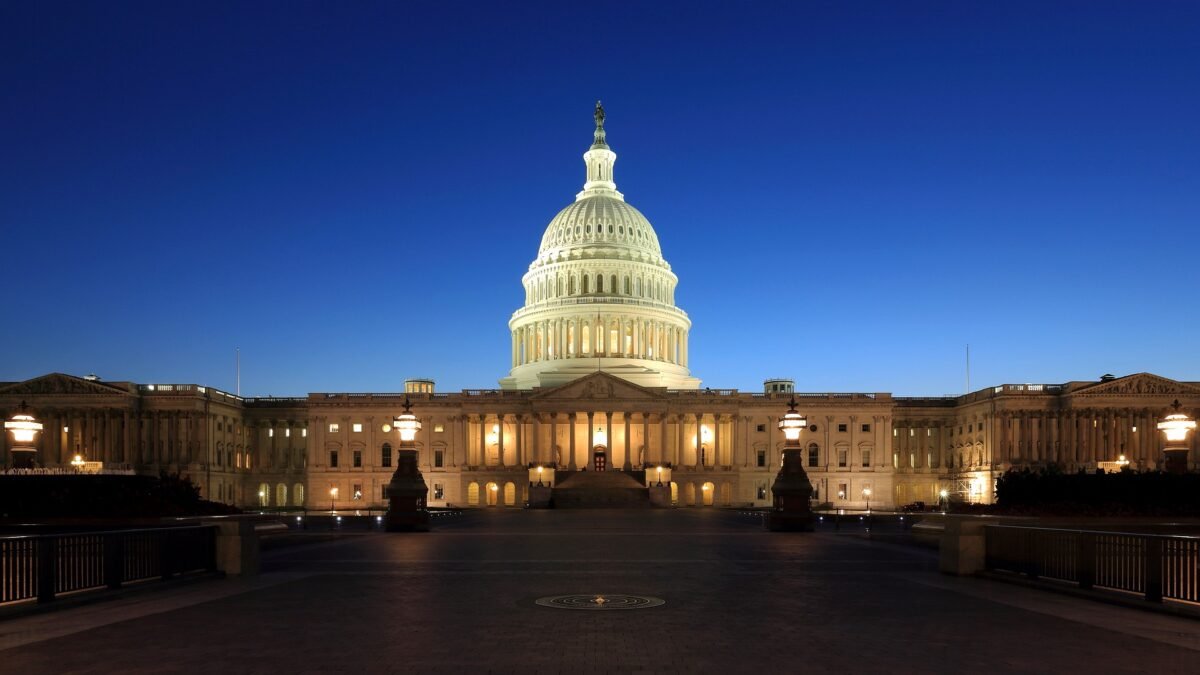
With four days to go until the midterm elections, the Trump administration has sharply escalated its legal campaign against state election systems, filing an amended federal lawsuit in Alaska that seeks to block certification of a crucial Senate race, accelerating a criminal investigation into the same contest with dozens of grand jury subpoenas, and pressing ahead with a criminal probe of election officials in California over alleged voting by noncitizens.
The moves, reported by Reuters on Friday, amount to an extraordinary federal intervention in elections that the United States Constitution leaves to the states to administer. Taken together, they show a Justice Department that is no longer waiting until after votes are counted to challenge how they are counted — and an administration willing to use the machinery of federal law enforcement, in the final days of a campaign, against the officials and candidates running in the election itself.
In Alaska, the Justice Department filed an amended lawsuit on Thursday seeking to prevent the state from certifying the results of its Senate race if the Republican incumbent, Dan Sullivan, loses narrowly to the Democrat, Mary Peltola. The suit cites a New York Times report published on Wednesday that said operatives linked to Peltola’s campaign recruited a second candidate with the same name as the incumbent to stand in the race. In California, meanwhile, the department has issued federal grand jury subpoenas to election workers in Los Angeles County as part of a criminal investigation into alleged voting by noncitizens, according to copies of documents seen by Reuters.
Both actions landed as more than 44 million Americans had already cast ballots, according to the University of Florida’s Election Lab, leaving the total less than two million short of the entire early-vote figure from the 2022 midterms. Election officials around the country have told Reuters they are bracing for further legal challenges from Washington before Tuesday.
The Alaska race is one of about ten highly competitive Senate contests that will decide control of the chamber. Democrats need a net gain of four seats to win back the majority from Republicans. If they take one or both chambers of Congress, they could launch investigations into the Trump administration and increase pressure on the president to end the war in Iran, according to Reuters.
The Alaska dispute: a second Sullivan on the ballot
The Alaska case turns on an unusual feature of the state’s ballot. Alongside the incumbent, Senator Dan S. Sullivan, a Republican, voters will find the name of a second candidate called Daniel Sullivan — a retired schoolteacher from Petersburg who is standing without a party designation, listed directly above the incumbent’s name. The Justice Department’s original lawsuit, filed on 22 October in the United States District Court for the District of Alaska, asked a federal judge to declare that any result affected by voter confusion would breach the state’s duties under the National Voter Registration Act, and to prevent Alaska from certifying the Senate result pending an investigation into whether votes cast for the second Sullivan were meant for the senator.
The case is formally United States of America v. Alaska, and it was assigned to Judge Sharon Gleason. Its central claim is that the second Sullivan’s candidacy was designed to confuse voters, and that the state failed in its obligation to protect the integrity of the election by allowing him to stand. Republican state officials had already tried to have the challenger removed from the ballot, arguing that his was not a genuine candidacy but an attempt to confuse voters who wanted to vote for the incumbent. The Alaska Supreme Court rejected those efforts in June, ruling that excluding him would deny his right to run, and ordered that he remain on the ballot.
What changed the case this week was the New York Times report published on Wednesday. According to the newspaper, staff members on Peltola’s campaign worked with a Democratic operative from Ohio to find another Dan Sullivan to run, in order to draw votes away from the Republican incumbent. The report was based on text messages and direct quotes from Peltola’s former campaign manager, according to USA Today. The Justice Department moved quickly to amend its lawsuit, incorporating twelve different excerpts from the Times report and alleging that the Peltola campaign and a national Democratic Party office had submitted “misleading” arguments about their knowledge of the recruitment effort.
The amended complaint describes the recruitment as a “sham campaign for the purpose of misleading Alaskan voters” and calls the situation a “conspiracy to undermine the integrity of the electoral process”. In a passage that drew attention from legal observers, the filing states: “Although what the New York Times reports is not always true, its reporting here aligns with what the United States has been alleging on information and belief. It also aligns with common sense.”
President Donald Trump weighed in on Wednesday, telling reporters that Peltola and the second Sullivan “should be prosecuted”, and calling the alleged scheme “voter fraud at the highest level”. He also called for Peltola to be prosecuted and banned from the ballot, according to USA Today, although he did not identify which statute he believes she violated. Trump has said publicly that he ordered the lawsuit. Attorney General Todd Blanche, in an interview on Fox News after the Times report appeared, said the recruitment efforts “should be illegal”, but he did not identify any crime that would compel the department to bring charges, and instead pointed to the administration’s civil suit.
Alaska’s Republican governor, Mike Dunleavy, ordered a state investigation on Wednesday evening, directing the Department of Public Safety to examine whether the Peltola campaign’s alleged role in recruiting the second Sullivan violated state law and whether criminal charges or civil action were warranted. The Alaska Bureau of Investigation has begun looking into the matter, according to its deputy commissioner, Austin McDaniel. Dunleavy said in an interview with NewsNation that any finding of illegality “may in fact impact whether someone is seated in the US Senate”. The chairman of the House Oversight Committee, James Comer, a Republican from Kentucky, opened a congressional inquiry on Thursday.
Peltola’s campaign has denied any involvement. In a statement to USA Today, the campaign said it had “no involvement with either Sullivan campaign”, and Peltola herself said on Friday that she knew nothing of the recruitment effort. The Democratic Senatorial Campaign Committee has also denied involvement and accused Republicans of propping up candidates of their own in other races. The second Sullivan has previously denied that his aim was to cause confusion or divert votes from the incumbent. An elections attorney in Alaska, Scott Kendall, told Reuters that the second candidate’s presence was likely to hurt Peltola more than help her, adding that with so few undecided voters left, the revelations were unlikely to affect the outcome.
A criminal investigation gathers speed
Alongside the civil lawsuit, the Justice Department has dramatically accelerated a criminal investigation into whether Alaska Democrats sought to confuse voters by recruiting the second Sullivan, according to CNN, which cited people familiar with the investigation. Federal prosecutors issued more than 40 grand jury subpoenas and record preservation notices to key targets by Wednesday evening, with additional subpoenas expected on Thursday. The Daily Caller reported that at least three dozen subpoenas were issued on Thursday to the campaign offices of Peltola and the second Sullivan, and that multiple grand jury subpoenas would follow in the coming days, with preservation orders for text messages and emails being prepared for mobile phone companies.
Investigators are looking at potentially bringing civil rights charges, including a deprivation of rights charge that is more typically used against law enforcement officials, according to a department official cited by CNN. The investigation had previously been moving slowly. The United States Attorney in Alaska, Michael Heyman, recused himself early in the inquiry, in part because he was in discussions with Senators Sullivan and Lisa Murkowski about a judgeship nomination in the state, leaving the investigation to career officials in his office and prosecutors from the department’s Civil Rights Division. Some career prosecutors have balked at aspects of the probe and at whether the effort broke federal law or simply represents electioneering tactics, according to one official cited by CNN, although a department official denied that there had been any backlash. Heyman un-recused himself on Wednesday afternoon at the request of department leadership. “Suddenly the options in the criminal case became much wider,” a department official told CNN on Thursday.
The flurry of activity follows a pattern that CNN described as a stark difference from previous administrations, including the first Trump administration, when the Justice Department took pains to remain out of public view in the weeks before an election. The department’s recent actions include a highly visible search of the home of Democratic Representative Ilhan Omar, criminal charges against prominent critics of the president, grand jury subpoenas to California election officials, and challenges to voter rolls in several states. Department officials describe the Alaska investigation and the other election-related efforts as normal and time-sensitive law enforcement activity, intended to safeguard votes rather than sway the election, as critics have alleged.
Alaska election officials, however, called the amended lawsuit “meritless” in a court filing on Thursday night, saying it had “cast a cloud over Alaska’s election that is contrary to the public interest”. The state’s Republican-led elections office is pressing the court to dismiss the case quickly. State and federal officials briefly discussed a potential settlement, according to CNN, including a “middle-of-the-road approach” under which poll workers would be given additional instructions to clarify for voters which Sullivan is which, but they were unable to agree.
Some inside the department privately admit that the Alaska lawsuit is all but destined to fail, according to CNN, but say it still serves a purpose by creating headlines that warn Alaskans about what one source described as a “massive voter fraud attempt”. One federal official called it a “preservation lawsuit”, saying: “It will allow us to challenge the election if a challenge becomes necessary.” A state official told CNN that there were examples of voters who were well informed about the two Sullivans still filling out their ballots incorrectly and having to seek new ones, although it was unclear how many spoiled ballots were related to the confusion.
Because Alaska uses ranked-choice voting, it could be weeks before the winner of the Senate race is declared. That delay, combined with the pending lawsuit, means control of the Senate could remain unclear well after election night — a prospect that has already begun to shape how both parties talk about the outcome.
California: subpoenas after a courtroom defeat
The second front in the administration’s election campaign is in California, where the Justice Department has issued federal grand jury subpoenas to election workers in Los Angeles County as part of a criminal investigation into alleged voting by noncitizens. The Los Angeles County Registrar-Recorder’s office received the subpoenas last week, according to copies of the documents seen by Reuters on Thursday. The subpoenas seek information about the agency’s methods for detecting “unlawful voting by aliens” and preventing such ballots from being counted, as well as records related to the county’s response to a series of letters the department sent this month.
At least two employees at the registrar’s office were served with grand jury subpoenas, according to the New York Times, which first reported the development; other reporting put the number at three. The subpoenas, dated 21 and 24 October, order the employees to appear in court on 4 November, the day after the election, according to CBS News. A letter accompanying one subpoena identifies Homeland Security Investigations as the agency conducting the criminal probe. Prosecutors have not announced charges against the employees, and receiving a subpoena does not establish that a person is suspected of wrongdoing.
The subpoenas are the latest step in a pressure campaign that began with letters the department sent to local election officials in California this month, warning them that they could “risk significant federal scrutiny and legal exposure” if they refused to cooperate with demands to set aside ballots cast by people federal officials had flagged as “likely” noncitizens. One letter warned that if officials knowingly tabulated ballots cast by individuals identified by federal agencies as noncitizens, they risked becoming “aiders and abettors to a federal crime”.
The department has also filed a civil lawsuit against California, on 15 October, seeking to force the state to set aside more than 20,000 ballots it says were sent to voters who are likely noncitizens, until their citizenship status can be confirmed. On Wednesday, a federal judge, David O. Carter, rejected the department’s request to temporarily block California from counting mail-in ballots from the list of 20,000 voters. Judge Carter found there was no legal basis for the demand and said the court was not convinced the list was reliable. He told the department’s lawyers at a hearing on Tuesday that the court believed “it would be wise that any threats to state and county election employees cease immediately”, and in his ruling said the request would “wreak havoc and disrupt the election” and create a “chilling effect on election workers and voters alike”. The department is appealing the ruling to the United States Court of Appeals for the Ninth Circuit.
The registrar-recorder of Los Angeles County, Dean Logan, said in a statement on Thursday: “At every step, the US Department of Justice has taken a confrontational, adversarial approach. Election officials are acting in accordance with state and federal law.” He added that his office would “take whatever steps necessary to ensure the safety of our employees and to remain focused on serving the voters of Los Angeles County so they can exercise their voting franchise”. A Justice Department spokesperson declined to comment on the subpoenas but said that California and the federal government “agree that noncitizen voting is properly addressed through criminal law”, and that, based on the judge’s ruling, taking criminal legal action against election officials was the next step.
The department has charged 156 immigrants with voting or registering to vote unlawfully in a pre-midterm push, the acting deputy attorney general, Trent McCotter, told reporters on Thursday. Federal agents have also delivered subpoenas to election offices in Orange, Santa Clara and San Diego counties, and in Orange County agents delivered a further subpoena on Thursday requesting unredacted records concerning suspected noncitizen voters. More than 500,000 ballots had already been processed in Los Angeles County, where election procedures protect voter secrecy by preventing officials from tracing processed ballots back to individual voters.
Studies have repeatedly shown that voting by noncitizens is rare and has no impact on election results, according to Reuters. California officials have argued that the federal government’s data is unreliable, pointing to earlier efforts in which nearly 200 people flagged in Nevada were ultimately confirmed to be United States citizens. Lawyers for California have also questioned whether the federal government has the authority to intervene in the state’s elections, noting that under the Constitution, states administer elections, not the federal government.
The wider campaign: voter rolls, lawsuits and no international observers
The Alaska and California actions are part of a much broader federal effort. The Justice Department has asked nearly every state to hand over complete voter registration lists, saying it needs the information to ensure compliance with federal voter-roll maintenance laws and to identify potentially ineligible voters. It has filed 31 federal lawsuits against 30 states plus Washington, D.C., to force compliance, according to FindLaw. Federal courts have dismissed many of those suits, and on 9 October a federal judge, Sparkle Sooknanan, struck down the department’s nationwide voter-data collection policy, finding that it exceeded the department’s legal authority and violated federal law. The department has appealed that ruling as well.
According to a report published on Wednesday, the administration has issued more than 100 subpoenas demanding records on tens of thousands of voters in at least 13 states, at least 49 of them from grand juries, which generally makes them harder to challenge in court. Democrats have asked a federal judge in Washington, D.C., for a restraining order barring the administration from interfering in the states’ ability to conduct the midterms. In response, the department has argued that the letters it sent to states “have no independent legal effect” and therefore give Democrats no standing to bring the lawsuit. Judge James Boasberg has scheduled a hearing on the request for a temporary restraining order.
There is also a notable absence from this year’s election. The United States did not invite election observers from the Organization for Security and Co-operation in Europe to Tuesday’s midterms — the first time that has happened since the organisation began observing American federal elections in 2002. The OSCE, a 57-member security body based in Vienna of which the United States is a member, has observed 12 American federal elections, six of them midterms. In a joint statement on 23 September, its Office for Democratic Institutions and Human Rights and its Parliamentary Assembly expressed regret at the decision, saying it was “not in line” with commitments made by all member states under the 1990 Copenhagen Document. The president of the Parliamentary Assembly, Pere Joan Pons, called it a significant departure from established democratic practice. The State Department has said the OSCE should focus its “limited resources” on elections where it can have the “greatest impact”, while a White House spokesperson said American elections would be administered, conducted and observed by American citizens. In response, two European election-monitoring organisations, Election-Watch.EU and MEMO 98, launched an independent remote assessment of the midterms on 27 October.
The campaign trail: rallies cancelled, early voting surges
The legal battles are unfolding against a campaign in its final stretch. On Friday, Trump will campaign in Florida, hoping to galvanise his supporters in a state he won handily in 2024 but where early voting has tilted towards Democrats, according to Reuters. He has cancelled planned weekend rallies in Kansas and Iowa and will instead take part in about 20 virtual campaign appearances before Tuesday, according to the Republican National Committee. Asked by a reporter on Thursday whether he was “sick of travel”, the president did not give a direct answer. The former vice-president Kamala Harris, whom Trump defeated in the 2024 election, will rally for Democrats in Atlanta on Friday.
The early-vote numbers suggest an electorate turning out in large numbers. More than 44 million Americans had already voted as of Thursday evening, according to the University of Florida’s Election Lab. In Texas, more than 5.8 million people had voted early, already exceeding the state’s entire early-vote total from 2022. At a polling centre on Thursday in Columbus, Ohio, home to highly competitive Senate and governor’s races, an election official, Antone White, said turnout was about twice as high as in 2022. Among those waiting to cast a ballot was Sadirah Simmons, a senior citizen living on a fixed income, who told Reuters: “The economy is not getting any better. You have to go out and vote if you want change.”
Analysis: Why It Matters
1. A federal election apparatus, deployed four days out
The most striking feature of this week’s events is not any single lawsuit or subpoena, but their timing and their combination. Four days before a midterm election, the federal government is simultaneously suing one state to stop it certifying a Senate result, criminally investigating the campaign of the Democratic candidate in that race, and serving grand jury subpoenas on election workers in the country’s largest county. Previous administrations, including the first Trump administration, made a point of keeping the Justice Department out of public view in the run-up to an election, precisely because the appearance of federal pressure on the electoral process can itself shape the result. That norm has now been set aside, and the department’s own officials describe the work as normal and time-sensitive. The question that will follow the election, whatever its outcome, is whether the norm can be restored — or whether the final days of every future campaign will now feature federal prosecutors as active participants.
2. Alaska: a name on the ballot becomes a federal case
The Alaska dispute is, at its core, about a genuinely unusual ballot. Two men with the same name, one of them the incumbent senator, standing in the same race, is the kind of quirk that election lawyers dream about and election administrators dread. The state supreme court has already ruled that the challenger has a right to stand, and Alaska’s own elections office considers the federal lawsuit meritless. What the Justice Department has done is to take a state-level ballot dispute and turn it into a federal case about the integrity of the whole election, using a newspaper report as its principal new evidence. The department’s own filing concedes that the newspaper’s reporting “is not always true”, while insisting that it aligns with what the government has been alleging. That is a remarkable foundation for a lawsuit that could delay the certification of a Senate seat. And the department’s own officials, speaking privately, acknowledge that the suit is all but destined to fail — while also acknowledging that it serves a purpose by creating headlines. When a lawsuit’s stated value lies partly in the headlines it generates, the line between law enforcement and campaign messaging becomes very difficult to draw.
3. California: from civil lawsuit to criminal subpoenas
The California sequence reveals a pattern worth watching. The department first tried the civil route: a lawsuit demanding that 20,000 ballots be set aside. A federal judge rejected that request, finding no legal basis for it and doubting the reliability of the government’s list. Rather than accepting the defeat, the department shifted to the criminal route, serving grand jury subpoenas on the very election workers who had just won in court. The department’s own spokesperson framed the move as the logical next step. But the sequence — lose in civil court, then open a criminal investigation of the same officials over the same subject — is exactly the kind of escalation that election administrators fear, because it tells every local official in the country that winning a court case may not be the end of the matter. Judge Carter’s warning that threats against election employees should “cease immediately” now reads less like a rebuke of a single episode and more like a description of a method.
4. The courts as the first line of defence — and their limits
So far, the courts have pushed back. Judge Carter rejected the California ballot demand. Judge Sooknanan struck down the nationwide voter-data programme. Alaska’s elections office is asking for the certification lawsuit to be dismissed quickly. But court victories take time, and elections do not wait. A ruling that arrives after the votes are counted is of limited use to an election worker who has already been subpoenaed, or to a voter who has already been told that the result may not be certified. The Alaska case illustrates the problem most sharply: because the state uses ranked-choice voting, the winner may not be known for weeks, and the lawsuit hangs over that entire process. The courts can decide, eventually, whether the department’s actions were lawful. What they cannot do is undo the uncertainty those actions create in the meantime — and uncertainty, in an election, is itself a kind of result.
5. What this means for trust in the result
Elections depend on a shared agreement that the result, whatever it is, is legitimate. That agreement is built from small things: officials who are seen to be neutral, courts that are seen to be independent, and observers — domestic and international — who can vouch for the process. This week has put pressure on all three. Election workers in Los Angeles are being subpoenaed. A Senate race in Alaska may not be certified on schedule. And for the first time in 24 years, there will be no international observers present to assess the process at all. None of this proves that the election will be unfair. But it does mean that the result will be announced into an atmosphere in which the federal government has already, in effect, pre-challenged parts of it. If the midterms produce a narrow or contested outcome — and the Alaska race, with its ranked-choice count, is almost certain to be slow — the arguments made this week will be the arguments made next week, only louder. The administration’s defenders will say it is defending the integrity of the vote. Its critics will say it is undermining it. The distinction between those two claims is now the central question of the election, and it will not be settled on Tuesday.
What to Watch Next
- The Alaska dismissal motion: Judge Sharon Gleason’s handling of the state’s request to dismiss the certification lawsuit quickly — and whether she allows the case to linger over the ranked-choice count — will determine whether the Senate seat is certified on schedule or left in limbo for weeks.
- The 4 November subpoena appearances: Los Angeles County election workers are due in court the day after the election. What prosecutors ask them, and whether further subpoenas follow in Orange, Santa Clara and San Diego counties, will show whether the California criminal probe is widening.
- The Ninth Circuit appeal: The Justice Department’s appeal of Judge Carter’s refusal to block counting of the 20,000 flagged California ballots will test whether an appeals court is willing to intervene in ballot counting after the votes have been cast.
- The ranked-choice count in Alaska: With the winner potentially unknown for weeks, watch how the two Sullivans’ votes split, how many ballots are spoiled or corrected, and whether the lawsuit’s proposed “investigation” into voter confusion is ever defined.
- Election Day itself: Whether the Justice Department takes further action before polls close on Tuesday — and how election officials in the most competitive states respond — will be the clearest signal of whether this week’s escalation was the peak of the campaign or only its beginning.
Sources
- Reuters — “Trump escalates legal challenges against states as Election Day nears” (30 October 2026)
- CNN — “Justice Department’s Dan Sullivan criminal probe accelerates after Alaska campaign revelations” (29 October 2026)
- Reuters — “Trump DOJ issues subpoenas in California noncitizen voting probe, escalating pressure campaign” (30 October 2026)
- USA Today — “Trump calls for Mary Peltola to be prosecuted after report on Sullivan spoiler” (28 October 2026)
- MEMO 98 / Election-Watch.EU — “MEMO 98 and Election-Watch.EU launch independent assessment of the 2026 US midterm elections” (27 October 2026, citing the OSCE/ODIHR joint statement of 23 September 2026)

About the Author — Abdul Mannan
Related Articles
More Than 43 Million Americans Have Already Voted in the Midterms as Early Voting Surges Past 2022 Pace
More than 43 million early ballots had been cast by 29 October, with Texas alone past its entire…
US Judge Blocks Narrow Medicaid ‘Medically Frail’ Rule, Protecting Seriously Ill People Ahead of Work Requirements
Judge Richard Stearns vacated the CMS definition that limited the medically frail exemption to conditions significantly impairing compliance,…
Dolores Huerta, Co-Founder of the United Farm Workers and Voice of ‘Sí Se Puede’, Dies at 96
Dolores Huerta, who co-founded the United Farm Workers and coined 'Sí se puede', died at home in Bakersfield…