
Limpet Mines Hit Tanker in Strait of Hormuz as Iran Claims More Ships Struck and Diplomacy Races the Clock

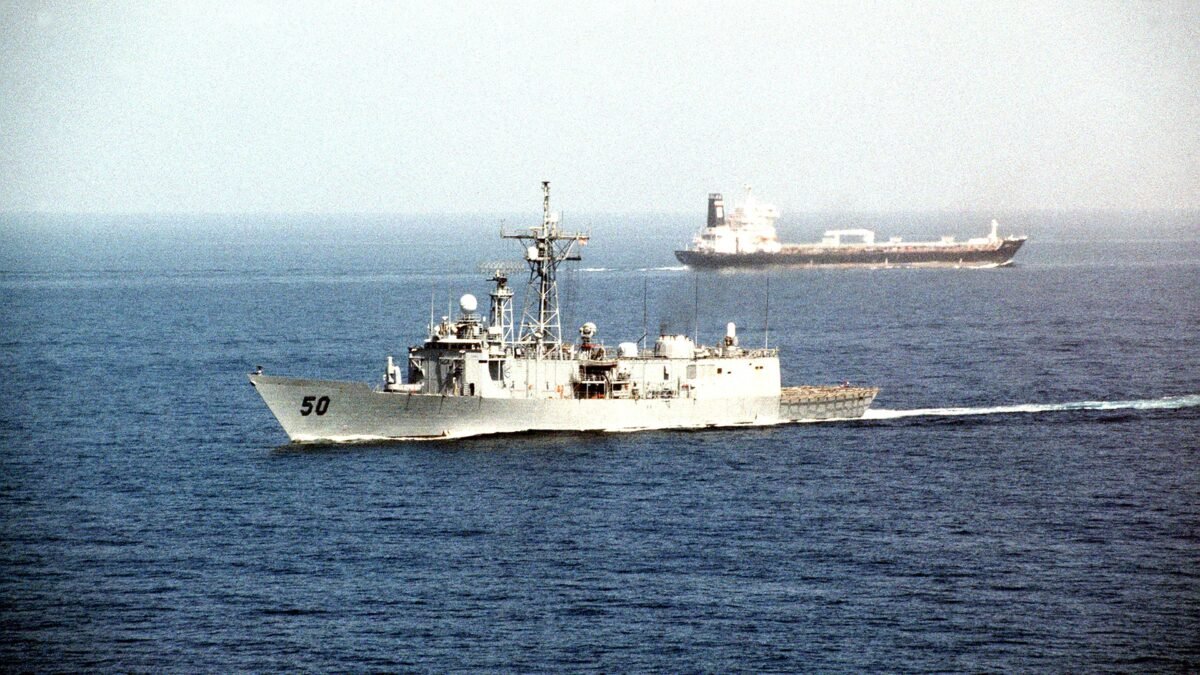
A small boat slipped alongside a moving oil tanker in the Strait of Hormuz on Thursday, fixed two explosive devices to the hull above the waterline, and withdrew before the blasts set the engine room on fire and left the vessel temporarily disabled, according to maritime authorities and security sources. The attack on the Panama-flagged tanker Louise 1 was, according to Reuters, the first successful use of limpet mines against a ship in the waterway since the war between the United States and Iran began in February, and it opened a dangerous new chapter in a campaign against commercial shipping that has already seen more than a hundred attacks in eight months.
British naval agency United Kingdom Maritime Trade Operations, known as UKMTO, said in an advisory note that the incident took place on Thursday about 25 nautical miles (46 kilometres) northeast of Khasab, on Oman’s Musandam Peninsula. The crew was safe, there was no environmental impact, the fire had been extinguished, and the vessel was continuing to its next port of call, UKMTO said. Reuters, citing assessments from three maritime security sources, identified the tanker as the Louise 1, a Dubai-owned vessel, and the Financial Times also identified the ship by name. It was not immediately clear who was behind the attack, Reuters reported, and no party has claimed responsibility.
The incident was one of several reported in the strait on Thursday and Friday. On Friday, Iran’s Revolutionary Guards Navy said two oil tankers had been involved in incidents and stopped in waters south of the Strait of Hormuz after ignoring radio warnings and attempting to use what it described as an unauthorised route through the strategic waterway, according to Reuters. Iranian state media said one tanker carrying around two million barrels of crude oil had struck a mine, but Reuters said it could not independently verify the claims. The New York Post, citing Iran’s Revolutionary Guard, reported that three tankers had exploded on Friday after striking mines, and noted that the claims could not be verified. Iran also said on Friday that it had destroyed a United States unmanned vessel in the eastern Strait of Hormuz. There was no immediate confirmation from the US military, Reuters reported.
The confusion over how many vessels were hit, and by what, underlines how murky the maritime war in the Gulf has become. What is not in doubt is that the Louise 1 attack worked, and that it worked with a weapon that is cheap, simple and almost impossible to defend against at scale.
A limpet mine is an explosive device attached directly to a ship’s hull, usually by magnet, and detonated later. The devices used against the Louise 1 were placed above the waterline on the port side, according to UKMTO, and the resulting explosions started a fire in the engine room that temporarily disabled the ship. Greece-based maritime risk management group Marisks said in a note on Friday that limpet mines were first deployed in the region in 2017 and used against tankers in the Strait of Hormuz in subsequent years, adding that “limpet mines are cheap and easily available”. The group warned that “the apparent ability of a small craft to approach a transiting tanker, deploy explosive devices and withdraw presents a significant security concern, particularly in the Strait’s congested shipping lanes”.
“The methodology of a small craft attaching these mines on the hulls of vessels in transit is cheap, low tech and very efficient,” Marisks said, according to Reuters.
The attack was the first known successful strike using limpet mines in the area since the beginning of the US war with Iran, two of the maritime security sources told Reuters, and it followed a separate attempt in September using such devices which did not detonate. The last time Iran used limpet mines against merchant shipping was in May 2019, when four vessels were attacked while anchored off Fujairah, followed the next month by attacks on the tankers Kokuka Courageous and Front Altair in the Gulf of Oman, according to Martin Kelly, head of advisory at EOS Risk Group, cited by gCaptain.
The Louise 1 was carrying 27 Indian seafarers, and a day earlier the Liberia-flagged tanker Arzanah, carrying two Indian nationals, was targeted in a separate projectile attack, according to Indian press reports. India’s minister for ports, shipping and waterways, Sarbananda Sonowal, said all 29 Indian seafarers aboard the two vessels were safe, with no injuries reported. “All 29 Indian seafarers across both vessels are completely safe with no injuries,” he said.
The vessel at the centre of Thursday’s attack is no stranger to being targeted. Ukrainian forces hit the Louise 1 in July with naval drones in the Black Sea over what Ukraine’s SBU security service said was its role in transporting Russian oil and being part of the so-called shadow fleet of tankers deployed by Moscow to keep oil exports flowing, according to Reuters. The vessel’s Panama-based operator, listed in shipping databases as Aquarius Maritime Ventures, could not be immediately reached for comment, Reuters reported.
The timing of the attack matters as much as the method. It came as diplomacy to prevent a renewed round of major fighting appeared to be running out of road, and as both sides prepared for what could follow the United States midterm elections on Tuesday, 3 November.
Qatari mediators returned to Tehran on Friday in another attempt to pull the region back from the brink of war, according to The War Zone, at a moment when the United States and Israel are reported to be preparing for a possible new round of strikes against Iran that could come as soon as next week, after America’s midterm elections. According to the Associated Press, US officials have warned several Middle Eastern countries to prepare for possible new strikes against Iran after the elections, as well as a potential Iranian response, in an operation that could last several days. President Donald Trump has not made any final decision, the Associated Press reported, according to Le Monde.
President Trump said on Friday morning, in an interview with Kansas City radio station KCMO, that the confrontation was nearing an end. “It’s going to get wrapped up soon,” he said, according to The War Zone. Fox News reported, citing unnamed US officials, that the Nimitz-class aircraft carrier USS Theodore Roosevelt and its carrier strike group, together with the Makin Island Amphibious Ready Group carrying the 13th Marine Expeditionary Unit, were heading to the Middle East and would arrive by the end of November.
On Friday morning, Admiral Brad Cooper, commander of US Central Command, said the waterway had been cleared of sea mines, according to The War Zone. The United States said it had cleared all internationally recognised, primary transit routes in the strait of mines, according to the New York Post. The claim sat uneasily alongside the reports of fresh explosions on Friday, and it illustrated the central problem facing every shipowner, insurer and energy buyer in the region: in a waterway barely 21 miles wide at its narrowest point, no assurance of safety can hold for long.
The war itself began on 28 February, when the United States and Israel launched strikes against Iran in an operation the Americans called Operation Epic Fury. It has continued at a reduced intensity following the collapse of a temporary ceasefire, with both sides exchanging limited attacks as Iran restricts shipping through the Strait of Hormuz and Washington maintains a naval blockade, according to the Congressional Research Service, cited by the Daily Caller. The war has already claimed the lives of 23 American service members, including 11 killed by hostile action, while another 865 have been wounded, according to the Pentagon’s casualty database. At least 3,636 people were killed in Iran during the initial fighting through 7 April, including 1,701 civilians and 1,221 military personnel, according to the Human Rights Activists News Agency. The regional conflict has also killed at least 4,389 people in Lebanon since 2 March, with another 12,424 wounded as of 12 October, according to the Lebanese Health Ministry.
October has been the worst month yet for shipping. Noam Raydan, a senior fellow at the Washington Institute for Near East Policy who maintains the institute’s interactive shipping incident map, recorded 28 confirmed and reported attacks in the Strait of Hormuz and surrounding waterways in October and 113 since the US-Israeli war with Iran began on 28 February, according to the BOE Report, cited by The War Zone. Separately, data from the International Maritime Organization reported by Seatrade Maritime News showed 34 attacks targeting commercial vessels in the region between 28 September and 27 October.
Oil prices surged on Friday to their highest levels since the end of April, according to the New York Post, as traders weighed the fresh incidents against the prospect of a new round of strikes. Brent crude had already climbed above 116 dollars a barrel during October, its fourth consecutive monthly gain, and analysts warned that continued fighting around the strait would keep prices elevated. “Continued kinetic action around the Strait of Hormuz amidst doubts of a viable diplomatic pathway is keeping oil prices elevated in expectation of an escalation of the conflict in coming weeks,” Saul Kavonic, head of energy research at MST Marquee, told Reuters. A Saxo Bank briefing in Singapore said crude was expected to trade in a higher range of 70 to 90 dollars a barrel even after the conflict ends, compared with a pre-war range of 60 to 70 dollars.
The diplomatic track, meanwhile, has produced more signals than substance. On Thursday, several Iranian commentators close to the corridors of power reported a letter from US Vice President JD Vance to Mohsen Rezaei, secretary of Iran’s Supreme National Security Council, delivered via Qatar, according to Le Monde. The New York Times reported that Vance proposed a meeting with Iranian officials and wanted the nuclear programme to be at the heart of the discussions. Mohsen Rezaei and the Islamic Republic of Iran have made no decision regarding a response to the letter, according to the report, and the seven conditions set by Iran remain unchanged.
In Tehran, the possibility of a renewed military escalation involving Iran, Israel and the United States is no longer just a hypothetical scenario, Le Monde reported. Iranian President Masoud Pezeshkian called on Wednesday, 28 October, for the country’s executive bodies to maintain a constant state of readiness “to face the country’s changing circumstances”, and Foreign Minister Abbas Araghchi has discussed recent consultations aimed at preventing a new escalation, particularly with Saudi Arabia, Pakistan and Turkey, the three signatories to the Mecca Defence Pact signed in August, as well as Qatar. Pakistan’s army chief, Asim Munir, visited Iran on 20 October, according to Le Monde. “Iran continues to give diplomacy a chance,” the newspaper quoted an Iranian official as saying, while noting that Iranian leaders believe any coming confrontation, should it occur, could be major, even decisive.
The regional spillover continued on Friday. Saudi Arabia said it shot down a drone near Mecca that had been launched by Yemen’s Iran-backed Houthi rebels, according to the New York Post. The Houthis denied the near-hit on Islam’s holiest site.
Back in Washington, the prospect of renewed strikes was already generating political friction. Democratic Connecticut Senator Chris Murphy warned, after a classified briefing, that the Trump administration had developed an “insane” plan for renewed military strikes against Iran that could trigger a “devastating escalation” across the Middle East, according to the Daily Caller. Murphy said lawmakers had received a detailed briefing on potential military operations, including a possible short-duration offensive, during a panel on Wednesday at the Middle East Institute. He warned that strikes against Iranian civilian infrastructure could prolong the eight-month conflict and further endanger American personnel.
In Israel, the parliamentary elections held on Tuesday, 27 October, weakened the right-wing bloc led by Prime Minister Benjamin Netanyahu, according to Le Monde, adding another layer of political uncertainty to a region already bracing for what comes after the American midterms.
Analysis: Why It Matters
A weapon designed to be deniable
The most important feature of the Louise 1 attack is not what it destroyed, which was relatively little, but how little it cost and how hard it is to answer. A limpet mine is a small explosive, attached by hand or by magnet, by people in a small boat who can approach a tanker in a crowded shipping lane without immediately attracting suspicion. There is no missile launch to detect, no drone to shoot down, no radar signature to track. The boat that planted the devices simply sailed away. That is why the method is so attractive to a weaker naval power, and so alarming to everyone else. As Marisks put it, the tactic is “cheap, low tech and very efficient”, and the history of the region shows it works: the 2019 attacks off Fujairah and in the Gulf of Oman disrupted shipping and pushed up insurance rates without ever producing a smoking gun that the international community could rally around.
The deniability matters because it lowers the threshold for action. A missile strike on a tanker is an act of war that demands a response. A limpet mine, planted in the dark by an unidentified small craft, invites argument about who did it, and argument is a form of delay. Iran has not claimed the Louise 1 attack, and it may never do so. The ambiguity is the point. It allows Tehran to raise the cost of doing business in the strait, to remind Washington and its allies that the waterway is contested, and to do so while maintaining enough distance to avoid the kind of retaliation that a declared attack would invite.
The strait is the world’s energy artery, and it is now a battlefield
The Strait of Hormuz is the narrow channel between Iran and Oman through which roughly a fifth of the world’s seaborne oil passes. There is no practical alternative route for most of the Gulf’s exports. That geography is what makes every incident in the strait a global event, and it is what makes the current campaign so dangerous. The 113 attacks recorded since February are not random. They are a sustained effort to assert control over the waterway, to raise the price of defiance, and to convert geography into leverage.
The economic effects are already visible. Oil prices have surged to their highest levels since April, and analysts now expect crude to trade in a permanently higher range even after the fighting ends. The reason is not just the physical disruption to supply, although that is real. It is the risk premium that now attaches to every barrel that must pass through the strait. Insurers charge more. Shipowners demand higher rates. Some vessels reroute around the Cape of Good Hope, adding weeks to the journey. These costs filter through to petrol stations, heating bills and food prices in countries that have nothing to do with the war, and they arrive at a moment when voters in the United States are already telling pollsters that the cost of living is their biggest concern, days before midterm elections.
Two clocks are running, and both point to November
The most striking feature of the current moment is how openly the calendar is driving events. The Associated Press reported that American officials have warned regional governments to prepare for possible new strikes against Iran after the 3 November midterms, and the arrival of the USS Theodore Roosevelt and the Makin Island group by the end of the month gives that warning a physical form. The Qataris are in Tehran. The Iranians are publicly preparing for war while privately keeping the door to talks ajar. The Americans are briefing Congress on options while the President says the confrontation will be “wrapped up soon”. Both sides are positioning themselves for a decision that neither has yet taken, and both are doing so in public, because the public positioning is itself part of the negotiation.
That is a dangerous way to run a crisis. When military movements and diplomatic signals are both timed to an election, the risk is that the election becomes the trigger rather than the deadline. If the midterm results embolden the administration, the temptation to act quickly, before the new Congress is seated, will be strong. If the results weaken it, the temptation to act before its authority ebbs will be stronger still. The history of the region is full of wars that began because both sides believed they were running out of time.
Diplomacy is alive, but it is running on fumes
It would be wrong to say that diplomacy has failed. The Vance letter to Mohsen Rezaei, the Qatari mediation, the consultations with Saudi Arabia, Pakistan, Turkey and Qatar, the Mecca Defence Pact, the visit of Pakistan’s army chief to Tehran: all of these are evidence that channels exist and are being used. But it would also be wrong to overstate what they have achieved. The seven conditions set by Iran remain unchanged. The nuclear programme, which Vance reportedly wants at the heart of any discussion, is precisely the issue on which neither side can afford to concede. And the tempo of events in the strait is now faster than the tempo of negotiation. Every new attack hardens positions, every new claim of a tanker struck makes compromise look like weakness, and every day that passes without a deal makes the next incident more likely.
The most honest reading of the current situation is that both sides are buying time, and that time is being bought at the expense of the crews on the ships in the strait. Twenty-nine Indian seafarers were lucky this week. The next crew may not be.
What the shipping industry is really afraid of
For the companies that move the world’s oil, the Louise 1 attack changes the calculation in a way that missile and drone strikes did not. Missiles and drones can be defended against, at least in principle: warships escort convoys, air defences intercept incoming threats, and the US Navy has spent eight months building a protective architecture around the strait. A limpet mine defeats all of that. It is placed by hand, at close range, by people who look, until the moment they act, like any other small boat in a crowded waterway. No amount of air defence can stop it. The only defence is to inspect every hull, at every port, before every transit, which is commercially impossible.
That is why the shipping industry’s response will be watched as closely as any military move. If insurers raise war-risk premiums sharply, or if owners begin to refuse charters through the strait, the economic pressure on all parties will rise fast, and the pressure will fall hardest on the countries that depend on Gulf oil, which is to say almost all of them. The strait has been called the world’s most important oil chokepoint for so long that the phrase has become a cliché. This week, it earned the description again.
What to Watch Next
- Whether the Friday tanker claims are confirmed. Iran’s Revolutionary Guards said two tankers were stopped south of the strait and Iranian media reported a tanker carrying two million barrels had struck a mine. Independent confirmation, from UKMTO, from insurers, or from satellite imagery, would show whether the campaign is escalating beyond the single confirmed limpet attack.
- Any American response to the limpet attack. Washington has not attributed the Louise 1 incident to anyone. If the United States names Iran, or if it retaliates against Iranian naval assets, the conflict will enter a new phase. If it does not, the silence will itself be a signal.
- The Qatari mediation in Tehran. Qatari envoys returned to the Iranian capital on Friday. Any sign of movement, a meeting, a statement, a change in Iran’s seven conditions, would be the first evidence that the diplomatic track still has life in it.
- Oil prices and shipping insurance rates. Brent crude surged on Friday. If prices hold above recent highs, or if war-risk premiums for transits through the strait jump sharply, the economic pressure on all sides will intensify, and the political pressure on Washington, days before the midterms, will grow with it.
- The days after the American midterms. The Associated Press reported that US officials have warned regional governments to prepare for possible new strikes after 3 November. The arrival of the USS Theodore Roosevelt strike group and the Makin Island amphibious group by the end of the month sets a window. What happens in that window will decide whether this war ends at the negotiating table or escalates again.
Sources
- Reuters — Tanker in Strait of Hormuz hit by limpet mines, security sources say (30 October 2026)
- Reuters — Iran’s IRGC navy says two tankers stopped south of Hormuz after incidents (30 October 2026)
- The War Zone — Iran Used Limpet Mine Placed On Ship’s Hull In Latest Strait Of Hormuz Attack: Report (30 October 2026)
- gCaptain — Tanker Hit by Limpet Mines in Strait of Hormuz as New Threat to Shipping Emerges (30 October 2026)
- Le Monde — Iran braces for possible new conflict with US and Israel despite diplomatic talks (30 October 2026)

About the Author — Abdul Mannan
Related Articles
Iran Says Four Tankers Hit Mines in Strait of Hormuz as British Monitors Report a Vessel on Fire
Iran says four oil tankers caught fire after striking mines in the Strait of Hormuz, but British maritime…

Vance Letter to Iran’s Top Security Official Tests a Diplomatic Opening as Trump Calls It Medical-Supplies Help
JD Vance wrote to Mohsen Rezaei, Iran's top security official, according to US media reports, while Donald Trump…
Iran Calls Qatar’s Latest Mediation Ideas ‘Unacceptable’ as Accounts Differ on Draft Deal to End War
Tehran has described Qatar's latest mediation ideas as unacceptable and not an offer, while an official briefed on…