
US Approves $2.1 Billion Sale of 500 Patriot Missiles to Ukraine — but Kyiv May Wait Years for Delivery

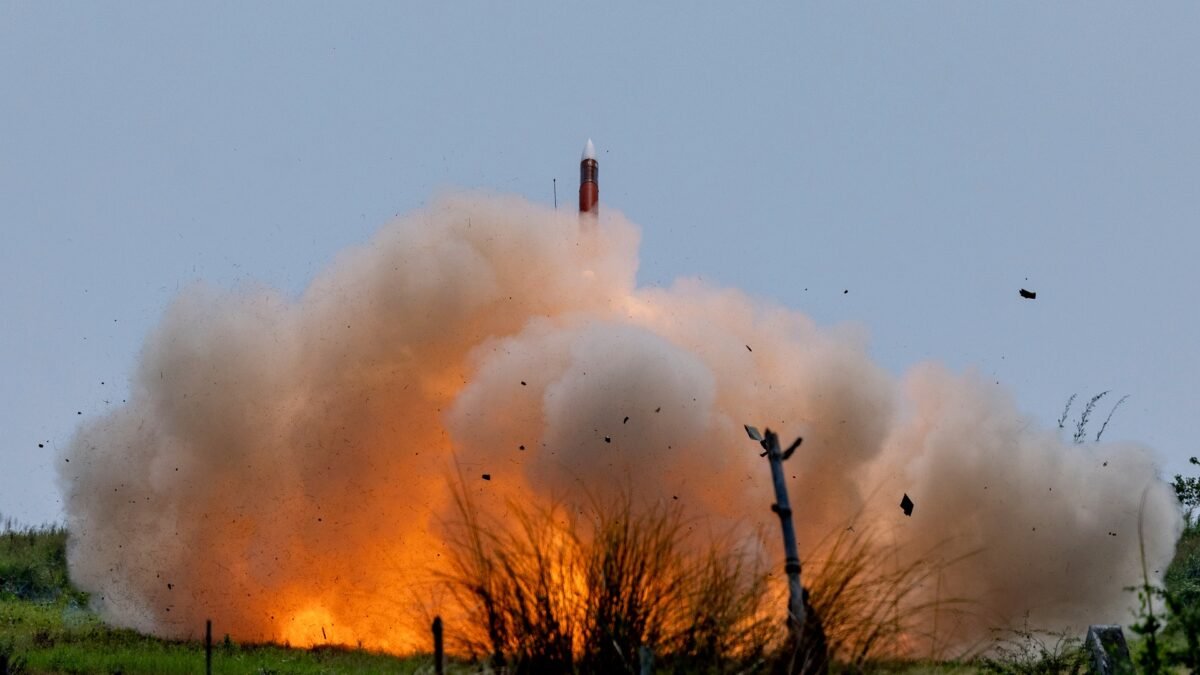
The United States has approved a possible sale of 500 Patriot air-defence missiles to Ukraine for an estimated $2.1 billion, in what Reuters described as one of the most significant steps to supply defensive weapons to Kyiv since the start of the second Trump administration — but the interceptors may not reach Ukraine for years, and President Volodymyr Zelenskyy has warned that his country needs them this winter, not in the 2030s.
The State Department said on Friday that it had approved the sale of 500 Patriot Advanced Capability-3 (PAC-3) Missile Segment Enhancement (MSE) interceptors, along with spare parts and logistics support, and had notified Congress of the decision, according to Reuters. Lockheed Martin, which produces the Patriot system, is the principal contractor for the sale.
The approval is a major political moment for Ukraine, which has been appealing for more of the interceptors for months. But it is not a delivery. Under American arms-export rules, the congressional notification opens a review period, after which Ukraine and the United States can sign a letter of offer and acceptance and the US Army can place an order with Lockheed Martin. The State Department gave no delivery schedule, and the missiles themselves have yet to be manufactured.
Two people briefed on the American decision told Reuters that the interceptors are not expected to be delivered until a couple of years into the 2030s. An analysis published by the Center for Strategic and International Studies in April 2026 estimated an average of 29 months between procurement and the first PAC-3 MSE deliveries. Zelenskyy, writing on X on Friday, put the point bluntly: “It has been stipulated that deliveries may begin ONLY IN A FEW YEARS.”
The timing is the heart of the story. Ukraine’s stock of Patriot interceptors ran dry earlier this month, CNN previously reported, and Russia has stepped up ballistic-missile attacks on Ukrainian energy and civilian infrastructure as winter approaches. In a social-media video on Friday, Zelenskyy said Russia had attacked with 17 ballistic missiles overnight, including some that hit oil-refining infrastructure in central Ukraine. He said Ukraine had been waiting almost a month for the United States to sign off on critical missile supplies, according to Reuters.
Zelenskyy praised the authorisation on Friday but stressed that the interceptors must be delivered soon, not years in the future, to protect against the attacks now under way. He said Ukraine had asked its American partners for a winter support package of 100 Patriot interceptors a month, and that 500 missiles “would be enough to protect our skies over the coming months — precisely when it is so important for Ukraine to be in a strong position in negotiations and for Russia NOT to succeed in breaking life in Ukrainian cities and communities.”
He also claimed that the United States and its partners “have sufficient stocks of PAC-3 interceptors in their warehouses,” and proposed a swap: “Providing them to Ukraine right now — in the winter of 2026–2027 — and replenishing our partners’ arsenals LATER, IN THE FOLLOWING YEARS, through this production already contracted and paid for by Ukraine and our partners would be the right approach.”
One of the most striking features of the deal is who is paying for it. The purchase is not subsidised or financed by the United States, according to the State Department release quoted by CNN. Instead, Ukraine will pay for the missiles with donations from Canada, Germany and Norway, routed through a programme called JUMPSTART, along with national funds financed by the European Union’s Ukraine Support Loan. “No U.S. funds are involved in this sale,” the notification said.
JUMPSTART — the Joint Ukrainian Multinational Program–Services, Training and Articles Rapid Timeline — was established in 2022 as a mechanism for third-party countries to contribute funds so Ukraine can buy American equipment. The programme was used in August to buy 3,350 air-launched cruise missiles worth $825 million, made by Zone 5 Technologies and CoAspire, according to Reuters. The European Union, for its part, agreed in early 2026 on a €90 billion loan for 2026 and 2027, with €60 billion set aside for defence, and the first disbursements went out in June 2026, according to Defence Blog.
The PAC-3 MSE is the most advanced version of the Patriot interceptor currently in service, and one of the few weapons capable of shooting down incoming ballistic missiles, according to CNN. The Patriot system, built around a radar, a control station and truck-mounted launchers, has become the backbone of Ukraine’s air defence since the first batteries arrived in 2023. Unlike older interceptors that destroy their target with a warhead blast, the PAC-3 MSE kills by direct impact, steering itself into the incoming missile — a design that makes it especially effective against the fast, high-altitude ballistic missiles Russia fires at Ukrainian cities and power plants, but also expensive and slow to produce.
The approval comes after weeks of visible tension between Washington and Kyiv. On 19 October, The Washington Post reported that the United States appeared to have delayed the transfer of Patriot interceptors to Ukraine amid a falling-out between President Donald Trump and Zelenskyy, according to Breaking Defense. Earlier in October, Trump announced a deal allowing Russian diesel exports to reach global energy markets and waived a further slate of sanctions related to Russian fossil-fuel sales that had only just been signed into law, according to CNN. He also threatened to withhold intelligence from Kyiv over its strikes on Russian refineries, and Ukraine’s access to the Starshield satellite system was throttled for a period before it was restored last week, CNN reported.
On 26 October, Zelenskyy said the wait for the missiles was for Defence Secretary Pete Hegseth to authorise Patriot and NASAMS interceptors that NATO allies had already paid for through PURL, the Prioritized Ukraine Requirements List, the programme through which allies buy American weapons for Ukraine, according to reporting summarised by Crisis Zone. His protest came 11 days before the approval, when he raised the delay with a bipartisan delegation from the US Senate and House of Representatives, according to ThisDay.
There was also a competing account of the pipeline on Friday. In Riga, General Alexus Grynkewich, NATO’s top commander in Europe, said: “Not a single item included in the PURL package paid for by European allies has been delayed.” The two accounts are not necessarily contradictory — the approval covers a new sale of missiles that must still be built, while the PURL packages involve weapons already in the system — but the contrast captures the confusion that has surrounded the interceptor question for weeks.
Trump himself added to that confusion in July, when he made a surprise announcement at the NATO summit in Turkey that Ukraine would receive a licence to produce its own Patriot missiles, a move that could eventually ease pressure on American production lines, according to CNN. Any Ukrainian interceptor factory could take years to build, however, and the president has seemingly backed off from the move, CNN reported.
The approval also lands in the middle of a crowded diplomatic calendar. The G20 foreign ministers’ meeting in Atlanta on Friday was dominated by the war in Ukraine, with Britain’s Foreign Secretary Ed Miliband telling Russia’s Sergei Lavrov in the session that “we all know who the aggressor in this war is,” and European ministers refusing to pose for the traditional family photograph with him. Russia’s campaign against Ukrainian energy infrastructure has intensified in parallel: on Thursday, a Russian drone strike on a railway station at Dnipro killed at least 14 people, according to Reuters.
Meanwhile, the United States is managing a second, competing demand on the same munitions stockpile. CNN noted that pressure on Patriot production lines is linked in part to the eight-month US-Israeli war on Iran, which has drawn heavily on American air-defence stocks. With the American midterm elections on Tuesday 3 November, and with Washington and Tehran engaged in last-minute mediation through Qatar, the administration is balancing two wars’ claims on the same scarce interceptors.
For Ukraine, the arithmetic of the winter is unforgiving. Ballistic missiles are the hardest targets in the Russian arsenal to intercept, and the Patriot is effectively the only system in Ukrainian service that can reliably do it. Every interceptor fired is one fewer in the stockpile, and every launcher must be positioned where it can protect a city, a power station or a refinery. The 500 missiles now approved would, on Zelenskyy’s maths, cover roughly five months at 100 a month — but only if they arrive, and only if the rate of Russian attacks does not rise further.
The State Department notification said the potential sale “will support the foreign policy and national security objectives of the United States by improving the security of a partner country that is a force for political and economic stability in Europe.” It also assessed that Ukraine would have no difficulty incorporating the equipment into its armed forces.
Whether that political endorsement translates into missiles in Ukrainian launchers before the coldest months of the year remains the open question. Congress now has its review window. Lockheed Martin has its order book. And in Kyiv, the calculation is simpler: the missiles have been approved, the allies have paid, and the winter has already begun.
Analysis: Why It Matters
An approval is not a delivery — and the gap is the story
The most important word in the State Department’s announcement is “possible.” A foreign military sales notification is the beginning of a process, not the end of one. Congress must review the deal, a letter of offer and acceptance must be signed, the Army must place the order, and Lockheed Martin must build missiles that do not yet exist. The Reuters reporting that deliveries may not begin until a couple of years into the 2030s is not a footnote to this story; it is the story. Kyiv has won the argument in principle and may still lose the winter in practice. The gap between a diplomatic victory and a physical interceptor is measured in years, and Russia’s missile campaign is measured in nights.
Europe is now paying America to arm Ukraine
The financing of this deal marks a quiet but profound shift in how the war is funded. No American taxpayer money is involved. Canada, Germany and Norway are donating the money, the European Union is lending the rest, and the United States is, in effect, the arms dealer. That arrangement suits the Trump administration’s insistence that Europe should carry more of the burden, and it suits European governments that want to keep Ukraine supplied without building their own missile factories. But it also creates a new vulnerability: the pipeline now depends on the willingness of three donor governments and the EU’s loan machinery to keep paying, year after year, for weapons that will not arrive until the next decade. A deal that is entirely allied-funded is also entirely allied-dependent.
Zelenskyy’s counter-proposal exposes the real shortage
Zelenskyy’s response to the approval was more revealing than the approval itself. By claiming that the United States and its partners already hold “sufficient stocks” of PAC-3 interceptors in warehouses, and proposing that missiles be handed over now and replenished later from production already contracted and paid for, he reframed the problem. In his account, the constraint is not money or manufacturing capacity but political will — the willingness to draw down existing stocks and trust that the production line will refill them. Washington has not publicly answered that claim, and the State Department did not address the delivery timeline when asked. But the proposal sets up the next argument: if the missiles exist, why are they not already in Ukraine?
The Patriot has become the bottleneck of the whole war
Few single weapons have ever mattered as much to a war as the Patriot interceptor does to Ukraine’s defence. It is the only system in Kyiv’s arsenal that can reliably kill ballistic missiles, and ballistic missiles are the weapon Russia uses against the targets that matter most: power plants, refineries, railway hubs and cities. That makes the interceptor stockpile the hard limit on Ukraine’s ability to keep the lights on. Every other form of support — artillery shells, drones, sanctions, diplomacy — operates around that limit. The 500 missiles now approved would matter enormously if they arrived; the fact that they may arrive in the 2030s tells us something stark about the state of Western munitions production four and a half years into the largest war in Europe since 1945.
Two wars, one stockpile
The Patriot approval cannot be read without the Iran war. The same interceptor that defends Kyiv also defends American bases and allies in the Gulf, and the eight-month US-Israeli campaign against Iran has drawn heavily on those stocks. CNN explicitly linked pressure on Patriot production lines to the Iran conflict. That linkage creates a strategic tension the administration has not resolved: every interceptor allocated to one theatre is an interceptor unavailable to the other, and the United States is now committed to both. The Qatar-led mediation effort to avert a renewed bombing campaign against Iran after the midterms is, among other things, an attempt to relieve that pressure. If diplomacy fails and the war resumes, the competition for Patriots will only intensify — and Ukraine’s 500 missiles may slip further down the queue.
What to Watch Next
- The congressional review window. Congress generally has 30 calendar days to review a proposed foreign military sale. Watch for any attempt to block or amend the deal, and for the date on which the letter of offer and acceptance is signed — that is the moment the approval becomes a contract.
- Any movement on Zelenskyy’s swap proposal. The Ukrainian president has asked for interceptors from existing allied stocks now, with replenishment later from contracted production. Any American or European response to that idea — acceptance, refusal or silence — will reveal how much stock genuinely exists.
- Lockheed Martin’s production schedule. The company has not said when it could begin delivering these 500 missiles. Watch for statements about production rates, new manufacturing capacity, and whether the Ukraine order is prioritised over other customers’ orders.
- Russia’s winter missile campaign. The pace and targets of Russian ballistic-missile attacks in November will determine how quickly Ukraine’s remaining interceptor stockpile is consumed, and how acute the shortage becomes before any new missiles arrive.
- The Iran mediation and the midterms. Qatari mediators are in Tehran trying to restart direct US-Iran negotiations before the 3 November elections. A deal would ease pressure on American air-defence stocks; a renewed bombing campaign would tighten it — and directly affect when Ukraine’s missiles are built.
Sources
- Reuters — US approves $2.1 billion Patriot missile sale to Ukraine
- CNN — US approves potential $2.1 billion sale of scarce Patriot missiles to Ukraine
- Breaking Defense — US greenlights 500 Patriot missiles for Ukraine, with $2.1 billion to be paid by allies
- Defence Blog — U.S. clears sale of 500 Patriot PAC-3 missiles to Ukraine
- ThisDay — US approves $2.1bn Patriot missile sale to Ukraine after Zelensky’s protest

About the Author — Abdul Mannan
Related Articles

Tens of Thousands March Across Italy in Nationwide Strike Against Cost of Living and Military Spending
Tens of thousands of Italians marched in more than 40 cities on Friday in a nationwide general strike…

Netanyahu’s Bloc Falls Eight Seats Short of a Majority as Final Israel Results Hand Arab Parties Record Kingmaker Role
Final results from Israel's election give Benjamin Netanyahu's bloc 53 seats and Gadi Eisenkot's opposition 48, with Arab…

Container Ship Contship Jet Sinks After Three Drone Strikes Off Bulgaria as Black Sea Attacks Reach NATO Waters
Three sea drones struck the Liberian-flagged container ship Contship Jet off Bulgaria's Black Sea coast on 28 October;…