
Container Ship Contship Jet Sinks After Three Drone Strikes Off Bulgaria as Black Sea Attacks Reach NATO Waters

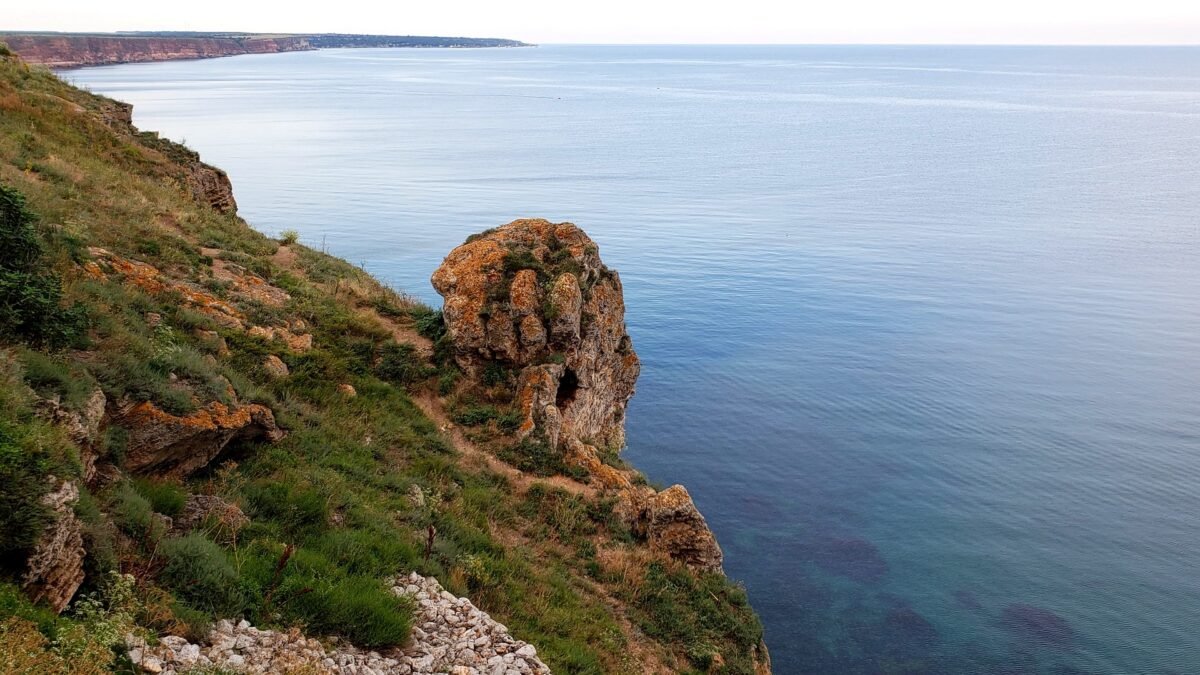
A container ship carrying 421 containers has sunk in the Black Sea after being struck by three sea drones off the coast of Bulgaria, in the latest attack on merchant shipping in waters belonging to a NATO member state.
The Liberian-flagged Contship Jet was hit on Wednesday, 28 October, while sailing from the Israeli port of Haifa to Constanța in Romania, according to the Bulgarian government. All 18 crew members were rescued and brought safely to the Bulgarian port of Varna, but the vessel sank overnight, Bulgarian authorities confirmed on Thursday, 29 October.
The attack took place about 17 nautical miles east of Cape Kaliakra, on Bulgaria’s northern Black Sea coast, according to the Bulgarian Navy and the country’s transport ministry. Defence Minister Dimitar Stoyanov gave a slightly different reference point, telling reporters the ship was struck about 21 nautical miles south-east of the coastal town of Shabla. Both descriptions place the attack inside Bulgaria’s exclusive economic zone, but outside its territorial waters.
According to Reuters, it was not immediately clear who carried out the attack, which added to growing concerns about the impact of Russia’s war in Ukraine on commercial shipping in the region. The Associated Press reported that the incident was the fifth drone attack in a NATO country’s exclusive economic zone this month.
The vessel, which is managed by the Greek company Contships Management and was operating under charter to the Israeli shipping line ZIM, was badly damaged by the strikes and began listing heavily before going down. The Maritime Executive, a specialist shipping publication, reported that the Contship Jet was the ninth vessel struck in the western Black Sea since the start of October, and that 34 sailors have been killed or are missing in the attacks this month, according to Reuters.
The attack and the rescue
The Bulgarian transport ministry said the Maritime Rescue Coordination Centre in Constanța received notification of the attack at 12:01 local time on 28 October. The crew abandoned ship at 12:13, just twelve minutes later, prompting an immediate search-and-rescue operation involving three Bulgarian Navy vessels and a Border Police vessel.
Eight seafarers were taken aboard a naval craft, while the remaining ten were rescued from the ship’s lifeboat, according to Container News, which cited Bulgarian official sources. All 18 crew members — 14 Filipinos and four Ukrainians — were subsequently transported to Varna. No injuries were reported, and the crew were taken for medical checks on arrival.
Bulgaria’s national radio reported that the vessel’s owner had already arranged hotel accommodation for the crew through a local agent, and that the seafarers would undergo medical examinations. Varna’s regional governor, Mario Smarkov, described the successful rescue as “the most wonderful news”, according to the same report.
The Bulgarian Defence Ministry confirmed that three strikes against the vessel had been observed during the incident. According to the ministry, a French maritime patrol aircraft operating over the western Black Sea had detected the maritime drones and alerted the Bulgarian Navy, which also tracked the attack through its coastal surveillance systems.
The Bulgarian Navy dispatched three vessels to the area immediately after the first strike, completing the rescue operation during the afternoon of 28 October, Container News reported. But the ship itself could not be saved. The Maritime Executive reported that the drones started a fire and left the vessel with a heavy list of 20 to 30 degrees. Bulgarian authorities said the ship sank during the night of 28 to 29 October, and the sinking was formally confirmed on Thursday by the Varna Regional Administration, citing information from maritime traffic control and the Bulgarian Maritime Administration.
Rear Admiral Kiril Mihaylov, commander of the Bulgarian Navy, told national television that authorities had been alerted to a possible drone attack by the French patrol aircraft but had been unable to prevent it. Speaking later to Bulgarian national radio, he said he did not know where the drones had come from, because they “could have been launched from anywhere”. He added that there were no forces or assets nearby that could reach the drones quickly enough to intercept and destroy them.
The Contship Jet was built in 2007 and has a capacity of 1,276 twenty-foot equivalent units, according to The Maritime Executive. The 18,000-deadweight-tonne vessel has been operating for Contships Management of Greece since 2019, and was listed as operating on the Levant–Black Sea Express route for ZIM, having come from Ashdod and Haifa in Israel. Vessel-tracking data examined by The Insider indicated that the ship had left Haifa on 24 October.
ZIM confirmed in a customer advisory issued on 28 October that the Contship Jet was operating under charter to the Israeli carrier. The company said it was maintaining close contact with the vessel’s owners following the incident, that all crew members had been safely evacuated, and that it was assessing the situation involving the vessel and its cargo and contacting affected customers, according to Container News.
Hazardous cargo adrift at sea
Of the 421 containers on board, 20 fell into the sea before the ship went down, Rear Admiral Mihaylov said. According to the ship’s manifest, the cargo in those containers included lithium-ion batteries, corrosive liquids and acids, flammable liquids, ethanol solutions, household chemicals and plastics.
Teams from the Bulgarian Maritime Administration conducted an initial assessment of the wreck and its potential environmental impact. According to information released by the Varna Regional Administration on 29 October, the initial assessment indicated that significant adverse consequences for the marine environment and coastline were not expected at that stage.
Initial inspections on Thursday found no visible traces of pollution from the ship, the Bulgarian government said, according to Reuters. The Associated Press reported that navy teams found no signs of pollution after taking samples from several locations in Bulgarian territorial waters.
Authorities said the vessel was carrying marine gas oil, a relatively light fuel, and assessed that any potential spill was unlikely to reach the Bulgarian coastline. Environmental monitoring remains ongoing, with teams from the basin directorate collecting seawater samples at five coastal locations — Durankulak, Shabla, Cape Kaliakra, Byala and Sozopol — according to Bulgarian national radio. Final conclusions will depend on laboratory results.
The question of the remaining containers is unresolved. Container News reported that the sinking has raised questions about the fate of the 421 containers carried aboard the vessel, although the authorities have not yet provided a complete assessment of the cargo or the resulting losses.
Who carried out the attack?
The identity of those responsible for the attack has not been officially established, and no group or state has claimed responsibility. That absence of attribution is now a familiar feature of the Black Sea shipping campaign, and it sits at the centre of the political argument the attacks have set off.
Russia has not taken responsibility for the recent attacks, but suspicion has fallen on Moscow, the Associated Press reported. Bulgarian Prime Minister Rumen Radev told his country’s parliament earlier this month that “the logic points in that direction … The problem is that we cannot prove it.”
Radev has since repeated the point in blunter terms. “We do not have clear and conclusive evidence to attribute responsibility to either side,” he said, according to The Guardian. “However, as I have already stated, the logic suggests that the outcome benefits the Russian Federation.”
Maritime security analysts have offered a more specific assessment. Ambrey, a maritime risk firm, analysed video reportedly filmed by a crew member showing a matte-black unmanned surface vehicle about five to six metres long closing on the hull at speed, and an Ambrey analyst told Reuters the craft was likely a variant of, or derived from, the Russian Murena-300S design. Moscow has denied involvement in recent Black Sea attacks and did not comment on this one, according to the same reporting.
Bulgarian officials have said there is “no logic” for Ukraine to attack its own shipments, The Guardian reported, while also refusing to attribute blame formally to Russia. The distinction matters: Bulgaria has summoned the Russian ambassador and opened an investigation into possible war crimes, because one of the sunken ships came from Ukraine, according to reporting in The Guardian.
A month of attacks on merchant shipping
The sinking of the Contship Jet was not an isolated incident. It was the latest in a rapid succession of drone strikes on commercial vessels in the western Black Sea that has turned October into the deadliest month for merchant seafarers in the region since Russia’s full-scale invasion of Ukraine in February 2022.
The pattern began in the early hours of 6 October, when the Turkish-owned bulk carrier Alfa Watan, heading for the Romanian port of Sulina, was struck by suspected Russian air and naval drones about 70 miles off the coastal town of Byala. The crew of the Bulgarian ferry Dioscuria heard a distant explosion, and when the ferry reached the scene it found an overturned lifeboat and lifejackets in the water. There was no sign of the Alfa Watan‘s crew of ten, The Guardian reported.
Six days later, drones struck another ship off the coast of Bulgaria, the HS Dignity. Eleven crew members died. By the following Thursday, the attacks had encroached on Romania’s airspace and territorial waters. Two chemical tankers, the Wine Trader and the Yara J, were attacked and left burning. Seven more sailors were reported missing.
The bulk carriers Able and Chelsea-3 were also hit in the same period. On 23 October, a foreign-flagged cargo ship, the Khoryv, capsized and sank following a suspected drone strike about 13 nautical miles off the Romanian port city of Constanța, according to the Associated Press. Bulgarian officials said they were monitoring the capsized vessel as it drifted into Bulgarian waters, The Maritime Executive reported.
According to Reuters, at least six ships have been attacked by drones off Bulgaria this month, and about two dozen seafarers are feared dead, according to government statements. The Maritime Executive reported the wider toll for the western Black Sea since the start of October as nine vessels struck and 34 sailors killed or missing. Safety4Sea, citing the Financial Times, reported that the Black Sea has become the most dangerous maritime region for seafarers in 2026, recording more fatalities than the Persian Gulf, despite attracting comparatively less international attention.
The Guardian reported that the attacks on six ships in ten days marked a dramatic escalation in a maritime conflict pressing on NATO’s borders, and that more sailors were lost in a week and a half than the number of American service members killed in the entire Iran war. The Guardian also reported that the vast majority of the more than 60 fatalities of seafarers in the Black Sea since Russia’s full-scale invasion began in February 2022 have occurred in the past year.
The campaign has not been confined to the Black Sea’s western shore. Ambrey, the maritime insurer and risk analyst, has warned that there is no end in sight to the threats to Black Sea cargo shipping, including grain and oil, and that insurance prices for passage through the waters have rocketed, The Guardian reported. Tomas Alexa, a senior analyst at Ambrey, has noted a sharp increase in the tempo of attacks beginning in July, with Russian forces estimated to be responsible for 80 per cent of them.
Alexa told The Guardian that the recent loss of life has been exacerbated by “double tap” attacks involving aerial and surface drones, the latter often carrying up to half a tonne of explosive payload. Smaller vessels that primarily use the Danube canal system have sunk rapidly, he said. “While attacks against merchant vessels in the Black Sea are not new, we are seeing an escalation both in terms of the number of attacks and in the geographical scope,” Alexa said. “The profile of vessels being attacked — that is, ships trading with Ukraine — had not changed. The Russian intent is clear, which is to degrade the export of Ukrainian grain and agricultural products.”
The result, The Guardian reported, has been a precipitous fall in the number of vessels visiting Ukraine. Insurance rates have soared, and seafarers and operators have become increasingly reluctant to operate in the Black Sea basin, even on ships unconnected with Ukrainian cargoes. In September, the Joint War Committee, representing the London insurance market, moved to extend the high-risk areas of the Black Sea to include the whole of the basin, excluding the territorial waters of Turkey, Romania, Bulgaria and Georgia.
NATO’s response — and its limits
The attack on the Contship Jet came on the very day that defence ministers from Bulgaria, Romania and Turkey were meeting in Sofia for trilateral discussions on regional security. In a statement after the talks, the three NATO countries strongly condemned the drone attacks on commercial vessels in the Black Sea and called for an “immediate cessation of attacks that threaten commercial ships, maritime infrastructure and the safety of maritime activities”. They also agreed on stronger intelligence sharing, early warning capabilities and coordination in the Black Sea, according to the Associated Press.
The timing was not lost on observers. The Associated Press reported that a string of such incidents off the coasts of NATO members Romania and Bulgaria this month has led some alliance members to wonder whether Russian President Vladimir Putin is seeking to test their support for Ukraine in its war against Moscow’s full-scale invasion.
NATO has already moved to bolster its presence. On Tuesday, 20 October, NATO ambassadors met at the North Atlantic Council in Brussels and agreed to send extra assets to the Black Sea, Reuters reported, citing the alliance’s military spokesman, Colonel Martin L. O’Donnell of the US Army. The package includes maritime patrol aircraft, radar systems, drones and intelligence personnel, along with teams examining traces of explosives used in the attacks. NATO spokesperson Allison Hart said the support would cover surveillance, reconnaissance and forensics.
Bulgarian Prime Minister Radev said a US Navy P-8 Poseidon patrol aircraft had begun flying over the Black Sea at Sofia’s request, and had landed at Varna on Sunday, 18 October, after flying from Sicily, according to flight-tracking data cited by Reuters. France has relocated its Atlantique 2 maritime patrol aircraft to an air base in Romania, The Maritime Executive reported — the same type of aircraft that spotted the drones approaching the Contship Jet.
NATO Secretary-General Mark Rutte said on 15 October on X that the alliance had “strengthened our posture along the eastern flank including with increasing counter-drone capabilities” in the face of increasingly frequent strikes on commercial vessels, according to the Associated Press. Rutte met Radev and Romanian President Nicușor Dan on the sidelines of the European Council on 15 October to discuss security in the Black Sea, and said: “NATO will continue to work closely with our allies in the Black Sea, adjusting our deterrence and defence posture as needed,” The Guardian reported.
Romania, for its part, has moved from watching the drones to shooting them down. On Saturday, 17 October, Romania said it had shot down two suspected Russian drones, and its defence minister, Radu Miruță, said the drones were probably the latest generation of Russian drones, flying at speeds similar to fighter jets, according to Reuters. Romania has recorded 35 unauthorised drone incursions so far this year, compared with nine in 2025, and has downed six drones this year against none last year.
Yet the Contship Jet incident exposed the gap between surveillance and protection. A French patrol aircraft saw the attack coming and warned the Bulgarian Navy. The navy tracked it on coastal surveillance systems. And still, as Rear Admiral Mihaylov acknowledged, there were no forces close enough to stop it. The Baltic Security Monitor, an analytical publication covering security on NATO’s eastern flank, put the point bluntly: “In the Black Sea, NATO can now see the attacks but cannot yet prevent them.”
European Commission President Ursula von der Leyen said after the sinking of the Alfa Watan: “Commercial ships — and innocent crews — are being targeted, with lives already lost at sea.” In a statement at the Organization for Security and Co-operation in Europe, Colonel Joby Rimmer, a senior British military adviser, said: “Attacks that fail to distinguish between military objectives and civilian vessels, or that are expected to cause excessive incidental harm to civilians and civilian vessels in relation to the anticipated military advantage, may violate international humanitarian law and the UN convention on the law of the sea.”
“Each attack raises the risk to crews of every nationality, drives up insurance costs and restricts the flow of food to those who depend on it,” Rimmer added. “The UK is deeply concerned by the far-reaching consequences of successive crises across the global maritime domain. Stable and secure sea lanes are a global common good from which we all benefit.”
Damien Chevallier, the director of maritime safety at the UN’s International Maritime Organization, warned last month of the long-term impact on shipping caused by attacks linked to the conflicts in Ukraine and the Middle East. “With rising casualties across the Black Sea, Red Sea and strait of Hormuz, being a seafarer has become a genuinely dangerous profession,” he said, according to The Guardian. “Seafarers are not trained to deal with threats from actions which are linked to wider security issues or geopolitical situations. What makes this moment genuinely unprecedented is not just the number of incidents, but the pattern behind them. Shipping has become a deliberate instrument of geopolitical leverage.”
Analysis: Why It Matters
1. The war has reached NATO’s waters — and NATO can see it but not yet stop it
The most important fact about the Contship Jet is not that a ship sank. It is where it sank, and what happened in the minutes before it did. The attack took place inside the exclusive economic zone of Bulgaria, a NATO and European Union member, on a vessel sailing between two ports that have nothing to do with Ukraine’s grain trade — Haifa and Constanța. A French patrol aircraft spotted the drones. The Bulgarian Navy tracked them. And the ship was still hit three times, set on fire, and lost.
That sequence is the story of the Black Sea in October 2026. Surveillance has improved faster than protection. NATO’s 20 October decision to send extra patrol aircraft, radar and drones was a response to a threat that was already outpacing it, and the Contship Jet proved the point within eight days. Rear Admiral Mihaylov’s admission — that there were no forces close enough to intercept the drones — is unusually candid for a serving naval commander, and it is the single most consequential sentence in this story. It tells shipowners, insurers and crews that detection is not defence, and that the waters off a NATO coastline are, for practical purposes, still undefended against a weapon that costs a fraction of the ship it destroys.
The strategic question is whether that gap closes before the next attack, or whether the alliance accepts a standing vulnerability on its south-eastern flank. Bulgaria has asked allies for help protecting its coast, and the United States and France have answered with patrol aircraft. But patrol aircraft cannot shoot down a sea drone skimming the surface at speed, and Bulgaria has no standing naval force in its economic zone capable of doing so. Closing the gap would require either armed escorts, pre-positioned interceptor craft, or a rules-of-engagement decision that NATO has so far avoided. Each option carries cost and escalation risk. The absence of any of them carries a different risk: that the attacks become routine, and routine becomes accepted.
2. Attribution without proof is the new grey zone — and it is deliberate
No one has claimed the Contship Jet attack. No one claimed the Alfa Watan, the HS Dignity, the Wine Trader or the Yara J either. Yet every informed observer points in the same direction: Ambrey’s analysts assess the drone as a Russian design; Bulgaria’s prime minister says the logic points to Russia; Ambrey estimates Russian forces are responsible for 80 per cent of the attacks; and Bulgarian officials say there is no logic for Ukraine to attack its own shipments.
This is the grey zone in its purest form. The attacks are deniable enough to avoid a formal attribution, and therefore deniable enough to avoid a formal response — while being obvious enough that every government in the region understands the message. The Associated Press reported that some alliance members now wonder whether President Putin is testing their support for Ukraine. That is exactly the purpose of a grey-zone campaign: to probe, to measure the reaction, and to learn how far the other side will go before it pushes back.
So far, the answer has been: not very far. Bulgaria summoned the Russian ambassador and opened a war-crimes investigation. NATO sent surveillance assets. The European Commission condemned the attacks. None of that has stopped the next one. The danger of this pattern is not only that ships keep sinking, but that the threshold for what counts as an attack on a NATO member keeps rising. If three drones can sink a container ship in a NATO economic zone without a military response, the next test will be bolder — and the alliance will have taught its adversary that the test carries no cost.
3. The economic weapon is working — and it is aimed at food
Look past the explosions and the Contship Jet is an economic story. The vessel was not carrying weapons or military cargo. It was carrying 421 containers of ordinary commercial goods on a routine route between Israel and Romania. Its sinking is a warning to every shipowner whose vessels pass through the Black Sea: your ship does not have to be connected to Ukraine to be a target.
That is precisely the point. Ambrey’s Tomas Alexa told The Guardian that the Russian intent is clear — to degrade the export of Ukrainian grain and agricultural products — and the mechanism is to make the whole basin too dangerous and too expensive to sail in. The evidence supports him. The number of vessels visiting Ukraine has fallen precipitously. Insurance rates have soared. The London market’s Joint War Committee has now classified the entire Black Sea basin as high-risk. Seafarers and operators are becoming reluctant to work in the region at all, even on ships with no connection to Ukrainian cargoes.
The knock-on effects reach far beyond the Black Sea. Ukraine and Russia are major grain exporters, as is Romania, and the Romanian foreign minister, Oana Toiu, has described the Black Sea as “a global food artery”. When that artery is squeezed, the cost is paid by food-importing countries in the Middle East and Africa, where bread prices are a political fact, not an abstraction. The shipping campaign is therefore not only a military tactic against Ukraine; it is a form of economic pressure on the world’s food supply, exercised at arm’s length, through deniable drones, against civilian crews who cannot defend themselves.
4. Seafarers have become the war’s forgotten casualties
Thirty-four sailors killed or missing in a single month, according to Reuters. More than 60 seafarer fatalities in the Black Sea since February 2022, the vast majority in the past year, according to The Guardian. More sailors lost in a week and a half than American service members killed in the entire Iran war. These numbers deserve to be read slowly, because they describe a category of victim that the world’s attention has largely passed over.
The crews of these ships are not soldiers. They are Filipino and Ukrainian contract seafarers, Turkish and Greek officers, men from the countries that supply the world’s merchant marine. They are not trained to deal with threats linked to wider geopolitical conflicts, as the International Maritime Organization’s Damien Chevallier pointed out. They sign on to move cargo, and they find themselves on the front line of a war they did not choose, in a sea that the Financial Times now calls the most dangerous maritime region for seafarers in the world — more dangerous, in 2026, than the Persian Gulf.
The Contship Jet‘s crew were lucky: all eighteen survived, rescued within hours by a navy that knew exactly where to find them. The crews of the Alfa Watan and the HS Dignity were not. Ten missing without trace; eleven dead. The contrast is a matter of minutes and miles, not of planning. And it raises a question that the shipping industry and the governments that regulate it have not yet answered: what duty of protection is owed to civilian seafarers sailing through a war zone that no one will formally declare?
5. The Article 4 question is no longer theoretical
As Russian strikes on shipping move ever closer to the borders of NATO members, they pose mounting security challenges to the alliance, which is already confronting Moscow’s growing hybrid warfare across Europe. There is speculation that the affected NATO countries may be forced to invoke Article 4 of the organisation’s treaty — the provision that calls for formal crisis consultations when a member feels its security is threatened.
Article 4 is a step below Article 5, the mutual-defence clause, but it is not a formality. It has been triggered only twice around the Ukraine war: in the immediate aftermath of Russia’s invasion in 2022, and by Poland in 2025 after Russian drones violated Warsaw’s airspace. Invoking it over the Black Sea attacks would be a deliberate escalation of the political response — a formal declaration by Bulgaria or Romania that the campaign against merchant shipping is a threat to their security, requiring the alliance as a whole to decide what to do about it.
That is a decision NATO has so far avoided, and the reasons are understandable. An Article 4 consultation would force the alliance to choose between measures it has been reluctant to take — armed escorts, a standing naval presence, or rules of engagement that allow the destruction of uncrewed vessels — and an admission that it cannot protect shipping in its own waters. But the Contship Jet makes the choice harder to postpone. Each attack that passes without a collective response lowers the cost of the next one, and raises the question of what, exactly, the alliance’s eastern flank posture is for, if not for this.
What to Watch Next
- The environmental assessment. Twenty containers are adrift in the Black Sea, some carrying lithium-ion batteries, corrosive liquids and acids. Bulgarian teams are sampling seawater at five coastal points. Watch for the laboratory results — and for any sign that containers or their contents are washing up on the Bulgarian coast.
- The attribution investigation. Bulgaria has opened an investigation, and NATO has sent forensic teams to examine traces of explosives from the attacks. Watch for any public finding on the origin of the drones, and for whether Bulgaria names a perpetrator — or repeats that the evidence is not conclusive.
- The NATO consultation question. Watch whether Bulgaria or Romania raises the Black Sea attacks in the North Atlantic Council, and whether any member invokes Article 4. A formal consultation would mark a sharp escalation of the alliance’s political response.
- The insurance and trade response. Watch the Joint War Committee’s next listing decision and the insurance rates for Black Sea transits, and whether more operators suspend services or reroute cargo away from Bulgarian and Romanian ports. A “dead zone”, as one Bulgarian shipping executive warned, would hit the region’s economies hard.
- The next attack. Nine vessels have been struck in the western Black Sea since the start of October, and Ambrey has warned there is no end in sight. Watch for any further strike on a merchant vessel in Bulgarian or Romanian waters — and for whether the response differs from the pattern of condemnation and surveillance that has followed the last eight.
Sources
- Reuters — “Greek container ship sinks after drone attack off Bulgaria” (29 October 2026)
- Associated Press — “Ship sinks off Bulgaria’s Black Sea coast after being hit by drones” (29 October 2026)
- The Maritime Executive — “Containership Struck Off Bulgaria as Ministers Meet to Increase Security” (28 October 2026)
- Safety4Sea — “Drone attack sinks containership off Bulgaria’s Black Sea coast” (29 October 2026)
- Radio Bulgaria — “Rear Admiral Mihaylov: Drones’ origin in Black Sea ship attack unknown” (29 October 2026)

About the Author — Abdul Mannan
Related Articles
Houthis Claim Six Missile and Drone Strikes on Saudi Oil Sites and Airports as Oil Tops $116
Yemen's Houthis say they struck Ras Tanura, Abqaiq, two airports and a military base; Saudi defences confirmed intercepting…

UN General Assembly Backs End to US Cuba Embargo Again, but Support Falls to Lowest Level in 20 Years
The UN General Assembly voted 130–17, with 25 abstentions, to call for an end to the US embargo…

Erin Patterson Loses Appeal and Will Spend Life in Prison Without Parole Over Mushroom Murders
Victoria's Court of Appeal dismissed Erin Patterson's challenge to her triple-murder convictions and removed her 33-year non-parole period,…