
Federal Judge Blocks Trump Administration From Threatening Election Officials Days Before Midterms

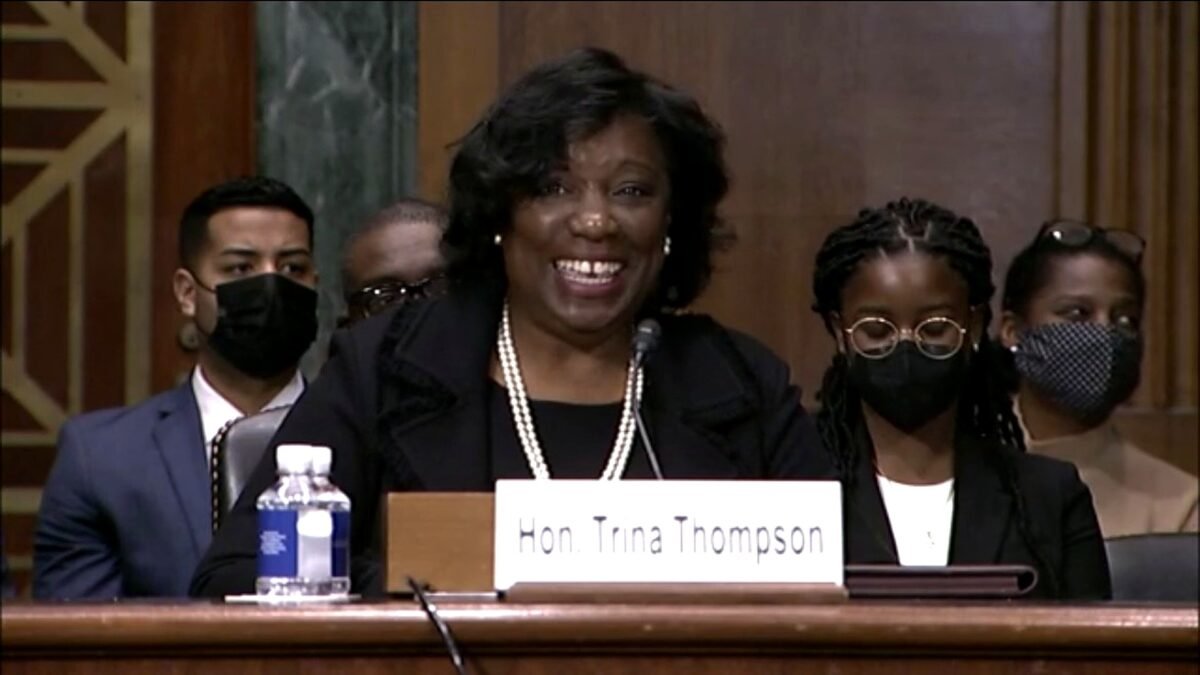
A federal judge in San Francisco has ordered the Trump administration to stop threatening state and local election officials with criminal prosecution, four days before midterm elections that will decide control of Congress.
United States District Judge Trina Thompson issued a temporary restraining order on Friday evening, 30 October, barring the Department of Justice and the Department of Homeland Security from pressing election officials to remove voters from the rolls, refuse them ballots or set their ballots aside on the basis of the administration’s lists of alleged non-citizen voters, according to Reuters.
The order, which runs until 16 November, also blocks the two agencies from halting ballot processing and from taking other actions that “threaten, intimidate or coerce” election officials into changing how ballots are processed because of claims that the voters are ineligible, according to CNN.
“Although Defendants claim that their actions are designed to halt unlawful voting by noncitizens, their actions are likely to have the effect of interfering with election administration and disenfranchising lawful voters,” Judge Thompson wrote in her opinion granting the order, according to CNN.
The ruling came in a lawsuit brought by a coalition of labour unions and civil rights groups, including the Service Employees International Union, the American Federation of State, County and Municipal Employees, the League of United Latin American Citizens and the National Association for the Advancement of Colored People. The defendants are the Justice Department, Attorney General Todd Blanche, the Department of Homeland Security and Homeland Security Secretary Markwayne Mullin.
“Because the public has a paramount interest in ensuring that election officials and workers are able to carry out their work in accordance with federal law and election procedure, and the official day of the Elections is only a couple of days away, the balance of the equities and public interest weigh in Plaintiffs’ favor,” Thompson wrote, according to Reuters.
The judge granted the emergency order without waiting for the government to respond, finding that the legal requirements for emergency relief without notice had been met. “Ballots have already been issued. Americans have already begun voting. Workers have already begun processing ballots,” she wrote, according to The Hill. “Given the consequences of inaction, the Court sees no reason to delay its ruling.”
The Justice Department had no immediate comment on the ruling, according to Reuters. CNN said it had reached out to the department for comment.
In a passage that goes to the heart of the dispute, Thompson wrote that election workers who do their jobs in accordance with the law break no federal criminal law, even when a ballot belongs to a voter the government claims is ineligible. “When state and local government employees perform the work of distributing, processing, or counting ballots or otherwise administering the 2026 midterm election” in accordance with the law, “they do not violate federal criminal law even if a particular ballot belongs to a registered voter alleged by Defendants to be ineligible to vote,” she wrote, according to CNN.
The order also requires the administration to inform the judge of any “search warrant applications, grand jury subpoenas, or other demands to access election materials or ballots” issued in connection with the lists it has created alleging that individuals are ineligible to vote, according to CNN.
Judge Thompson, who was appointed by former President Joe Biden, sits in the Northern District of California. The case is Service Employees International Union v. U.S. Department of Justice.
The ruling lands at the sharp end of a midterm campaign in which more than 44 million Americans had already voted as of Thursday evening, according to the University of Florida’s Election Lab, and in which polls favour Democrats to take control of the House of Representatives while giving them a plausible chance of a Senate majority. Republicans currently hold narrow majorities in both chambers. Democrats need a net gain of three seats to win the House and a net gain of four to win the Senate.
The letters and lists behind the lawsuit
The lawsuit challenges a pressure campaign that has intensified in the final weeks before the election. At its centre is a data-matching operation run by the Department of Homeland Security that compares state voter lists with federal records to produce lists of people the administration says may be non-citizens. Election officials say the lists are unreliable and include United States citizens, according to CNN.
On 23 October, the Justice Department sent letters to county election officials and employees across California threatening criminal prosecution of any worker who helped process a ballot cast by a voter the government claimed was ineligible. The plaintiffs allege those letters were hand-delivered by armed Homeland Security personnel.
In an earlier letter to officials in Los Angeles, Acting Deputy Attorney General Trent McCotter wrote that “noncitizen voting in a federal election is a federal crime” and warned that knowingly facilitating it was also unlawful, according to ABC News reporting cited in a case summary of the lawsuit.
Three days later, on 26 October, the government turned to Washington state, sending a letter that identified more than 400 potential non-citizens and demanded that the secretary of state halt processing their ballots, according to a case summary of the proceedings.
This week, the Justice Department sent letters to election officials in all 50 states threatening potential prosecution if they failed to preserve election records, according to The Hill. Reuters separately reported that the department had sent letters to 29 states and Washington, D.C., threatening investigations and demanding that they preserve records and voter data from the 2024 election. Federal law already requires jurisdictions to preserve election records for 22 months after an election.
The department has also sued to try to block the counting of ballots of thousands of voters in California that the federal government says may be non-citizens. On Wednesday, another federal judge in California, David O. Carter, rejected the department’s request to set aside the ballots of 20,000 people the government had identified as potential non-citizens, finding no legal basis for the demand, that the list was unreliable and that granting it would “wreak havoc” and have a “chilling effect” on election workers. A split panel of the 9th U.S. Circuit Court of Appeals upheld that ruling on Friday. The appeals court said the administration does not have the right to intervene in how states verify citizenship status, according to CNN.
The administration’s broader campaign has run into the courts before. The Justice Department has filed 31 lawsuits against 30 states and Washington, D.C., seeking voter rolls and related data. On 9 October, a federal judge struck down the department’s nationwide voter-data policy. And the Organization for Security and Co-operation in Europe has not been invited to observe these midterms, the first time since 2002 that the United States has not invited the organisation’s election observers, according to its election-observation arm.
Studies cited by Reuters have consistently found that voting by non-citizens in American elections is rare. Non-citizens are already barred from voting in federal elections, and states have their own verification procedures.
A second front in Alaska
The San Francisco order is not the only federal court fight over the election playing out in the final days of the campaign. On Thursday, the Justice Department filed an amended lawsuit in Alaska seeking to block certification of the results if Republican Senator Dan Sullivan loses narrowly to Democratic challenger Mary Peltola, one of about ten highly competitive Senate races that will decide control of the chamber.
The amended suit cites a New York Times report that operatives for Peltola’s campaign recruited a candidate with the same name as the incumbent — a retired teacher from Petersburg also called Daniel Sullivan — to siphon votes from the Republican. The department described it as a “sham campaign for the purpose of misleading Alaskan voters”. Peltola’s campaign has said it had no involvement with either Sullivan campaign, and the state elections office called the amended suit “meritless” and said it “cast a cloud over Alaska’s election”.
The department has also accelerated a criminal investigation in Alaska, issuing more than 40 grand jury subpoenas and preservation notices, with charges including deprivation of rights under colour of law under consideration. President Donald Trump said on Wednesday that he believed the people behind the alleged scheme “should be prosecuted” and called it “voter fraud at the highest level”. Alaska’s governor ordered a state police investigation, and the chairman of the House Oversight Committee opened a congressional inquiry.
Because Alaska uses ranked-choice voting, a close result could take weeks to resolve, potentially leaving control of the Senate unclear long after election night. The dispute could also interact with the San Francisco order, which bars the administration from using threats of prosecution to influence how officials handle ballots — the precise conduct at issue in the Alaska case is different, but both cases turn on how far the federal government may go in policing state-run elections.
Trump has made false claims related to elections in the past, including not acknowledging his defeat in the 2020 election, according to Reuters. His administration says stricter measures are needed to ensure election security and public confidence in the vote. Critics, including political experts and Democratic and some Republican election officials, have viewed the administration’s moves as federal overreach. Some election officials have told Reuters they were preparing for potential federal interference in the midterm elections.
Analysis: Why It Matters
A court-drawn line around election day
The most important feature of Judge Thompson’s order is not its reasoning but its timing. It was issued on a Friday evening, four days before an election in which tens of millions of ballots have already been cast and are already being processed. The judge’s own words — “Ballots have already been issued. Americans have already begun voting. Workers have already begun processing ballots” — explain why she acted without waiting for the government’s response. In ordinary litigation, a court gives both sides time to be heard. Here, the judge concluded that the cost of waiting, measured in disrupted ballot processing and intimidated election workers, outweighed the cost of acting on one side’s account alone.
That urgency is the order’s strength and its vulnerability. As a temporary restraining order, it is by design short-lived: it expires on 16 November. It does not decide the underlying legal questions — whether the administration’s data-matching programme is lawful, whether its letters were coercive, or whether the Voting Rights Act was violated. It simply freezes the status quo for the most sensitive fortnight in the American electoral calendar. The administration can be expected to challenge it, and the judge will have to decide, probably within days, whether to convert it into a preliminary injunction that lasts through the post-election period, when certification fights are most likely.
The lists at the centre of the fight
Everything in this dispute turns on the reliability of the lists. The administration’s case for its campaign is straightforward: only citizens may vote in federal elections, the government has data suggesting some registered voters are not citizens, and it is entitled to tell states about them. The plaintiffs’ case is equally straightforward: the lists are wrong often enough to matter, they sweep in citizens, and the threat of criminal prosecution attached to them makes officials afraid to do their ordinary jobs.
The evidence so far favours the plaintiffs’ account of the lists’ quality. Election officials have said the lists include United States citizens. A federal judge in California found the list of 20,000 names unreliable. A federal appeals court agreed that the administration had no right to dictate how states verify citizenship. And the administration’s own figures underline the mismatch between the scale of its claims and the scale of the problem: studies consistently show non-citizen voting is rare, while the lists in question cover tens of thousands of names. When a list is unreliable and the penalty for ignoring it is prosecution, the rational response of a local election worker is to err on the side of caution — and caution, in this context, means not counting a ballot that should be counted.
Why the threat of prosecution matters more than the lawsuit
It is worth being precise about what the administration was actually doing. It was not, in most cases, suing to have ballots thrown out. It was writing letters. Letters threatening criminal prosecution, letters warning of “significant federal scrutiny”, letters hand-delivered — the plaintiffs allege — by armed federal personnel. A letter is cheaper than a lawsuit and harder to challenge, but for a county elections clerk earning a modest salary, a letter from the Justice Department threatening prosecution is not a minor administrative communication. It is a personal risk calculation, made at the busiest moment of a two-year election cycle, by people who have no legal department of their own.
Judge Thompson’s order recognises this asymmetry. Her finding that election workers “do not violate federal criminal law” when they process ballots in accordance with the law is not a new legal rule; it is a statement of the obvious that, in the current climate, apparently needed to be said by a federal judge. The order’s requirement that the administration report any new search warrants, subpoenas or demands for election materials is the practical teeth of the ruling: it gives the court a window into conduct that would otherwise happen in private correspondence between federal agencies and local officials.
A pattern of court losses for the pressure campaign
Thompson’s order is the third judicial setback for the administration’s election campaign in October alone. First, a federal judge struck down the Justice Department’s nationwide voter-data policy on 9 October. Then Judge Carter rejected the demand to set aside 20,000 California ballots, and the 9th Circuit upheld him on Friday. Now a second California judge has barred the threats themselves.
The pattern matters because it suggests the problem is not a single overzealous official or a single flawed list, but a strategy that the courts are repeatedly finding to exceed the federal government’s lawful role. Elections in the United States are administered locally under the Constitution, and the federal government’s authority over them is limited. The administration’s defenders argue that federal law gives it tools to protect election integrity; the courts, so far, have been unimpressed by how those tools have been used. Each ruling also creates a record that the next judge can rely on, which is why the administration’s losses compound.
What it does not settle
None of this resolves the underlying arguments. The administration may appeal, and an appeals court may take a different view of the balance of harms. The order expires on 16 November, and if it is not extended, the administration could resume its campaign during the certification period, when the stakes are highest. The Alaska lawsuit continues, and a close result there could produce a certification fight that tests the limits of federal power in a different way. And the broader question — how the federal government should verify citizenship without wrongly excluding citizens — remains unanswered by any court.
The most likely legacy of the order is narrower and more practical: for the four days that matter most, the people who count America’s votes can do their jobs without a letter from Washington telling them they might be prosecuted for it. In an election conducted by tens of thousands of local officials, most of them unknown to the public, that protection is not a small thing.
What to Watch Next
- An appeal or a narrowing request: whether the Justice Department asks the 9th Circuit to stay or narrow the order before Tuesday’s vote, and whether it seeks to keep its data-matching programme running in the meantime.
- The 16 November deadline: whether Judge Thompson converts the temporary order into a preliminary injunction, which would carry the protections through the certification period, and what the government argues at that hearing.
- The reporting requirement: whether the administration discloses any new search warrants, grand jury subpoenas or demands for election materials to the court, and whether any election official reports fresh pressure despite the order.
- Alaska’s count: how the Senate race between Dan Sullivan and Mary Peltola resolves under ranked-choice voting, whether the federal lawsuit delays certification, and how long control of the Senate remains undecided.
- Election night and after: whether the order holds through the counting period, how quickly results are certified in the closest House and Senate races, and whether any candidate or official cites the administration’s lists in a post-election challenge.
Sources
- Reuters — Judge orders Trump administration to cease threats to prosecute election officials
- CNN — Judge imposes sweeping emergency order halting DOJ pressure campaign on election officials across the country
- The Hill — Judge blocks Trump administration threats to election workers
- Reuters — Trump escalates legal challenges against states as Election Day nears
- The Democracy Advocate — DOJ pressure campaign of interference on election officials blocked by federal judge days before the midterms (case summary)

About the Author — Abdul Mannan
Related Articles
Trump Restores Kansas and Iowa Rallies Days Before Midterms as Tight Senate Races Threaten Republican Majority
Less than 24 hours after cancelling them, President Donald Trump has put his Kansas and Iowa rallies back…
Trump Administration Escalates Election Legal Fights Days Before Midterms as Alaska and California Battles Intensify
With four days to go until the midterms, the Justice Department has amended its Alaska lawsuit, accelerated a…
More Than 43 Million Americans Have Already Voted in the Midterms as Early Voting Surges Past 2022 Pace
More than 43 million early ballots had been cast by 29 October, with Texas alone past its entire…