
Fakhar Zaman’s 127 Powers Pakistan to Tri-Series Title in Record 326 Chase Against Sri Lanka

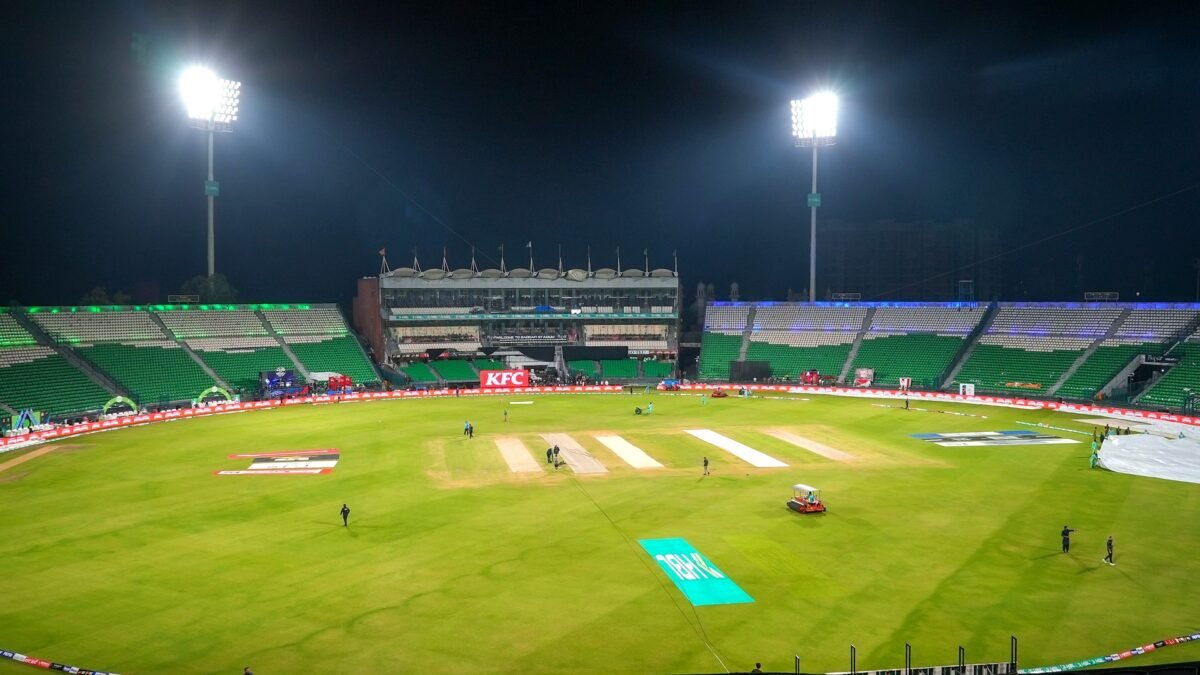
Fakhar Zaman produced one of the great final innings of his career as Pakistan chased down 326 to beat Sri Lanka by three wickets and win the ODI tri-series at the Gaddafi Stadium in Lahore on Saturday, ending an 18-year wait for a tri-series title and delivering the joint-highest successful chase ever recorded in a one-day international final.
Pakistan reached 331 for seven with nine balls to spare, according to Reuters, after Zaman’s 127 from 99 balls and a blistering 61 from 31 balls by Arafat Minhas turned a chase that had begun in crisis into a coronation. Captain Shaheen Shah Afridi struck the winning runs, launching Dilshan Madushanka over the boundary for six, as a packed home crowd celebrated a trophy that had eluded Pakistan since the Kitply Cup in Bangladesh in 2008.
The victory also made amends for last year’s disappointment, when Pakistan lost the final of a home tri-series to New Zealand, and it gave the hosts their first win in an ODI final on home soil after three previous defeats in finals played in Pakistan, according to ESPN’s records.
Sri Lanka, put in to bat after Pakistan won the toss, had posted 325 for eight, built around a maiden ODI century from Kamindu Mendis, who made 131 from 128 balls, and a fluent 77 from 65 balls by Pavan Rathnayake. At 255 for two after 41 overs, the visitors looked set for a total approaching 350. Instead, Pakistan’s fast bowlers dragged the innings back in the final nine overs, and Sri Lanka lost five wickets for 28 runs.
What followed was a chase of rare drama: a top-order collapse, a 149-run rescue act, a nine-over stretch without a boundary, and then a late assault that settled the match with room to spare. It was, by the numbers, the equal of the most famous chase in ODI final history — India’s pursuit of 326 against England in the 2002 NatWest final at Lord’s — and the two teams’ combined 656 runs set a new record aggregate for an ODI final, surpassing the 651 scored in that 2002 match.
A chase that began in crisis
Pakistan’s pursuit began in the worst possible fashion. Dilshan Madushanka struck twice with the new ball, removing young opener Maaz Sadaqat for five and then Babar Azam for a five-ball duck, both caught at slip, to leave the hosts reeling at 14 for two in the fourth over. The Gaddafi Stadium, so loud at the start of the evening, fell suddenly quiet.
What happened next defined the match. Zaman, who had endured a lean series with the bat, and 19-year-old wicketkeeper-batter Saad Baig rebuilt the innings with a 149-run stand for the third wicket that completely shifted the momentum. Baig, playing in only his first series at this level, brought up his maiden ODI fifty and made 74 from 75 balls, striking 11 fours, before Maheesh Theekshana finally ended his knock, caught and bowled, with Pakistan at 163 for three in the 27th over.
Zaman, meanwhile, had paced his innings with the care of a man who knew exactly what the occasion demanded. He took 52 balls to reach his half-century, according to ESPNcricinfo, and then climbed into a higher gear, reaching his 12th ODI hundred off the 84th ball he faced and scoring 75 off his last 40 deliveries. He was productive on the leg side throughout — 72 of his 127 runs came in that direction — sweeping beautifully and pulling with conviction, and he dominated the spinners and the less-accomplished seamers with particular ferocity.
He did not have it all his own way. Theekshana dropped him on 69 in the 25th over, a difficult chance, and later got a hand to another possible catch in the 32nd over, only to tread on the boundary. Significant dew had settled on the Lahore outfield late in the evening, hampering Sri Lanka’s bowling and fielding, and ground-fielding errors compounded as Pakistan drew closer to the target. But Zaman, as ESPNcricinfo’s report noted, had done just enough to avoid offering the straightforward chances, and in between the escapes he struck brutal boundaries.
When Madushanka finally bowled him in the 34th over, ending an innings of 127 that included 11 fours and six sixes, Pakistan still needed 106 runs. Salman Ali Agha departed two overs later for 17, leaving the hosts at 230 for five after 36.5 overs, and the chase entered its most uncertain phase. For nine overs, between the 33rd and the 42nd, Pakistan did not find the boundary at all — yet, with batting still to come, they remained ahead of the required rate.
The decisive passage belonged to the youngest players on the field. Minhas, batting at No. 7, bided his time through his first 14 balls without a boundary, then exploded after the 42nd over as the dew took hold, reaping 48 runs off the last 17 balls he faced. He finished with 61 from 31 deliveries, including four sixes and three fours, and his 94-run partnership with Hasan Nawaz, who made an unbeaten 37 from 45 balls, effectively sealed the match.
Minhas struck two sixes and a four off Asitha Fernando to bring Pakistan to within two runs of victory before top-edging a slower ball that Fernando himself chased down. Fernando then removed Faheem Ashraf for a first-ball duck in the same over, leaving Pakistan at 324 for seven in 47.5 overs — but with so few runs needed and so many balls remaining, there was little doubt about the outcome. Afridi, the captain, settled it in style, smashing Madushanka for six over square leg on the third delivery of the penultimate over.
Zaman was named player of the match. Minhas, whose all-round contribution across the series also included wickets with his left-arm spin, was named player of the series.
Sri Lanka’s innings: from command to collapse
Sri Lanka’s innings had followed the opposite arc. After being asked to bat first, the visitors made a strong start, with opener Avishka Fernando and Kamindu Mendis adding 51 runs in the powerplay and 87 for the first wicket before Fernando’s dismissal in the 18th over ended the opening stand. Captain Kusal Mendis fell to Agha soon after, leaving Sri Lanka at 109 for two.
What followed was the finest batting of the day from the visitors. Kamindu, who had been 18 from 29 balls at the end of the ninth over, accelerated through the middle overs, unleashing virtually the full array of his strokes on his way to a maiden ODI hundred. He and Rathnayake shared a 146-run partnership for the third wicket from 119 deliveries, a stand that kept Sri Lanka firmly in control and had them, at 255 for two after 41 overs, heading for a total close to 350.
Rathnayake, who finished the series as its leading run-scorer with 427 runs at a strike rate of 122.70, hit 77 from 65 balls, showcasing a powerful sweep and a ravishing pull, and punishing every error of length on a true pitch. Kamindu brought up his hundred with 12 fours and two sixes before Afridi trapped him leg-before, missing a sweep — the wicket that set in motion Sri Lanka’s collapse.
Afridi and Haris Rauf removed Dasun Shanaka and Rathnayake within the space of two overs, Shanaka caught at long-on off Afridi in the 44th over and Rathnayake caught on the straight boundary off Rauf the following over. It was the first time in four innings that Rathnayake had been dismissed for less than 100. Sahan Arachchige provided a late cameo with a brisk 15 from 12 balls before falling to Naseem Shah, and Sri Lanka’s tailenders had to play out the last 11 balls of the innings.
Pakistan’s quicks shared the spoils: Afridi, Naseem Shah, Agha and Rauf each took two wickets, with Afridi collecting figures of two for 50 from his ten overs and Agha two for 44. Madushanka, with three for 63, finished as Sri Lanka’s leading bowler on the night and the leading wicket-taker of the series, with 11 wickets.
The records behind the win
The numbers attached to Pakistan’s victory tell the story of a night that will be filed among the most significant in the country’s recent one-day history. The chase of 326 was the joint-highest successful target chase in an ODI final, levelling India’s 326 against England in the 2002 NatWest final, and the joint-highest target any team has chased down in a men’s ODI knockout match. It was also Pakistan’s sixth-highest successful ODI chase, the third-highest at the Gaddafi Stadium, and the second-highest chase ever recorded against Sri Lanka, behind only Pakistan’s pursuit of 345 in Hyderabad during the 2023 World Cup.
For Zaman, the hundred carried a weight beyond the match itself. It was his 12th ODI century and his second in an ODI tournament final, after his famous hundred against India in the 2017 Champions Trophy final at The Oval. In doing so, he became only the second Pakistan batter to score two centuries in ODI finals, equalling the record of the great Saeed Anwar, whose hundreds came against Sri Lanka in the 1993 Wills Trophy final and against India in the 1998 Silver Jubilee Independence Cup final.
The innings also took Zaman past 4,000 ODI runs — he finished the match on 4,019 runs from 96 innings, at an average of 44.65 and a strike rate of 93.57, becoming only the 16th Pakistani batter to reach the milestone. He was the second-fastest Pakistani to the mark, behind Babar Azam, who reached it in 82 innings. It was, too, his fourth century in a chase of a target above 300, the most by any Pakistan batter, moving him ahead of Babar Azam and Younis Khan, who each have three.
For the team, the title ended several droughts at once. It was Pakistan’s first ODI tri-series title since the 2008 Kitply Cup in Bangladesh, when they beat India in the final, and their first triumph in a multi-nation ODI competition since the 2017 Champions Trophy. It was also their first tri-series title at home, and their first win in an ODI final on home soil after losing their three previous home finals. The 2025 home tri-series final, lost to New Zealand, had been the most recent of those disappointments; this time, in front of their own crowd, they finished the job.
The road to the final
The series itself, played from 18 to 31 October across Rawalpindi and Lahore and featuring England alongside the two finalists, had offered little hint of how the final would unfold. Pakistan began by beating Sri Lanka by 37 runs in the opener in Rawalpindi, then beat England by 87 runs, and then edged England by one wicket in Lahore on 25 October to book their place in the final. Sri Lanka, meanwhile, produced one of the great chases of the series in Rawalpindi, overhauling England’s 429 with 430 for eight, and then inflicted a humbling eight-wicket defeat on Pakistan in Lahore on 27 October, bowling the hosts out for 110 in 25.3 overs — their second-lowest ODI total at the Gaddafi Stadium — with Madushanka taking a career-best five for 34.
That defeat, four days before the final, had raised real questions about Pakistan’s batting. Babar Azam, the top scorer in the 110 with 29, was the only batter besides Hasan Nawaz, Afridi and Minhas to reach double figures. England, who lost all three of their group matches, beat Sri Lanka by 55 runs in the final group game on 29 October, a dead rubber played after both finalists had already been decided, with Ben Duckett’s 167 the standout innings of the series for England.
Afridi, the Pakistan captain, had urged his team to forget the 110 defeat and focus on the final, and on Saturday night his players answered him. The series was staged as preparation for all three teams for the 2027 Cricket World Cup, to be held in South Africa, Zimbabwe and Namibia, and on that measure Pakistan will take more from it than a trophy: they found match-winners at the top of the order, in the middle order, and at the death, and they did it after their worst batting performance of the series.
Analysis: Why It Matters
A chase built on partnerships, not panic
The most instructive thing about Pakistan’s chase is how it was constructed. At 14 for two, with both openers gone and the tournament’s most reliable batter back in the pavilion for a duck, the temptation would have been to swing wildly and hope. Instead, Zaman and Baig added 149 runs in 140 balls, Zaman and Agha added 57, and Minhas and Nawaz added 94 in 65 balls. Three substantial partnerships, each with a different character — rescue, consolidation, and acceleration — and each arriving exactly when the innings needed it. That is not a team riding its luck; that is a batting order that understands the shape of a long chase. The nine-over boundary drought in the middle of the innings, which in another side might have triggered a collapse, was absorbed calmly because the required rate had already been brought under control by the pace of Zaman’s scoring. Pakistan lost wickets, but they never lost the arithmetic, and in a chase of 326 that is the difference between a famous win and a famous collapse.
Fakhar Zaman’s redemption, completed in the arena that suits him best
Zaman has always been a cricketer of the big occasion, and this innings was the latest proof. His first hundred in nearly three years arrived in a final, against the same opposition he had dominated in the 2017 Champions Trophy final, and it carried him past 4,000 ODI runs and level with Saeed Anwar on a record that had stood for almost three decades. What makes the achievement striking is the contrast with the rest of his series: he had struggled for runs in the group stage and was dismissed cheaply in the heavy defeat to Sri Lanka four days earlier. Lesser players carry that doubt into a final; Zaman carried it out of the ground with him. His record in finals — two hundreds in three ODI finals — now stands alongside his record in chases of more than 300, where no Pakistani has more centuries. At 36, and with younger openers pressing for his place, this was an innings that answered every question about his future in one evening. The selectors may debate the composition of the top order for months, but they will do so knowing that when the stakes are highest, Zaman remains the batter they want walking out first.
The young core announced itself
If Zaman provided the experience, the final belonged just as much to Pakistan’s emerging generation. Saad Baig, 19 years old and keeping wicket in a final, made a maiden ODI fifty in a 149-run stand that rescued the innings; Arafat Minhas, still early in his international career, produced a match-turning 61 from 31 balls and was named player of the series; Hasan Nawaz, unbeaten on 37, held the other end while Minhas attacked. Add Maaz Sadaqat, who opened the batting in a final despite his early dismissal, and the picture is of a side deliberately investing in youth — and being repaid on the biggest stage of the series. This matters because Pakistan’s one-day rebuild has often been talked about in terms of the next World Cup rather than the present. On Saturday night, the future and the present were the same thing. The challenge now is to keep these players in the side long enough for a single final to become a pattern, and to resist the urge, after the next inevitable failure, to discard them as quickly as they were embraced.
Sri Lanka will rue the collapse — and the dew will be debated
For Sri Lanka, the defeat will sting precisely because the match was theirs to win. At 255 for two after 41 overs, with Kamindu and Rathnayake set and the bowling tiring, a total near 350 was in sight; instead they managed 70 from the last nine overs and lost five wickets for 28 runs. That collapse, triggered by Afridi’s removal of Kamindu and completed by the fast bowlers at the death, was the first turning point of the match, and it deserves as much attention as anything Pakistan did with the bat. The second talking point is the dew, which settled heavily on the Lahore outfield and hampered Sri Lanka’s bowlers and fielders as the evening wore on, contributing to the dropped catch of Zaman on 69 and to a series of ground-fielding errors. Sri Lanka will feel, with reason, that the toss — won by Pakistan, who chose to field — handed the hosts a real advantage in a day-night final. But that is the nature of day-night cricket in Lahore, and it does not diminish the quality of Pakistan’s chase. The lesson for Sri Lanka is narrower and more useful: a side that posts 325 after being 255 for two should be defending a winning total, and the five-for-28 collapse is the passage they must fix before the next tournament, not the weather.
What this title means for the road to 2027
The broader significance of the tri-series is that it was explicitly staged as preparation for the 2027 World Cup, and Pakistan leave it with answers to questions that have lingered since their last global campaign. They have a captain in Afridi who wins finals and finishes matches with the bat as well as the ball; they have a match-winner in Zaman who rises to finals; they have a young middle order that can absorb pressure and accelerate; and they have a fast-bowling group that can defend, or in this case restrict, at the death — four bowlers sharing eight wickets in the final. The concerns have not vanished: Babar Azam’s duck in the final, following his 29 as top scorer in the 110 collapse, extends a lean run for a player on whom the batting has leaned for years, and the top order’s fragility — 14 for two in a final, 23 for two in the 110 — remains the side’s most obvious vulnerability. England, meanwhile, leave the series with a rebuild of their own to contemplate after a winless group phase, and Sri Lanka leave with a batter in Rathnayake, the series’ leading scorer with 427 runs, who looks ready to carry their middle order for years. But for Pakistan, the immediate meaning is simpler and more valuable than any of that: they won a home final, in front of their own crowd, after losing three before it, and they did it by chasing the joint-highest total ever chased in an ODI final. Trophies do not guarantee World Cups, but they do change the way a team thinks about itself, and that is the real prize Pakistan carried out of the Gaddafi Stadium.
What to Watch Next
- Pakistan’s next ODI assignment: whether the selectors keep faith with the young core — Baig, Minhas, Nawaz and Sadaqat — or revert to experience, and how the tri-series XI is carried into the next home series.
- Babar Azam’s form: the former captain’s duck in the final and his lean series will be scrutinised; his response in the next series will shape the debate about Pakistan’s top order.
- Fakhar Zaman’s place: after a final hundred, a 4,000-run milestone and a share of Saeed Anwar’s record, whether the 36-year-old opener cements his spot for the build-up to the 2027 World Cup.
- Sri Lanka’s response: how Kusal Mendis’s side address their death-overs collapse and whether Rathnayake, the series’ leading scorer, becomes the centrepiece of their batting.
- England’s rebuild: what changes follow a winless group phase in Lahore and Rawalpindi, and whether Duckett’s 167 is the foundation of a new-look one-day side.
Sources
- Reuters — Zaman hundred powers Pakistan to tri-series title over Sri Lanka
- ESPNcricinfo — Minhas’ match-turning 61, Fakhar 127 take Pakistan to tri-series title
- ICC — Pakistan clinch tri-series with big chase against Sri Lanka
- ESPN — Stats: Pakistan record joint-highest chase in ODI final
- Geo Super — Fakhar Zaman equals Saeed Anwar’s record with century in ODI tri-series final

About the Author — advmannan1
Related Articles

Milan Stun Inter 3-1 in Derby della Madonnina as Moreira Stars and Champions Suffer First Defeat of the Season
AC Milan beat Inter Milan 3-1 in the Derby della Madonnina at San Siro, with Diego Moreira scoring…

Phillips’ Record-Breaking Century Powers New Zealand to 87-Run Rout of India at Eden Park
Glenn Phillips smashed 107 from 49 balls and Jacob Duffy took 4 for 23 as New Zealand posted…

Kiwis Crush Fiji 78-0 to Reach World Cup Semi-Finals as Two Players Sent Off in Gold Coast Flashpoint
New Zealand thrashed Fiji 78-0 on the Gold Coast to book a Rugby League World Cup semi-final, but…