
Kiwis Crush Fiji 78-0 to Reach World Cup Semi-Finals as Two Players Sent Off in Gold Coast Flashpoint

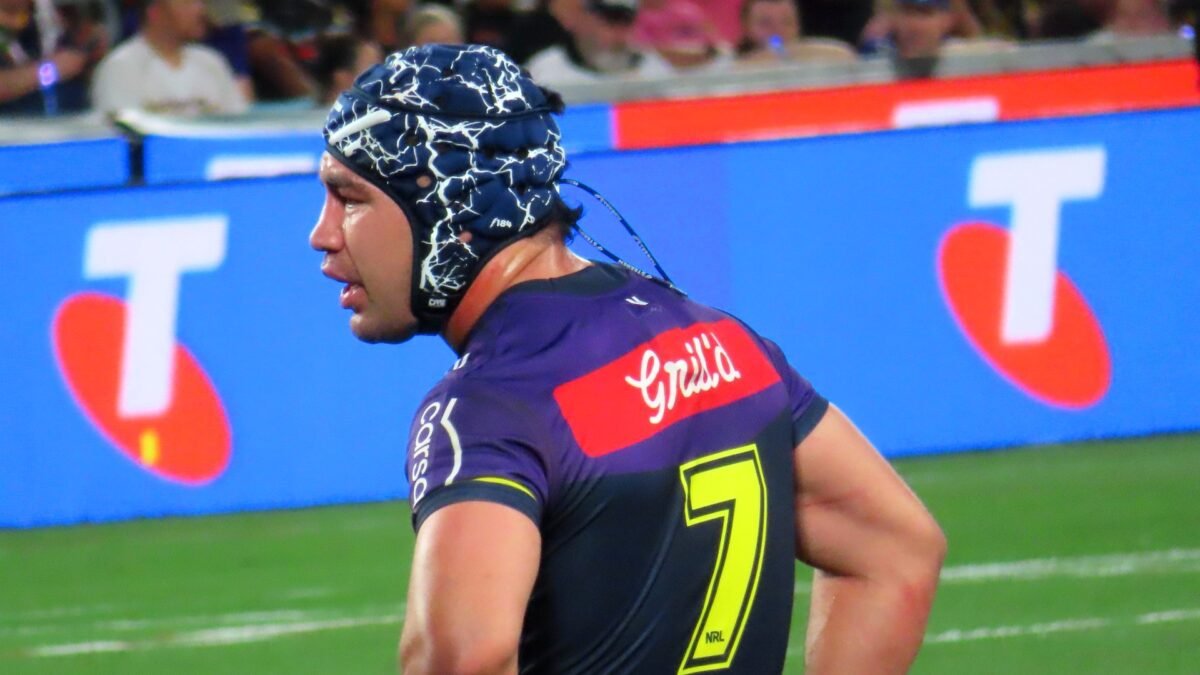
New Zealand produced one of the great Rugby League World Cup statements on Saturday, thrashing Fiji 78-0 at Cbus Super Stadium on the Gold Coast to book their place in the semi-finals — but a 13-try demolition that should have been remembered purely for its brilliance was instead overshadowed by a second-half flashpoint that left two players sent off and one of the Kiwis’ stars facing the possible end of his tournament.
The match was, in the plainest terms, a shootout for survival. According to NRL.com, the equation for the Kiwis before kick-off was brutally simple: beat Fiji and reach the semi-finals, lose and go home. New Zealand had already lost their tournament opener 24-22 to Australia in Sydney on 15 October, and although they had bounced back by hammering the Cook Islands 82-16 in Christchurch, only a win over Fiji would keep their campaign alive. Fiji, for their part, arrived with genuine belief after pushing defending champions Australia all the way in a 36-22 defeat at Lang Park in Brisbane a week earlier, a match in which they had briefly led 16-12 early in the second half.
What followed bore no resemblance to a contest between two teams separated by so little on paper. The Kiwis were ahead within four minutes and never looked back, racing to a 48-0 lead by half-time after scoring eight tries in the opening 40 minutes. By full-time the scoreboard read 78-0, Fiji had been held scoreless, and New Zealand had sent what NRL.com described as “an ominous warning to their World Cup rivals” ahead of the knockout stage.
Fullback Keano Kini, standing in for the injured superstar Kalyn Ponga, was the game’s outstanding player. According to NRL.com, the 13-try rout was both started and finished by Kini, who racked up 260 run metres and seven tackle breaks in a performance of rare completeness. Fox Sports reported that Kini made two line-breaks and scored inside the opening four minutes, then finished the contest with what it called a “slashing solo effort”. For a player who began the tournament as a deputy, it was a statement of his own: the Kiwis’ attack did not merely survive without Ponga, it flourished.
Centre Casey McLean was almost as destructive. According to NRL.com, McLean scored four tries to take his record to 15 tries in just seven Tests, a strike rate that places him among the most prolific finishers in the international game. Fox Sports noted that McLean began the match at centre before switching to the wing once Ronaldo Mulitalo was sent off, and still kept finding the try-line. His fourth try underlined the depth of New Zealand’s outside backs: even after losing a winger to dismissal, the Kiwis simply moved a centre out wide and carried on scoring.
Halfback Jahrome Hughes was the architect of much of it. According to Fox Sports, Hughes scored a try and set up three more, while NRL.com credited him with three try assists as he tuned up for the knockout stage. Hughes was eventually taken off as a precaution to protect his hamstrings, according to Fox Sports, a decision that spoke volumes about how comfortable New Zealand were by then — their chief playmaker could be wrapped in cotton wool with the job already done.
Captain James Fisher-Harris also got on the scoresheet, and the manner of his try captured the Kiwis’ dominance. According to NRL.com, the skipper scored his first Test try since the 2023 Pacific Championships against Samoa, trailing through to pounce on the ball after Mulitalo had tapped back a Hughes bomb. It was a front-rower’s try built on support play and anticipation, the kind of score that comes only when a team is hunting in a pack and every player believes the next play will break open.
For Fiji, the afternoon unravelled almost before it began. According to Fox Sports, their hopes of an upset were effectively over after just eight minutes, when inspirational captain Apisai Koroisau was forced off with a suspected broken jaw. The veteran dummy-half clashed heads while making a tackle and was later seen with the green whistle in the sheds while being looked after by paramedics. Winger Semi Valemei, who had scored three tries against Australia the previous week, was also lost to a head knock later in the first half, according to both NRL.com and Fox Sports, and was ruled out of the contest.
Deprived of their captain, their most dangerous winger and any semblance of field position, Fiji could manage only six completed sets in the opening 40 minutes, according to Fox Sports. That statistic tells the story of the first half more honestly than the scoreline alone: the Bati barely had the ball, and when they did, they could not hold it long enough to build pressure. New Zealand, by contrast, broke tackles at will. NRL.com reported that Kini, McLean and Mulitalo were breaking tackles almost every time they touched the ball, while forward Naufahu Whyte “continued to enhance his reputation as one of the game’s elite big men”.
Then, with the Kiwis cruising at 48-0 early in the second half, the match exploded. According to NRL.com, the flashpoint came in the 52nd minute, when winger Ronaldo Mulitalo shot in off his wing and made high contact with Fiji’s Ronald Philitoga, who was ruled out of the rest of the game. Fox Sports described it as an “ugly high shot” that came “out of nowhere” and was “completely unnecessary”. Fiji halfback Brandon Wakeham came in to remonstrate with Mulitalo and threw a punch, sparking an all-in melee, and referee Grant Atkins had no choice but to send both players from the field.
Mulitalo now faces a nervous wait for Sunday’s judiciary charges, according to NRL.com, and Fox Sports warned that his World Cup “could be over” if the match review committee takes a dim view of the incident. The winger was also seen to have copped a punch to the head during the melee. The incident was not the only disciplinary blot on the afternoon: according to Fox Sports, key forward Joseph Tapine was placed on report as tempers threatened to boil over, and Fijian forward Jordan Miller was sent to the sin bin late in the match for a headbutt.
Remarkably, the dismissals did not slow New Zealand down. With both sides reduced to 12 men, the Kiwis ran in five more tries, according to NRL.com, taking their tally to 13 for the match. The final quarter also featured what Fox Sports called a “monster shot” from Moses Leota on Fiji’s Caleb Navale in the closing minutes, a hit that summed up New Zealand’s mood: even with the game won, the intensity did not drop.
The result sets up a semi-final against either Tonga or Samoa, who meet in a sold-out showdown at CommBank Stadium in Sydney on Sunday night. According to Fox Sports, Ponga is on track to return for that match, just a few weeks after breaking his arm in the tournament opener against Australia. Ponga watched Saturday’s demolition from the stands, according to Fox Sports, and his expected return gives coach Stacey Jones a selection headache of the best kind: Kini has been superb in his absence, and Jones must now decide how to fit both men into his back line.
For Fiji, the defeat ends a campaign that promised far more than it delivered in its final act. Head coach Mick Potter had praised his side’s courage after the narrow loss to Australia, and the Bati had arrived on the Gold Coast with genuine momentum, having beaten the Cook Islands 40-12 in their opener. But the loss of Koroisau inside eight minutes removed their leader, their organiser and their emotional anchor, and from that moment the match was a damage-limitation exercise that failed. Fiji’s World Cup is over; New Zealand’s, emphatically, is not.
Elsewhere on Saturday, the women’s tournament produced its own piece of history. According to NRL.com, Fiji’s women’s side, the Bulikula, stormed into the semi-finals at their first ever World Cup with a 54-6 win over France at the same venue, Cbus Super Stadium. The Bulikula will now face world champions Australia at Allianz Stadium next Sunday, a reward for a campaign that has already exceeded every expectation.
England’s men, meanwhile, kept their own semi-final hopes alive on Friday night with a 34-12 victory over Papua New Guinea in Wollongong, although their fate now depends on Tonga beating Samoa by more than 46 points on Sunday, according to LeagueNews.co. Australia, the only men’s team to have booked their semi-final place before the final round of group matches, face the Cook Islands in Townsville on Saturday night, with their semi-final scheduled for Allianz Stadium on Sunday 8 November.
Analysis: Why It Matters
A statement win — and a warning to Australia
New Zealand have not won the Rugby League World Cup since 2008, when they stunned Australia 34-20 in the final in Brisbane. In the years since, they have been beaten finalists, semi-finalists and, memorably, victims of one of the great World Cup upsets when Fiji beat them 4-2 in the quarter-finals in Wellington in 2017. This 78-0 victory does not erase that history, but it does announce that the Kiwis have arrived at the business end of this tournament in formidable shape. Scoring 13 tries against a Fiji side that had pushed Australia to the wire a week earlier is not a routine result; it is a marker. Australia, who needed a late surge to beat New Zealand 24-22 in the opener, will have watched this with interest. The gap between the two trans-Tasman rivals, on this evidence, is paper-thin — and New Zealand’s attack, which has now scored 160 points in its last two matches, looks capable of troubling any defence in the competition.
The Kini question: a selection headache Jones will welcome
The most intriguing subplot of New Zealand’s campaign is what happens at fullback when Kalyn Ponga returns. Ponga is the Kiwis’ biggest star, a player whose broken arm in the tournament opener was widely assumed to have ended his World Cup. His rehabilitation has been so rapid that he is now expected to play in next week’s semi-final. But Kini has been magnificent in his place: 260 run metres, seven tackle breaks and two tries against Fiji, on top of a starring role in the 82-16 win over the Cook Islands. Dropping Kini after performances like these would be harsh; shifting Ponga elsewhere would waste his talent. Jones may yet find a way to play both — Ponga’s ball-playing could work at five-eighth, or Kini could shift to the wing — but the decision is now one of the most fascinating selection calls of the tournament. The depth it reveals is itself a strength: New Zealand can lose a player of Ponga’s calibre and barely miss a beat.
Mulitalo’s moment of madness could cost him everything
The 52nd-minute incident will dominate the disciplinary news for the next 48 hours, and rightly so. At 48-0 up, with the game won and a semi-final already secured, there was no competitive justification for Mulitalo to rush out of the defensive line and make high contact with an opponent. The judiciary will decide his fate on Sunday, but the stakes are clear: a lengthy suspension would end his World Cup, and a short one would still leave a mark on a player who had been in superb try-scoring form. There is also a wider point about discipline. New Zealand’s pack plays on the edge — Tapine was placed on report in the same match, and Leota’s late shot on Navale, while legal, underlined the physicality of their approach. Against Tonga or Samoa, both famously physical sides, that edge will be tested far more severely than it was against a depleted Fiji. The Kiwis cannot afford to lose players to suspension at the exact moment the tournament gets serious.
Fiji’s cruel lesson: depth decides World Cups
Fiji’s campaign will be remembered for two very different matches: the brave 36-22 defeat to Australia, in which they led at Lang Park and had the champions rattled, and this 78-0 capitulation. The difference between those two performances was not effort or talent but depth. Losing Koroisau after eight minutes removed the one player Fiji could least afford to lose — their captain, their dummy-half, their kicker of composure in the middle of the field. Losing Valemei compounded the damage. International rugby league is unforgiving of sides that cannot absorb injuries to key men, and Fiji’s squad, for all its NRL quality, is thinner than those of Australia, New Zealand and England. The Bati’s challenge for the next World Cup cycle is to build the depth that turns a brave defeat into a semi-final appearance. The women’s Bulikula, reaching the semi-finals at their first attempt, show that the Fijian pathway is producing talent; the men’s side must now find a way to keep it on the field when it matters most.
The Pacific is now the centre of rugby league
Look at the shape of this World Cup’s final weekend and a larger truth emerges. The semi-final race is being decided by New Zealand, Fiji, Tonga, Samoa and Papua New Guinea, alongside the traditional powers Australia and England. Tonga against Samoa on Sunday night is a sell-out at CommBank Stadium, one of the hottest tickets of the tournament. Fiji’s women have reached the last four at their first World Cup. The Pacific nations are no longer the tournament’s colourful outsiders; they are its beating heart. For the sport’s administrators, the lesson is obvious: the international game’s growth markets are in the Pacific, and the crowds, the colour and the competitiveness on display this weekend are the best advertisement rugby league has had in years. Whoever wins on Sunday night between Tonga and Samoa, New Zealand’s semi-final will be a Pacific derby of rare intensity — and a reminder that the old order, in which only Australia, New Zealand and England mattered, is gone for good.
What to Watch Next
- Sunday’s judiciary: Ronaldo Mulitalo’s charge — and any grading — will be confirmed on Sunday. A suspension of two matches or more would end his World Cup; New Zealand will also learn whether Joseph Tapine faces any sanction after being placed on report.
- Tonga v Samoa, Sunday 8.05pm AEDT: The sold-out clash at CommBank Stadium decides New Zealand’s semi-final opponent — and, with it, the shape of the final four. A Samoa win secures them top spot on the combined Pools B and C table; Tonga go through even in defeat if England’s win over Papua New Guinea stands, as expected.
- Kalyn Ponga’s return: Watch for confirmation during the week that Ponga has been cleared to play, and for Stacey Jones’s selection call at fullback — whether Kini keeps the jersey or makes way for the returning star.
- Jahrome Hughes’s hamstrings: Hughes was withdrawn as a precaution on Saturday. His fitness will be monitored closely in the build-up to the semi-final, given his central role in New Zealand’s attack.
- Australia v Cook Islands, Saturday night: The Kangaroos can lock up first place in Group A with a win in Townsville, setting up their semi-final at Allianz Stadium on Sunday 8 November — a possible dress rehearsal for a trans-Tasman final.
Sources
- NRL.com — “Kiwis run riot as two sent off on Gold Coast” (match report, 31 October 2026)
- Fox Sports Australia — “Ugly high shot, punch as pair SENT OFF in mammoth Kiwis demolition” (live blog and report, 31 October 2026)
- NRL.com — “Every team’s path to the RLWC semi-finals” (explainer, 29 October 2026)
- The Sporting Base — “Rugby League World Cup 2026 Semi-Final Scenarios” (29 October 2026)
- NRL.com — “Blistering Bulikula blast into semis at first World Cup” (Fiji women’s semi-final, 31 October 2026)

About the Author — Abdul Mannan
Related Articles
Fakhar Zaman’s 127 Powers Pakistan to Tri-Series Title in Record 326 Chase Against Sri Lanka
Fakhar Zaman's 127 off 99 balls and a blistering 61 from Arafat Minhas carried Pakistan to a three-wicket…
Milan Stun Inter 3-1 in Derby della Madonnina as Moreira Stars and Champions Suffer First Defeat of the Season
AC Milan beat Inter Milan 3-1 in the Derby della Madonnina at San Siro, with Diego Moreira scoring…
Phillips’ Record-Breaking Century Powers New Zealand to 87-Run Rout of India at Eden Park
Glenn Phillips smashed 107 from 49 balls and Jacob Duffy took 4 for 23 as New Zealand posted…