
Saudi Arabia Says It Shot Down Houthi Drones Over Makkah and Madinah as Holy-City Attacks Escalate

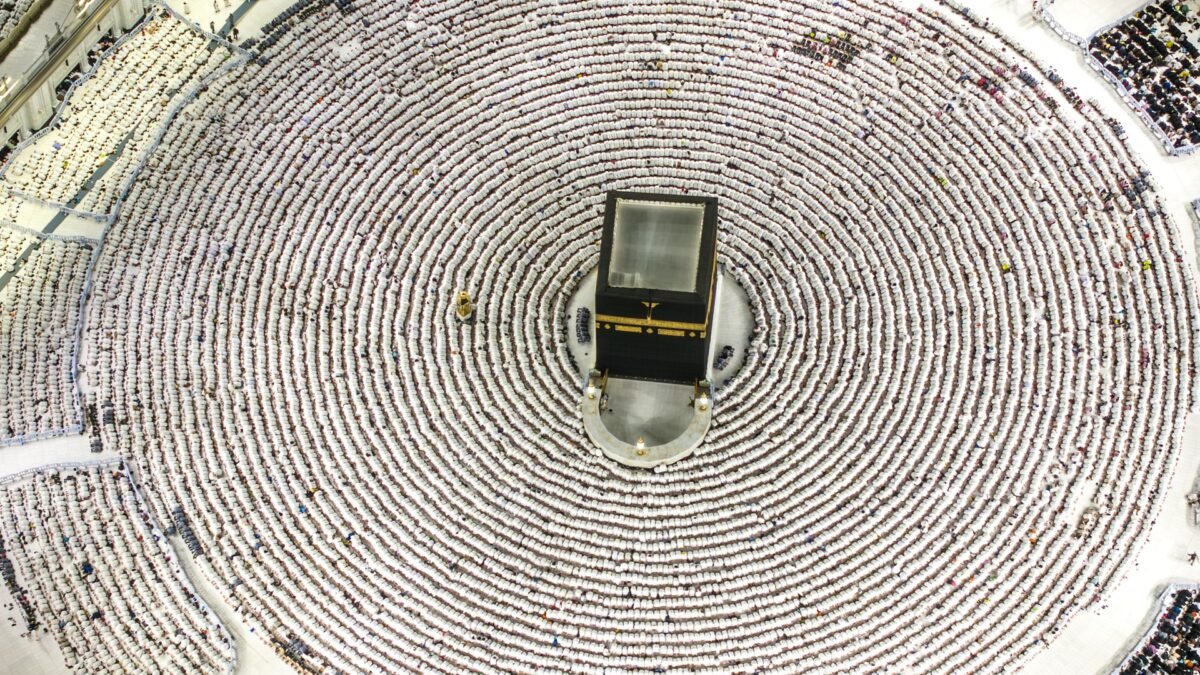
Saudi Arabia said on Friday and Saturday that its air defences had intercepted and destroyed drones launched by Yemen’s Houthi movement over Makkah and Madinah, Islam’s two holiest cities, in the most sensitive escalation yet of a cross-border missile and drone campaign that has intensified sharply through October. The Houthis denied targeting either city, calling the Saudi account a fabrication, even as they fired ballistic missiles at Yemen’s presidential palace in Aden on the same day.
The Saudi-led coalition fighting in Yemen said on Friday that it had intercepted and destroyed a drone in the Makkah region, and on Saturday that a second drone had been intercepted over the Madinah region, according to the Associated Press and Agence France-Presse. The coalition’s spokesman, Maj. Gen. Turki al-Malki, said the first drone was destroyed in the region surrounding Makkah, Islam’s holiest city and the destination for millions of Muslim pilgrims every year. No damage or injuries were reported from either interception, according to the reports.
The Houthis, who control the Yemeni capital Sanaa and much of northern Yemen, rejected the claims outright. Their military spokesman, Yahya Saree, said on the messaging platform Telegram that the group had carried out no military operations targeting Saudi territory on Friday, and described the Saudi claim about Makkah as a “blatant and outrageous lie”, according to AFP and the Anadolu Agency. Mr Saree said the group’s operations targeted Saudi oil facilities and military bases, not the holy cities.
The two interceptions were the centrepiece of a violent weekend across the region. On Friday, the Houthis also fired two ballistic missiles at the Maashiq presidential palace complex in Aden, the seat of Yemen’s Saudi-backed internationally recognised government, a police official told AFP. Two witnesses said they saw ambulances entering the palace compound shortly after residents heard two blasts in the city. The Houthis had most recently struck the perimeter of Aden’s airport on Wednesday, after saying they had targeted a naval base and a military camp the previous week.
According to the Saudi-led coalition, the weekend’s interceptions brought the tally for Friday and Saturday to two missiles and three drones destroyed: a cruise missile heading for the western region, a ballistic missile aimed at the southern region, and three drones heading for Riyadh, Makkah and Madinah. Saudi civil defence authorities issued special safety instructions to residents after the attacks.
A week of missiles over the capital
The holy-city interceptions capped a week in which Saudi air defences were repeatedly in action. On Thursday, the coalition said it had intercepted and destroyed two ballistic missiles heading for Riyadh and another aimed at the Eastern Province, according to Maj. Gen. al-Malki. The Houthis claimed responsibility on the same day for six attacks against targets in Saudi Arabia, including oil facilities and airports.
A day earlier, Saudi civil defence authorities reported that debris from two downed Houthi ballistic missiles had damaged a building, a construction site and a vehicle. The debris fell across the Makkah and Madinah regions, with scattered fragments also reported near Jeddah, Taif and Rabigh, according to reports carried by ANI, the Asian News International wire service.
Saudi Arabia has previously reported intercepting missiles and drones headed towards Makkah and Madinah, and the Houthis have repeatedly denied targeting either city. In September, the coalition reported intercepting a drone south of Makkah. In October, it accused the group of attacking a power station supplying electricity to the Prophet’s Mosque in Madinah.
The pattern is not new, but its pace and its targets have changed. The Houthis have attacked Saudi territory repeatedly since the war in Yemen began, yet the concentration of strikes on airports, energy infrastructure and now the regions around the holy cities marks a distinct intensification that began after the collapse in July of a ceasefire that had eased fighting for several years.
The October campaign
The weekend’s attacks were the latest in a month-long Houthi campaign against Saudi Arabia that has already killed civilians and set fire to energy infrastructure. On 3 October, the movement claimed a missile and drone attack on an Aramco facility in Riyadh. On 10 October, a Houthi-claimed attack on King Khalid International Airport in Riyadh killed 12 people and injured 309, according to official Saudi figures carried by ANI. Two preceding strikes earlier that week had claimed four lives and damaged a commercial aircraft.
On 13 October, a strike claimed by the Houthis started a major fire at Saudi Aramco’s headquarters in Dhahran, followed by further claims of attacks on Aramco assets in Dhahran and a petroleum refinery in Riyadh on 14 October. Last week, an assault on King Fahd International Airport in Dammam killed two people, a Saudi national and an Indian citizen, and injured eight others.
The campaign has run in parallel with the coalition’s own escalation inside Yemen. The Saudi-led coalition has launched a series of air strikes against Houthi targets in support of a military operation by Yemen’s internationally recognised government to retake areas held by the group, and Saudi territory has become a target for Houthi retaliation in return. Aden, the government’s seat, has been targeted repeatedly since Yemen’s dormant civil war reignited in July.
The Houthis say their operations target Saudi oil facilities and military bases, and they pledge to claim responsibility transparently for the attacks they do carry out. That pledge is central to their denial: Mr Saree and other Houthi officials argue that a group which openly claims its strikes on Aramco and on airports would have no reason to hide an attack on the holy cities, and that the coalition’s claims are therefore fabricated. Riyadh, for its part, has repeatedly condemned the attacks as violations of its sovereignty and affirmed its right to defend its territory and citizens.
Why the holy cities matter
Makkah and Madinah are not ordinary cities, and that is precisely why claims of attacks on them carry such weight. Makkah is home to the Grand Mosque and the Kaaba, the holiest site in Islam, and Madinah is home to the Prophet’s Mosque, the second holiest. Together they draw millions of pilgrims every year for the Hajj and for Umrah, and any suggestion that they have come under attack resonates across the Muslim world in a way that a strike on an oil facility or an airport does not.
That resonance is part of the contest now playing out in public. The Houthis have repeatedly denied targeting either city, including in September, when their leader Abdul-Malik al-Houthi called the Makkah targeting claim “a major lie”, according to Time magazine. Houthi officials have also said their operations are “far from the holy sites”. The coalition, meanwhile, has reported interceptions over the holy cities on several occasions, and the dispute over what actually flew over Makkah and Madinah has become a recurring feature of the war’s information battle.
The stakes of that dispute extend well beyond Yemen. Saudi Arabia’s claim to leadership in the Muslim world rests in large part on its custodianship of the two holy mosques, and an attack on them — or even the credible appearance of one — is an attack on the kingdom’s standing as much as on its territory. For the Houthis, the accusation is equally damaging: a movement that presents itself as a defender of Muslim causes cannot afford to be seen as threatening the cities where Muslims pray.
The timing adds a further layer. The holy-city interceptions came as the Muslim world watches a wider war unfold: the United States and Israel have been at war with Iran since late February, a conflict now in its eighth month, and the Houthis are Iran’s closest regional ally. The Houthi campaign against Saudi Arabia is inseparable from that wider confrontation, and Riyadh’s air defences are now being tested on two fronts at once.
The wider war, and the clock to Tuesday
The attacks on Saudi Arabia cannot be understood apart from the war with Iran. Iran’s Supreme Leader, Mojtaba Khamenei, warned on Saturday that any renewed American or Israeli attack would be met with an “immediate, impactful and geographically unrestricted response”, and ordered his commanders to prepare target lists covering American and allied assets across the region. The warning followed days of American military preparations and reports that Gulf states had been briefed on the possibility of American strikes against Iran after the United States midterm elections on Tuesday 3 November.
President Donald Trump told reporters on Saturday that the United States could deal with Iran’s remaining nuclear sites “in 10 minutes”, and named a site he called Pickaxe Mountain as one of one or two facilities still to be addressed. Mr Trump and the Israeli Prime Minister, Benjamin Netanyahu, reportedly spoke by telephone on Saturday morning about American plans to resume strikes on Iran. Mr Trump has said publicly that Washington will not attack Iran at any time before the midterm elections, and American officials have said no attack order has been confirmed.
The same week brought a reminder of the pressure on shipping. A tanker caught fire in the Strait of Hormuz on Thursday after a small boat attached two explosives to its hull, according to the United Kingdom Maritime Trade Operations, which said the crew was safe and there was no environmental impact. Iran’s Revolutionary Guard said on Thursday that three oil tankers had struck mines while attempting to leave the strait through an unauthorised route. UKMTO said October was already the busiest month for reported attacks on shipping in the strait since March, in the opening months of the Iran war.
Diplomacy, meanwhile, has not stopped. Qatari mediators returned to Tehran on Friday after more than 12 hours of talks, and a deal developed by regional governments from Iranian proposals — under which Iran would reopen the Strait of Hormuz within four days of American sanctions being lifted, and the Houthis would pull back fighters who have advanced along Yemen’s Red Sea coast — remains under discussion. Iran’s foreign minister has said Tehran wants the United States to meet its conditions, and a message from the American vice-president, JD Vance, remained unanswered as the weekend began.
A new alliance takes shape
Saudi Arabia’s response to the Houthi campaign has not been limited to air defence. The kingdom has spent the autumn building a new regional security architecture, and the holy-city attacks have given that effort fresh urgency. On Saturday, Syria’s foreign minister, Asaad al-Shaibani, said at the IISS Manama Dialogue in Bahrain that Damascus was considering joining the Mecca Joint Defence Agreement, the mutual defence pact signed in August by Saudi Arabia, Turkey and Pakistan.
“Discussions are currently underway to evaluate Syria’s entry into the Mecca alliance,” Mr al-Shaibani said, according to Al Jazeera and The New York Times. He said Syria considered itself an “integral” part of regional security, that Gulf security was part of Syria’s own security, and that Damascus would stand alongside the Gulf states against cross-border militias. No formal application has been submitted and no timetable for a decision has been announced.
The pact, signed on 7 August in Makkah by the Saudi Crown Prince Mohammed bin Salman, the Turkish President Recep Tayyip Erdogan and the Pakistani Prime Minister Shehbaz Sharif, commits its members to treat an armed attack on any one of them as an attack on all three, invoking the collective right of self-defence under Article 51 of the United Nations Charter. It provides for intelligence sharing, joint military exercises, counterterrorism coordination and defence-industrial cooperation, and it established a Strategic Political and Defence Committee and a permanent secretariat in Riyadh.
Pakistan and Saudi Arabia have completed their ratification processes. Turkey’s parliamentary Foreign Affairs Committee approved the ratification bill earlier this week, and Ankara is preparing a mandate to authorise the deployment of military personnel to Saudi Arabia under the pact, a lawmaker from the ruling AK Party told Reuters. Turkish officials have said any military support for Riyadh would not include deploying Turkish troops to fight in Yemen or to attack the Houthis directly.
The alliance is already reshaping the region’s diplomacy. Iran hosted a high-level delegation from Saudi Arabia, Turkey and Pakistan in Tehran last week to discuss Saudi terms over Yemen and longer-term security arrangements, and Tehran’s security chief, Mohsen Rezaei, met the Houthi ambassador in Sanaa’s mission on Tuesday. Pakistan has not ruled out new members joining the pact, and when asked, mentioned Iran as well. The open question of who joins next is already forcing Israel, the United States and the Gulf states to revise their planning.
Analysis: Why It Matters
The holy cities are a red line, whoever fired
Whether or not a Houthi drone actually flew over Makkah or Madinah, the claim itself has become a weapon. For Riyadh, announcing an interception over the holy cities demonstrates that its air defences work and that the kingdom can protect the sites at the heart of its legitimacy. For the Houthis, denying the claim with such vehemence is an acknowledgement of how damaging the accusation is: no armed group in the region wants to be accused of threatening the Kaaba. The result is a strange contest in which both sides agree on one thing — that an attack on the holy cities would be beyond the pale — and disagree entirely on whether one happened. That agreement is itself significant. It suggests that even in a war that has grown steadily more brutal, the holy cities retain a status that neither side wishes to breach, and that the taboo around them is one of the few restraints still operating in the conflict.
The credibility contest is the story
The weekend’s events cannot be independently verified from the ground. The coalition’s claims rest on its own statements and on posts on X; the Houthi denial rests on a Telegram statement. Neither side has produced wreckage, radar tracks or independent footage. That is not unusual in this war — claims and counter-claims about interceptions are routine — but it matters more when the cities involved are Makkah and Madinah, because the allegation alone moves public opinion across the Muslim world. The pattern of the past two months is instructive: the coalition has reported interceptions over the holy cities before, in September and again in October, and the Houthis have denied them each time, while openly claiming their strikes on Aramco facilities, airports and military bases. The most honest reading is that the truth is contested and will remain so until independent evidence emerges. What is not contested is that missiles and drones are flying over Saudi Arabia in growing numbers, that civilians have been killed at airports, and that the kingdom’s air defences are under sustained strain.
The arithmetic of air defence favours the attacker
Every interception reported this weekend was a success for Saudi air defence, and the coalition has every reason to advertise that. But the arithmetic of missile defence is unforgiving. A Houthi drone costs a fraction of the interceptor missile used to shoot it down, and the Houthis can launch several at once, forcing defenders to spend expensive interceptors on cheap targets. The October campaign — six claimed attacks in a single day, missiles at Riyadh, drones at three cities in one weekend — is designed to exhaust that arithmetic. The strikes on airports are particularly telling: King Khalid International Airport and King Fahd International Airport are civilian infrastructure, and hitting them, or forcing their repeated closure, imposes economic and political costs far beyond the price of the weapons used. Saudi Arabia has some of the most advanced air defences in the world, and it has been intercepting Houthi missiles and drones since 2015. The question is not whether it can shoot them down, but how long it can keep doing so at this tempo, and at what cost.
The Mecca pact is becoming the region’s answer
The most consequential development of the weekend may not be the drones at all, but the Syrian foreign minister’s announcement in Bahrain. The Mecca Joint Defence Agreement was signed less than three months ago, and it is already attracting a fourth prospective member. Syria’s interest, coming from a country still rebuilding after its own civil war, shows how quickly the pact has become the framework through which the region’s states are thinking about collective security. Pakistan brings nuclear-armed military capacity, Turkey brings NATO’s second-largest army and a defence industry, Saudi Arabia brings money and geography, and Syria would bring a frontline state on Israel’s border. The pact’s logic is defensive — an attack on one is an attack on all — but its implications are far-reaching. It gives Riyadh a formal security guarantee that does not depend on Washington, it gives Ankara a foothold in Gulf security, and it gives Islamabad a central role in Middle Eastern affairs. The fact that Pakistan has publicly kept the door open to Iran as well suggests the pact’s architects see it as a framework for regional order, not merely an anti-Houthi coalition. Whether it becomes a Middle Eastern NATO or remains a paper commitment will be decided by what happens next in Yemen and in the war with Iran.
The clock is ticking to Tuesday
Everything in the region is now measured against the American midterm elections on Tuesday. Mr Trump has said he will not attack Iran before the vote, and Gulf states have reportedly been told to prepare for the possibility of a short, intensive American campaign afterwards. Iran’s supreme leader has ordered an unrestricted response to any new attack. The Houthis have shown they can strike the holy cities, or at least force Saudi Arabia to say they tried. The next 72 hours will therefore be watched with unusual intensity. If the elections pass without an American strike, diplomacy — the Qatari mediation, the regional deal on Hormuz, the Mecca pact’s expansion — may get room to breathe. If strikes resume, the Houthi campaign against Saudi Arabia is likely to intensify further, and the holy cities will be at the centre of the storm. Either way, the weekend’s drones have made one thing clear: the war that began in Yemen and the war that began with Iran are now a single conflict, and Saudi Arabia sits at the centre of both.
What to Watch Next
- The American decision after the midterms: whether Washington orders new strikes on Iran once Tuesday’s elections are over, and whether Mr Trump’s “10 minutes” remark about the remaining nuclear sites becomes a plan or remains a threat.
- Iran’s response: whether Tehran’s promised “geographically unrestricted” retaliation materialises, and whether it targets American bases, Gulf energy infrastructure or shipping in the Strait of Hormuz.
- The next Houthi salvo: whether the group launches another wave of missiles and drones at Saudi Arabia in the coming days, and whether any future claim involves the holy cities again.
- Syria and the Mecca pact: whether Damascus moves from evaluating membership to formally applying, and how Israel and the United States react to a fourth member joining the alliance.
- The Qatari mediation: whether the talks in Tehran and Doha produce a deal to reopen the Strait of Hormuz and pull Houthi fighters back from Yemen’s Red Sea coast before the shooting resumes.
Sources
- Associated Press — “Saudi Arabia says drone intercepted near Islam’s holiest city, and other Mideast news” (30 October 2026)
- Jawawa, reporting AFP — “Houthis’ Drones Also Reportedly Targeted Medina, Besides Makkah” (31 October 2026)
- Alsiasi, reporting AFP — “Houthis target Saudi Arabia’s Medina and Yemen’s presidential palace in Aden” (31 October 2026)
- Saudi Flash — “Saudi Air Defenses Intercept Houthi Missiles and Drones Targeting Makkah, Madinah and Other Regions” (31 October 2026)
- ANI via APNA MA TV — “Houthis deny drone attack on Medina after Saudi-led coalition interception claim” (31 October 2026)

About the Author — advmannan1
Related Articles
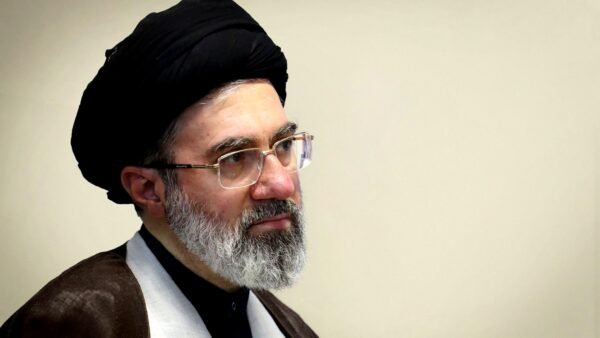
Khamenei Orders ‘Unrestricted’ Response to Any New US or Israeli Attack as War Fears Mount After Midterms
Iran's Supreme Leader Mojtaba Khamenei has ordered an immediate and geographically unrestricted military response to any renewed US…
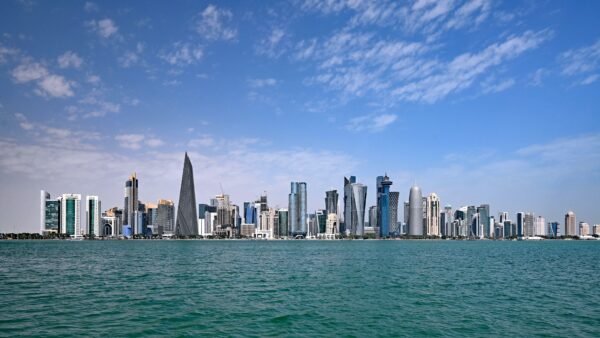
Draft Iran–US Deal Would Move Uranium Abroad and Reopen Hormuz in Seven Days as Strikes Loom After Midterms
A reported draft framework would see Iran move its enriched uranium abroad and reopen the Strait of Hormuz…
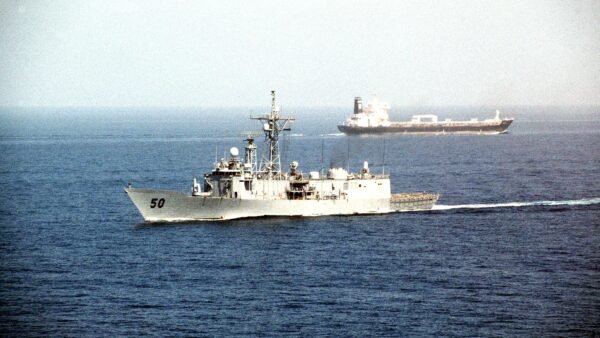
Limpet Mines Hit Tanker in Strait of Hormuz as Iran Claims More Ships Struck and Diplomacy Races the Clock
A small boat fixed two limpet mines to the hull of the tanker Louise 1 in the Strait…