
Khamenei Orders ‘Unrestricted’ Response to Any New US or Israeli Attack as War Fears Mount After Midterms

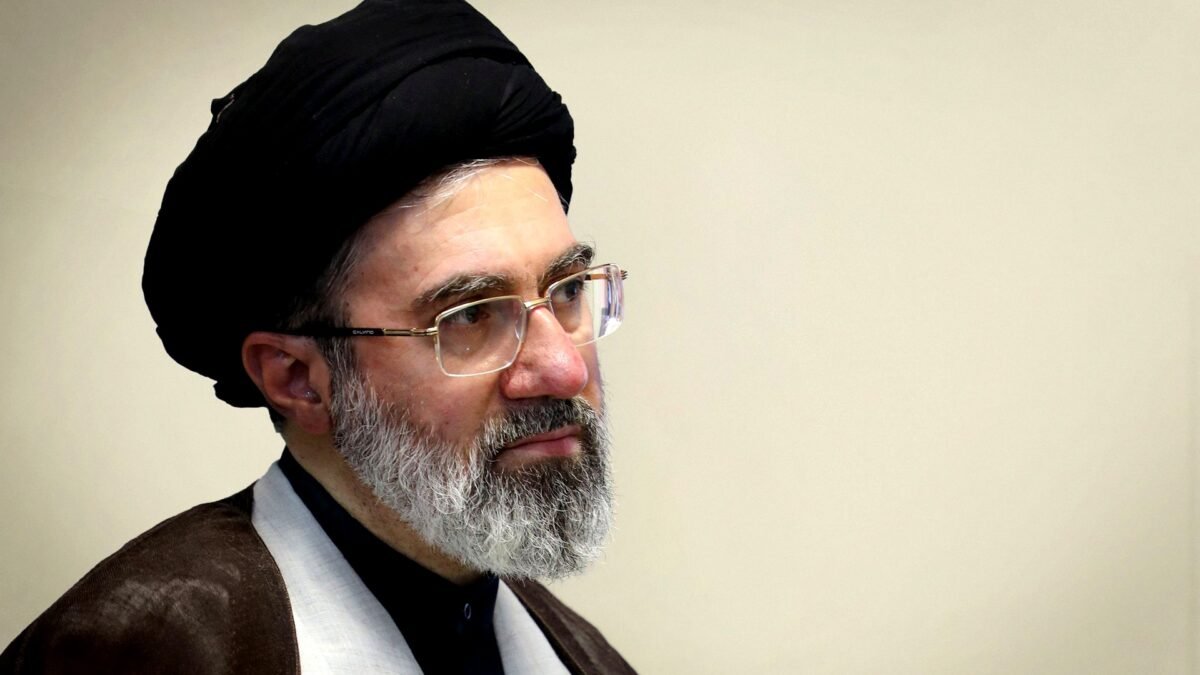
Iran’s Supreme Leader, Mojtaba Khamenei, has ordered the country’s armed forces to answer any renewed attack by the United States or Israel with an “immediate, impactful and geographically unrestricted response”, according to a statement from his office published on Saturday, in the sharpest warning from Tehran since the regional war began in February.
The order was issued during a meeting with Iran’s three most senior military commanders — the first reported meeting between Khamenei and the military leadership since he became supreme leader in March, following the killing of his father, Ayatollah Ali Khamenei, in US-Israeli strikes at the outset of the war. According to the Times of Israel, those present were Armed Forces Chief of Staff General Ali Abdollahi, Army Commander Major General Amir Hatami, and Islamic Revolutionary Guard Corps Commander Major General Ahmad Vahidi.
“Any level or type of threat must be met with an immediate, impactful and geographically unrestricted response,” Khamenei told the commanders, according to the statement, which was carried on his official channels and reported by Axios correspondent Barak Ravid. He framed combat readiness as a requirement of what his office called “maximum deterrence”.
“If the enemies once again launch military or terrorist attacks, it is the armed forces of the Islamic Republic and the Iranian nation that will determine the time and conditions for ending them,” the statement said, according to Reuters.
Khamenei also ordered the commanders to update Iran’s military target list — its “target bank” — so that, in the statement’s words, “all types of tangible and intangible assets belonging to the American-Zionist enemy” are brought within the reach of the armed forces. The statement did not identify specific targets, and it did not explain what Khamenei meant by “non-physical” assets.
The warning comes at a moment of acute tension. US President Donald Trump has said he is weighing fresh military action against Iran after the US midterm elections on Tuesday, 3 November, telling reporters last weekend that he was considering whether to “finish them off”. One report, cited by the Times of Israel without naming its source, suggested a resumption of attacks could come as soon as 4 November, the day after the elections. That date has not been confirmed by any US official, and it should be treated as speculation rather than fact.
Speaking at a G20 press conference in Atlanta on Saturday, US Secretary of State Marco Rubio said plainly that no decision had been taken. “He hasn’t made a decision. I have no announcement in that regard with you today, and nor do we take any of it lightly,” Rubio said, according to reports of the briefing.
In Israel, Prime Minister Benjamin Netanyahu has spoken of a “historic, one-time opportunity” to topple the Iranian government, according to the DNA News Agency. Israel’s own politics remain unsettled: the country’s election for the 26th Knesset ended without a clear winner, leaving Netanyahu without a parliamentary majority and the parliament in deadlock.
A first meeting, conducted in writing
The meeting itself carried significance beyond its words. Axios reported that it was the first publicly disclosed meeting between Khamenei and all of Iran’s top military commanders since the war began. The Times of Israel described it as the first reported meeting between Khamenei and these officers since he took office, and noted that he has not been seen in public since becoming supreme leader.
Khamenei has issued only written statements since succeeding his father, and he has not appeared or spoken publicly in that time. The statement on Saturday was published on his official website and social media accounts, according to the reports, although accounts differ slightly over which channel carried it first. The Times of Israel initially attributed the remarks to a statement on his official Telegram account and later to a statement posted on his website; both may carry it. The reports do not say when the meeting itself took place.
There is also a minor difference in the reporting over how many commanders were in the room. Ravid wrote that Khamenei met the top three commanders. The Israeli Telegram channel Abu Ali Express, which follows Arabic and Iranian media, described a wider audience of regular army and Revolutionary Guard officers. The named officers reported by the Times of Israel — Abdollahi, Hatami and Vahidi — match the count of three given by Axios, and the reports agree on the substance of what was said.
According to the statement, the commanders briefed Khamenei on military readiness along Iran’s Gulf coastline and around the Strait of Hormuz and the Gulf of Oman, as well as along the country’s north-western and south-eastern borders. They also reported what the statement described as a “several-fold increase” in the production of ammunition and weapons for reconnaissance, support and combat. No production figures were offered, and the increase was presented as the commanders’ own report rather than as a separately verified measure.
Khamenei directed the military to strengthen its intelligence capabilities, to deepen defence built on domestic capacity in both doctrine and tactics, to develop up-to-date defence and security capabilities through new technologies, and to reinforce what the statement called spiritual resilience and the spirit of jihad. He also spoke of meeting the livelihood needs of armed forces personnel, saying that “nationwide support for the Armed Forces is one of the pillars of deterrence”, according to the statement.
General Abdollahi, the armed forces chief of staff, said after the meeting that Iran’s armed forces had already prepared a new list of US and Israeli targets and assets across a wider geographical area, warning of an “unimaginable response” to any renewed attacks. “We will respond to the enemy with great force and intensity, without geographical limits,” he said, according to the New York Post.
Iran’s Foreign Minister, Abbas Araghchi, also warned on Saturday that Iran’s armed forces would deliver an “Earth-shattering blow” to anyone who threatens the country. An Iranian army spokesman, Mohammad Akraminia, went further on social media, warning that another US attack would push the war beyond its current borders. “The flames of war will undoubtedly engulf a much wider geographical area,” he wrote on X.
The nuclear question returns
Within hours of Khamenei’s statement, a senior Iranian lawmaker renewed public demands that Tehran build an atomic bomb. Mahmoud Nabavian, a hardline member of Iran’s Parliament for Tehran, wrote on X that a change in Iran’s nuclear doctrine was “the demand of the overwhelming majority of the heroic people of Iran”, according to the New York Post.
“We must respond at the same level at which the enemy attacks us,” Nabavian added in a second post, citing a verse from the Quran on retaliating against aggression in equal measure.
Nabavian, a former first deputy chairman of Parliament’s National Security and Foreign Policy Committee, has urged Iran’s leadership to authorise an atomic bomb since at least 2024. His latest demand comes as Iran faces the prospect of renewed military action, and it marks a public push by hardliners to overturn Tehran’s longstanding official opposition to nuclear weapons.
There has been activity at Iran’s nuclear sites since they were hit in joint US and Israeli strikes, according to the New York Post, which cited satellite imagery from Maxar Technologies. The extent and purpose of that activity have not been independently established, and no international inspector has publicly confirmed what is happening at the sites.
The nuclear question sits at the centre of the diplomacy now under way. Iran has said it will not limit uranium enrichment unless Western nations scale back sanctions, while the United States has pressed for a deal covering not only the nuclear programme but also Iran’s ballistic missiles and its support for armed groups. Iran has rejected such demands and says the talks held in Oman focused only on nuclear issues.
Diplomacy running alongside the threats
Remarkably, the warning was issued in the middle of an active diplomatic effort to prevent another escalation. A Qatari delegation arrived in Tehran on Friday, 30 October, for discussions with Iranian officials, following reports that Iran had received a letter from US Vice President JD Vance. According to the reports, the Qatari mediators held more than 12 hours of discussions in Tehran, and the talks continued in Doha on Saturday.
The Qatari outlet Al-Araby Al-Jadeed reported that Iran’s deputy foreign minister was in Doha, and that there were claims of progress in negotiations and the possibility that an American delegation would arrive, according to Ynet. Neither claim has been confirmed, and Khamenei did not address the negotiations in his remarks, according to the same report.
Iran has said there are currently no plans for direct talks with Washington, although it confirms receiving the letter from Vice President Vance. The letter remains unanswered, according to the Iranian-affiliated Tasnim news agency. President Trump, for his part, has said that talks with Iran are ongoing and that Tehran wants to talk, while insisting that Washington is not engaged in a “typical war”.
The two tracks — public threats and quiet mediation — have run side by side for weeks. On 28 October, the United States told Gulf states to brace for possible Iranian strikes. On Friday, the Islamic Revolutionary Guard Corps said four oil tankers had caught fire and exploded while attempting to use what it described as unauthorised routes through the Strait of Hormuz. Shipping through the strait remains about 70 percent below pre-conflict levels, according to a weekly assessment by the UK Maritime Trade Operations, with vessels continuing to face attacks, navigation interference and security risks across the Gulf.
The same day, a limpet mine strike hit a tanker in the strait — the first successful limpet strike since the war began, according to the Washington Institute, which has counted 28 attacks in October and 113 since 28 February. The Saudi-led coalition said its air defences had intercepted and destroyed drones over Riyadh, the Eastern Province and the southern region, and over the Medina region. The United States has ordered non-emergency staff to leave Saudi Arabia from 23 October.
Eight months of war
The conflict began on 28 February with US-Israeli strikes on Iran, which swiftly responded with attacks on targets around the region. Iran’s then supreme leader, Ayatollah Ali Khamenei, was killed in the opening strikes, and his son Mojtaba succeeded him in March. The war has since spread across the Gulf, the Red Sea and the Levant, drawing in shipping, energy markets and the armed groups aligned with Tehran.
Oil prices have reflected the danger. Brent crude settled above 113 dollars a barrel on Friday, its highest level since late April, and has risen more than 13 percent in October. OPEC+ producers agreed in principle on Saturday to hold December output steady, a decision taken against the backdrop of a conflict that has already disrupted regional production.
For the Gulf states caught between Washington and Tehran, the stakes are direct. Saudi Arabia, the United Arab Emirates, Bahrain, Kuwait and Qatar all host US military facilities that Iran has threatened in the past, and all depend on the Strait of Hormuz for their oil exports. Qatar’s role as mediator reflects that exposure: Doha has more reason than most capitals to keep the war from resuming.
Israel, too, has paid a price. Iranian retaliatory strikes have hit Israeli and US targets in the region, and Israel’s election deadlock has left its government without a settled mandate at the very moment its prime minister is pressing Washington for a wider war aim — the removal of Iran’s government rather than merely a nuclear deal.
Analysis: Why It Matters
1. A message delivered in writing, not in person
The most striking feature of Saturday’s statement is not what it says but how it arrived. Iran’s supreme leader has not been seen or heard in public since he took office in March. His most consequential military instruction to date — an order to prepare an unrestricted response to any new attack — was issued as a written text on official channels, relayed to the world by Israeli and international outlets rather than delivered in a speech or a televised appearance.
That absence is itself a message, and it can be read in two opposite ways. To Tehran’s supporters, a leader who governs through written orders while his country is at war projects discipline and continuity: the institution functions, the chain of command holds, and the supreme leader need not appear to be in charge. To his critics, the invisibility feeds questions about his condition and his authority that no written statement can fully answer. Axios noted that some reports have described him as having been wounded in an Israeli strike on the first day of the conflict; that claim has not been confirmed by any official source, and it should not be treated as established fact.
What is established is that this was the first reported meeting between Khamenei and his top commanders since he took office, and that it was staged — or at least reported — as a formal briefing on readiness, with the commanders reporting to him rather than the other way round. The choreography matters: it presents a supreme leader receiving the military’s assessment and then issuing orders, the normal picture of civilian command. For a leader whose public legitimacy rests heavily on continuity with his father, that image of orderly command is worth more than any single threat in the text.
2. “Without geographical limits” redraws the map of the threat
The phrase that will be studied most carefully in Washington, Tel Aviv and the Gulf capitals is “without geographical limitations”. Until now, Iran’s retaliation has been understood as regional: strikes on Israel, on US bases in the Gulf, on shipping in the Strait of Hormuz. A response without geographical limits suggests something wider — and the order to update the target list to include “all types of tangible and intangible assets” of the United States and Israel points in the same direction.
The deliberate vagueness is the point. “Non-physical” assets could mean cyber infrastructure, financial networks, or the digital systems on which modern militaries depend. It could mean Iranian-aligned groups operating far from the Gulf. Or it could be rhetoric designed to make American and Israeli planners imagine the worst without Iran having to commit to anything specific. Ambiguity is cheap; a specific threat can be deterred, denied or answered. A threat with no boundaries forces the other side to defend everywhere, which is another way of saying it cannot defend everywhere.
There is a cost to that ambiguity, however. A threat this broad is harder to walk back, and it gives hardliners on the other side exactly the evidence they want: proof, in their telling, that Iran cannot be contained by a narrow nuclear deal and must be confronted more broadly. Netanyahu has already made that argument. Khamenei’s statement, read in Washington, may strengthen the hand of those who want the widest possible war aim — the opposite of what Tehran presumably intends.
3. The calendar is doing the threatening
Nothing in the timing of this statement is accidental. The US midterm elections fall on Tuesday, 3 November. One report has suggested that American strikes could resume as soon as the following day, 4 November. Whether or not that date is real — it rests on a single unnamed source and should be treated with caution — the calendar itself has become a weapon. Both sides are now operating against a deadline that neither fully controls.
For President Trump, the elections create a window: action before the vote risks a backlash; action after it can be presented as a fresh mandate. For Tehran, the same window creates a period of maximum danger, when the incentive for a demonstration of force is highest and the diplomatic cover for restraint is thinnest. Khamenei’s statement is best read as an attempt to raise the price of that window — to tell Washington that a post-election strike would not be a clean, limited operation but the opening of a conflict whose end Iran would dictate.
That logic cuts both ways. A threat issued days before an election is also a gift to those in Washington who want the strike, since it can be presented to voters as evidence of Iranian defiance. The statement may therefore be less a deterrent than a gamble: that the threat of an unbounded war will outweigh, in the President’s calculation, the political appeal of a show of force. The next 72 hours will show which reading was right, and the honest answer is that no outside observer can know in advance.
4. The bomb lobby has stepped into the open
Mahmoud Nabavian’s renewed call for Iran to build an atomic bomb, issued within hours of Khamenei’s statement, deserves attention precisely because it is not official policy. Tehran’s longstanding position has been opposition to nuclear weapons, grounded in a religious ruling by the late Ayatollah Ali Khamenei. Nabavian is now publicly pressing for that doctrine to change, and he claims the “overwhelming majority” of Iranians want it changed too.
That claim cannot be verified — there is no public polling to support it, and Nabavian is a hardline parliamentarian speaking for a faction, not for the country. But the timing is significant. The demand for a bomb is being made at the moment of maximum military pressure, when the argument that only a nuclear weapon can guarantee Iran’s survival sounds most plausible to its audience. It is also being made while there is unexplained activity at Iran’s nuclear sites, which gives the demand a material edge it would not otherwise have.
The danger is that the debate itself becomes a driver of escalation. If Washington and Tel Aviv conclude that Iran is moving towards a weapon — whether or not it actually is — the case for a pre-emptive strike strengthens. If Tehran concludes that its enemies believe it is building a bomb, the incentive to build one grows. This is the classic spiral of a nuclear crisis, and it is now operating in the open, in parliamentary posts on social media rather than in secret briefings. The fact that the debate is public makes it harder for either side to back down quietly.
5. Diplomacy and deterrence are the same policy now
The most easily missed fact of the weekend is that the threats and the talks happened at the same time. While Khamenei was ordering an unrestricted response, Qatari mediators were in Tehran for more than 12 hours of discussions, and talks continued in Doha on Saturday. While Nabavian was demanding a bomb, Iran’s deputy foreign minister was reported to be in the Qatari capital, and an American delegation was said to be a possibility.
This is not a contradiction. It is how this conflict has been conducted from the start: maximum public pressure alongside quiet mediation, with Qatar carrying messages between capitals that will not speak directly. The letter from Vice President Vance, the Qatari shuttle, the Doha talks — all of it suggests that a channel exists and is being used. The threats, on both sides, are part of the negotiation, not an alternative to it: each side is trying to establish the price the other will pay for failure before the talks resume in earnest.
That reading is more hopeful than the headlines suggest, but it is also fragile. Mediation works when both sides want an outcome and use threats to improve their terms. It fails when one side concludes that the other is only buying time — and both sides have accused each other of exactly that. The Qatari effort will be judged not by the meetings it arranges but by whether it produces a pause that holds past the American elections. If the talks survive 4 November, they may yet produce a deal. If they do not, the statements of this weekend will read, in hindsight, as the last warnings before the war resumed.
What to Watch Next
- Tuesday, 3 November — the US midterms: the vote itself, and whether the result strengthens or weakens the case inside the White House for military action. Watch for any statement from President Trump in the hours after the polls close.
- Wednesday, 4 November — the reported date: a single unnamed report has suggested strikes could resume on this day. Treat the date with scepticism, but watch for any unusual US or Israeli military movement and for any official denial or confirmation.
- The Doha channel: whether the Qatari-mediated talks produce a public signal — a statement, a meeting, or a pause in the threats — and whether Iran answers the letter from Vice President Vance.
- The Strait of Hormuz: shipping levels, already about 70 percent below pre-conflict volumes, and any further attacks on tankers or interference with navigation. The strait is where a widening war would first be felt in oil prices.
- Iran’s nuclear sites: any verified reporting on the activity at the sites hit in February’s strikes, and any statement from the International Atomic Energy Agency on access for its inspectors.
Sources
- Reuters, via News Central TV — “Khamenei Warns US Against Renewed Attacks” (31 October 2026)
- Israel.com live blog, reporting the Times of Israel and Axios — “Khamenei orders unlimited response to attack at meeting with three top commanders” (31 October 2026)
- New York Post — “Iran hardliner demands atomic bomb as Khamenei threatens ‘unrestricted’ retaliation against US” (31 October 2026)
- Islamabad Post — “Iran’s supreme leader warns US, Israel against new attacks” (31 October 2026)
- Madhyamam — “Touch Iran and face retaliation: Mojtaba Khamenei warns US, Israel” (31 October 2026)

About the Author — Abdul Mannan
Related Articles
Draft Iran–US Deal Would Move Uranium Abroad and Reopen Hormuz in Seven Days as Strikes Loom After Midterms
A reported draft framework would see Iran move its enriched uranium abroad and reopen the Strait of Hormuz…
Limpet Mines Hit Tanker in Strait of Hormuz as Iran Claims More Ships Struck and Diplomacy Races the Clock
A small boat fixed two limpet mines to the hull of the tanker Louise 1 in the Strait…
Iran Says Four Tankers Hit Mines in Strait of Hormuz as British Monitors Report a Vessel on Fire
Iran says four oil tankers caught fire after striking mines in the Strait of Hormuz, but British maritime…