
Qatar Shares Surge 4.6% as Gulf Markets Slide on Fears of Renewed US–Iran Conflict

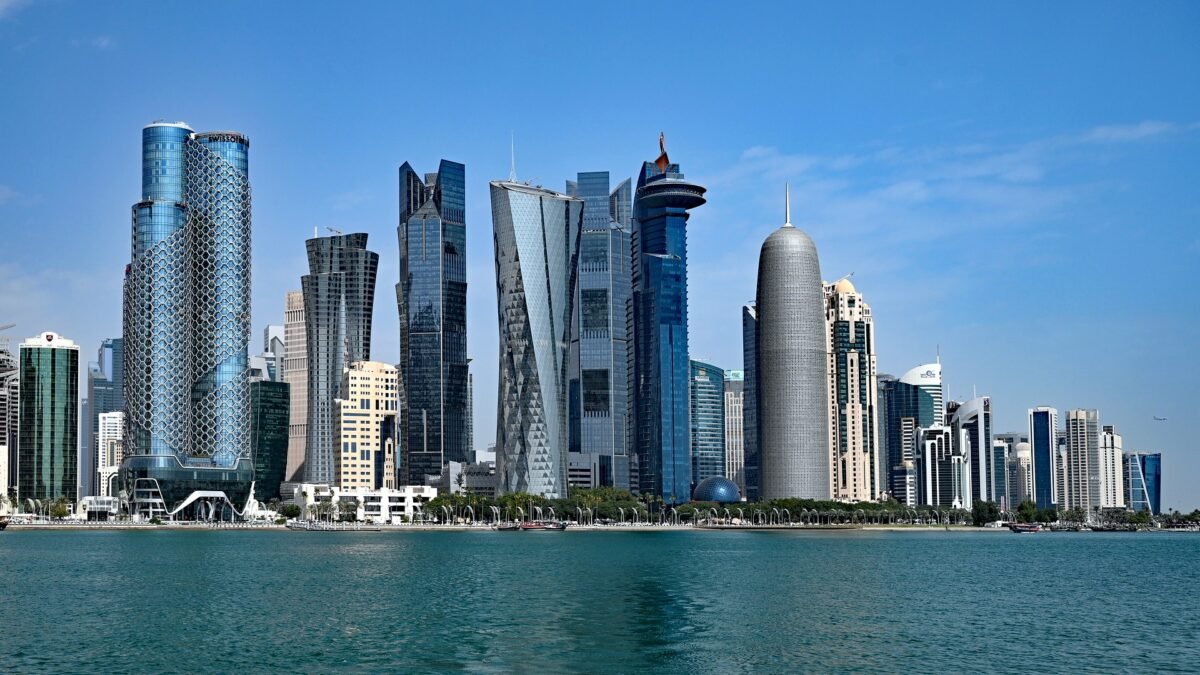
Qatar’s stock market posted its sharpest gain in more than eight years on Sunday, defying a slide across the rest of the Gulf as investors braced for the possibility that the United States could resume military action against Iran after Tuesday’s midterm elections, according to Reuters.
The benchmark Qatar Stock Exchange index climbed 4.6 percent to 9,575, its biggest intraday percentage gain in more than eight years, rebounding from a decline in the previous session. The rally stood in stark contrast to the rest of the region, where every other major Gulf market finished lower on the first trading day of the week.
Saudi Arabia’s benchmark index slipped 0.8 percent to 9,838, with nearly all of its constituents ending the day lower. Kuwait lost 0.8 percent to 8,826, Oman fell 0.7 percent to 7,293 and Bahrain eased 0.6 percent to 1,819. Outside the Gulf, Egypt’s blue-chip index dropped 1.9 percent to 48,650.
The divergence captured a region holding its breath. Across the Gulf, governments and investors have spent days preparing for the possibility that President Donald Trump could order renewed strikes on Iran once Americans have voted on Tuesday, 3 November. Tehran has repeatedly warned that it would retaliate against any new attack by hitting American and Israeli interests in neighbouring countries, a threat that puts Gulf states hosting US bases and energy infrastructure directly in the line of fire.
A split screen across the Gulf
Sunday’s session, reported by Reuters, laid out the regional picture in unusually sharp relief. Qatar was the only market in the green, and by a wide margin. The gains were broad: Qatar’s exchange opened the day 1.21 percent higher, adding 110.40 points to reach 9,261 in early trading, with every sector advancing, according to Qatar News Agency. Industrials led the morning with a 2.14 percent rise, followed by real estate at 1.39 percent, insurance at 1.23 percent, telecoms at 1.18 percent, transportation at 1.10 percent, consumer goods and services at 1.01 percent, and banks and financial services at 0.81 percent. By 10:00 am local time, the exchange had already recorded 9,795 transactions worth 174.8 million riyals across 52.1 million shares.
The two pillars of the Qatari market did much of the heavy lifting. Qatar National Bank, the region’s largest lender, advanced 3 percent, while Industries Qatar, the industrial conglomerate linked to the state energy giant QatarEnergy, jumped 7.9 percent.
Saudi Arabia told the opposite story. The kingdom’s benchmark fell 0.8 percent, dragged down by a 2.6 percent drop in Saudi Arabian Mining Company and a 7.3 percent plunge in Jabal Omar Development, after the real estate developer reported a third-quarter net loss of 261.61 million riyals, about 69.76 million dollars, against a net profit of 197.85 million riyals a year earlier. One bright spot was IT solutions provider Elm Company, which gained 9 percent after reporting a 39 percent rise in quarterly net profit.
Egypt’s decline came with its own domestic pressure. Commercial International Bank, the country’s largest private lender, fell 2.2 percent, and property developer Talaat Moustafa Group dropped 2 percent. The selling followed a decision by Egypt’s central bank on Thursday to raise its key interest rates by 100 basis points, its first rate increase since March 2024, a move that tightens borrowing costs for businesses and consumers at a moment when the wider region is already on edge.
Why Qatar rose while its neighbours fell
Two developments specific to Qatar helped explain why its market moved against the regional tide, according to Reuters. The first was energy strategy. Investor sentiment was supported by QatarEnergy’s efforts to secure long-term liquefied natural gas supplies from the United States and other producers, part of a trading strategy designed to protect the country’s revenues should exports through the Strait of Hormuz be disrupted. Qatar is one of the world’s largest exporters of liquefied natural gas, and almost all of that gas leaves the Gulf through the narrow strait, the same waterway at the centre of the current confrontation.
The second was a vote of confidence from the ratings agencies. S&P Global Ratings affirmed Qatar’s sovereign credit ratings at AA, with a stable outlook, citing the country’s substantial liquid, fiscal and external asset buffers amid regional security and trade-flow risks. In plain terms, the agency judged that Qatar has the financial firepower to absorb a shock, even one as severe as a disruption to its gas exports.
That assessment carries weight because the risks to Qatar are real and acknowledged. S&P Global Ratings expects Qatar’s real gross domestic product to shrink by 14 percent in 2026, according to its latest sovereign assessment reported by Further Arabia, after Iranian strike damage disrupted the gas sector, before rebounding by 15 percent in 2027 as production recovers. The agency nevertheless kept the AA rating, a signal that it views the damage as a severe but temporary interruption rather than lasting harm to the country’s creditworthiness. The North Field expansion, the project at the heart of Qatar’s plan to raise liquefied natural gas capacity from 77 million tonnes a year to 126 million tonnes by 2027, is expected to proceed, according to the same assessment.
For investors, the combination was reassuring: a state energy company actively hedging its export routes, a central bank of credibility in the form of enormous sovereign assets, and a ratings agency willing to look through a painful year to the recovery beyond it. That is why Qatar National Bank and Industries Qatar, the two stocks most closely tied to the state’s financial and industrial strength, led the rally.
Three losing sessions in a row
Sunday’s slide did not come out of nowhere. Gulf markets have been retreating for days as the prospect of renewed war has hardened. On Thursday, Gulf stock markets closed lower across the board, weighed down by banking stocks, as the escalating conflict in Yemen and stalling peace efforts dampened sentiment, according to Maaal. Saudi Arabia’s benchmark fell 1 percent that day, pressured by a 1.1 percent drop in Al Rajhi Bank and a 1.9 percent decline in Saudi National Bank, the kingdom’s largest lender. Dubai’s main index fell 0.5 percent after budget carrier Air Arabia plunged 4.9 percent, and Abu Dhabi dropped 1.2 percent even though First Abu Dhabi Bank, the United Arab Emirates’ largest lender, reported a 6 percent rise in third-quarter net profit. Qatar itself fell 0.7 percent on Thursday, while Bahrain, Oman and Kuwait slipped by 0.3, 0.4 and 0.5 percent respectively. Egypt was the exception that day, rising 0.6 percent.
Friday brought more of the same. Gulf stocks slid again as earnings disappointed and Middle East tensions flared, even as Brent crude rose 2.3 percent to 117.56 dollars a barrel, according to Finimize, citing Reuters. Dubai’s main index fell 0.8 percent for a third consecutive session, with confidence-sensitive names such as Emirates NBD Bank and property giant Emaar under pressure, after attacks linked to Yemen’s Iran-aligned Houthis and reports of ships being hit near the Strait of Hormuz. Abu Dhabi also edged lower, led by financial and energy-linked stocks, after several companies posted softer quarterly profits.
Milad Azar, a market analyst at XTB MENA, told Maaal that reports suggesting the possibility of military action following the US midterm elections had kept investors cautious, while disruptions to energy supply routes had further fuelled anxiety. The pattern is familiar from earlier in the year: when war risk rises, Gulf equities fall first, because they are the markets closest to the fighting and the most exposed to any closure of the strait.
The war risk hanging over the markets
The anxiety is not abstract. The war between the United States, Israel and Iran began on 28 February 2026, and although the heaviest fighting subsided months ago, the confrontation has never truly ended. In recent weeks it has intensified again: tankers have been hit near the Strait of Hormuz, Houthi forces have claimed attacks on Saudi energy facilities, and shipping through the strait has fallen to roughly 70 percent below pre-conflict levels, according to the United Kingdom Maritime Trade Operations.
On Saturday, Iran’s Supreme Leader, Mojtaba Khamenei, ordered the country’s armed forces to meet any renewed American or Israeli attack with what he called an immediate, impactful and geographically unrestricted response, the first such instruction since he succeeded his father in March after the elder Khamenei was killed in the opening strikes of the war. His commanders told him that target lists had been prepared and that ammunition and weapons production had increased several-fold.
President Trump, for his part, is reported to be weighing new strikes once the midterm elections are over, and one unnamed report has suggested military action could resume as soon as 4 November, the day after the vote. His secretary of state, Marco Rubio, told reporters at the G20 meeting in Atlanta that Mr Trump had not yet made a decision, while Israel’s prime minister, Benjamin Netanyahu, has spoken of what he called a historic, one-time opportunity to topple the Iranian government.
Diplomacy has not stopped. A Qatari delegation spent more than twelve hours in talks in Tehran on Friday, and Qatari mediators have presented Iran with a new draft agreement aimed at ending the war, according to a person familiar with the matter cited by Maaal. A senior Iranian official, however, said Doha had put forward ideas that fell short of a genuine proposal. The mediation continues, but the markets are pricing the possibility that it fails.
Oil and the Strait of Hormuz
Energy prices frame everything else in this story. Brent crude, the international benchmark, settled at 113.43 dollars a barrel on Friday, up 2.63 dollars on the day, and gained 13.6 percent across October, its fourth consecutive monthly rise, according to Reuters. The December contract expired at 117.64 dollars. The rally reflects a market that expects supply to be disrupted, not one that expects it to flow freely.
That expectation is the reason QatarEnergy’s hedging matters so much to investors. If the Strait of Hormuz were closed or rendered unsafe, Qatar’s liquefied natural gas, which accounts for the overwhelming bulk of its export earnings, would have no route to market. Securing long-term supplies from the United States and other producers gives the company cargoes it can deliver to customers from outside the Gulf, protecting revenues even if its own shipments are stranded. It is, in effect, an insurance policy bought in the open market, and the stock market rewarded it on Sunday.
Saudi Arabia faces the same strait and the same risk, but its market has no equivalent hedge to celebrate. The kingdom’s producers have also been squeezed by the conflict: seven core OPEC+ members, including Saudi Arabia, have agreed in principle to hold December output steady, and regional output has already been disrupted by months of attacks on shipping and energy infrastructure. For Saudi investors, the war premium in the oil price is offset by the war discount on everything else, from banks to property developers.
Analysis: Why It Matters
1. Markets are voting on the calendar, not the ceasefire
The most important thing Sunday’s trading revealed is what investors think will happen after Tuesday. Gulf markets do not fall for three straight sessions because of a single headline; they fall because traders have concluded that the odds of renewed war have risen and are positioning accordingly. The specific trigger they are watching is the American midterm election, after which, by several accounts, President Trump will be freer to act. That is a remarkable position for markets to be in: pricing a war not on whether it will happen, but on when the politics allow it. It also means the next forty-eight hours matter enormously. A clear signal from Washington after the vote, in either direction, is likely to move Gulf markets sharply, and Qatar’s rally shows that investors are already distinguishing between countries they believe can withstand a shock and those they believe cannot.
2. Qatar’s rally is a bet on resilience, not on peace
It would be a mistake to read Qatar’s 4.6 percent surge as optimism that war will be avoided. Nothing in the day’s news suggested the danger had passed. What the rally actually expressed was confidence that Qatar can endure a disruption better than its neighbours. The ingredients are visible: the world’s largest liquefied natural gas expansion under way, a state energy company buying supply insurance outside the Gulf, sovereign assets large enough to impress S&P into holding an AA rating through a year in which the economy is expected to shrink by 14 percent, and a banking system anchored by the region’s largest lender. Investors were not buying peace; they were buying the country they consider best armoured for war. That distinction matters, because if fighting resumes, the same logic could just as easily reverse: the assets that look defensive today would be tested against a blockade of the strait they were designed to survive.
3. The ratings agencies are now part of the story
S&P’s decision to affirm Qatar at AA, with a stable outlook, did more than reassure bondholders; it gave equity investors a reason to buy on a day when fear was the dominant emotion. Credit ratings rarely move stock markets, but in a crisis they act as a second opinion on a country’s survival prospects, and this one was unusually blunt: Qatar’s buffers are substantial enough to withstand the conflict and the disruption to trade flows. The agency’s simultaneous forecast of a 14 percent economic contraction in 2026 is a reminder of how severe the damage could be, and how much of the country’s resilience depends on assets accumulated over decades rather than on any single year’s earnings. For the rest of the Gulf, the implicit comparison is uncomfortable. Saudi Arabia, the United Arab Emirates and Kuwait all hold large reserves of their own, but none received a comparable public endorsement on the same day their markets fell.
4. Egypt shows how war risk travels beyond the Gulf
Egypt’s 1.9 percent drop is a reminder that the conflict’s economic blast radius extends far beyond the states that sit on the strait. Egypt does not export Gulf gas and hosts no American bases targeted by Tehran, yet its market fell hardest in percentage terms after Qatar’s gain. The reasons are domestic, higher interest rates imposed by a central bank fighting inflation, and external, a country dependent on tourism, Suez Canal revenues and foreign investment, all of which suffer when the region looks dangerous. The canal’s traffic has already been battered by months of attacks on Red Sea shipping, and a renewed war would deepen that wound. Egypt’s experience is a warning to the wider Middle East and North Africa: in a regional war, there are no bystanders, only countries that are hit directly and countries that are hit through their economies.
5. Energy markets and equity markets are telling different stories
Brent crude above 113 dollars a barrel says the oil market expects disruption. Gulf equities falling for three sessions say the same thing. Yet Qatar’s stock market surged, and QatarEnergy is buying gas from outside the Gulf to keep its customers supplied. Taken together, these are not contradictory signals but complementary ones: the market believes a supply shock is plausible, believes the shock would be severe, and believes that the best-prepared producer can profit from it. That is a fragile equilibrium. If the strait stays open, the war premium in oil prices will unwind and the Gulf’s equity discount will close. If it closes, even the best-prepared producer will be tested, and the distinction between resilience and exposure will narrow quickly. For now, investors are paying for insurance and for armour at the same time, which is what markets do when they cannot decide whether the next headline will be a ceasefire or a missile.
What to Watch Next
- The US midterm elections on Tuesday, 3 November. The vote is the hinge on which the region’s risk turns. Watch for any statement from President Trump or his administration in the hours after the polls close, and for whether military movements or diplomatic contacts follow.
- Qatari mediation in Tehran. Doha’s envoys have spent days shuttling between the parties with a draft agreement. Any sign that Iran has accepted, rejected or amended the proposal will move Gulf markets before the ink is dry.
- Brent crude and Hormuz shipping. If Brent pushes decisively above 120 dollars, or if shipping data shows traffic through the strait falling further, the war premium is rising. A sharp fall in Brent would signal that traders believe diplomacy is working.
- QatarEnergy’s supply deals. Details of the long-term liquefied natural gas supplies the company is securing from the United States and elsewhere will show how seriously the world’s largest gas exporter takes the threat to its own shipments.
- The next Gulf trading sessions. Sunday’s split between Qatar and its neighbours will either prove to be a one-day anomaly or the start of a lasting divergence. Watch whether Saudi Arabia and the United Arab Emirates recover on Monday, and whether Qatar’s gains hold when the rest of the region’s markets reopen.
Sources
- Reuters — Qatar surges, bucking Gulf market slide on Iran war concerns
- Fana News (Qatar News Agency) — QSE Index Opens Higher
- Finimize — Gulf Stocks Slip As Earnings Miss And Tensions Rise
- Maaal — Gulf stock markets end the week lower amid growing concerns over Middle East tensions
- Further Arabia — Qatar GDP growth swings 15% in 2027 after gas shock (S&P Global Ratings assessment)

About the Author — advmannan1
Related Articles
South Korea’s Exports Nearly Double in October as AI Chip Boom Puts $1 Trillion Year Within Reach
South Korea's exports jumped 93.7% to $115.28 billion in October — the sharpest rise since 1974 — as…

Binance Says 90% of $6.3 Billion Stolen in Record Hack Is Covered as FBI Blames North Korea
Binance says it has covered 90 per cent of the $6.3 billion stolen in the largest crypto theft…
OPEC+ Agrees in Principle to Hold December Oil Output Steady as Brent Nears Six-Month Highs
Seven core OPEC+ producers have agreed in principle to keep December oil output targets unchanged at Sunday's meeting,…