
South Korea’s Exports Nearly Double in October as AI Chip Boom Puts $1 Trillion Year Within Reach

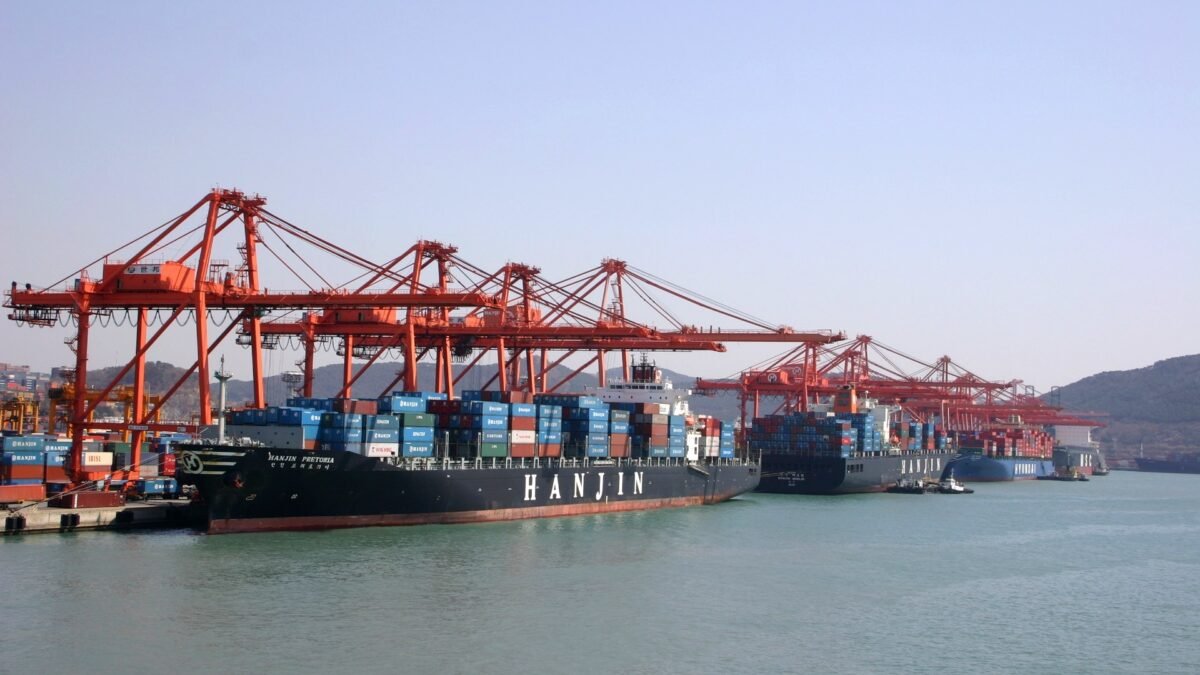
South Korea’s exports nearly doubled in October, rising 93.7 per cent from a year earlier to $115.28 billion, as booming global demand for artificial intelligence hardware lifted semiconductor shipments to unprecedented levels, according to trade data released by the government on Sunday. The increase was the sharpest since January 1974 and beat both September’s 83.7 per cent gain and the 93.2 per cent median rise forecast in a Reuters poll of economists, underlining how completely the AI infrastructure boom now dominates the world’s trade flows.
The figure was the second-highest monthly export total South Korea has ever recorded, behind only September’s $121.1 billion, and the second consecutive month in which shipments topped $110 billion. Cumulative exports for the first ten months of the year reached $930 billion, up 60.6 per cent from the same period last year and the first time the ten-month total has passed $900 billion. Only about $70 billion now separates the country from $1 trillion in annual exports, a milestone reached so far only by the United States, China and Germany.
“With exports continuing solid growth of more than $110 billion in October, it is becoming certain that annual exports of $1 trillion will be reached within November,” Kim Jung-kwan, the minister of trade, industry and resources, said, according to Reuters. The ministry’s data, published on Sunday, showed that South Korea is on course to become only the fourth country in the world to export more than $1 trillion of goods in a single calendar year.
The surge was driven overwhelmingly by semiconductors. Chip exports jumped 259.4 per cent from a year earlier to $56.44 billion, accounting for nearly half of all outbound shipments. It was the second consecutive month in which chip exports exceeded $50 billion, with prices and volumes staying high as large technology companies kept spending heavily on facilities to compete for leadership in artificial intelligence, the trade ministry said. Computer exports surged 496.6 per cent to $5.85 billion on growing server demand for AI services.
Imports also rose sharply, climbing 36.0 per cent to $72.78 billion, the biggest annual increase since January 2022, leaving a monthly trade surplus of $42.50 billion. That surplus was narrower than the record $49.97 billion posted in September, but it was the second month in a row above $40 billion, and the cumulative surplus for January through October widened sharply, according to Korean media reports.
South Korea, Asia’s fourth-largest economy and home to the world’s two largest memory-chip makers, Samsung Electronics and SK Hynix, has become the clearest single read on the state of the global AI build-out. Its export figures are watched as a bellwether for world trade, and October’s numbers suggest that the physical economy behind artificial intelligence is still accelerating even as financial markets have begun to question the scale and the returns of the spending.
The Numbers Behind the Surge
The headline figure needs to be read with two comparisons in mind. Against October 2025, exports nearly doubled. Against September 2026, the dollar total actually fell, from $121.1 billion to $115.28 billion. Both facts are true at once: the year-on-year comparison captures an extraordinary boom, while the month-on-month comparison shows that September, not October, remains the high-water mark in absolute terms. The trade ministry’s own presentation emphasised the annual milestone rather than the monthly record, and the data supports that emphasis — two consecutive months above $110 billion, a ten-month total of $930 billion, and a $1 trillion year all but certain within weeks.
Part of the year-on-year jump came from a favourable calendar. October 2026 had more working days than October 2025 because of the timing of the Chuseok holidays, the Korean harvest festival, which shifts across the calendar from year to year. The trade ministry acknowledged the effect, and the data bears it out: average daily exports, which adjust for the number of working days, rose 76 per cent from a year earlier to $5.24 billion, staying above $5 billion for a second straight month. That is still an exceptional rate of growth, but it is smaller than the headline 93.7 per cent, and it is the more honest measure of the underlying momentum.
The forecasts underline how unusual the month was. A Reuters poll of economists had produced a median forecast of a 93.2 per cent rise, which the actual figure only narrowly beat. A separate Wall Street Journal survey of 11 economists had a median forecast of 86.7 per cent growth, which the result cleared by a wide margin. The difference between the two surveys is a reminder that, in a month distorted by a moving holiday and by prices that are themselves moving fast, even professional forecasters were spread across a range of several percentage points.
Imports tell a complementary story. A 36.0 per cent rise to $72.78 billion, the largest annual increase since January 2022, reflects both the raw materials and components that feed South Korea’s export machine and the strength of domestic demand. The resulting $42.50 billion surplus exceeded the market consensus estimate of $38.28 billion cited by the Wall Street Journal, even though it fell short of September’s revised record of $49.97 billion.
The destination breakdown shows how broadly the AI boom is pulling Korean goods around the world. Shipments to the United States grew 185.8 per cent to $24.9 billion, supported by demand for semiconductors, computers and electrical equipment used in AI infrastructure. Shipments to China climbed 133.6 per cent to $26.98 billion, the fifth straight month above $20 billion. The two largest markets for Korean exports are now both growing at triple-digit rates, which is historically unusual and points to a demand shock that is genuinely global rather than concentrated in a single customer.
Chips at the Centre
Semiconductors are not merely the largest part of the story; they are, for practical purposes, the story. Chip exports of $56.44 billion in a single month represented 48.9 per cent of everything South Korea sold abroad. A year ago, that share was far smaller. The 259.4 per cent year-on-year increase was the second-highest monthly chip figure on record, behind only September’s $60.3 billion, and it was the second month in a row above $50 billion.
The trade ministry attributed the surge to continued facility investment by global big technology firms competing for leadership in the artificial intelligence industry, with both prices and volumes staying high. That combination matters: when prices and volumes rise together, it signals genuine scarcity rather than a speculative bubble in a single input. Memory chips, South Korea’s specialty, are the bottleneck in the AI data-centre build-out. Every new server rack needs high-bandwidth memory, and the world’s supply of that memory is dominated by two companies — Samsung Electronics and SK Hynix — both of which reported record earnings for consecutive quarters last week, according to the Wall Street Journal, benefiting from tight supply and robust demand for memory chips and other hardware used in AI computing.
Computer exports, the next link in the chain, surged 496.6 per cent to $5.85 billion, driven by server demand for AI services. The near-sixfold increase in a category that was, until recently, a modest part of Korea’s export mix shows how the AI build-out is pulling entire supply chains with it. Servers need memory, storage, power systems and networking equipment, and Korean firms supply several of those links. Electrical equipment such as transformers, wires and cables rose 74.0 per cent to $1.99 billion, a monthly record, on expanding demand from AI data centres, according to the Seoul Economic Daily. Wireless communication device exports rose 6.7 per cent, extending gains to a twelfth straight month on the back of Apple’s new product launch and solid smartphone sales at Samsung Electronics.
The boom is not confined to a single quarter. South Korea’s economy grew faster than expected in the third quarter on strong semiconductor exports and investments, Reuters reported, with chipmakers Samsung Electronics and SK Hynix posting surging profits. The export data for October suggests that the third-quarter momentum carried into the fourth quarter without interruption.
That continuity is the most striking feature of the numbers. In a year when financial markets have repeatedly swung between enthusiasm and doubt about artificial intelligence — the Nasdaq fell 2.9 per cent on Friday, nearly $1 trillion was wiped from the index in a single week, and Alphabet suffered its worst day ever on Thursday after its AI search product squeezed its advertising business — the physical trade data has pointed in one direction only. Ships are leaving Busan fuller than ever, and the cargo is overwhelmingly the hardware that the AI industry runs on.
Beyond Semiconductors
One of the more encouraging details in the October data is that the boom is not entirely a chip story. Exports excluding semiconductors rose 34 per cent, and 18 of the 20 main product categories grew, according to the ministry’s release. That breadth matters, because a one-sector boom is fragile in a way that a broad-based expansion is not.
Automobile exports reached $6.55 billion, the highest ever for October, rising 18.1 per cent on strong overseas demand for hybrid models. The figure was helped by the extra working days, but the underlying trend is real: Korean carmakers have found a sweet spot in hybrids at a moment when many Western manufacturers are still struggling to make electric vehicles profitable. Cosmetics exports also soared, according to the Korea JoongAng Daily, continuing a run that has made Korean beauty products a significant export category in their own right.
Not every category shared in the gains. Ship exports fell 43.6 per cent, partly reflecting a large delivery in the comparison period a year ago. Shipbuilding is a lumpy business, and a single month’s figure says little about the order book. The decline is a useful reminder that the headline number is an aggregate, and that even in a record month some industries are having a bad one.
The breadth of the growth also shows up in the destination data. Beyond the United States and China, Korean exporters are selling into a world that is, for the moment, buying almost everything they make. That is the practical meaning of 18 out of 20 categories growing at once: the boom has a base wider than a single product or a single customer.
For South Korea itself, the $1 trillion milestone carries symbolic weight that goes beyond the economics. The country industrialised within living memory, from one of the poorest nations on earth in the 1960s to an economy that now exports more in a single month than many countries export in a year. Joining the United States, China and Germany as the only countries ever to export $1 trillion of goods in a year would be a marker of that transformation, and it would arrive in a year when the country’s most important industry happens to be the one the whole world wants to buy from.
Analysis: Why It Matters
The AI boom is real, and Korea is its measuring stick
Financial markets spent last week arguing about whether the artificial intelligence trade has gone too far. Intel lost a quarter of its value in a day after weak guidance. Alphabet had its worst day ever. The Nasdaq dropped nearly 3 per cent on Friday. Yet the trade data from South Korea tells a different story, and it is the more reliable one. Stock prices are opinions about the future; export figures are facts about the present. When a country ships $56.44 billion of semiconductors in a single month — more than triple a year earlier — that is not a forecast or a valuation. It is physical hardware, loaded onto ships, paid for by customers, and installed in data centres. The gap between the market’s doubts and the trade data’s certainty is the central tension in the AI story right now, and October’s Korean numbers come down firmly on the side of the data. The hyperscalers are still buying, still building, and still paying up for memory. Whatever the stock market thinks about the returns on that spending, the spending itself has not slowed.
A $1 trillion year changes how the world sees South Korea
Milestones matter in trade as they do in sport, not because the number itself changes anything, but because it changes the conversation. A $1 trillion export year would put South Korea in a club of four, alongside the United States, China and Germany — three economies many times its size. For a country of about 52 million people, that is an extraordinary concentration of export power, and it will be noticed in Washington, Beijing, Brussels and Tokyo. It gives Seoul leverage in trade negotiations, it strengthens the case for Korean firms in supply-chain decisions, and it makes the country’s economic model — export-led, technology-heavy, dominated by a handful of world-class firms — look like a deliberate strategy rather than a historical accident. The risk, of course, is that the milestone arrives at the peak of a cycle. If memory prices fall next year, the $1 trillion figure could look like a high-water mark rather than a new normal. But even so, the country will have demonstrated that it can reach the mark, and that demonstration has value of its own.
Concentration is the price of the boom
The most important number in the October release is not 93.7 per cent. It is 48.9 per cent — the share of exports accounted for by semiconductors. Nearly half of everything South Korea sells abroad is now a single product category, and within that category the dominant products are memory chips whose prices have historically swung violently. The memory market has a long history of brutal cycles: years of shortage and soaring prices followed by gluts, collapsing prices and idle factories. The current boom is being driven by a genuine structural shift — AI data centres need vastly more memory than anything that came before — but structural shifts do not repeal cyclicality; they merely change its timing. If the hyperscalers overbuild, or if a new memory technology changes the economics, South Korea’s export machine would feel it immediately, because there is no longer a large enough second engine to absorb the shock. The breadth in the October data — 18 of 20 categories growing — is reassuring, but none of those categories is remotely close to chips in scale. Concentration is the price South Korea is paying for its success, and the bill, if it ever comes, will arrive all at once.
The calendar flatters the headline, but not the trend
It would be a mistake to dismiss October’s figures as a holiday artefact, and it would be an equal mistake to take the headline at face value. The Chuseok calendar effect is real: more working days means more shipments, and the 93.7 per cent figure is inflated by it. But the working-day-adjusted figure — average daily exports up 76 per cent to $5.24 billion — is itself extraordinary, and it is the number that analysts should carry forward. Two consecutive months above $110 billion, two consecutive months above $5 billion a day, a ten-month total up 60.6 per cent: these are trend figures, not calendar noise. The honest reading is that October was a genuinely historic month that also happened to benefit from a favourable calendar. The boom is real; the headline is merely louder than the boom.
What the boom means for everyone else
South Korea’s export surge is good news for the world economy in the short term and a warning in the medium term. In the short term, it means the AI build-out is generating real economic activity — orders, jobs, shipping, construction — across Asia and beyond. Korean chip exports are an input to American data centres, Chinese servers and European cloud facilities, so the boom is, in effect, a transfer of demand from the world’s largest technology companies to the world’s most capable chipmakers, with the benefits spreading through supply chains in Taiwan, Japan, the Netherlands and the United States. In the medium term, however, the same data raises the question that markets were asking last week: who is paying for all of this, and what happens if the returns do not arrive? OpenAI has committed roughly $600 billion to computing capacity through 2030, according to Reuters, and the industry as a whole is spending at a pace that has no precedent. South Korea’s exports are the clearest evidence that the spending is real. They are also, paradoxically, the clearest evidence of how much is riding on it. If the AI build-out slows, the first place it will show up is in Korean export data. For now, that data is pointing up, and up sharply. The world should enjoy it — and watch it closely.
What to Watch Next
- The $1 trillion crossing: With $930 billion banked through October and monthly shipments running above $110 billion, South Korea should pass $1 trillion in annual exports in November. The exact date will be a news event in itself, and the government is likely to mark it publicly.
- November export data: The next monthly release, due in early December, will show whether October’s pace holds without the Chuseok calendar effect. A third consecutive month above $110 billion would confirm the trend; a sharp fall would suggest the boom is already cooling.
- Memory prices and chipmaker guidance: Samsung Electronics and SK Hynix have both reported record earnings on tight memory supply. Their next quarterly updates, and any movement in DRAM and high-bandwidth memory contract prices, will signal whether the shortage — and the pricing power behind it — is lasting into 2027.
- US economic data this week: The week ahead is crowded: the ISM manufacturing report on Monday, job-openings data on Tuesday, the ADP employment report and ISM services on Wednesday, and the official payrolls report on Friday, alongside Tuesday’s midterm elections. Strong data could reinforce expectations of further interest-rate rises, which would test the AI trade again.
- AI capital spending: The hyperscalers’ next round of capital-expenditure announcements — and Nvidia’s next earnings report — will show whether the infrastructure build-out that is driving Korean exports is still accelerating, or whether the spending plans are being trimmed after last week’s market sell-off.
Sources
- Reuters — “South Korea exports nearly double in October, strongest growth since 1974” (1 November 2026)
- The Wall Street Journal — “South Korea’s Chip-Led Exports Accelerate, Bringing $1 Trln Annual Target Closer” (1 November 2026)
- Korea JoongAng Daily (Yonhap) — “South Korea exports hit record $115.3 billion in October on chip demand” (1 November 2026)
- Seoul Economic Daily — “Korea’s October Exports Surge 93.7% to Second-Highest on Record” (1 November 2026)
- Asia Today — “South Korea exports near $1 trillion after record October” (1 November 2026)

About the Author — advmannan1
Related Articles
Binance Says 90% of $6.3 Billion Stolen in Record Hack Is Covered as FBI Blames North Korea
Binance says it has covered 90 per cent of the $6.3 billion stolen in the largest crypto theft…
OPEC+ Agrees in Principle to Hold December Oil Output Steady as Brent Nears Six-Month Highs
Seven core OPEC+ producers have agreed in principle to keep December oil output targets unchanged at Sunday's meeting,…

Gold Crashes to One-Year Low Below $3,900 as Silver Breaks $50 in a Brutal October for Precious Metals
Gold fell to its lowest in a year on Friday as rising oil prices hardened bets on another…