
Burnham Opens Door to Formal Slavery Apology but Rules Out Reparations as Commonwealth Summit Opens

Burnham Opens Door to Formal Slavery Apology but Rules Out Reparations as Commonwealth Summit Opens
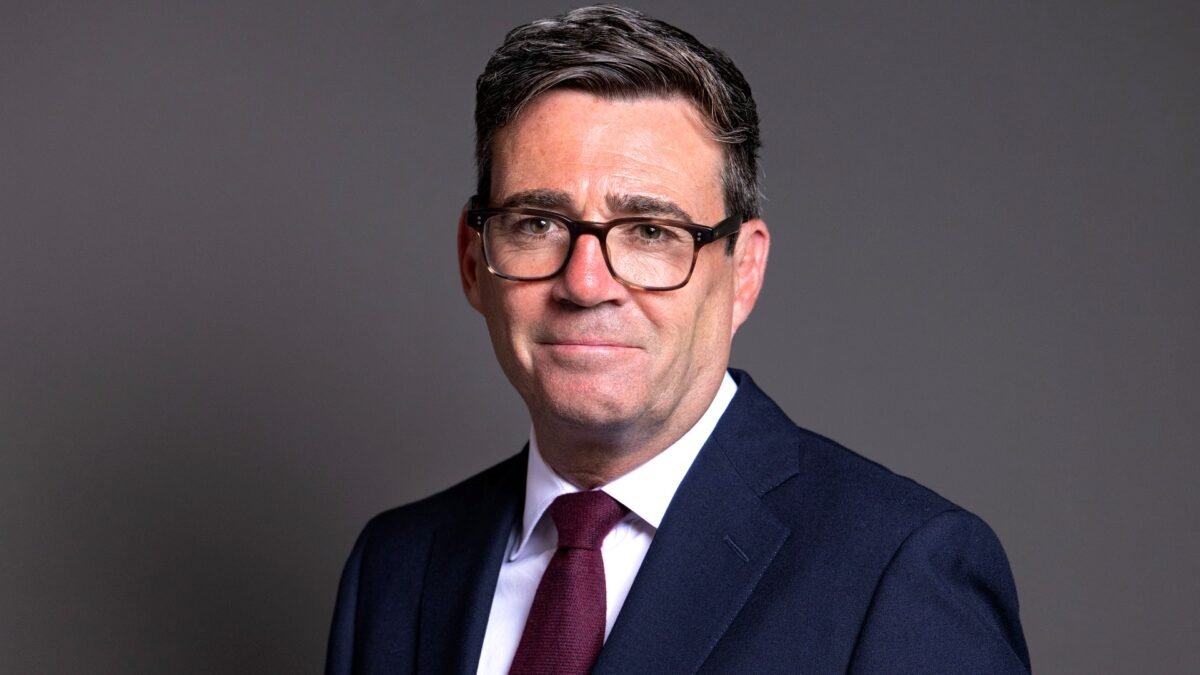
Prime Minister Andy Burnham has said he is open to Britain issuing a formal apology for its role in the transatlantic slave trade, while ruling out financial reparations, in a significant shift of position days before Commonwealth leaders gather in Antigua and Barbuda for a summit where the question of reparatory justice is expected to dominate.
Writing in The Guardian, Mr Burnham said Britain was “offering a structured dialogue with those affected by the transatlantic slave trade”, in which at least 12.5 million Africans were abducted and sold into slavery, according to Reuters.
“Listening to calls for a formal apology on behalf of the British state will form an important part of this process, and I am open to them,” he wrote.
Mr Burnham described the slave trade as “a brutal and barbaric violation” and said Britain must “face up to the past”. He expressed his “sorrow and regret for the pain and suffering of so many millions and to recognise the way it still shapes our world today”.
But he drew a firm line on money. “I do not think that British people today can be held liable for historical wrongs, however heinous, that happened in a different age under different laws and in which they played no personal part,” he wrote, adding that reparations were “not the right answer”.
The intervention, published on Friday, is the first time a British prime minister has publicly entertained a formal state apology for slavery. Britain has never formally apologised for the slave trade and has never paid reparations, and successive prime ministers have resisted both.
Mr Burnham also announced a new drive on debt relief for the poorest Commonwealth countries, to be led by former prime minister Gordon Brown, including helping vulnerable countries “repay over a longer time period and with better rates”. He said more than 40 per cent of the world’s poorest and most vulnerable countries now spend more on debt interest than on healthcare.
His comments came as King Charles III and Queen Camilla arrived in Antigua and Barbuda for the Commonwealth Heads of Government Meeting, which runs from 1 to 4 November in St John’s, the capital. The King will formally open the summit on Tuesday with a speech that, according to The Times, “will not shy away from confronting the most shameful aspects of the past”.
The King is expected to address Britain’s role in the slave trade with “unflinching honesty and sincere sorrow”, according to Buckingham Palace, but he is not expected to offer a formal apology. The Palace has said it would “not be appropriate” for him to address matters of UK government policy, and that no changes were made to his speech after Downing Street alerted the Palace to the change in the government’s position.
A Summit Now Dominated by One Question
The Commonwealth Heads of Government Meeting, held every two years, brings together leaders from the organisation’s 56 member countries, most of them former British colonies. The 2026 summit is the 28th meeting and the first under Commonwealth Secretary-General Shirley Ayorkor Botchwey. Its official theme is “Accelerating Partnerships and Investment for a Prosperous Commonwealth”, but the gathering is expected to be dominated by discussion of Mr Burnham’s offer of talks on a slavery apology.
Antigua and Barbuda’s Prime Minister, Gaston Browne, welcomed Mr Burnham’s comments and his proposals for practical assistance, while adding in a Facebook post that “the Caribbean’s longstanding position on reparatory justice remains unchanged”.
Barbados Prime Minister Mia Mottley, who has consistently advocated reparations, also welcomed Mr Burnham’s statement and said she would engage in good faith while maintaining her country’s position, according to reports of the reaction.
Caribbean leaders are expected to press demands for reparations at the summit, which they have often framed in terms of debt relief, development finance, education, healthcare and climate resilience, according to Reuters. A side meeting on Monday 2 November, titled “From Samoa to St John’s: Britain, the Commonwealth and the Road to Reparatory Justice”, brings together lawyers, parliamentarians and civil society groups to move the conversation from “resolution to repair”.
The King and Queen attended their first official engagement in Antigua on Sunday, a special church service at St John’s Pentecostal House of Restoration celebrating the “family of nations”, on the island’s 45th Independence Day. They were greeted by the Governor-General of Antigua and Barbuda, Sir Rodney Williams, and by Prime Minister Browne. The Bishop of Antigua, Ernest Flemming, told the congregation that the voices of small states must be heard for there to be “true partnerships” in the Commonwealth.
The King, 77, is on a nine-day Caribbean tour that began in the Bahamas on 27 October and continued through Guyana before reaching Antigua. Queen Camilla joined him on day five of the tour, having flown out later. The King continues to receive treatment for cancer, though a senior Buckingham Palace aide said he was “working as hard as ever, across time zones with packed schedules”.
Later on Sunday, the King and Queen were due to attend Antigua and Barbuda’s 45th annual independence parade and meet cricketing legends, before the King tossed a coin to open a Commonwealth cricket celebration match between teams of Caribbean leaders and leaders from the wider Commonwealth.
Reaction at Home: Welcome, and a Backlash
Mr Burnham’s intervention was welcomed by campaigners for reparatory justice, but only up to a point. Bell Ribeiro-Addy, chair of the All-Party Parliamentary Group for Afrikan Reparations, welcomed the opening for talks but said the government had not gone far enough by stopping short of a formal apology. “Acknowledgement is not the same as understanding,” she told BBC Radio 4. “Until we apologise, we are never going to be on equal footing.” She has pointed out that, as far as she knows, no invoice for financial reparations has ever been presented to the UK.
Denis O’Brien, founder of The Repair Campaign, which advocates reparations for slavery for Caribbean nations, said London “must stop obfuscating and give a full and formal apology now”.
Within the government, the move was defended by senior ministers. Emma Reynolds, chief secretary to the Treasury, said financial reparations were “off the table”. “I think the symbolism of issuing a formal apology is powerful … but that will not involve reparations because the British people of today did not have a role in the slave trade hundreds of years ago,” she told Sky News’s Sunday Morning programme. Chancellor John Healey said Mr Burnham was open to discussing an apology because it was the right thing to do, particularly ahead of the Commonwealth summit, while stressing that it would not create financial liability. A government source told the BBC that moving towards an apology was “morally the right thing to do”.
The Conservatives and Reform UK attacked the move. Kemi Badenoch, the Conservative leader, dismissed Mr Burnham’s intervention as “a navel-gazing distraction” and questioned the purpose of the Commonwealth summit. “If every Commonwealth summit becomes an exercise in presenting Britain with demands for cash then we need to start asking if it is worth the effort,” she said. She warned that a formal apology would invite demands for reparations. “I don’t think that Andy Burnham needs to be apologising because it is a lever to wedge open the door to ask for cash,” she told Sky News.
Reform UK leader Nigel Farage said: “I say no. I say enough.” His deputy, Zia Yusuf, called the idea “insane”, while former home secretary Suella Braverman warned it was “how the Chagos disaster started”. The Sunday Express splashed with the claim that the Prime Minister had “let down the King” over the slavery apology.
The criticism reflects a long-standing political sensitivity. An apology is seen by its opponents as the thin end of a wedge towards financial liability, while its supporters argue that the refusal to apologise has itself become the obstacle to a mature relationship with the Commonwealth’s Caribbean members.
Two Centuries of Refusal
Britain played a prominent role in the transatlantic slave trade from the 16th century, with English authorities and the monarchy involved in the system that transported millions of Africans to the Americas. Britain transported an estimated 3.2 million people across the Atlantic, according to the Trans-Atlantic Slave Trade Database.
Parliament passed legislation abolishing slavery in most of the British Empire in 1833, but the law compensated slave owners for the loss of the people they had enslaved, not the enslaved themselves. The government borrowing used to fund those payments was not fully repaid until 2015, which means generations of British taxpayers, including many descendants of the enslaved, helped pay for it.
No British government has formally apologised. Tony Blair expressed “deep sorrow and regret” in 2007, on the 200th anniversary of the abolition of the slave trade, but stopped short of an apology. David Cameron, visiting Jamaica in 2015, rejected reparations and urged the region to “move on”. Rishi Sunak dismissed calls for an apology in 2023, and Keir Starmer ruled out compensation in 2024.
The issue surfaced at the last Commonwealth summit in Samoa in 2024, when leaders called for discussions about reparations despite opposition from Mr Starmer, who was then prime minister. Mr Burnham succeeded Mr Starmer in July 2026.
In 2013, the heads of government of the Caribbean Community, CARICOM, established the CARICOM Reparations Commission, which published a Ten-Point Plan the following year. The plan begins with a full formal apology and goes on to seek investment in public health, education and cultural institutions, debt relief and technology transfer: a programme of repair and development, not a cheque.
Mr Burnham’s debt initiative sits deliberately close to that agenda without accepting it. By offering debt restructuring led by Mr Brown, a former prime minister with long-standing credibility on development finance, he is offering the Caribbean something concrete while withholding the two things its leaders have asked for most directly: an apology and reparations. The question for the summit is whether that distinction will hold.
Analysis: Why It Matters
A door opened, not a promise made
Mr Burnham’s wording matters, and it was plainly chosen with care. He did not apologise. He did not promise to apologise. He said he was “open” to calls for a formal apology, and that listening to them would form “an important part” of a structured dialogue. That is a genuine change of direction — no previous prime minister has gone even that far — but it is also a position that can be walked back, delayed or quietly buried once the summit is over. The test will not be what was written in a newspaper article on a Friday night, but whether a dialogue actually begins, who sits at the table, and whether it ends with a formal statement in Parliament. Until then, the Caribbean leaders in Antigua have every reason to treat the offer as the start of a negotiation rather than its conclusion.
The King’s speech will be read line by line
King Charles will open the summit on Tuesday, and his speech will be examined for every shade of meaning. The Palace has been careful to say that he will speak with “unflinching honesty and sincere sorrow” about the “most shameful aspects of the past”, while also making clear that a formal apology is a matter for the government, not the monarch. That division of labour is constitutionally correct — the King acts on the advice of his ministers — but it is also politically convenient for both sides. The King can express sorrow in language that sounds like an apology without giving one, and the Prime Minister can promise a dialogue without being bound by the King’s words. The risk is that the gap between the two becomes the story: a monarch expressing deep sorrow while his government offers only a conversation. The Palace’s insistence that the speech was not changed after Downing Street’s alert suggests the King’s words were already as far as he was prepared to go.
Debt relief is the real offer — and it may be the cleverer one
The most substantive part of Mr Burnham’s intervention may not be the apology at all, but the debt drive. More than 40 per cent of the world’s poorest and most vulnerable countries now spend more servicing debt than on healthcare, and for Caribbean states battered by hurricanes, climate change and the long economic shadow of slavery, debt is the most immediate burden. By putting Gordon Brown in charge of the effort, Mr Burnham has chosen a figure with genuine authority on the subject and a record of delivering debt relief. If the initiative produces real restructuring — longer repayment periods, lower rates, genuine fiscal space — it will matter far more to the countries concerned than the wording of any apology. It also reframes the debate on terms the British government can live with: practical help rather than historical liability.
The domestic backlash was predictable — and it is the point
The attacks from the Conservatives and Reform UK were immediate and fierce, and they were entirely predictable. For Mr Burnham’s opponents, the apology debate is a gift: it allows them to present a prime minister as more interested in the past than in the cost of living, and to warn that an apology is the first step towards a bill. But the backlash also serves Mr Burnham’s purpose. It marks him out, at the start of his premiership, as a leader willing to take on a difficult argument rather than dodge it, and it draws a clear line between his government and its critics on questions of history and identity. The danger is that the argument consumes the summit itself, turning a meeting about trade, investment and climate into a row about the 18th century. That is precisely what Mrs Badenoch accused him of doing, and it is a charge that will gain force if the summit produces headlines about slavery and nothing else.
The Commonwealth’s future is on the table, not just its past
Behind the apology debate lies a larger question about what the Commonwealth is for. The organisation’s 56 members include some of the world’s fastest-growing economies and some of its most climate-vulnerable states, and its summits are meant to be about trade, development and shared security. But for many Caribbean members, the organisation’s credibility depends on whether Britain is willing to reckon honestly with the history that created it. The summit in Samoa in 2024 ended with leaders demanding reparations talks over Mr Starmer’s objections; the summit in Antigua will test whether Mr Burnham’s softer approach produces a different outcome. If the dialogue he has offered turns into a genuine process, the Commonwealth may emerge stronger. If it turns out to be a holding operation, the frustration that has been building since Samoa will only deepen — and the next summit will be harder still.
What to Watch Next
- The King’s speech on Tuesday. King Charles will formally open the summit in St John’s on 3 November. Watch whether his language on slavery goes beyond the “sorrow” already trailed by the Palace, and how Caribbean leaders receive it.
- Whether the “structured dialogue” actually starts. Mr Burnham has offered talks, not an apology. Watch for a timetable, a named lead and a commitment to report back — or for the offer to fade once the summit ends.
- The debt initiative. Gordon Brown’s debt drive is the concrete part of the package. Watch for specific commitments on restructuring, and for the reaction of the International Monetary Fund and the World Bank.
- The summit communiqué. The final statement from Antigua will show whether Commonwealth leaders accepted Mr Burnham’s framing or insisted on stronger language on reparatory justice.
- The domestic political fallout. The Conservative and Reform attacks will continue. Watch whether Labour MPs and the wider public rally behind the Prime Minister’s position or whether the backlash forces a retreat.
Sources
- Reuters: UK PM Burnham says he is ‘open’ to formal apology for slavery, but rules out reparations
- BBC: UK PM Burnham says he is ‘open’ to formal apology for slavery, but rules out reparations
- The Times: King Charles to address slavery ‘with honesty and sincere sorrow’
- The News: UK PM ‘open’ to slavery apology but not reparations
- Royal Central: King and Queen touch down in Antigua and Barbuda as Caribbean tour continues

About the Author — advmannan1
Related Articles
Rachel Reeves Says Britain’s Future Lies in the EU as Brexit Made UK ‘Poorer, Weaker and Less Secure’
Former chancellor Rachel Reeves has said Britain should rejoin the European Union, declaring Brexit made the country 'poorer,…
Lewis Hamilton Claims His First Ferrari Pole at the Mexico City Grand Prix, Becoming the Oldest Pole-Sitter Since 1982
Lewis Hamilton took his first Grand Prix pole position for Ferrari in Mexico City on Saturday, edging George…
Nearly 1,000 Migrants Cross the Channel in Two Days as Arrivals Resume After Three-Week Weather Pause
Some 671 people arrived in nine boats on Friday and 263 in three boats on Thursday, ending a…