
Nine Killed as Learjet 60 Crashes Into Florida Neighbourhood, Second-Deadliest US Crash of 2026

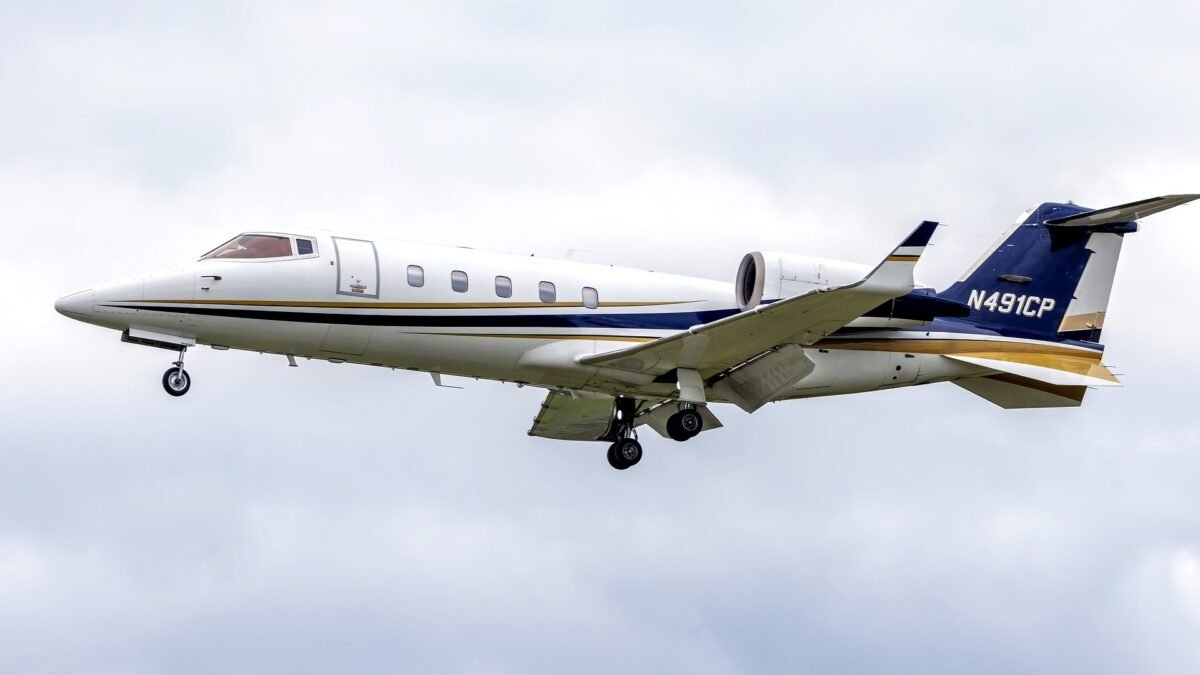
Nine people were killed on Sunday when a Learjet 60 business jet bound for the Bahamas plunged from the sky and erupted into a fireball in a residential neighbourhood in Palm Beach County, Florida, according to United States officials. The crash, which came down beside a mobile-home community and tore a crater into a busy road, is the second-deadliest air disaster in the United States this year, according to records kept by the National Transportation Safety Board (NTSB).
The aircraft went down at about 12.50pm local time near Military Trail, between Cresthaven Boulevard and 10th Avenue North, close to the communities of Greenacres and Cresthaven. All nine people on board were killed, the US Transportation Secretary, Sean Duffy, confirmed on Sunday afternoon, describing the crash as a “horrific tragedy”. No one on the ground was reported killed, although about 600 residents were forced from their homes as emergency crews worked through the wreckage and a debris field spread across the neighbourhood.
The jet had departed Austin-Bergstrom International Airport in Texas and was heading for North Eleuthera Airport in the Bahamas when it fell from the sky, according to the Federal Aviation Administration (FAA). Its tail number was N722BD, and FAA records show it was registered to a limited liability company in Delaware and listed as available for charter online, according to CNN.
The cause of the crash is not yet known. The FAA and the NTSB will investigate, with the NTSB taking the lead, and investigators were expected to reach the site on Sunday and Monday. What is already clear, from air-traffic-control recordings and flight-tracking data, is that the emergency unfolded with terrifying speed: minutes after the pilot reported conditions he described as manageable, the aircraft was falling at 20,000 feet per minute and the pilot was telling controllers, in his final transmission, that the jet was going to crash into the ground.
What happened in the final minutes
Minutes before the crash, the pilot of the Learjet reported ice accumulating on the aircraft, an outside air temperature of minus 47 degrees Celsius, and moderate turbulence that was bouncing the plane by as much as 700 feet, according to a recording of air-traffic-control radio calls captured by LiveATC.net and reported by CNN. “We have light, clear ice that is manageable and moderate turbulence,” the pilot radioed the Miami Air Route Traffic Control Center.
Moments later, after reporting that precipitation had started to fall and asking to climb, the crew declared an emergency. “We’re descending 8,000 – mayday, mayday – we’re descending 10,000 feet per minute,” the pilot said. “We are in an overspeed condition descending 20,000 feet per minute … We’re going to crash into the ground.”
Flight-tracking data reviewed by CNN from ADS-B Exchange showed the jet descending 27,000 feet over the course of about one minute before the tracking data cut off. There were scattered storms in the area at the time of the crash, and the aircraft had passed through a stronger storm cell a few minutes before it began its descent. It is not yet clear whether the weather contributed to the crash, and investigators have not drawn any conclusions.
The aircraft came down in a residential area near the entrance to a mobile-home community, according to local reports, and the impact buckled the road where the plane struck it, leaving a crater that was visible in video from CNN affiliate WPBF. The jet erupted into a giant fireball that, according to the Associated Press, appeared to just miss homes before crashing near the busy roadway.
Florida’s governor, Ron DeSantis, said the crash looked like “a missile going down”. He added that there were no reports of anyone on the ground being killed, but that the impact had created a significant debris field. The Palm Beach County Sheriff’s Office closed all northbound and southbound lanes of Military Trail until further notice and urged motorists to avoid the area and seek alternate routes.
The scene on the ground
About 600 people were left in need of shelter because of the damage on the ground, according to Joel Flores, the Palm Beach County commissioner for District 3, who was the first county official to reach the scene. The residents were being sent to two shelters in the county while the site was investigated, he said. Fires and scattered debris caused major destruction in the area, according to the Palm Beach Post, and emergency crews worked through the afternoon as smoke rose over the neighbourhood.
The crash site lies about four miles south of the airport in West Palm Beach, which was renamed for President Donald Trump earlier this year, according to CNN. Mr Trump had been in West Palm Beach earlier on Sunday but departed the airport on Air Force One a little more than one hour before the crash. There was no indication the Learjet had been shot down, the Palm Beach Post reported on Sunday night.
As of Sunday night, officials had not released the names of the nine people killed, and had not confirmed whether anyone on the ground had been injured. The Transportation Secretary’s confirmation of the death toll came in a post on X, the platform formerly known as Twitter, made just before 4pm local time, several hours after the crash. The FAA said its information was preliminary and subject to change.
What investigators will examine
The NTSB will lead the investigation, supported by the FAA, and its investigators were due to arrive at the site on Sunday and Monday. In an investigation of this kind, the board’s go-team typically secures the wreckage, recovers the flight-data and cockpit-voice recorders, reviews air-traffic-control recordings and radar and flight-tracking data, examines the aircraft’s maintenance records, and reconstructs the weather the aircraft encountered.
Several lines of inquiry are already visible. The pilot’s own reports of ice, extreme cold at altitude and turbulence, followed within minutes by an uncontrolled descent, will put the weather and the aircraft’s de-icing systems at the centre of the early work. The ADS-B tracking data, which captured the jet’s plunge in unusual detail, will help investigators establish the aircraft’s speed, altitude and attitude second by second. The air-traffic-control recording, including the mayday call, will be transcribed and analysed alongside it.
Investigators will also want to know who was operating the flight and under what rules. The aircraft was registered to a Delaware company and listed as available for charter online, according to CNN, but officials have not yet said which operator was flying the aircraft or whether the flight was conducted under the stricter rules that govern commercial charter operations or the more general rules that cover private flying. That distinction matters: charter operations face tighter requirements on crew training, rest, maintenance and operational control, and the NTSB routinely examines which regime applied.
The board normally publishes a preliminary report within a few weeks of an accident, setting out the facts established so far without reaching a conclusion about the cause. A final report, with a probable-cause finding and any safety recommendations, usually takes between a year and two years. That timetable was on display in the investigation of the year’s deadliest US crash so far, in Missouri in June, where a preliminary report was issued weeks after the accident but the final finding is still more than a year away.
The aircraft: the Learjet 60
The Learjet 60 is a mid-size business jet built by Bombardier Aerospace in Wichita, Kansas. Announced in October 1990 as an upgrade of the Learjet 55, it first flew on 10 October 1990 and received FAA certification in January 1993. It is powered by two Pratt & Whitney Canada PW305A engines, each producing 4,600 pounds of thrust, and has a range of about 2,405 nautical miles with four passengers and two crew, a service ceiling of 51,000 feet, and a climb performance that takes it to 41,000 feet in 18 and a half minutes at maximum weight. It typically seats up to eight or nine passengers with a crew of two.
The type was the last of the legacy Learjets, built on a wing design that the aircraft’s originator, Bill Lear, had adapted from the Swiss military aircraft the FFA P-16. Bombardier built about 318 of the original model before production ended in 2007, and introduced an upgraded variant, the Learjet 60XR, with modernised avionics and a reworked cabin. Production of the 60XR was paused in 2012, and Bombardier announced in February 2021 that it would end all Learjet production, delivering the final aircraft in March 2022. Every Learjet 60 flying today is therefore a pre-owned aircraft, some of them more than three decades old, maintained under the manufacturer’s continuing support programmes.
Aviation reference sources note that the Learjet 60 has the highest incident and accident rate in its class, with most accidents occurring during the landing phase, and that the NTSB has attributed most of those mishaps to pilot error, describing the aircraft as unforgiving and demanding of skilled handling. A 2008 accident in Columbia, South Carolina, in which a hydraulic-system failure disabled the systems needed to slow the jet, prompted the FAA to require tyre-pressure checks every four days for the model. None of that history says anything about the cause of Sunday’s crash, which occurred in the cruise and descent phases rather than on landing, but it is part of the record investigators will have in mind as they work through the wreckage and the maintenance history of this particular aircraft, registration N722BD.
A deadly year for American aviation
Sunday’s crash is the second-deadliest in the United States this year, according to NTSB records cited by CNN, after the crash of a skydiving aircraft in Butler, Missouri, in June, which killed 12 people. The two accidents could hardly be more different in character, but together they have made 2026 a grim year for non-airline flying in America.
On 14 June, a Pacific Aerospace 750XL single-engine turboprop operated by Skydive Kansas City took off from Butler Memorial Airport, about 60 miles south of Kansas City, carrying a pilot and 11 skydivers. The aircraft lifted off at about 11.25am, never climbed properly, banked hard to the left and struck a field roughly 300 yards from the runway before catching fire. All 12 people on board were killed, in the deadliest skydiving-plane accident in the United States in decades and the deadliest crash in the airport’s history.
The NTSB’s preliminary report on the Butler crash, issued weeks later, found no obvious reason for the accident: there was no engine failure, the fuel was clean, the weather was not a factor, and the aircraft was within its proper weight and balance limits. The aircraft was not equipped with a crashworthy flight-data or cockpit-voice recorder, although investigators recovered damaged GoPro cameras from the wreckage. More than four months on, the investigation remains open and the agency’s final report could take a year or longer.
The contrast between the two crashes is instructive. In Butler, investigators were left with almost no recorded data and a preliminary report that ruled out the obvious explanations without supplying an answer. In Palm Beach County, by contrast, they have a detailed ATC recording, second-by-second tracking data, and – if they survived the fire – the jet’s recorders. The Palm Beach investigation should therefore move faster in its early stages, even if a final probable-cause finding is still a long way off.
Analysis: Why It Matters
A mayday that lasted less than a minute
The most chilling detail of Sunday’s crash is not the fireball or the crater in Military Trail, but the compression of the emergency. The pilot’s radio calls trace a collapse that took roughly a minute: from “light, clear ice that is manageable” to a mayday, to a descent rate of 20,000 feet per minute, to the flat statement that the aircraft was going to crash into the ground. In commercial aviation, emergencies usually develop over minutes and are worked through checklists; here, the crew had almost no time at all. That compression is itself a clue. Investigators will want to know whether something failed suddenly – a flight control, an engine, a structural element – or whether the aircraft entered a condition, such as a severe icing encounter or a loss of control in turbulence, from which recovery at that altitude was impossible. The answer will shape not only this investigation but the safety lessons drawn from it, because a failure that gives a crew sixty seconds is a different problem from one that gives them ten minutes.
Weather is a suspect, not a verdict
It is tempting, given the pilot’s own words about ice and storms, to conclude that the weather brought the aircraft down. That would be a mistake, and it is one the NTSB will be careful not to make. Scattered storms were in the area, and the jet passed through a stronger storm cell minutes before it began to descend, but thousands of aircraft fly through icing conditions and turbulence every day without incident, and the pilot himself described the ice as manageable moments before the emergency. Icing can degrade a wing’s lift and add weight, and it can jam or confuse instruments, but it rarely produces a 27,000-foot plunge in sixty seconds on its own. The weather may prove to be a contributing factor, a trigger, or a coincidence, and the distinction matters enormously for what the industry learns. The Butler investigation is a useful caution here: its preliminary report ruled out the engine, the fuel and the weather, and still left investigators without an answer. Early certainty is the enemy of a good investigation, and the public would be wise to wait for the preliminary report rather than settle on a cause from the first radio transcripts.
The neighbourhood that was spared – barely
The human arithmetic of this crash could have been far worse. The jet came down beside a mobile-home community on a Sunday lunchtime, tore a crater into one of the county’s busiest roads, and scattered debris across a neighbourhood – yet, as of Sunday night, no one on the ground had been reported killed. About 600 people were displaced, and that displacement is itself a serious harm: families who left their homes with what they could carry, unsure when they can return, and facing damage to homes that are, for many residents of such communities, their most valuable possession. But the margin between this outcome and a much larger tragedy was measured in metres and seconds. The crash raises a question that American aviation has wrestled with for decades and never fully answered: how much risk should communities near busy airports be asked to bear? Flight paths, by necessity, pass over homes, and private jets use the same corridors as airliners. The answer is not to move airports or ban flying, but the near-miss on the ground in Palm Beach County will, rightly, sharpen the debate about land use around airports, about the routes aircraft take on departure and arrival, and about the emergency planning that determines how quickly hundreds of displaced residents are sheltered when the worst happens.
Two crashes, one uncomfortable pattern
It would be wrong to link the Palm Beach crash to the Butler disaster as if they shared a cause; one was a twin-engine business jet in cruise, the other a single-engine skydiving aircraft seconds after take-off. But they share a context that deserves attention. Both were non-airline flights, operating outside the intense, layered safety system that governs scheduled commercial aviation – the system of airline operations control, dispatch, crew-resource management and continuous regulatory surveillance that has made US airline flying so safe that fatal accidents are now rare events. Private and charter flying is held to high standards, but it is a different world: smaller operators, older aircraft, and a safety culture that varies widely from one company to the next. Two accidents killing 21 people in less than five months will inevitably invite scrutiny of that world – of how charter operators are overseen, of how ageing business jets are maintained, and of whether the rules that apply to them are keeping pace with the growth of on-demand private flying. That scrutiny is healthy, provided it waits for evidence. The worst outcome would be a rush to blame a class of aircraft, or a class of operator, before the NTSB has established what actually happened on Sunday.
The Trump connection will dominate the noise
There is one aspect of this crash that has nothing to do with aviation safety and everything to do with the news cycle. The aircraft came down about four miles south of an airport renamed for President Donald Trump earlier this year, and Mr Trump himself had departed the same airport on Air Force One a little more than an hour before the crash. That proximity guarantees that the story will be pulled into political argument, and that speculation – already visible online within hours – will outrun the evidence. Officials have already said there is no indication the aircraft was shot down, and nothing in the ATC recording suggests anything other than an aircraft in desperate trouble. The discipline now required of everyone covering this story, and of the public following it, is to keep the focus where it belongs: on the nine people who died, on the families waiting for their names to be released, on the hundreds displaced from their homes, and on the investigators whose job is to establish, slowly and carefully, why a modern business jet fell out of a Florida sky on a Sunday afternoon.
What to Watch Next
- The NTSB preliminary report. Expected within a few weeks, it will set out the facts established so far – the flight’s track, the weather, the condition of the wreckage, and whether the recorders survived – without reaching a conclusion on the cause. It will be the first authoritative account of what happened.
- The identities of the nine victims and the operator. Officials had not released the names of those killed as of Sunday night, nor identified the operator of the flight. Those details will establish who was on board, why they were travelling to the Bahamas, and under which regulatory regime the flight was conducted.
- The weather and icing analysis. Investigators will reconstruct the storm cell the aircraft passed through, examine the de-icing systems, and assess whether ice, turbulence or a loss of control played a part. The pilot’s own description of the conditions as “manageable” minutes before the emergency will be a central piece of that analysis.
- The toll on the ground. About 600 residents were displaced and sent to two shelters. The coming days will show how much damage was done to homes, when Military Trail reopens, and how quickly the displaced families are able to return.
- The long road to a final finding. As the Butler investigation has shown, a final NTSB probable-cause report can take a year to two years. The Palm Beach investigation has richer recorded data, which may speed the early work, but a definitive answer – and any safety recommendations that follow from it – is still a long way off.
Sources
- CNN – “9 killed after a Learjet crashes and erupts into flames in Palm Beach County, Florida”
- USA Today – “9 on board plane killed after crash in Florida, federal officials investigating”
- The Palm Beach Post – “Plane crash near Greenacres killed all nine people aboard, U.S. says”
- Associated Press (via The Oldham Times) – “Nine killed in Florida plane crash”
- National Transportation Safety Board – Preliminary report, Butler, Missouri accident CEN26FA224 (14 June 2026)

About the Author — advmannan1
Related Articles
Judge Throws Out Justice Department Bid to Block Alaska Senate Certification in ‘Second Sullivan’ Ballot Case
A federal judge has dismissed the Justice Department's lawsuit seeking to block certification of Alaska's Senate race, ruling…
Trump White House Maps Path to Govern Without Congress if Democrats Win Midterms, Reuters Reports
The White House has spent months mapping executive actions on immigration, tariffs, housing and spending in case Democrats…
More Than 51 Million Americans Have Already Voted in the 2026 Midterms, Smashing the Early-Voting Record
More than 51 million Americans had already cast ballots by Saturday afternoon, passing the entire early-voting total of…