
More Than 51 Million Americans Have Already Voted in the 2026 Midterms, Smashing the Early-Voting Record

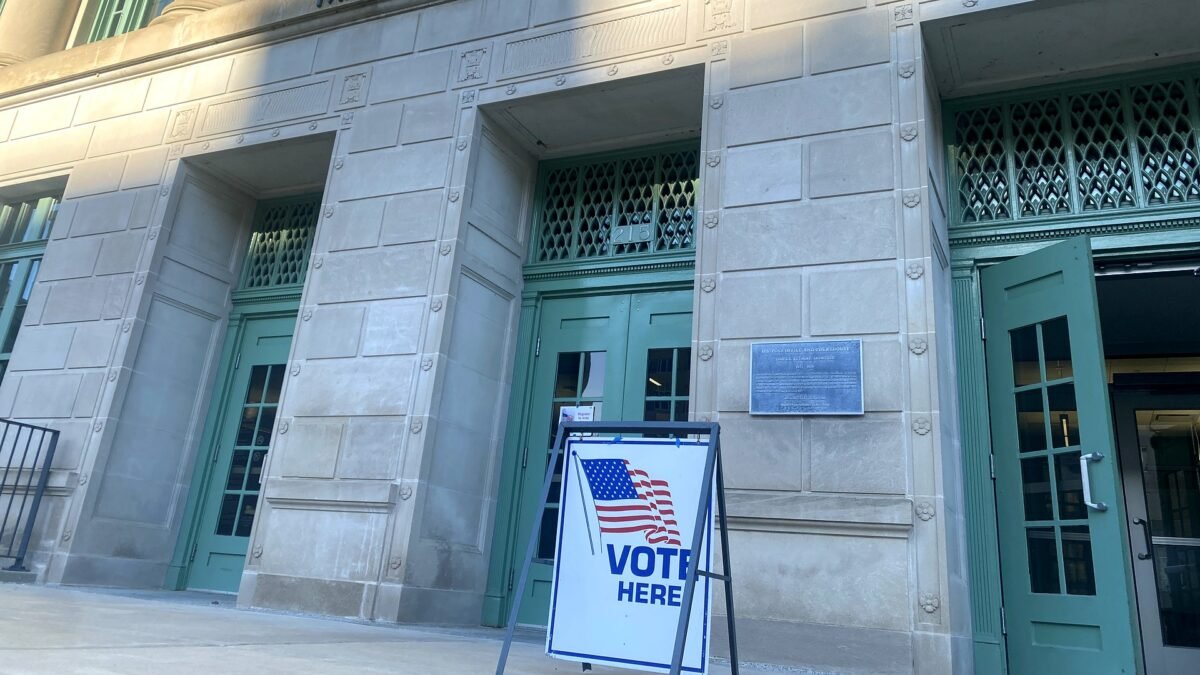
More than 51 million Americans had already voted in the 2026 midterm elections by Saturday afternoon, smashing the record for early voting in a midterm and passing the entire early-voting total of the last midterms with three days still to go before Election Day, according to an analysis by the University of Florida.
The University of Florida’s Election Lab put the total at more than 50.5 million ballots cast by Saturday morning, and its Election Research Center reported that the figure had reached 51.31 million by 2:30 p.m. local time on Saturday, 31 October, according to Aju Press. The 50 million mark had already been crossed on Friday, 30 October. By comparison, the whole of the 2022 midterm cycle produced about 45.9 million early votes, meaning the 2026 total is already nearly five million ahead of that full-cycle figure while millions of ballots are still to be cast.
The surge has been driven by voters casting ballots in person and by post in the weeks before Tuesday, 3 November, when Americans will decide control of both chambers of Congress for the final two years of President Donald Trump’s second term. All 435 seats in the House of Representatives are on the ballot, along with 35 Senate contests, including special elections in Florida and Ohio, and 36 governorships, according to Times Now.
Republicans enter the election defending a 53-47 majority in the Senate and a narrow 218-214 advantage in the House. Democrats need only a small net gain in the House to take control, but flipping the Senate requires them to win in states where they have rarely succeeded in recent years, including Texas, Alaska and Kansas.
The numbers behind the record
The headline figure is striking, but the detail underneath it matters just as much. In the states that record the party registration of early voters, 10.7 million registered Democrats had voted by Saturday morning, compared with 7.8 million registered Republicans, according to the Guardian’s analysis of the University of Florida data. Those figures do not reveal how any individual voted, and they cover only the states that publish registration breakdowns, so they should not be read as a result. They do, however, show which side’s supporters have turned out first.
Traditionally, Republicans have been more likely to vote in person on Election Day itself, while Democrats have made heavier use of early and postal voting, according to Aju Press. That pattern means the early-voting lead for registered Democrats is expected, and it says little on its own about the outcome once Tuesday’s ballots are counted.
Texas has become the clearest example of the surge. More than seven million people in the state had voted early by Saturday, according to the University of Florida data, already 1.5 million more than the number who voted early in Texas during the whole of the 2022 midterm cycle. In Harris County, which includes Houston, an Associated Press analysis found that 862,700 people had voted by Wednesday, compared with 564,500 at the same point in 2022.
The rise is not confined to Texas. According to the Associated Press, early voting in South Carolina is up 83 percent compared with the 2022 midterms, even though Trump won the state by nearly 18 percentage points in the 2024 presidential election. In Kansas, where another unusually tight Senate battle is under way in a normally reliable Republican state, early voting is up 34 percent. Maine has seen a 44 percent increase, while Michigan, the site of another key Senate race, is up 32 percent.
Early voting began as early as 18 September in states such as Minnesota, South Dakota and Virginia, according to Times Now, and the availability of early and postal voting has varied significantly by jurisdiction. There is no provision for online voting in the United States.
What is at stake on Tuesday
Tuesday’s vote will decide the makeup of both chambers of Congress for the final two years of Trump’s second term. Control of the House and Senate will shape what legislation can pass, what oversight can be pursued, and how much room the administration has to advance its agenda. That breadth of consequence helps explain why so many voters have acted early rather than waiting for Election Day.
Polling points to widespread dissatisfaction with Trump’s presidency, alongside unusually close contests in states that Republicans would normally expect to win comfortably. A Reuters/Ipsos poll published in October put Trump’s approval rating at a record-low 31 percent, according to Al Jazeera, and polling averages cited in coverage have given Democrats a lead on the national congressional ballot. According to NBC News, Senate Democrats are likely to win North Carolina and Maine from the Republicans, while in the House the network predicts possible flips from Republican to Democrat in 15 districts.
That combination has widened the competitive map well beyond the handful of states that usually decide control of the Senate. Democrats are now contesting ground that, in a more typical year, might have been treated as safely Republican, and the early-voting numbers in those states are being watched closely as a result.
Texas is the centre of that ambition. Voters there are choosing in a closely watched Senate contest between the state’s Republican attorney general, Ken Paxton, and the Democrat James Talarico, while the Republican governor, Greg Abbott, is seeking re-election against the Democrat Gina Hinojosa. Hundreds of millions of dollars have poured into the Senate race, in a state where Democrats have not won a statewide election for more than three decades. Trump visited Texas earlier in the week, his third trip there in a month.
Elsewhere, the Senate battleground includes Alaska, where the Democratic candidate Mary Peltola is challenging the Republican incumbent Dan Sullivan in a race that has drawn a federal criminal investigation into claims that a second man with the same name was recruited to confuse voters, and Kansas, Maine, Michigan and North Carolina. In Georgia, former President Barack Obama campaigned on 28 October in Morrow for Kisha Lance Bottoms, a former Atlanta mayor running for governor who would become the first Black woman to serve as governor of Georgia if elected, according to Aju Press. Former President Bill Clinton campaigned in Mississippi for the Democratic Senate candidate Scott Colom, in a state where Republicans have held the Senate seats for 40 years.
A frantic final weekend
Both parties have spent the final weekend making a last push to rally their supporters. Trump visited his home state of Florida on Friday, 30 October, where thousands of supporters gathered at a rally in Daytona Beach. During the event, he called the vote “the most important midterm election in history” and pledged to end the war in Iran, according to Aju Press.
Trump had expected the Florida rally to be the final event of his midterm campaign, and he told the crowd that 28 consecutive days of rallies had been a heavy burden. “I thought this was going to be my last one,” he said, referring to the Republican gubernatorial candidate Byron Donalds. “I thought I could relax. 28 days of this crap is a lot,” according to USA Today.
But after the Republican National Committee announced that his Saturday rally in Kansas and Sunday rally in Iowa would be cancelled, Trump reversed course following pushback from Republicans in both states who asked him to come. He addressed the schedule changes to reporters in the Oval Office on Friday, saying he had received calls from Republicans in both states. The two states are home to tight Senate races that are central to the battle for control of the chamber, and both are places Republicans would normally expect to win comfortably.
Vice President JD Vance is scheduled to campaign in northern New York on Monday, 2 November, according to Aju Press. On the Democratic side, the party has framed the vote as a referendum on the Trump administration, aiming to regain control of both the House and Senate.
The voting is taking place against a backdrop of rising prices for food, gasoline and other essentials, alongside the Iran war and concern about government corruption, according to the Guardian’s coverage. Trump, weighed down by deep unpopularity among voters, has tried to lift struggling Republican candidates with rallies in previously safe states. The final campaign days have also been marked by disputes over voting procedures and election administration, including a federal judge’s rejection of the administration’s request to isolate potentially ineligible ballots in California.
Even Pope Leo XIV, the first American-born pope, cast a mail-in ballot in the midterm elections, according to reports, a small detail that underlines how far early and postal voting has spread across American life.
Analysis: Why It Matters
A record of access as much as enthusiasm
The 51 million figure is a genuine record, but it is worth asking what exactly it records. Early voting has expanded steadily across the United States over the past decade, with more states offering it, longer windows in which to use it, and voters growing more comfortable with casting a ballot days or weeks before Election Day. Some of the increase, therefore, reflects a change in how Americans vote rather than a surge in how many of them vote. A record early vote can mean that people who used to vote on Election Day are simply voting sooner, rather than that many more people will vote overall. The honest test of enthusiasm will come when total turnout is known, not when the early count is tallied. Still, the scale of the jump — nearly five million past the whole of 2022’s early total with three days to spare — is too large to explain away as a mere shift in timing. Something has moved millions of Americans to act early, and both parties are reading that movement as a sign of an electorate that is unusually engaged.
Texas is the election’s real test
If there is one state that will define this midterm, it is Texas. Seven million early votes in a single state, 1.5 million more than the whole of 2022’s early total there, is a remarkable figure on its own. But the political meaning runs deeper. Democrats have not won a statewide race in Texas for more than 30 years, yet they are pouring hundreds of millions of dollars into the Paxton-Talarico Senate contest and watching Harris County’s numbers with open excitement. The county’s jump from 564,500 early votes at this point in 2022 to 862,700 now is the kind of local surge that changes the arithmetic of a statewide race. None of this guarantees a Democratic win: Texas Republicans have turned out in force on Election Day in the past, and Abbott remains a strong favourite for re-election. But the early numbers show a Democratic Party that has decided the state is worth contesting seriously for the first time in a generation, and a Republican Party that has been forced to defend ground it once took for granted. Trump has visited the state three times in a month, which tells its own story about how seriously his party is taking the threat.
The Democratic edge is real — and narrow
The registration figures — 10.7 million Democrats against 7.8 million Republicans in the states that publish them — look like a clear Democratic advantage, and in one sense they are. Democratic voters have turned out early in large numbers, and that enthusiasm is genuine. But three cautions matter. First, the figures cover only the states that record party registration, so they are not a national picture. Second, party registration does not reveal which candidates a voter supported; millions of registered voters cross party lines. Third, Republicans have long preferred to vote in person on Election Day, which means a large share of the Republican vote has not been cast yet. In 2022, the same pattern produced early leads for Democrats that narrowed sharply once Tuesday’s ballots were counted. The early-voting numbers are a measure of organisation and motivation, not a forecast. They tell us that Democrats are energised. They do not tell us who will win.
Affordability is the issue on the ballot
Every midterm is, in the end, a verdict on the party in power, and this one is no different. The Reuters/Ipsos poll showing Trump’s approval at a record-low 31 percent is the single most important number in the campaign, because it captures the mood that is driving voters to the polls: anger about rising living costs, set against a deeply unpopular war with Iran and a sense that the government is not on the side of ordinary households. The Guardian’s coverage notes that affordability, immigration, healthcare, artificial intelligence and the Iran war are among the leading campaign issues, but affordability sits at the centre of them all. Voters who are paying more for food and fuel do not need a lecture on economics; they need a reason to believe the next two years will be different. Democrats have framed the election as a referendum on the administration, and the early-voting surge suggests that message is landing. Republicans, for their part, are betting that their voters will turn out on Tuesday in numbers large enough to hold the line. The question is whether anger about prices outweighs loyalty to a president who remains popular with his own base.
Tuesday still decides everything
For all the drama of the early-voting record, the election will be decided on Tuesday, and the days after it. Tens of millions of Americans will vote in person on Election Day, and in several states mail ballots cannot be counted until polls close, which means close races may not be called on the night. The Senate map is so tight — with Texas, Alaska, Kansas, Maine, Michigan and North Carolina all in play — that a single seat could decide control of the chamber. The House is closer still, with NBC News pointing to 15 districts that could flip. And the legal disputes that have marked the final days, from the California ballot case to the criminal investigation in Alaska, are a reminder that the aftermath of this election may be contested in court as well as at the ballot box. The early-voting record is a story about how America votes now. Tuesday’s results will be the story of what America decided.
What to Watch Next
- Election Day turnout on Tuesday, 3 November: whether total turnout beats 2022, and how many of the voters who have not yet cast a ballot turn out in person.
- The Texas Senate result: whether James Talarico can turn the record early vote into a Democratic win over Ken Paxton, or whether Republican Election Day turnout holds the state.
- The Senate battlegrounds: Alaska, Kansas, Maine, Michigan and North Carolina, where a single seat could decide control of the chamber.
- Control of the House: whether Democrats flip enough of the 15 districts NBC News has identified as possible pick-ups to take the chamber.
- When results are known: mail ballots cannot be counted until polls close in several states, so close races may take days to call — and legal challenges could follow.
Sources
- The Guardian — “More than 50m Americans cast ballots in early voting with three days to go before midterms” (via World Right Now)
- Aju Press — “Early Voting for U.S. Midterm Elections Exceeds 50 Million”
- Times Now World — “US Midterm Elections See Record Early Voter Turnout”
- The American Diary 24 — “More than 51 million Americans have already voted as battle for Congress enters final weekend” (citing Reuters)
- USA Today — “’28 days in a row of this crap is a lot.’ Trump weighs in on midterm rallies”

About the Author — advmannan1
Related Articles

Justice Department Asks Alaska Judge to Set Aside Ballots for Second Dan Sullivan as Criminal Probe Into ‘Sham Candidate’ Claims Widens
The Justice Department has asked a federal judge in Alaska to preserve and set aside every ballot ranking…

Trump Administration Plans to Deport More Than 150 Afghans to Taliban-Ruled Afghanistan, With First Flight Expected Monday
The Trump administration is preparing to deport more than 150 Afghan immigrants to Taliban-ruled Afghanistan via Pakistan, with…
Federal Judge Blocks Trump Administration From Threatening Election Officials Days Before Midterms
A federal judge in San Francisco has barred the Justice Department and Homeland Security from threatening election officials…