
South Korea’s Exports Jump 94% to $115 Billion as AI Chip Boom Puts a $1 Trillion Year Within Reach

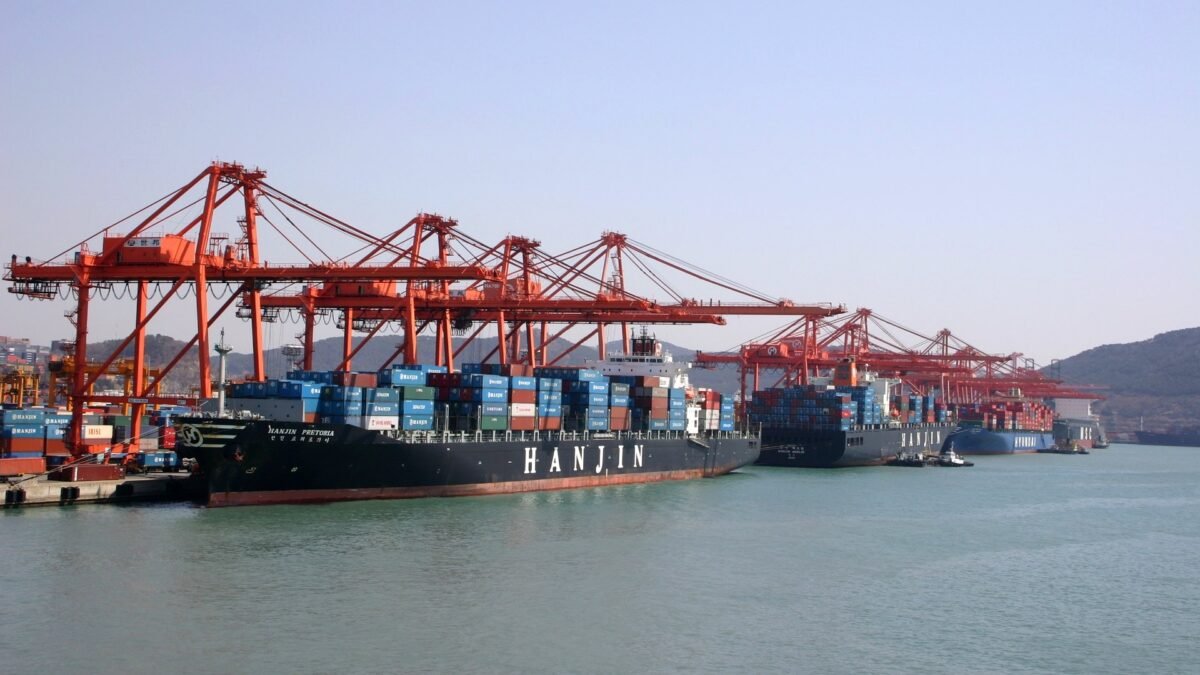
South Korea exported goods worth $115.28 billion in October, a rise of 93.7 per cent on the same month last year, as an extraordinary surge in semiconductor shipments carried Asia’s fourth-largest economy to the edge of a milestone no country outside the world’s three largest exporters has ever reached. The figures, released by the Ministry of Trade, Industry and Energy on Sunday, put cumulative exports for the first ten months of 2026 at $930 billion, leaving South Korea about $70 billion short of its first-ever $1 trillion export year — a threshold the government now says it is certain to cross this month.
Semiconductors did almost all of the heavy lifting. Chip exports more than tripled, rising 259.4 per cent year on year to $56.44 billion, according to the ministry. It was the second consecutive month in which semiconductor shipments exceeded $50 billion, and chips alone accounted for nearly half of everything South Korea sold abroad in October. The ministry said high prices and strong volumes were sustained by continued capital spending by global technology companies building artificial intelligence infrastructure.
The monthly total was the second-highest on record, behind only September’s $120.9 billion, according to Yonhap Infomax. It also beat expectations: a survey of nine domestic and international financial institutions by Yonhap Infomax had projected October exports of $111.77 billion, an increase of 87.8 per cent, while a separate survey of 11 economists by The Wall Street Journal put the median forecast at 86.7 per cent growth. The actual figure exceeded both.
Trade Minister Kim Jung-kwan said the achievement of $1 trillion in annual exports in November was now certain, calling it the result of expanded demand in high-tech industries such as semiconductors and the competitiveness of Korean companies “despite difficult conditions”. If the milestone is reached, South Korea would become only the fourth country in history to export more than $1 trillion of goods in a single year, after the United States, China and Germany.
A record month, with an asterisk
The headline growth rate of 93.7 per cent deserves a careful reading. October had 22 working days this year against 20 a year earlier, because the Chuseok harvest holiday fell in September in 2026 but in October in 2025. Adjusted for working days, daily average exports rose 76 per cent to $5.24 billion — still an exceptionally strong figure, but lower than the unadjusted rate. Both the total and the daily average ranked as the second-highest on record, behind September.
Even with that adjustment, the pace of growth was remarkable. According to Investing.com, the 93.7 per cent year-on-year increase was the fastest since January 1974. The figures are preliminary customs data and can be revised until annual statistics are finalised in February 2027, but the scale of the change is far beyond the margin of any plausible revision.
Imports also rose sharply, climbing 36 per cent from a year earlier to $72.78 billion. Energy imports jumped 63.1 per cent, reflecting high international oil prices, while non-energy imports increased 29.7 per cent. The combination produced a monthly trade surplus of $42.5 billion — the second consecutive month in which the surplus has exceeded $40 billion.
The strength was not confined to chips. Non-semiconductor exports rose 34 per cent, and 18 of the 20 major export items recorded growth, according to the ministry. That breadth matters: it suggests the October result was not a one-product fluke, even if semiconductors supplied roughly half of the total value.
Semiconductors: half of everything Korea sells
Within the chip category, the engine was memory. Memory chip exports rose 360.5 per cent year on year, according to Investing.com, and the contract price of a DDR5 16-gigabit memory chip reached $50 in October, up from $46.50 in August. Demand for DRAM still outstrips supply, the ministry said, and contract prices for both DRAM and NAND flash memory continue to rise, according to Korean media reports of the ministry’s briefing.
The two companies at the centre of the boom are Samsung Electronics and SK Hynix, the world’s two largest memory-chip makers. Both reported record earnings for consecutive quarters last week, benefiting from tight supply and robust demand for memory chips and other hardware used in AI computing, according to The Wall Street Journal. Their order books are, in effect, a proxy for the global race to build data centres.
Computer exports told the same story from a different angle. They surged 496.6 per cent to $5.85 billion, driven by expanded server infrastructure investment and increased demand for server solid-state drives as AI spreads through corporate computing, according to the ministry. The hardware that powers artificial intelligence is, increasingly, made in Korea and shipped from ports such as Busan.
The scale of the spending behind the boom is enormous. The world’s technology giants plan to spend a combined $750 billion on artificial intelligence this year, according to a Bloomberg report cited by CNBC TV18, and the advertising, consumer and retail operations that fund that investment are only now starting to show strain. For as long as the spending continues, Korean memory makers sit at the narrow end of the funnel: almost every AI server needs the high-bandwidth memory that Samsung and SK Hynix dominate.
Cars, cosmetics and crude: the breadth beyond chips
Automobile exports set a new record for October, rising 18.1 per cent year on year to $6.55 billion. The ministry attributed the result to strong hybrid vehicle exports and to the extra working days created by the Chuseok shift. Petroleum product exports increased 80 per cent to $6.92 billion and petrochemicals rose 27.5 per cent to $4 billion, reflecting price effects from high international oil prices. Steel exports increased 22.3 per cent to $2.29 billion.
Several smaller categories set October records of their own. Cosmetics reached $1.44 billion, agricultural and fishery products $1.11 billion, and bio-health products $1.53 billion. Ship exports were the notable exception, plunging 43.6 per cent to $2.64 billion — a temporary decline caused by base effects from offshore plant exports in the same month last year, according to the ministry.
The pattern is one of a manufacturing economy firing on most cylinders at once, with the notable exception of shipbuilding, whose lumpy order cycle makes any single month a poor guide. The breadth also answers, in part, the charge that Korea’s export boom is a single-product story. Chips are the headline, but cars, cosmetics, refined fuel and pharmaceuticals are all growing at double-digit rates.
Both superpowers are buying
Exports increased to seven of the nine major destinations last month. Shipments to China surged 133.6 per cent to $26.98 billion, while exports to the United States jumped 185.8 per cent to $24.9 billion, both centred on semiconductors. Exports to the Association of Southeast Asian Nations rose 128 per cent to $21.33 billion, exceeding $20 billion for the second consecutive month.
The geography is striking. South Korea is selling the hardware of the AI age to both sides of the US-China rivalry at the same time, in roughly equal measure. Washington and Beijing are competing to control the semiconductor supply chain, yet both are buying record volumes of Korean chips, computers and electrical equipment. That position — indispensable to both, owned by neither — is the foundation of Korea’s trade strength, and also its greatest vulnerability, since either side could decide that dependence is a risk to be reduced rather than a relationship to be maintained.
Minister Kim sounded a note of caution alongside the celebration. “Many small and medium-sized enterprises are still experiencing difficulties due to uncertainties in the global trade environment,” he said, citing rising protectionism in major economies, shifts in global supply chains and geopolitical tensions in the Middle East. The government, he said, would concentrate its efforts on strengthening trade cooperation with major countries and resolving export difficulties at home and abroad “so that small and medium-sized enterprises can broadly enjoy the fruits of export growth”.
The $1 trillion club
The $1 trillion figure is more than a round number. Only three economies have ever exported more than $1 trillion of goods in a single year: the United States, China and Germany. South Korea would be the fourth, and by a considerable distance the smallest of the four in population and land area. The journey has taken just over six decades: South Korea first recorded $1 billion in annual exports in 1964, passed $100 billion in 1995, and is now set to reach $1 trillion 31 years after that.
The milestone also captures how far the economy has travelled from its origins. In the 1960s, Korea exported wigs, textiles and plywood. Today, nearly half of its monthly exports are semiconductors, and its two largest companies by market value are chipmakers. The transformation from labour-intensive manufacturing to knowledge-intensive industry is, in the trade data, a matter of public record.
The export boom is already visible in the wider economy. South Korea’s economy grew 1.0 per cent in the third quarter from the preceding three months, beating forecasts, according to advance central bank estimates reported by Reuters. The Bank of Korea estimated that about half of that growth was driven by semiconductors, and the economy is now seen growing 3.7 per cent this year if output in the fourth quarter stays at the same level as the third.
Analysis: Why It Matters
The AI boom now has a national balance sheet
Until now, the artificial intelligence boom has mostly been measured in the share prices and capital spending of American technology companies. South Korea’s trade data gives it a different measure: a national export ledger. When chips worth $56.44 billion leave one country in a single month — more than many countries export in a year — the AI build-out stops being a stock-market story and becomes a fact of global trade. Korea is, in effect, the hardware supplier to the AI age, and its monthly customs returns are now one of the most reliable real-time indicators of how fast that age is arriving. That is a position of real power, but it also means Korea’s fortunes are now lashed to a single investment cycle in a way no diversified economy should be comfortable with.
A 62-year climb, measured in containers
The $1 trillion milestone matters because of what it says about the pace of development, not because of the number itself. In 1964, South Korea’s entire annual exports were worth $1 billion. It took 31 years to reach $100 billion, in 1995, and another 31 years to reach $1 trillion. The symmetry is neat, but the second half of that journey was far harder: it required building, from almost nothing, the world’s leading memory-chip industry, a global car industry and a shipbuilding industry, and then surviving the 1997 Asian financial crisis, the 2008 global financial crisis and a pandemic. The October figures are the latest instalment of that story, and they are worth reading as the product of six decades of industrial policy rather than as a single good month.
The concentration risk nobody can ignore
The most important number in the October release may not be the $115.28 billion total but the share of it that came from one product. Semiconductors accounted for about 49 per cent of exports — 47.5 per cent in August, 49.9 per cent in September, and now roughly half again. When half of a country’s exports depend on one product whose price can swing several-fold in a single cycle, a turn in the memory market would hit the trade surplus, corporate earnings and the currency at the same time. The warning signs are already visible in the margins: Chinese memory makers such as CXMT are catching up, according to Korean press reports, and the same tight supply that has pushed prices up will eventually invite new capacity. There is also a counter-signal in the data: South Korea’s factory activity grew in October at its slowest pace in eight months, according to the S&P Global purchasing managers’ index published on Monday, with output growth the weakest of the year and firms citing slowing demand, raw material shortages and high costs. The customs data and the factory survey are measuring different things — shipments versus sentiment — but the gap between them is a reminder that booming export values and healthy factories are not the same thing.
Selling to both sides of a rivalry
Exports to the United States rose 185.8 per cent and to China 133.6 per cent in the same month. That is a remarkable position for a middle power to hold, and a fragile one. Both Washington and Beijing are trying to secure their semiconductor supply chains, and both currently regard Korean chips as essential. But the logic of industrial policy on both sides points towards reducing that dependence over time — through domestic fabrication in the United States and through the rise of Chinese producers such as CXMT. Korea’s task is to stay far enough ahead in technology that neither side can afford to do without it, while avoiding being forced to choose between its two largest customers. The minister’s warning about protectionism and supply-chain shifts was not boilerplate: it was a description of the central strategic problem facing the Korean economy.
What the headline number hides
Three qualifications should accompany any celebration of the October figures. First, the 93.7 per cent growth rate is flattered by the calendar: on a working-day-adjusted basis, growth was 76 per cent — still extraordinary, but a reminder that the headline is not the whole story. Second, the gains are concentrated in large companies. The minister himself acknowledged that many small and medium-sized enterprises are still struggling, and the export boom has not obviously reached them. Third, the data are preliminary and will be revised until annual statistics are finalised in February 2027. None of this diminishes the achievement, but it does set the terms on which it should be judged: a genuine, historic surge, driven by a real technological boom, whose benefits are unevenly shared and whose durability is not guaranteed.
What to Watch Next
- The November data, due in early December. With $930 billion already banked, South Korea needs only about $70 billion in November to cross $1 trillion. Any monthly total near October’s level would do it comfortably; a sharp fall would delay the milestone into December and raise questions about the durability of the chip cycle.
- Memory chip prices and the chipmakers’ guidance. The DDR5 contract price has risen from $46.50 in August to $50 in October. Whether it keeps climbing — and what Samsung and SK Hynix say about capacity and capital spending in their next updates — will determine whether the boom has months or years left to run.
- Big Tech earnings and AI capital spending. Apple and Palantir report results this week, and the market is watching whether the technology giants sustain the roughly $750 billion of AI spending planned for this year. Any pullback in data-centre investment would show up in Korean export orders within weeks.
- Tariffs, protectionism and the won. The minister’s warning about rising protectionism in major economies is the key risk to the export outlook. Watch for any new US or Chinese trade measures affecting semiconductors, and for the won’s reaction to the record surplus.
- Factory activity and domestic demand. The October purchasing managers’ index showed the slowest factory growth in eight months, even as exports soared. If the November survey weakens further, it will suggest the export boom is masking a softer domestic economy — and that the $1 trillion milestone, however historic, is not the whole story of the Korean economy.
Sources
- Yonhap Infomax — Annual Exports Near $1 Trillion Mark as Semiconductors Exceed $50 Billion for Second Consecutive Month (1 November 2026)
- Korea JoongAng Daily — South Korea exports hit record $115.3 billion in October on chip demand (1 November 2026)
- Reuters — South Korea factory activity growth slows to 8-month low, PMI shows (2 November 2026)
- Global Economy Charts — Korea’s Exports Jump 93.7% in October: Chips, Calendar Effects and the $1 Trillion Mark (1 November 2026)
- Nation Press — South Korea exports hit record $115.3 billion in Oct on chip surge (1 November 2026)

About the Author — advmannan1
Related Articles

Reliance Posts Record Quarterly Profit as Refining Windfall and Jio Listing Cap a Historic Week
Reliance Industries has reported the biggest quarterly profit in its history — Rs 29,550 crore — as a…
Qatar Shares Surge 4.6% as Gulf Markets Slide on Fears of Renewed US–Iran Conflict
Qatar's stock market posted its sharpest gain in more than eight years on Sunday, defying a regional slide…
South Korea’s Exports Nearly Double in October as AI Chip Boom Puts $1 Trillion Year Within Reach
South Korea's exports jumped 93.7% to $115.28 billion in October — the sharpest rise since 1974 — as…