
Iran Offers Two-Day Plan to Reopen Strait of Hormuz as Oil Slides and Washington Weighs Its Answer

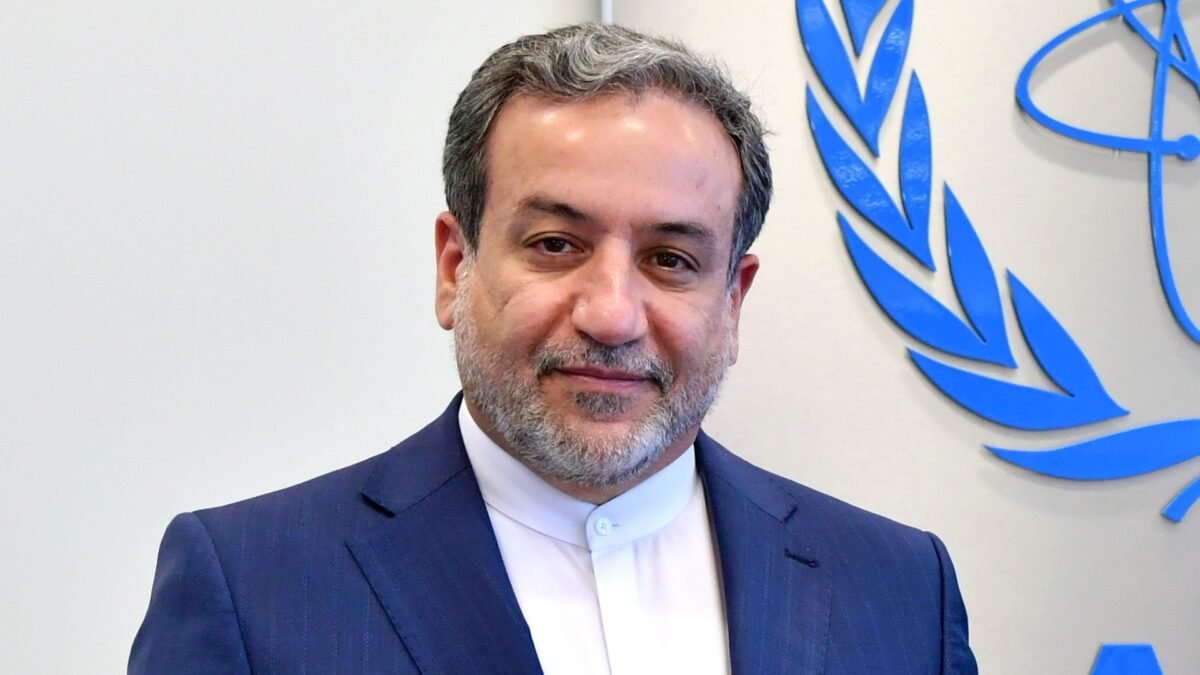
Iran has put a number on reopening the world’s most important oil chokepoint: two days. Foreign Minister Abbas Araghchi told Al Jazeera on Saturday that a plan worked out with Qatari mediators could restore shipping through the Strait of Hormuz within 48 hours of Washington acting on Tehran’s conditions, the clearest timetable yet for ending a disruption that has choked Gulf energy exports for eight months.
Oil traders took the hint. Brent crude fell around $2 a barrel in early Asian trade on Monday, according to Reuters, as Iranian and Qatari officials held a third consecutive day of talks in Doha aimed at ending the war and reopening the strait. The move trimmed some of the war premium built into crude in recent weeks, but it changed nothing about physical supply, which remains constrained while Hormuz flows are disrupted.
Nothing is agreed. Washington has given no public response to the plan, and several of Tehran’s demands look difficult for the United States to accept quickly. But for the first time since the war began in February, the two sides are arguing about a timetable rather than about whether to talk at all, and that alone marks a shift in a conflict that has repeatedly looked closer to a new round of bombing than to a settlement.
A plan that shrank from seven days to two
Araghchi set out the proposal in an interview with Al Jazeera on Saturday, a day after Qatari mediators spent more than 12 hours in Tehran and as an Iranian delegation travelled to Doha to continue the consultations. According to the foreign minister, Tehran’s original proposal envisaged a seven-day implementation period for reopening the strait. Qatar then proposed cutting that to five days. The version now on the table, he said, brings it down to two.
“The Qatari side proposed shortening the implementation period of the Iranian proposal to five days. We have reached a proposal at this stage that reduces the implementation period to two days,” Araghchi said, according to Al Jazeera.
Under the sequencing he described, Washington would carry out a package of measures on the first day, and on the second day the strait would reopen and maritime traffic would return to normal. The plan is, in effect, a test of good faith: each side performs its part in full view of the other, with only a single day between them.
Araghchi was equally clear about what Tehran wants in return. The conditions, as he listed them, include lifting the sanctions imposed after the collapse of the Islamabad memorandum, reducing the United States military presence in the region, restoring oil waivers, and releasing all of Iran’s frozen funds, including about $6 billion held in Qatar. Tehran is also seeking formal recognition of shipping routes through the strait that it discussed with Oman, along with the closure of other routes, and an end to the conflict on all fronts, including Israel’s attacks on Lebanon.
“Reopening the Strait of Hormuz in accordance with our conditions paves the way for the resumption of negotiations with Washington regarding outstanding issues,” he said.
Iran’s top security official, Mohsen Rezaei, has drawn the line even more sharply. He has said repeatedly that no talks will take place and the strait will remain closed unless Tehran’s seven conditions are met, and he warned on Saturday that Iran would deliver devastating blows to any aggressor using new weaponry if the country is attacked, while maintaining that diplomacy remained possible if the conditions were fulfilled. Al Jazeera’s correspondent in Tehran, Resul Serdar Atas, reported that there was no remarkable flexibility in Iran’s position, with Tehran insisting on the same demands while negotiations continue.
The letter from Washington
The diplomatic opening follows a letter from Vice President JD Vance to Rezaei, sent earlier in the week on President Donald Trump’s instructions, according to the Wall Street Journal, in an effort to restart negotiations and head off further American military strikes. Rezaei said the letter showed a markedly changed tone from Washington, which he described as a very positive sign, and Araghchi said Iran had studied it in high-level meetings before responding.
“The American side’s attempt to open the door to dialogue and understanding more broadly is a positive step,” Araghchi told Al Jazeera. He added a warning of his own: if Washington’s goal in sending the letter was to stir up discord, it would be yet another mistake to add to its previous ones.
The communication reportedly outlined a framework for negotiations rather than specific peace terms, with the proposal envisaging direct talks under Vance’s leadership and Iran’s nuclear programme forming part of the discussions. Trump himself said on Thursday that Vance had contacted Iran to help it obtain medical supplies, according to Reuters, a notably softer framing than the language of ultimatums that has dominated the American side in recent weeks.
Araghchi played down talk of imminent meetings between the two sides. Reports of upcoming sessions were, he said, merely media speculation, and Iran sees no need to meet American officials at this stage. Whether Tehran holds direct or indirect talks with Washington, he said, depends on its conditions being met first. Mediators, he added, have presented proposals concerning the nuclear dossier, which Iran is reviewing as part of a second phase of the talks. Qatari and Pakistani mediators are continuing consultations on the conditions, and an aide to Araghchi has travelled to Doha.
Rouzbeh Parsi, an Iran analyst and affiliated researcher at Lund University, told Al Jazeera that any progress in the Tehran talks was most likely on the sequencing of the first steps needed to establish the barest of trust, without which further and bolder steps are not possible. That reading fits the shape of the two-day plan itself: it is less a peace deal than a choreography for the first 48 hours of one.
Washington has not answered
For all the movement in Doha, the American side has yet to say anything substantive about the proposal. Secretary of State Marco Rubio confirmed on Saturday that the Qatar-led talks were continuing, but said he did not know whether there was a specific timeframe for them, and that Trump had not yet decided whether to resume military action against Iran.
Trump, speaking to reporters on Sunday, said negotiations were going fine and that Iran wanted to make a deal, but added that Tehran was not very reliable and that he was in no great hurry to reach one. The same weekend, he repeated that the United States could still strike Iran’s remaining targets swiftly, saying there were one or two sites left to take care of and that the operation could be done in 10 minutes, and singling out Pickaxe Mountain, a suspected underground nuclear complex.
The tension between those two messages — talks going fine, strikes still on the table — is the central fact of the moment. It is also the reason the calendar matters so much. The United States holds its midterm elections on Tuesday, and much of the region expects the current holding pattern to last at least until the votes are counted. Abbas Khamayar, a former Iranian diplomat, told Al Jazeera he expects the situation to hold until after the elections.
Trump held a call with Israeli Prime Minister Benjamin Netanyahu on Saturday over whether and when to ramp up combat operations against Iran, according to American media reports. Axios, citing one American and one Israeli official, reported that Netanyahu pressed the president to strike Iran immediately after Tuesday’s elections, while Trump was eager to let negotiations play out. The Israeli source described the call as tough; the American source called it direct. Trump confirmed on Sunday that he had discussed Iran with Netanyahu, but would not elaborate.
Warnings on both sides
While the diplomats talk, the generals are still talking too. On Saturday, Iran’s Supreme Leader, Ayatollah Mojtaba Khamenei, ordered any renewed American or Israeli attack to be met with an immediate, impactful and geographically unrestricted response, in a written message to his three most senior commanders that was reported over the weekend. The armed forces chief of staff, Major-General Ali Abdollahi, said on Saturday that Iran would respond to any attack with immense force, with no geographical limits, and that Tehran would decide when any new war ends.
“We have a new stockpile of enemy targets and assets, and they are on our agenda,” Abdollahi said. “America and Israel will face an unimaginable response, and we are the ones who will determine the end of any new war.”
On Sunday, army spokesman Mohammad Akraminia warned that any renewed war with the United States could last longer than the previous round of fighting, and that the American president would not be in a position to dictate the timing or the conditions of its conclusion. Revolutionary Guards spokesman Hossein Mohebbi echoed the warning the same day, saying that in a conflict with America there are no geographical limitations and that a vast theatre has been defined for inflicting damage on the enemy.
Araghchi himself struck both notes at once. Iran does not rule out the possibility of an attack against it, he told Al Jazeera, and is prepared for all scenarios. “We have upgraded our weaponry, addressed our vulnerabilities, and tested new arms. Our forces are at the highest level of readiness,” he said. In the same interview, he said Iran hoped the other side would exercise rationality and choose diplomacy, and that Tehran remained prepared for both defence and diplomacy.
Tehran is also debating whether to maintain its longstanding ban on nuclear weapons if hostilities resume, according to Rezaei, though no decision has been taken on any change. The statement, reported in the Middle East Eye’s morning briefing, is a reminder that the nuclear question sits behind every other issue in the talks, and that it is the one subject on which a miscalculation would be hardest to reverse.
Why the strait matters
The Strait of Hormuz is the narrow passage between Iran and Oman that links the Persian Gulf to the open ocean, and it is the Gulf’s only outlet for the vast majority of its oil exports. Before the war, about 20 million barrels a day of crude oil and refined fuels moved through the channel, according to the United States Energy Information Administration, including nearly 15 million barrels a day of crude — roughly a third of global crude oil trade by sea.
The 2026 war showed what that concentration means. After American and Israeli strikes on Iran began on 28 February, Tehran declared the strait closed and daily ship transits fell by about 95 per cent in March, according to Clarksons shipping data cited by the United Nations trade body UNCTAD. Global oil supply dropped by 10.1 million barrels a day that month, a loss the International Energy Agency called the largest disruption in history. Brent crude’s spot price rose from $71.32 a barrel on 27 February to a 2026 high of $138.21 on 7 April, according to Energy Information Administration data.
The disruption has never fully ended. Shipping through the strait remains about 70 per cent below pre-conflict levels, according to the United Kingdom Maritime Trade Operations centre, which recorded 122 outbound and 155 inbound transits in the week to 28 October. The Washington Institute has counted 28 attacks on shipping in October and 113 since the war began. Brent settled at $117.64 a barrel on Friday, its highest close in six months, after gaining 13.6 per cent across October.
That is why a two-day reopening plan moved the market on Monday morning even though no deal exists. Traders are not pricing in a settlement; they are pricing in the possibility that one has become imaginable. The same logic explains why the move is so fragile. The weekend also brought claims of tankers striking mines in the strait, renewed Ukrainian attacks on Russian refineries, and lingering speculation about American strikes after Tuesday’s midterms, all of which point in the opposite direction. Until there is a concrete American response to the Iranian conditions, oil is likely to stay headline-driven, with sharp moves in both directions.
A war that has not stopped while diplomats talk
The talks in Doha are taking place against a war that has continued on every front. Iran’s Revolutionary Guards said on Sunday that tankers had struck mines in the Strait of Hormuz, a claim that has not been independently verified, and reports differed on how many vessels were involved. Iran has restricted passage through the waterway and attacked ships it says break its rules, while the United States has imposed a naval counter-blockade on Iranian ports.
In Yemen, the Saudi-led coalition said on Sunday that it had carried out an operation to neutralise resources used by the Houthi movement, in response to continued Houthi attacks on civilians and civilian targets in Saudi Arabia and Yemen. The coalition said the resources supported the Houthis’ war effort, particularly their ballistic missile and drone programmes. Separately, a Houthi missile landed near a government military site in Aden on Sunday, causing a loud explosion but no reported casualties, according to residents and a security official. Saudi civil defence said it had also responded to falling debris in the Mecca and Medina regions on Saturday after intercepting two Houthi missiles, a claim the Houthis denied, insisting they had not targeted the holy cities.
The United Arab Emirates, meanwhile, condemned the targeting of a Qatari carrier in the Gulf, and Qatar’s leaders joined France in calling for the reopening of Hormuz and the implementation of the Gaza ceasefire. Anwar Gargash, diplomatic adviser to the president of the United Arab Emirates, said on Sunday that his country hoped the exchanges would yield a breakthrough but was preparing for the worst. “We’re hoping that there is a diplomatic breakthrough,” he told a conference in Manama. “It is not the interest of the region to go through another round… But I think we’re also, as we’ve shown before, braced for the worst.”
The mediation itself has become a small coalition. Qatar has led the effort, with Pakistan working alongside it, and the Qatari delegation’s 12-hour session in Tehran on Friday was followed by three straight days of talks in Doha. OPEC+ producers, meeting online on Sunday, agreed in principle to hold December output targets steady, a decision that reflects the same uncertainty: nobody in the oil market is yet willing to bet that the strait will reopen, or that it will stay closed.
Analysis: Why It Matters
A deadline changes the negotiation
For eight months, the argument about Hormuz has been conducted in absolutes: open or closed, war or peace, conditions met or conditions ignored. A two-day timetable replaces those absolutes with something concrete and testable. Either Washington performs its measures on day one or it does not; either the ships move on day two or they do not. That is a deliberate design choice, and it tells us something about how the mediators understand the problem. The obstacle is not that the two sides disagree about the destination — both want the strait open and both want a negotiation — but that neither trusts the other to move first. A 48-hour sequence, with each step visible to the world, is the smallest possible unit of trust that can be built. If it works once, it can be repeated. If it fails, both sides will know exactly where and why, and the failure will be attributable rather than deniable. That is why the number matters more than the details: two days is short enough to be a real commitment and long enough to be verifiable.
The conditions are the hard part
The timetable is the easy half of the proposal. The conditions are not. Each of Tehran’s demands touches something Washington has treated as non-negotiable: sanctions relief after the collapse of a memorandum the Americans say Iran broke, the release of frozen funds including $6 billion held in Qatar, the restoration of oil waivers, a reduced American military presence in the region, and formal recognition of shipping routes that Iran drew up with Oman. Taken together, they would amount to the United States accepting, in substance, Iran’s version of what the strait is: a waterway whose rules Tehran sets. That is a political price no American administration pays lightly, least of all on the eve of an election. The gap between the two sides is therefore not a misunderstanding to be cleared up by better drafting. It is a genuine conflict of interest, and the two-day plan does not resolve it — it merely schedules the moment at which it must be confronted. The plan’s value is that it forces that confrontation into the open, in days rather than months.
The midterm clock governs everything
Nothing about this week makes sense without Tuesday’s American midterm elections. The former Iranian diplomat Abbas Khamayar told Al Jazeera he expects the current situation to hold until after the vote, and the reporting around Trump’s call with Netanyahu points the same way: the Israeli prime minister pressing for strikes immediately after the elections, the American president eager to let negotiations play out. Both sides are, in effect, waiting for the same event, for opposite reasons. For Trump, a strike before the election would be a gamble with voters already anxious about prices; a deal before the election would be a triumph he could claim. For Tehran, waiting costs little — the strait stays closed, the leverage stays in place — while acting now would spend that leverage before knowing who holds power in Washington afterwards. The danger is that a timetable designed to create trust can also create a deadline for war: if Tuesday passes without an American answer, the Iranians will read the silence as one, and the generals on both sides have already written their lines for what follows.
Oil markets are pricing hope, not a deal
Brent’s fall on Monday morning is the most honest indicator in this story, because it measures exactly what it claims to measure: the market’s assessment that a settlement has become slightly more likely than it was on Friday. But the move should not be mistaken for confidence. The price fell on a proposal, not an agreement, and on a proposal whose conditions Washington has not answered. Physical supply remains constrained, shipping remains about 70 per cent below pre-conflict levels, and the weekend’s unverified mine claims are a reminder that the waterway is still dangerous. Markets have made this mistake before in this war, rallying on ceasefire talk in April and then watching the price spike again when the fighting resumed. The right way to read Monday’s fall is as a signal to the negotiators rather than as a verdict on them: the world’s traders are telling both governments that a deal is worth a great deal of money, and that its absence is costing a great deal more.
The strait is leverage, and leverage cuts both ways
It is tempting to read the two-day offer as a sign that Iran is weakening, and there is some evidence for that reading: eight months of blockade, sanctions and strikes have put enormous pressure on the Iranian economy, and Tehran’s insistence on the release of frozen funds is a measure of how much it needs the money. But the offer is better understood as Iran monetising its leverage rather than surrendering it. The closure of Hormuz is the single most valuable card Tehran holds, and it is offering to play it for a defined price, on a defined timetable, in exchange for things that would strengthen its position for the next round: sanctions relief, restored oil waivers, freed funds, and recognised shipping routes. That is not a concession; it is a transaction. The risk for Washington is the mirror image: paying the price would remove the immediate crisis but leave Iran richer, better armed and more confident. The risk for Tehran is that the offer reveals the limits of the leverage itself, because a card that is never played eventually loses its power to frighten. Both sides know this, which is why the negotiation has taken eight months to reach a 48-hour plan.
What to Watch Next
- Any public American response to the conditions. A statement from Washington accepting, rejecting or amending even one of Tehran’s demands would be the first real movement since the Vance letter, and it would tell the market whether the two-day clock has started or stopped.
- Tuesday’s midterm elections and what follows. Watch whether Trump’s language changes once the votes are counted, and whether Netanyahu’s reported push for immediate strikes after the election gains traction in Washington.
- Whether the Doha talks produce a written text. Mediators have so far described proposals and frameworks; a document both sides have signed, even a short one, would be the first concrete evidence that the sequencing has been agreed rather than merely discussed.
- Tanker traffic and shipping advisories. United Kingdom Maritime Trade Operations bulletins, insurance rates and the number of transits through the strait will show before any announcement whether shipowners believe the waterway is becoming safer.
- The nuclear file. Rezaei’s disclosure that Tehran is debating its longstanding ban on nuclear weapons, and the mediators’ proposals on the nuclear dossier that Araghchi said Iran is reviewing, will shape whether any Hormuz deal becomes a wider settlement or remains a one-off transaction.
Sources
- Al Jazeera, “Iran FM says US outreach a ‘positive step’ as delegation in Qatar for talks”, 31 October 2026
- Reuters, via InvestingLive, “Oil slips as Iran says Qatar-brokered plan could reopen Hormuz in two days”, 2 November 2026
- Asian News International, “Araghchi says Iran, Qatar propose reopening Strait of Hormuz within two days if US meets Tehran’s conditions”, 1 November 2026
- The Business Standard, “Iran warns new war could last longer after Trump threatens strikes”, 2 November 2026
- XTB, “Morning Wrap: Oil falls after Qatar talks”, 2 November 2026

About the Author — advmannan1
Related Articles
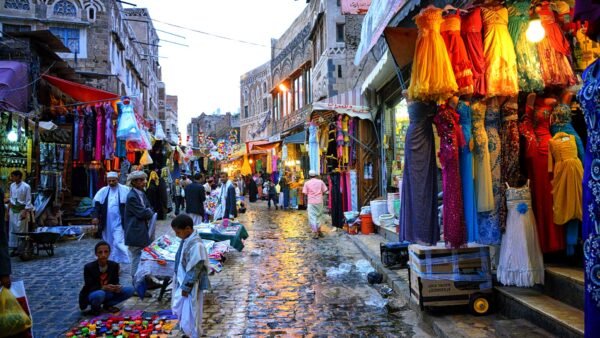
UN Demands Investigation After Rights Worker Dies in Houthi Custody in Yemen
The UN says Mohammad el Shami, a human rights officer held by the Houthis since June 2024, died…
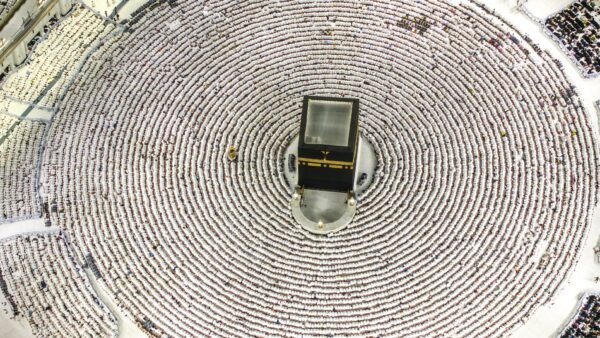
Saudi Arabia Says It Shot Down Houthi Drones Over Makkah and Madinah as Holy-City Attacks Escalate
Saudi air defences intercepted Houthi drones over Makkah and Madinah on Friday and Saturday, the Saudi-led coalition said,…
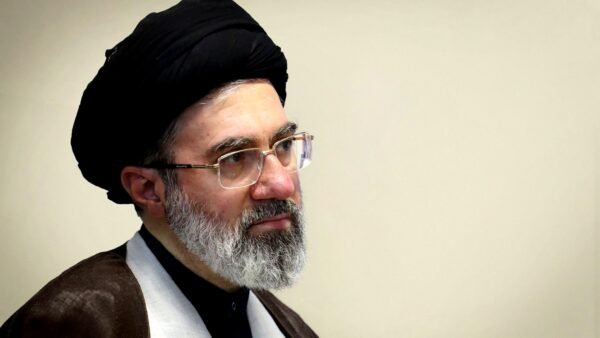
Khamenei Orders ‘Unrestricted’ Response to Any New US or Israeli Attack as War Fears Mount After Midterms
Iran's Supreme Leader Mojtaba Khamenei has ordered an immediate and geographically unrestricted military response to any renewed US…