
US Strips South Africa and Rwanda of Duty-Free Trade Access in AGOA Shake-Up

The United States will suspend South Africa and Rwanda from its flagship duty-free trade programme for sub-Saharan Africa from 1 January 2027, ending preferential access that has underpinned a quarter-century of commerce between Washington and the continent’s largest beneficiary. The decision, announced on Monday, is the sharpest escalation yet in the Trump administration’s deteriorating relationships with both governments, and it lands on an African economy already battered by tariffs, record unemployment and a scramble for new markets.
United States Trade Representative Jamieson Greer said on Monday that Washington would suspend the two countries from the African Growth and Opportunity Act, known as AGOA, after notifying Congress of the move, according to Reuters. “President Trump found that the governments of Rwanda and South Africa are engaging in practices that are inconsistent with AGOA’s eligibility criteria,” Mr Greer said in a statement.
Washington cited concerns about human rights, corruption and threats to American interests. In its statement, the administration said both countries were being suspended because of “barriers that undermine American trade and investment and practices that pose a threat to US national security and foreign policy interests in the region.” It also highlighted concerns over human rights and the rule of law in Rwanda, and, in South Africa, barriers to American trade and investment, corruption and threats to United States national security and foreign-policy interests, according to Bloomberg.
The suspensions take effect on 1 January 2027, giving exporters less than two months to adjust. The South African government has 60 days to submit its argument against removal, according to Bloomberg, but the notification to Congress is the formal step that sets the process in motion, and Pretoria had been bracing for bad news for weeks.
What AGOA is — and what South Africa stands to lose
AGOA was enacted by the United States Congress in 2000 and has been the centrepiece of American economic engagement with Africa ever since, offering duty-free access to the United States consumer market for thousands of products from eligible countries. The programme covers more than 1,800 products, and it was renewed until the end of 2028, although eligibility is reviewed every year by the American president, according to AFP.
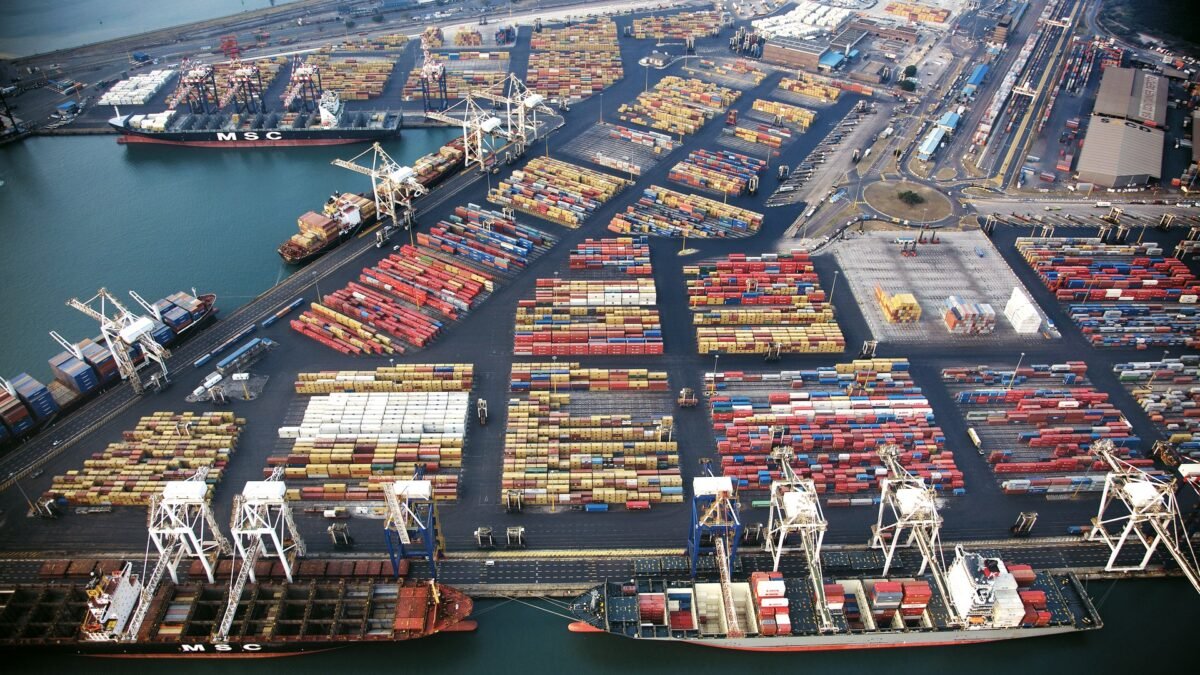
South Africa has been the largest beneficiary of the programme, exporting about $1.7 billion worth of goods to the United States under AGOA in 2025, according to Reuters. Its main exports under the scheme include car parts, citrus fruit and wine. Rwanda’s exports under the programme are smaller and include coffee and minerals.
Under AGOA, South Africa has exported vehicles, jewellery, ferroalloys, fruit and nuts, beverages and spirits to the United States, while the United States has in turn exported products including pork and poultry to South Africa, according to Bloomberg. Vehicles remain the country’s second-largest export earner to the United States after precious metals, according to the South African Revenue Service.
Yet the numbers also show how much the relationship has already shrunk. About 10 per cent of South African exports to the United States entered under the programme in 2025, down from 28 per cent the previous year, Trade Minister Parks Tau said, according to AFP. The South African trade ministry said on Monday that AGOA exports make up only about 10 per cent of its total exports to the United States and about 1 per cent of its total global exports.
“AGOA remains important to South Africa, but it does not constitute the totality of the economic relationship between South Africa and the United States,” the ministry said in a statement late on Monday, adding that it would support sectors affected by the decision and continue pursuing trade, investment and shared economic opportunities with the United States.
Removal from AGOA does not mean South Africa loses access to the American market. It simply means South African exports will no longer enter duty-free and will instead face the United States’ standard tariff regime — the normal duties applied to countries without a preferential trade arrangement, according to Bloomberg. The practical cost is real but measurable: exporters could face an additional most-favoured-nation tariff of approximately 3.4 per cent on top of existing American tariffs, according to the agricultural economist Wandile Sihlobo, the presidential envoy on agriculture and land. For products currently entering the American market at the 12.5 per cent rate set on so-called Liberation Day, that would push tariffs to 15.9 per cent, further eroding their competitiveness, Sihlobo said.
A relationship already frayed
For South Africa, the government had been bracing for bad news on its continued eligibility as ties between Washington and Pretoria have frayed since Mr Trump returned to the White House in 2025, according to Bloomberg. Pretoria had lobbied hard to retain its place in the programme, and President Cyril Ramaphosa said in recent weeks that South Africa must prepare for being cut out of it, and that it was already doing so by seeking new markets and signing trade deals with partners such as China, according to Reuters.
“I need, as president, to prepare us if it ever happens,” Mr Ramaphosa said in October, acknowledging that the economic impact on domestic employment would be devastating if the country were excluded, according to ThinkBusiness Africa. Trade Minister Parks Tau told reporters on Friday that the country was ready for whatever decision Washington reached, and that the United States would remain a valued partner.
The Trump administration has taken a series of measures against South Africa, according to Reuters. After returning to power, Mr Trump quickly froze American assistance to South Africa, claiming the government is allowing a genocide of white Afrikaner farmers — a claim Pretoria rejects as false. Mr Trump has also criticised the country’s black economic-empowerment laws, which were introduced to address inequalities created by apartheid, and the administration expelled Ebrahim Rasool, South Africa’s ambassador to Washington, in mid-March, accusing him of being a “race-baiting politician” who hates Mr Trump.
The United States has also criticised South Africa’s foreign policy, in particular the genocide case it brought against Israel at the International Court of Justice, according to Reuters. Israel denies genocide.
The American ambassador to South Africa made Washington’s view plain in a post on X on Monday. “It is regrettable that South African policies led to the termination of AGOA for South Africa,” he wrote. “This was a predictable and preventable outcome resulting from the rejection by South Africa’s government of real concerns raised by the US Government.”
South Africa is not starting from a position of strength. The country has been trying to agree a broader trade deal with Washington after Mr Trump unveiled harsh tariffs that penalise its automobile sector, potentially putting jobs at risk in a country with one of the highest levels of unemployment in the world, according to Bloomberg. The United States imposed a 30 per cent tariff on most South African imports in August 2025, and South African authorities warned at the time that an estimated 30,000 jobs were at risk if the response to the higher tariffs was mismanaged. The official unemployment rate was 32.9 per cent in the first quarter of 2025, according to Statistics South Africa, while youth unemployment had risen to 46.1 per cent.
The United States ranks as South Africa’s third-biggest trading partner, after China and the European Union. Bilateral trade between South Africa and the United States last year was $24.1 billion — less than half the $55.6 billion of commerce with China, according to data compiled by Bloomberg.
Rwanda and the war in eastern Congo
Rwanda’s suspension has a different and more immediate driver: the war in eastern Democratic Republic of Congo. Experts said the decision to suspend Rwanda was most likely linked to the conflict there, where Washington says Rwanda is backing rebels, according to Reuters. The United States has already imposed sanctions on a number of Rwandan individuals and institutions, including the military and a gold refinery.
The pressure on Kigali escalated sharply less than a week before the AGOA announcement. On 28 October, the United States Treasury Department sanctioned Rwanda’s Ministry of Defence and Zigama Credit and Savings Society, a financial institution that serves Rwanda’s security services, accusing them of supporting the M23 armed group in eastern Congo. Treasury Secretary Scott Bessent said the measures were intended to hold Rwanda accountable for commitments made under the Washington Accords for Peace and Prosperity, the peace agreement signed by the Congolese and Rwandan presidents in Washington on 4 December 2025.
“Rwanda must halt its support for M23 and withdraw its troops from eastern DRC,” Mr Bessent said in announcing the sanctions, according to the United States Department of State. The Treasury Department accused Rwanda’s Ministry of Defence of directing the deployment of thousands of Rwanda Defence Force troops in North and South Kivu provinces, where they allegedly operated alongside M23 fighters and provided military equipment, supplies, logistical assistance and training. The new measures followed sanctions Washington imposed in March 2026 against the Rwanda Defence Force and four senior military officials over their alleged involvement in supporting the rebellion.
Rwanda has repeatedly denied supporting M23, maintaining that its security concerns are linked to the activities of the Democratic Forces for the Liberation of Rwanda, an armed group whose origins are associated with the 1994 genocide. The fighting has continued in eastern Congo despite the Washington Accords, and M23 maintains control over strategic areas, including Goma and Bukavu, the provincial capitals of North and South Kivu, which the group captured in early 2025.
There was no immediate reaction from Rwanda to the AGOA suspension, according to Reuters. Kigali is no stranger to the programme’s discipline: Rwanda has been subject to a partial suspension since 2018 that does not allow it to export apparel under AGOA, due to import tariffs that the United States considers a barrier to trade.
The contrast between the two suspensions is striking. South Africa is being punished, in Washington’s telling, for its domestic politics and its foreign policy. Rwanda is being punished, in Washington’s telling, for a war it is accused of fuelling next door. Both decisions use the same instrument — a trade programme built to reward good governance — as a lever of geopolitical pressure.
The cost on the ground
For South African exporters, the loss of AGOA will hit agriculture and manufacturing hardest. According to various estimates and research, being excluded from AGOA will cost around 3,000 jobs in those sectors and close to 10,000 overall, according to Bloomberg. Those figures sit on top of the damage already done by the 30 per cent tariff, and they fall on an economy where work is already scarce.
The automotive industry is the most exposed. Vehicles are South Africa’s second-largest export to the United States, and the industry directly supports 86,000 manufacturing jobs and up to 125,000 jobs including sub-contractors, according to the employer group Naamsa. The trade union Solidarity said it feared the economic consequences could extend well beyond agriculture, particularly affecting the automotive industry and other export-oriented sectors, potentially placing thousands of jobs at risk, and it urged the government to repair relations with Washington immediately.
Agriculture faces a quieter but more widespread squeeze. South African agriculture faced tariffs of around 30 per cent in 2025 yet still exported an estimated $504 million worth of goods to the United States, down just 3 per cent from the previous year, according to Food For Mzansi. Exports subsequently rose 56 per cent between the first and second quarters of 2026, reaching $123 million, helped largely by the reduction in tariffs from 30 per cent to 12.5 per cent. The United States accounts for approximately 4 per cent of South Africa’s agricultural exports, including citrus, berries, grapes, wine, fruit juices, apples, pears and nuts.
That small share hides deep local dependence. The United States accounted for 28.85 per cent of South African litchi exports during the 2025-26 season, and citrus producers in particular regions have longstanding commercial relationships with American buyers, according to Food For Mzansi. AgriSA, the agricultural industry body, expressed concern about the loss of preferential access shortly after the announcement, warning that even modest tariff increases could have serious consequences for agricultural businesses operating on narrow margins, with effects extending to packhouses, transport operators, farmworkers and rural suppliers.
For Rwanda, the direct trade loss is smaller — coffee and minerals are its main AGOA exports — but the symbolism is sharper. Kigali is being told, in the same week it was sanctioned by the Treasury Department, that its access to the American market is now conditional on a war it says it is not fighting.
The political reaction
The decision drew a sharp rebuke from the top Democrat on the House Ways and Means Committee, the panel that oversees trade. “It’s yet another trade decision grounded in grievance that flies in the face of what responsible policy should be,” said Representative Richard Neal, urging a more thorough explanation “and what steps South Africa can take to be reinstated to the program,” according to Reuters.
Mr Neal’s intervention matters because AGOA is, at its heart, a congressional programme. It was created by Congress, it is renewed by Congress, and its eligibility criteria are written into American law. The administration can suspend a country, but only Congress can rewrite the rules — and the Democrats’ criticism signals that the decision will be contested as a matter of trade policy, not merely accepted as an executive act.
Ebenezer Obadare, an expert with the Council on Foreign Relations, said South Africa could still export to the United States, just on less favourable terms, and that the American move would likely prompt African nations to diversify their trade strategies, according to Reuters. Even if the next American administration changed its approach, he said, Washington could find that South Africa and others had found “new opportunities and new friends,” including China.
“I won’t be surprised if they don’t already have some alternatives lined up,” Mr Obadare said. “Ten percent is not a trivial number, but it’s not 90%, it’s not 60%.”
Pretoria is already moving in that direction. Mr Tau confirmed that his department is exploring trade agreements with the European Union, countries in Asia, Canada, India and the Middle East, and he pointed to the African Continental Free Trade Area, which aims to create a single continental market and progressively reduce tariffs on goods traded between African countries. China has implemented a zero-tariff scheme on select South African imports since May, offering one alternative pipeline for exporters squeezed out of the American market.
“Diversification is not a rejection of the US,” Mr Tau said after a meeting with partners at the National Economic Development and Labour Council. “Our door to the US is open and our economy is resilient.”
Analysis: Why It Matters
AGOA was never just a trade programme
AGOA was designed in 2000 as the economic arm of American engagement with Africa: duty-free access in exchange for movement towards market economies, the rule of law and good governance. For a quarter of a century it has been the one American policy towards Africa that survived changes of administration, because it served both sides — African exporters got the world’s largest consumer market, and Washington got a lever of influence that cost it almost nothing in tariff revenue. Suspending the programme’s largest beneficiary and one of its most strategically important partners is therefore not a technical adjustment. It is a statement that the administration now values the lever more than the relationship it was built to sustain.
The numbers are small; the signal is large
On the figures alone, this decision should be survivable. AGOA covers about a tenth of South Africa’s exports to the United States and about one per cent of its total global exports. The additional tariff is roughly three percentage points. The job losses, while painful for the families involved, are measured in thousands in an economy where unemployment is measured in millions. But trade policy is rarely only about the arithmetic. The suspension tells every other AGOA beneficiary that eligibility is now judged against a political standard that includes foreign-policy alignment, and it tells Pretoria that the relationship it spent a year trying to repair is, for now, beyond repair. That is the damage that will outlast the tariff schedule.
Rwanda and the price of a broken peace
The Rwanda suspension is the more consequential of the two, because it is attached to a live war. The Washington Accords were signed less than a year ago, in December 2025, with Mr Trump himself as witness, and they were supposed to end the fighting in eastern Congo while opening the region’s mineral wealth to American investment. Instead, the fighting has continued, M23 still holds Goma and Bukavu, and Washington has now sanctioned Rwanda’s defence ministry and cut its trade preferences within the same week. The message to Kigali is unmistakable: the administration believes its own peace deal is being violated, and it is reaching for economic punishment because diplomacy has not worked. The risk is that punishment hardens the very behaviour it is meant to change, and that the mineral supply chains the accords were meant to secure become collateral damage instead.
Diversification is real, but it is slow
South Africa’s response — accelerate diversification, deepen trade with China, the European Union and the rest of Africa — is the rational one, and it was already under way before Monday’s announcement. But diversification is measured in years, not weeks. Citrus growers who spent decades building relationships with American buyers cannot replace them with Chinese buyers by January. Car plants built around American demand cannot be retooled overnight. The African Continental Free Trade Area is a genuine long-term prize, but it is still being built. The gap between losing a market and finding a new one is where the jobs disappear, and that gap is the real cost of this decision.
What to watch next
- South Africa’s 60-day response: Pretoria has two months to submit its argument against removal. Watch whether it offers concrete concessions on the trade barriers and governance concerns Washington cited, or whether it treats the process as a formality and focuses entirely on diversification.
- The automotive sector: With vehicles the second-largest export to the United States and 86,000 manufacturing jobs directly at stake, any plant-level decisions — shift cuts, investment freezes, relocation — will be the first hard evidence of the damage.
- Rwanda and the M23 front line: If the AGOA suspension and the Treasury sanctions do not change Kigali’s calculus, Washington will face a choice between escalating further and accepting that its leverage is limited. Watch the fighting around Goma and Bukavu for the answer.
- The China pivot: Beijing’s zero-tariff scheme for select South African imports is already in place. Watch for new deals, state visits and investment announcements that show how quickly Pretoria can convert a threat into an alternative.
- Congress and the courts: Representative Neal’s criticism is the opening shot in a congressional argument about whether AGOA is being used as trade policy or as punishment. Watch for hearings, and for any legal challenge to the eligibility findings.
Sources
- Reuters — “US to suspend South Africa and Rwanda from duty-free trade access”, 2 November 2026
- Bloomberg via Moneyweb — “South Africa, Rwanda lose access to Agoa”, 2 November 2026
- AFP — “US to exclude South Africa, Rwanda from Africa duty-free trade deal”, 2 November 2026
- United States Department of State — “The United States Announces Sanctions in Response to Rwanda’s Destabilizing Activities in Eastern Democratic Republic of the Congo”, 28 October 2026
- Food For Mzansi — “Agoa blow: SA faces higher tariffs, but US market stays open”, 2 November 2026

About the Author — Abdul Mannan
Related Articles

Wall Street Rebounds as Apple Retakes World’s Most Valuable Crown After Brutal October Tech Rout
Wall Street steadied on Monday as the Dow climbed more than 400 points and Apple overtook Nvidia as…
South Korea’s Exports Jump 94% to $115 Billion as AI Chip Boom Puts a $1 Trillion Year Within Reach
South Korea's exports surged 93.7% in October to $115.28 billion, powered by a 259% jump in semiconductor shipments,…

Reliance Posts Record Quarterly Profit as Refining Windfall and Jio Listing Cap a Historic Week
Reliance Industries has reported the biggest quarterly profit in its history — Rs 29,550 crore — as a…