
Wall Street Rebounds as Apple Retakes World’s Most Valuable Crown After Brutal October Tech Rout

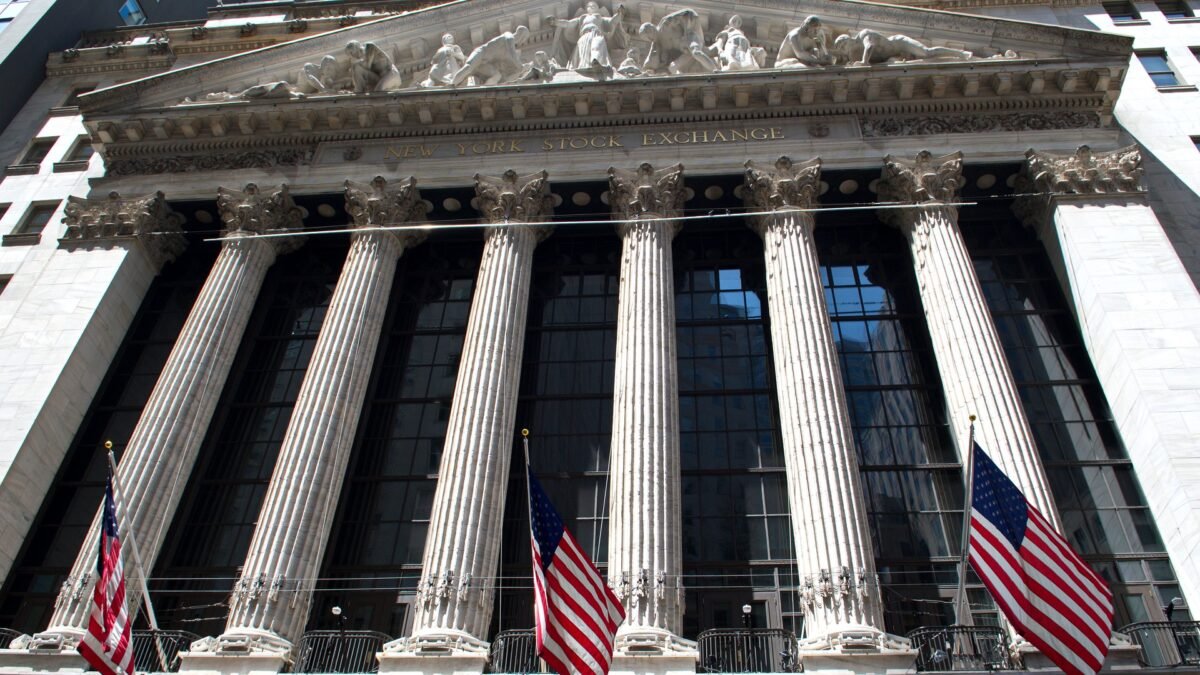
Wall Street steadied on Monday as investors returned to technology shares after a bruising October, with the Dow Jones Industrial Average climbing more than 400 points at the open and Apple reclaiming its place as the world’s most valuable listed company ahead of its quarterly results.
According to Reuters, shares bounced across Asia and in early United States trading as hopes for Apple’s earnings later in the session offered some relief from worries about the sheer scale of spending on artificial intelligence. The Dow Jones rose 407 points in early trading on Monday, while the S&P 500 gained 0.48 per cent and the Nasdaq Composite advanced 0.69 per cent, according to Invezz, which tracked the opening session.
The rebound followed one of the most punishing months for technology investors in years. The Nasdaq lost almost 7 per cent in October, its worst month since the tariff-driven rout of April 2025, according to Reuters. The Nasdaq-100 shed more than 2.5 trillion dollars in market value during the month and came close to entering correction territory, Invezz reported. Friday’s session had delivered the sharpest blow: the Nasdaq fell nearly 3 per cent, its worst day since June, the S&P 500 dropped 1.8 per cent and the Dow declined 1.1 per cent.
Apple, by contrast, has become an unlikely haven in the storm. The iPhone maker closed Friday worth about 5.03 trillion dollars, edging past Nvidia at 4.93 trillion dollars to become the world’s most valuable company for the first time since a brief spell in late July, according to Bloomberg figures cited by several outlets. Both companies fell on Friday — Apple by 1.2 per cent and Nvidia by 4.2 per cent — but Apple’s smaller decline was enough to take the crown.
Apple reports results for its fourth fiscal quarter after the market closes on Monday, with analysts expecting earnings per share of about 2 dollars on revenue of about 113 billion dollars, according to Reuters. That would compare with earnings of 1.85 dollars a share on revenue of about 102.5 billion dollars a year earlier. The results will be the first earnings call for John Ternus as chief executive since he succeeded Tim Cook on 1 September, and investors will be watching the December-quarter guidance as closely as the numbers themselves.
A brutal October ends with a question, not an answer
The October sell-off was not a single bad day but a month-long reassessment of the artificial intelligence trade. According to Reuters, concerns about negative cash flow and the sheer scale of AI capital expenditure saw the cost of insuring against corporate defaults blow out last week. Alphabet and Amazon both saw their free cash flow turn negative as their spending on data centres surged, a development that forced investors to ask how long the largest technology companies can keep spending at this pace before the returns arrive.
Goldman Sachs analysts expect capital expenditure by the giant cloud companies known as hyperscalers to almost double to 800 billion dollars this year and to rise further to 1.2 trillion dollars in 2027, according to Reuters. That scale of spending is without precedent in corporate history, and it is the reason the debate has become so heated. Ben Snider, Goldman’s chief United States equity strategist, wrote in a note that earnings results had underscored a fundamental challenge for investors: earnings growth is strong, but it is no longer accelerating. In his words, third-quarter results support the view that AI investment spending will continue to grow, but that the growth rate of AI capital expenditure is peaking.
Friday’s falls were concentrated where the doubts are sharpest. Intel plunged 28.6 per cent after its third-quarter results, its worst one-day decline since the 1980s, according to Invezz. The chipmaker issued a weaker-than-expected fourth-quarter revenue forecast and said it did not expect to generate positive cash flow this year. Reddit lost 29.2 per cent and AMD fell 10.9 per cent on the same day, while the Philadelphia Semiconductor Index dropped more than 7 per cent. South Korea’s KOSPI, heavily weighted towards memory chips, fell 5.57 per cent on Friday and lost 16 per cent across October, according to the Serrari Group’s market brief.
Monday brought a partial reversal. South Korea gained 2.6 per cent, Japan’s Nikkei firmed 0.3 per cent and China’s blue-chip index rose 1.3 per cent, according to Saxo Bank’s morning note. In premarket trading in New York, AMD rose 2.2 per cent, Nvidia gained 1.5 per cent and Micron climbed 2.7 per cent, according to CNBC figures cited by several outlets. Intel, however, kept falling, down about 1 per cent before the open and a further 2.78 per cent in early trading as investors continued to digest its broken outlook.
The broader market held up better than technology through the month. The S&P 500’s technology sector fell 6.8 per cent in October, its largest monthly drop since March 2025, according to Analytics Insight, but nine of the index’s eleven sectors advanced during the month, limiting the broader S&P 500 decline to less than 1 per cent. The Dow gained nearly 2 per cent in October as investors shifted towards more defensive sectors, according to Invezz. The United States economy, meanwhile, expanded at a 3.4 per cent annualised rate in the third quarter, accelerating from 2.2 per cent in the second quarter, according to Gallagher’s weekly markets update, which also noted that the Federal Reserve held interest rates unchanged at its October meeting at 3.75 to 4.00 per cent.
Apple’s quiet crown
Apple’s return to the top of the market-value table is a study in contrast. The company does not spend billions of dollars building data centres at the pace of its rivals, and that restraint has become its greatest asset in a market suddenly worried about spending. According to Reuters, Apple has been an oasis of relative calm, with its shares climbing for four months straight.
Apple’s shares are up about 27 per cent in 2026, close to triple Nvidia’s gain of about 9.7 per cent for the year, according to iPhone Wired, which tracked the Friday close. The company is projected to see its free cash flow rise 38 per cent to 142 billion dollars for its fiscal year that ended on 30 September, according to Bloomberg. That figure, more than any other, explains why investors have rotated towards Apple while punishing the heaviest spenders: it generates cash rather than consuming it.
Monday’s results will test whether that confidence is justified. Consensus expectations sit near the top of the range Apple guided on its July call, when it told investors to expect September-quarter revenue growth of 9 to 11 per cent. Analysts expect iPhone sales of about 56.48 billion dollars, a 15 per cent rise on a year earlier, according to figures compiled by Cailian Press. The December-quarter guidance, with Wall Street’s consensus near 153.4 billion dollars, is likely to matter more than the September numbers themselves, since it will show whether demand for the new iPhone 18 range is holding up into the holiday season.
Palantir also reports after Monday’s close, offering a very different read on technology demand. While Apple tests consumer spending, Palantir will show whether companies are actually buying artificial intelligence software at the pace the industry’s promises imply. AMD follows on Tuesday, with Arm and Qualcomm reporting on Wednesday, making this one of the most consequential earnings weeks of the year for the chip sector.
Intel’s warning shot
Intel’s collapse deserves attention on its own, because it was not a reaction to a weak quarter. The company’s third-quarter revenue reached 16.5 billion dollars, up 21 per cent on a year earlier, with its data centre and AI division up 78 per cent to 7.3 billion dollars. The shares fell anyway, because the outlook disappointed investors who were already questioning the returns from massive AI infrastructure spending. That is the heart of the current anxiety: even strong revenue growth is not enough if the cash being spent to achieve it keeps rising faster than the profits it produces.
Intel’s fall also raised the stakes for every other chip group reporting this week. AMD’s results on Tuesday now carry added weight, and traders will be looking for evidence of how demand is translating into revenue, margins and guidance across different chip businesses, according to TradingView’s market preview. Nvidia’s 1.6 per cent rise on Monday helped lift technology sentiment, but the company is down more than 10 per cent over the past month, and its guidance will be scrutinised when it reports later in the season.
The sell-off extended beyond the United States. Gold broke below 3,900 dollars an ounce and silver below 50 dollars, according to Saxo Bank, as investors reassessed haven assets after a volatile month. The Bank of Japan held its short-term interest rate at 1.25 per cent in an 8-to-1 vote, its highest level since 1995, and signalled room for further increases as inflation nears 2 per cent. China’s official manufacturing purchasing managers’ index fell to 49.3 in October from 50.1, returning to contraction as demand weakened and business confidence hit a seven-month low, according to Saxo Bank.
Oil falls as diplomacy flickers
Oil provided the other relief for markets on Monday. Brent crude futures fell 3.3 per cent to 109.70 dollars a barrel, while United States crude futures lost 3.4 per cent to 100.58 dollars a barrel, according to Reuters. The decline followed talks between Iranian and Qatari mediators aimed at halting the United States-Israel war on Iran, with Qatari and Iranian officials meeting for a third day to seek a deal before the United States midterm elections, according to Saxo Bank’s Asia market note.
The fall should be kept in perspective. Brent still rose 13.6 per cent in October, its fourth straight monthly gain, and settled at 113.43 dollars on Friday after a 2.63-dollar rise. Tankers were still being attacked in the Gulf, according to Reuters, and the Organisation of the Petroleum Exporting Countries and its allies kept oil output targets unchanged through December. Iran warned that new attacks would trigger retaliation, while President Donald Trump pledged no fresh strikes before the vote but left post-election action open, according to Saxo Bank.
The Binance episode added to the sense of a market under strain. The world’s biggest cryptocurrency exchange went back online on Sunday after hackers stole billions of dollars from the platform last week, and withdrawals followed as customers moved funds, according to Reuters. Bitcoin was last trading near 78,000 dollars, according to the WEEX daily market note.
The Fed, the midterms and a crowded week
The retreat in equities last month provided a reprieve for safe-haven bonds, and investors are now wondering whether a sustained sell-off in the stock market could deter the Federal Reserve from raising interest rates in December. According to Reuters, futures still imply a 72 per cent chance of a quarter-point rate rise, but only 55 basis points of total tightening is now priced in, compared with more than 70 basis points a month ago. Yields on 10-year Treasuries held at 4.931 per cent, well off their October peak of 5.3645 per cent, while two-year yields stood at 4.612 per cent.
Tuesday brings the United States midterm elections, which will decide control of the House of Representatives and the Senate, and which add a layer of political uncertainty to an already crowded economic calendar. According to Reuters, a win by Democrats in either or both houses could result in more political hurdles for data centres, an added wrinkle for the AI infrastructure story. Monday brings the influential Institute for Supply Management survey of manufacturing for October, followed by job openings data on Tuesday, services data on Wednesday and the all-important October employment report on Friday, 6 November.
The calendar underlines how much is riding on this week. Apple and Palantir report on Monday, AMD on Tuesday, and a run of consumer and technology names follows. Each result will be read not just for what it says about one company, but for what it says about the central question of this market: whether the hundreds of billions of dollars being poured into artificial intelligence infrastructure will produce returns quickly enough to justify the spending, or whether investors have begun to demand proof before they pay up again.
Analysis: Why It Matters
The AI trade has moved from faith to evidence
For two years, the artificial intelligence trade ran on a simple story: spend whatever it takes now, because the returns will be enormous later. October broke that story, not because the technology disappointed, but because the bills arrived. When Alphabet and Amazon both reported negative free cash flow, the market’s question changed from whether AI will work to when it will pay. That is a much harder question, and it is the reason a 28.6 per cent fall in Intel could happen on the same day the company reported revenue growth of 21 per cent. Investors are no longer rewarding the scale of the spending; they are asking for the receipts. The companies that can show cash generation, like Apple, are being rewarded. The companies that can only show spending are being punished. That shift, if it holds, changes the rules for every technology company planning its next round of investment.
Apple’s crown is a verdict on discipline, not just size
Apple overtaking Nvidia is not merely a change in a league table. It is the market’s verdict on two different philosophies. Nvidia built the picks and shovels of the AI boom and was rewarded with the top spot for more than a year. Apple spent far less on infrastructure, kept its cash, and let its consumer business do the work. The fact that Apple is now worth more, with a lead of roughly 100 billion dollars, tells us that investors have started to value discipline over ambition. That does not mean Nvidia’s story is over — its chips remain the foundation of the AI build-out — but it does mean the market is no longer willing to assume that the biggest spender wins. The crown is narrow, with less than two per cent separating the two companies, and it could change hands again with a single earnings report. But the signal it sends about what investors now prize is unmistakable.
The rebound is real, but it is not yet a recovery
Monday’s gains were welcome, but they should not be mistaken for a resolution. A 407-point rise in the Dow and a 0.69 per cent gain in the Nasdaq recover only a fraction of what October took away, and the Nasdaq remains close to correction territory after losing more than 2.5 trillion dollars of value in a month. The rebound was also narrow in character: chip stocks bounced because they had fallen furthest, not because the underlying doubts had been answered. Intel kept falling on Monday, a reminder that the market is now discriminating between companies rather than lifting the whole sector. A genuine recovery will require evidence — from Apple, from AMD, from Palantir — that the spending is producing revenue and margins, not just headlines. Until that evidence arrives, Monday looks more like a pause for breath than a turn in the tide.
The midterm elections are now a market event
It is unusual for a midterm election to feature so directly in a market story, but this one does, because the AI build-out has become a political question. Data centres need power, land, water and permits, and a change in control of either house of Congress could slow or complicate the approvals on which the infrastructure boom depends. The election also matters for the oil price, since the diplomatic track with Iran is explicitly tied to the electoral calendar, with both sides waiting to see the result before deciding their next move. Investors who normally ignore Washington are being forced to watch it, and the combination of an election, a jobs report and a heavy earnings week in the same five days makes this one of the most event-dense weeks of the year.
The global picture is fragmenting
Look beyond the United States and the picture is uneven. South Korea’s market fell 16 per cent in October and then rose 2.6 per cent on Monday, a whipsaw that reflects its dependence on the memory-chip cycle. Japan’s central bank is moving in the opposite direction to the Federal Reserve, holding rates at their highest since 1995 and signalling more rises. China’s manufacturing has slipped back into contraction. These are not separate stories: they are the same story told in different places, of a world economy trying to work out whether the AI investment boom is a durable source of growth or a bubble that is beginning to leak. The answer will not come from one market or one quarter, but the evidence is now accumulating fast, and this week will add a great deal of it.
What to Watch Next
- Apple’s results after Monday’s close. Earnings per share near 2 dollars and revenue near 113 billion dollars are expected, but the December-quarter guidance, with consensus near 153.4 billion dollars, is the number that will move the market. A weak guide would put Apple’s newly won crown at immediate risk.
- AMD on Tuesday and the chip earnings run. After Intel’s collapse, AMD, Arm and Qualcomm must show that chip demand is converting into revenue and margins. Any sign of weakening orders would deepen the sell-off in semiconductors.
- The United States midterm elections on Tuesday. Control of the House and Senate will shape the regulatory path for data centres and the diplomatic calendar with Iran. Markets will react first to the result and then to what it means for spending and energy policy.
- The October jobs report on Friday, 6 November. With the Federal Reserve’s December decision in the balance, a weak payrolls number could take a rate rise off the table, while a strong one would reinforce the case for tightening despite the market turmoil.
- Oil and the Iran diplomacy track. Brent fell on hopes of a deal, but it remains above 109 dollars and tankers are still being attacked in the Gulf. Any breakdown in the talks, or any strike after the midterms, would send crude sharply higher and unsettle the fragile rebound in equities.
Sources
- Reuters — “Stocks bounce as Apple earnings near, oil falls” (Wayne Cole, 2 November 2026)
- Invezz — “Dow Jones rises 400 points as AI stocks rebound and oil prices fall” (2 November 2026)
- Invezz — “Nasdaq-100 futures gain 240 pts: Five things to know before Wall Street opens” (2 November 2026)
- TradingView — “Nasdaq Futures Rebound with Apple Earnings, US Midterm Elections Ahead” (2 November 2026)
- iPhone Wired — “Apple reclaims most valuable company title at $5.03 trillion ahead of Monday earnings” (2 November 2026)

About the Author — Abdul Mannan
Related Articles

South Korea’s Exports Jump 94% to $115 Billion as AI Chip Boom Puts a $1 Trillion Year Within Reach
South Korea's exports surged 93.7% in October to $115.28 billion, powered by a 259% jump in semiconductor shipments,…

Reliance Posts Record Quarterly Profit as Refining Windfall and Jio Listing Cap a Historic Week
Reliance Industries has reported the biggest quarterly profit in its history — Rs 29,550 crore — as a…

Qatar Shares Surge 4.6% as Gulf Markets Slide on Fears of Renewed US–Iran Conflict
Qatar's stock market posted its sharpest gain in more than eight years on Sunday, defying a regional slide…