
AFC Postpones 2027 Asian Cup by Almost a Year as War and Houthi Strikes Reach Saudi Arabia

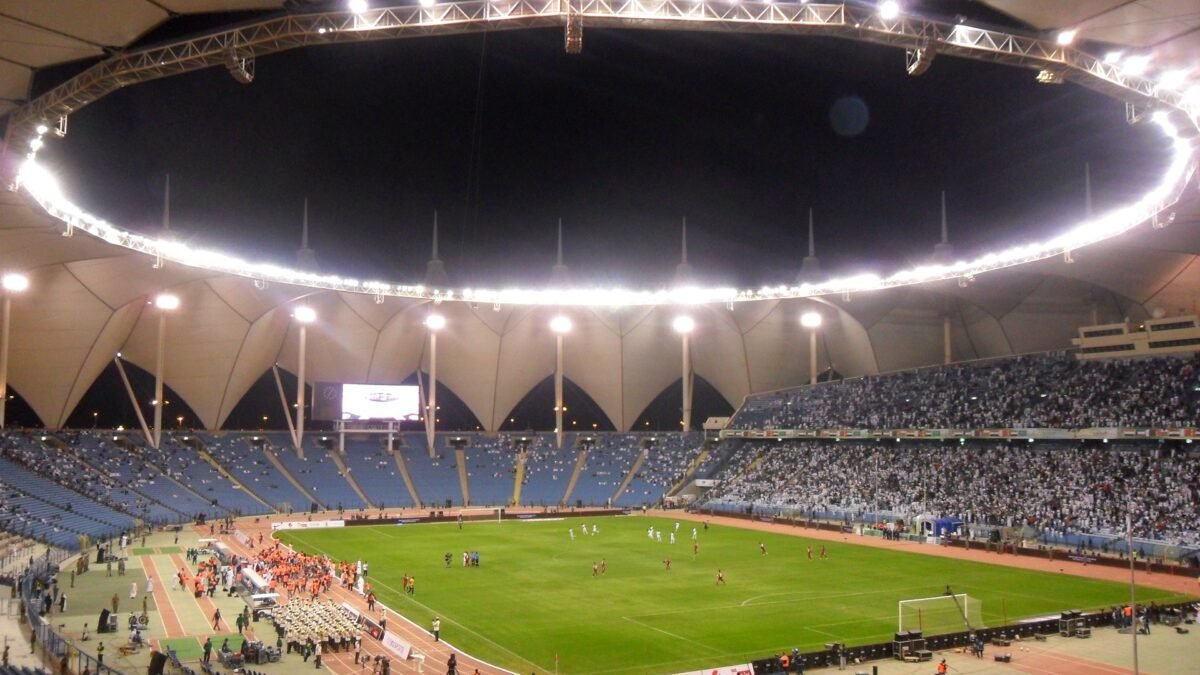
The 2027 Asian Cup, the biggest football tournament in Asia, has been postponed by almost a year after the war engulfing the Middle East reached the host country. The Asian Football Confederation (AFC) announced on Tuesday that the 24-team championship, due to be played in Saudi Arabia from 7 January to 5 February 2027, will now take place from 23 December 2027 to 21 January 2028.
According to the AFC, the decision was taken after “extensive discussions and close consultation” with the tournament’s local organising committee and the Saudi Arabian Football Federation. The new dates will be presented to FIFA for approval. The postponement makes the Asian Cup the biggest sporting event yet to be moved because of the conflict, and it comes less than a month after a Houthi missile strike on Riyadh’s international airport killed at least 12 people and wounded more than 300.
“The Organising Committee for AFC Asian Cup approved to reschedule the flagship national team tournament in light of the current exceptional circumstances arising from developments in the region, including substantial logistical complexities and travel disruptions,” the AFC said in a statement. “Exceptional circumstances have been created for the organisation and delivery of the competition as originally scheduled, making the postponement necessary in the interest of all participating teams, officials, spectators and other stakeholders.”
The tournament will still be held in Saudi Arabia, across the same three host cities — Riyadh, Jeddah and Al Khobar — and the same eight stadiums. But the new dates land in the middle of the European club season, one of the busiest periods in world football, and they push the final to within days of the start of the Islamic holy month of Ramadan. For the players, the fans and the organisers, almost nothing about the next 14 months will now go as planned.
The announcement
The AFC’s statement, issued from its headquarters in Kuala Lumpur on Tuesday, was short and carefully worded. It did not name the Houthis, the war in Yemen or the wider conflict with Iran. It spoke instead of “exceptional circumstances” and “developments in the region”. But nobody following the tournament needed the subtext spelled out. According to Reuters, the postponement followed weeks of speculation after the attack on Riyadh’s King Khalid International Airport, and it came after the AFC’s own president had publicly conceded that a delay might be necessary.
The AFC praised the Saudi organisers for their work so far. “The AFC commends SAFF and the LOC for their commitment to delivering a world-class tournament for the continent’s players and fans,” the statement said, adding that the confederation would “continue to work closely with the LOC, Participating Member Associations and its valued sponsors and broadcast and commercial partners and all stakeholders to stage a showpiece befitting the stature and operational excellence synonymous with Asia’s most prestigious men’s national team competition, while minimising the impact of the postponement.”
That final phrase — minimising the impact — will be tested in the months ahead. The draw for the tournament was already held in Riyadh in May, and the pairings are set: hosts Saudi Arabia were drawn to open the tournament against Palestine. Tickets, travel and broadcast schedules were all built around January. All of it must now be reworked, and the AFC has given no timetable for when supporters will learn what happens to tickets bought for the original dates.
FIFA’s role is also unresolved. According to the Associated Press, the new dates must be submitted to FIFA for approval, and that approval matters for a practical reason: only FIFA can mandate when clubs around the world must release their players for national-team duty. A December tournament without a FIFA-approved release window would leave national coaches negotiating one by one with clubs in the middle of their seasons.
Why the tournament had to move
The immediate trigger was the attack on Riyadh’s airport on Saturday 10 October. According to Saudi Arabia’s General Authority of Civil Aviation, a missile struck a terminal at King Khalid International Airport at around 3pm, killing at least 12 people — four Saudis, two Bangladeshis and one person each from the United States, Jordan, Palestine, Syria, Sudan and Egypt — and wounding 309 others. Some reports put the death toll at 13. It was, according to Reuters, the deadliest attack in Saudi Arabia in more than a decade.
The Houthis, the Iran-aligned movement that controls much of Yemen, claimed responsibility for the strike. A senior Houthi official, Mohammed al-Bukhaiti, described it as retaliation for Saudi airstrikes in Yemen, including attacks on civilian infrastructure. All flights at the airport, which serves a city of eight million people, were suspended and diverted, and operations were halted for days.
It was not an isolated incident. The 10 October strike was the third attack on the airport that week; according to Saudi officials, the two earlier attacks had killed four people and heavily damaged a Saudi commercial plane parked on the tarmac. The next day, a projectile struck Terminal 4, killing one Pakistani resident and injuring 11 others. Saudi-led coalition officials later said the airport had been attacked 20 times during October, and on 25 October the Houthis renewed their warning against using the airport at all, declaring that it remained a “military target” and that operations against it would continue.
The airport campaign is part of a wider escalation. According to Le Monde, Saudi airports have been threatened or targeted by missiles and drones fired from across the kingdom’s southern border almost daily since the Saudi-led coalition announced on 5 October that it would provide aerial support for “Operation Dawn of Yemen”, the Yemeni government forces’ mission against the Houthis. The Houthi strategy, as described by specialists quoted in the French newspaper, is a blockade for a blockade: if no aircraft can land at the airport in Yemen’s capital, Sanaa, then the same should apply in Saudi Arabia.
That campaign, in turn, sits inside a much larger war. The United States and Israel launched attacks on Iran in February, beginning a conflict that has now run for eight months. The Houthis, backed by Iran, have made Saudi Arabia — a United States ally — a pressure point in that wider war, striking airports, ports and energy installations. Yemen’s own civil war, which had been paused under a years-long truce, reignited in July. The result is a region in which a football tournament scheduled for January could no longer be treated as a normal event.
The signs had been building for weeks. According to the Associated Press, the AFC’s announcement “ended months of speculation about a postponement which, until recently, had been rejected by local organizers”. Last month, AFC president Sheikh Salman bin Ebrahim Al Khalifa indicated that the competition could be postponed by a year if necessary, and said a final decision could be delayed until late November. At an AFC meeting in Tokyo last month, a spokesman for the organising committee, Muhammed Q. Alghamdi, insisted that “daily life is ongoing in Saudi Arabia”. Within weeks, the confederation had reached the opposite conclusion.
Sport in Saudi Arabia had already felt the effects. According to the Associated Press, a number of sports events in the kingdom have been cancelled or postponed in recent weeks following the Houthi attacks. The Six Kings Slam, a lucrative tennis exhibition in Riyadh, was pushed back to December. The Asian Cup is the largest event yet to fall, and by a wide margin.
What the new dates mean
The rescheduled tournament will still feature 24 teams playing 51 matches in six groups, across eight venues in three cities. Riyadh, the capital, will host five of the eight stadiums, Jeddah two, and the new Aramco Stadium in Al Khobar one. The flagship venue is the King Fahd Sports City Stadium in Riyadh, a 70,000-capacity ground known as “the tent” for its roof design inspired by the Bedouin tent. It was due to host the opening match and the final, and it will still do so — a year later than planned.
The field is already set. Two-time defending champions Qatar, who won the tournament in 2019 and again on home soil in 2023, will return to defend their crown. Japan, the most successful nation in the competition’s history with four titles, South Korea and Australia are among the heavyweights who have qualified. Saudi Arabia, three-time champions in 1984, 1988 and 1996, will carry the hopes of the home crowd, just as they were meant to do in January.
The new dates create a problem the original January window did not. The tournament was deliberately placed in January, in the middle of the European winter break for some leagues and a relatively quiet period for others. December is different. According to the Australian Associated Press, the proposed new dates fall in “one of the busiest periods in European club football”, with league fixtures, domestic cups and continental competitions all running at full pace. Clubs will be asked to release their players at the height of their seasons, and the negotiations over who goes, and for how long, will be harder than they would have been in January.
The players affected are not marginal figures. According to TNT Sports, Uzbekistan’s Abdukodir Khusanov of Manchester City and Japan internationals Zion Suzuki, Ao Tanaka, Daizen Maeda and Daichi Kamada were among the Premier League players set to compete in January. Their clubs, and dozens of others across Europe, will now have to plan for their absence over Christmas and the new year — a period in which, in England especially, fixtures come thick and fast.
There is also the question of Ramadan. According to the Associated Press, the new dates would see the tournament end on 21 January 2028, “just days before the Islamic holy month of Ramadan opens”. That compresses the schedule for players and officials who observe the fast, and it leaves almost no slack if anything else goes wrong. The AFC’s statement did not mention Ramadan, but the proximity of the two will be impossible to ignore as the tournament approaches.
A tournament already shaped by war and disruption
This is the second Asian Cup in a row to be postponed. The 2023 edition was originally scheduled to be held in China, but was moved to Qatar and played in January and February 2024 because of the COVID-19 pandemic. Qatar stepped in at short notice and delivered a successful tournament, which it went on to win. The 2027 edition now joins it as a tournament defined, before a ball is kicked, by forces far beyond football.
The Asian Cup is one of the oldest continental championships in world football. The first edition was played in Hong Kong in 1956, four years before the first European Championship, and the 2027 tournament will be the 19th. It has grown from a four-team event into a 24-team, month-long competition that now shapes the careers of players across the continent and commands a global television audience. Its history has been interrupted before — by war, by politics and by disease — but never twice in succession.
For Saudi Arabia, the stakes go beyond a single tournament. The kingdom is due to host the 2034 World Cup, the biggest event in world sport, and it has spent the past decade building a sporting portfolio — from LIV Golf to heavyweight boxing, Formula One to the Spanish Super Cup — as part of a deliberate strategy to place itself at the centre of global sport. According to the Associated Press, the postponement raised immediate questions about “whether the 2034 World Cup host nation is currently safe enough for a major international soccer tournament”. The AFC’s decision does not answer that question, but the fact that it had to be asked at all is itself a measure of how far the conflict has reached.
The 2027 tournament was meant to be a showcase for that strategy: a month of football in new and renovated stadiums, with the final in the rebuilt King Fahd Sports City Stadium, whose capacity is being increased to around 72,000. Instead it has become the most visible casualty yet of a war that began hundreds of miles away and has now redrawn the sporting calendar of an entire continent.
Analysis: Why It Matters
War has redrawn the sporting calendar
For most of the past eight months, the war in the Middle East has been treated by the sporting world as something happening elsewhere — a backdrop to be managed, not a force that could cancel fixtures. The Asian Cup postponement ends that pretence. A continental championship, 24 nations, 51 matches, eight stadiums, billions of dollars of broadcast and sponsorship value: it has been moved, in plain language, because missiles are falling on the host country’s main airport. That is not a scheduling inconvenience. It is a recognition that the conflict has crossed a threshold, from a regional war into an event that reshapes the institutions of ordinary life — and football, for all its wealth and insulation, is part of ordinary life.
The significance is not only the postponement itself but the reason the AFC gave. “Exceptional circumstances arising from developments in the region, including substantial logistical complexities and travel disruptions” is the language of a governing body that cannot say what it means. Read plainly, it means teams, officials and fans could not reliably get in and out of the country. An airport that has been attacked 20 times in a month cannot be the gateway to a month-long international tournament. The AFC’s euphemism is understandable — governing bodies do not lightly name the wars that disrupt them — but it should not obscure the fact: the tournament moved because the host country is under attack.
A credibility test for Saudi Arabia’s sporting project
Saudi Arabia’s investment in sport has always carried an implicit promise: that the kingdom can host the world’s biggest events safely, whatever is happening around it. That promise was already under strain before October, as the Houthi campaign gathered pace. The airport attack, and now the Asian Cup postponement, put the strain in public view.
The kingdom’s response so far has been to insist that life goes on. The organising committee’s spokesman said as much in Tokyo last month, and the Saudi energy ministry kept the 25th World Energy Congress running in Riyadh the day after the airport attack. That resilience is real, and it matters — a country of 30 million people cannot simply stop. But resilience is not the same as insulation, and the Asian Cup decision shows that the rest of the world no longer accepts the distinction. The AFC, FIFA, the broadcasters and the sponsors all have their own thresholds for risk, and the airport campaign pushed the tournament past them.
The question now is what this means for 2034. The World Cup is eight years away, and much can change — wars end, truces hold, airports are rebuilt. But the postponement will be remembered when the time comes to assess Saudi Arabia’s readiness, and it will be remembered by the same people who will have to decide whether to send their teams, their fans and their money. A country that could not host the Asian Cup on schedule in 2027 will have to work harder to convince the world it can host the World Cup in 2034.
The club-versus-country collision
Football’s calendar is already the most crowded in its history, and the Asian Cup’s move into December makes it worse. The original January dates were chosen precisely because they were the least disruptive option available: many European leagues pause or slow down in January, and the tournament fitted into a gap. December has no gap. It is the busiest month in the English season, a period of league, cup and European fixtures in which clubs play every three or four days.
The consequences will fall first on the players, and then on the clubs that employ them. A national-team coach selecting a squad for December will be asking clubs to release their best players at the worst possible moment, and the clubs will resist. FIFA’s approval of the new dates will settle the formal question of release, but it will not settle the resentment, or the quiet pressure on players to make themselves unavailable, or the injuries that follow when a player returns from a month of international football in mid-season.
There is a wider point here, too. The Asian Cup is one of several tournaments that have been squeezed by a calendar that no longer has room for them. The 2023 edition was moved by a pandemic; the 2027 edition by a war. Each time, the solution has been to push the tournament into someone else’s window — and each time, the cost has been borne by players and clubs who had planned for something else. At some point, the governing bodies will have to ask whether the calendar they have built can survive the world they have built it in.
A tournament living on borrowed time
Two postponements in a row should worry the AFC more than either one alone. A single delay can be explained away — a pandemic, a war, an act of God. Two in succession suggest something structural: a tournament whose place in the calendar is no longer secure, and a confederation that has lost the ability to guarantee its own flagship event will happen when it says it will.
The practical effects are already visible. Sponsors plan years ahead; broadcasters buy rights for specific windows; host cities build infrastructure to deadlines. Every postponement forces all of them to start again, and every restart costs money and goodwill. The AFC’s statement promised to “minimise the impact”, but the impact is already measured in the months of preparation that must be redone and the fans who bought flights and hotels for January.
There is also the sporting cost. A tournament played in December 2027 will feed into a different cycle from the one planned for January: the next World Cup qualifying campaign, the 2028 Olympic football tournament, the club seasons of 2027–28. Players who would have peaked in January will be asked to peak in December; teams that built their preparation around a January start must rebuild it. None of this is fatal to the tournament. But it is a reminder that in football, as in everything else, time is not free.
The fans and teams left in limbo
Behind the statements and the scheduling arguments are the people who were going to be there in January. Supporters who had booked flights to Riyadh, Jeddah and Al Khobar. Families who had planned holidays around the tournament. Volunteers who had signed up, and small businesses that had geared up for a month of visitors. None of them has yet been told what happens next.
The AFC’s statement said nothing about tickets, refunds or rebooking, and that silence will have been noticed. The confederation will have to answer those questions soon, and the answers will matter — not only for the fans, but for the credibility of the tournament itself. A governing body that moves a tournament by a year and leaves its supporters to sort out the consequences will find it harder to ask for their trust the next time.
The teams, too, are in limbo. Coaches had built their preparation around a January start: warm-up fixtures, training camps, squad announcements. All of that must now be rebuilt for December, a year later, with a different set of players in form and a different set of injuries to manage. For the smaller nations, whose preparations are the most fragile, the disruption will be the greatest.
What to Watch Next
- FIFA’s decision on the new dates. The AFC has said the December 2027 dates will be presented to FIFA for approval. That approval, and the player-release window that comes with it, will determine how much disruption the clubs and the national teams actually face.
- The Houthi campaign against Saudi airports. The postponement was driven by the attacks on Riyadh’s King Khalid International Airport. Whether those attacks continue, ease or escalate will shape not only the Asian Cup but every event Saudi Arabia hopes to host in the meantime.
- Tickets and refunds. Supporters who bought tickets and booked travel for January will want to know whether their tickets carry over, whether they can be refunded, and what happens to the fixtures they planned to attend.
- The knock-on effect on the football calendar. A December Asian Cup collides with the European club season and the build-up to Ramadan. Watch for how leagues, clubs and other confederations respond — and whether other tournaments are forced to move in turn.
- Saudi Arabia’s 2034 World Cup preparations. The postponement raises unavoidable questions about the kingdom’s readiness to host the World Cup. Watch for how the Saudi authorities answer them, and for what security assurances they offer to FIFA and to the football world.
Sources
- Asian Football Confederation — Important update on AFC Asian Cup Saudi Arabia 2027™ (official statement)
- Reuters — Asian Cup postponed until December 2027, AFC says
- TNT Sports — Asian Cup 2027: Tournament in Saudi Arabia postponed by almost a year due to ‘exceptional circumstances’ amid regional conflict
- Associated Press, via TSN — Asian Football Confederation postpones 2027 Asian Cup because of conflict in Middle East
- Le Monde — Saudi Arabia weighs response after deadliest Houthi attack on Riyadh in a decade

About the Author — Abdul Mannan
Related Articles
King Charles’s Former Horse Point Of Law Wins Melbourne Cup as Maher Trains Historic Trifecta
Point Of Law, bred by King Charles III and sold to Australian owners earlier this year, stormed home…
Glenn Maxwell Calls Time on International Cricket as ‘The Big Show’ Bows Out Without a Melbourne Farewell
Glenn Maxwell has retired from international cricket at 38, ending a 14-year career of three World Cup titles…

Mbappé Answers Ballon d’Or Defeat as Real Madrid Cruise 3-0 at Racing Santander to Keep Title Race Alive
Kylian Mbappé scored on his first outing since losing the Ballon d'Or to Harry Kane as Real Madrid…