
Glenn Maxwell Calls Time on International Cricket as ‘The Big Show’ Bows Out Without a Melbourne Farewell

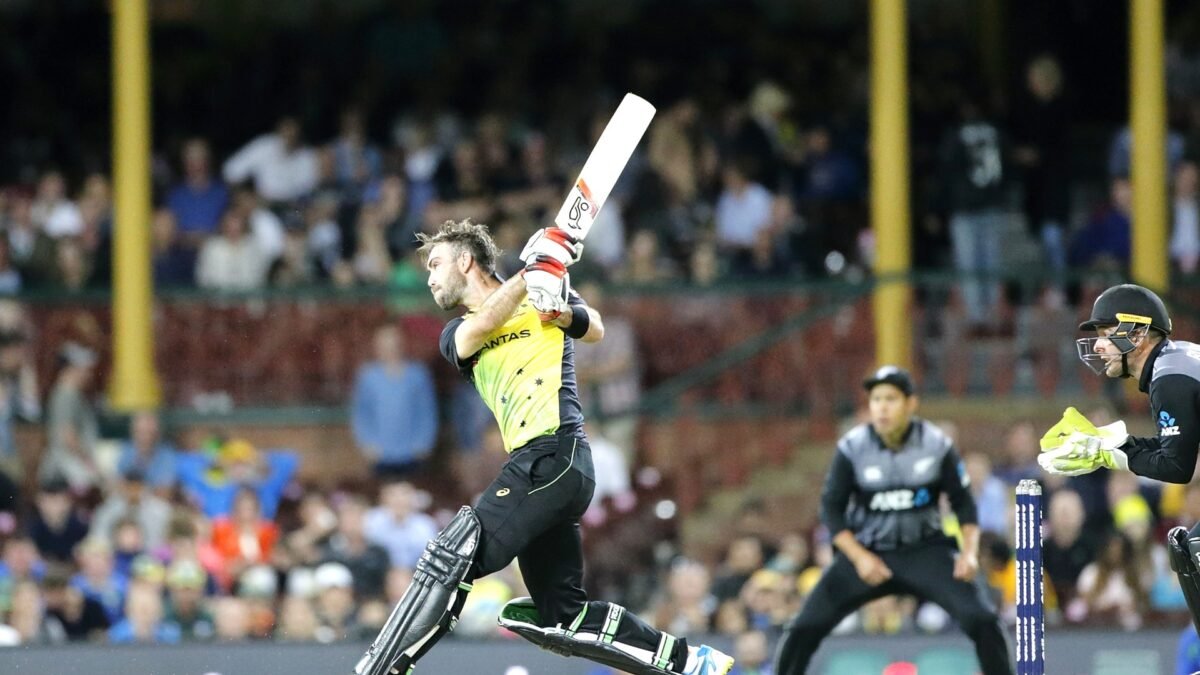
Glenn Maxwell has announced his retirement from international cricket, closing the curtain on one of the most audacious and unpredictable careers in the modern game. The 38-year-old Australian all-rounder confirmed the decision on Tuesday on The Final Word podcast, bringing an end to a 14-year international journey that delivered three World Cup titles, a record-equalling five Twenty20 international centuries and one of the greatest one-day innings ever played.
Maxwell also confirmed that he is walking away from first-class and List A cricket for Victoria, the state he represented throughout his career. He will continue to play Twenty20 franchise cricket, including for the Melbourne Stars in the Big Bash League, where his contract has been extended to the 2027-28 season, according to ESPNcricinfo.
“I’m going to be announcing my retirement from international cricket and domestic games for Victoria in the 50 over and the four-day stuff, red ball completely,” Maxwell told The Final Word, in an episode released on Tuesday, according to Reuters. “It’s probably a time where I probably need to spend a little bit more time investing in the body to make sure I can get through the remaining couple of tournaments I’ve got in my career.”
The announcement, reported by Reuters, ESPNcricinfo, Sky Sports, the Australian Associated Press and Fox Sports, ends months of uncertainty about the future of a player who had kept the door open to a Twenty20 return after retiring from one-day internationals in June last year. His final appearance for Australia came against Oman at the Twenty20 World Cup in Sri Lanka in February, a match in which he took two wickets for 13 runs from three overs and was not required to bat.
Maxwell retires as one of the defining white-ball cricketers of his generation. Across 286 international matches, he scored 7,226 runs and took 136 wickets, according to ESPNcricinfo and Fox Sports. He played 149 one-day internationals, 130 Twenty20 internationals and seven Tests, and he was a member of Australia’s victorious squads at the 2015 and 2023 50-over World Cups and the 2021 Twenty20 World Cup.
No farewell at the MCG
For Maxwell, the decision carried a tinge of regret. He had held out a small hope of one last appearance for Australia on his home ground, the Melbourne Cricket Ground, against England later this month. That hope ended on Monday, when Australia named its squad for the home series against England and Maxwell’s name was not in it.
“I suppose, a small hope or discussion that I might have been able to potentially get a send-off game at the MCG,” Maxwell said on the podcast, according to ESPNcricinfo. “But I can completely understand the direction they’re going with this squad. There’s going to be a lot of change, I suppose, over the next 12 to 24 months with the Olympics coming up [in 2028], and they’ve got to make sure that they get their eyeballs on a few young guys coming through and making sure that they’re getting exposed to international pressure that you probably can’t always get from a BBL fixture.”
Maxwell said he had considered trying to get himself ready for the England series, which includes five Twenty20 internationals beginning in Melbourne on 21 November, according to Fox Sports. Instead, he chose to prioritise his body, with a knee injection and eight weeks of rehabilitation planned to make sure he is fit for the Big Bash League season with the Stars.
“The option was there, but I was sort of ready to push the button on getting an injection on my knee to make sure I was ready for the BBL,” he said, according to ESPNcricinfo. “So there was sort of a positive either way. And as soon as that door was shut, I was able to start to put some time back into my body. Eight weeks of solid rehab again to make sure I’m strong and ready for the BBL coming up. So probably just the small fairy tale that you sort of see your heroes and idols sort of go through. You start to sort of let your mind drift towards that, and probably no other format I probably would have asked for it, except for this one, where I feel like it’s been almost felt like home over the last 15 years.”
The selectors’ decision was consistent with the direction Australia has taken since the 2026 Twenty20 World Cup. Maxwell was not picked for the three-match Twenty20 series in Bangladesh in June, when he was playing Major League Cricket in the United States instead, and the squad named on Monday for the England series continued that emphasis on youth, according to Fox Sports and ESPNcricinfo. Maxwell said there had been no pressure from the team management to retire and that the door had deliberately been left open after the World Cup.
“We probably had numerous discussions before and after the T20 World Cup,” he said on the podcast, according to ESPNcricinfo. “And it was pretty open ended. There wasn’t any pressure from that side [Australia team management], and we decided to sort of leave the door open. There was a couple of series that were coming up; they were going to look to the future, and we saw that in Bangladesh with guys getting their opportunity and performing really well.”
His farewell to Victorian cricket was, by his own account, the harder goodbye. He played two matches for Victoria in the One-Day Cup earlier this season before telling his state team-mates that his time with them was over.
“Post the last one-day game for Victoria, speaking to my team-mates and letting them know that that was going to be my last game for the state was probably harder than I thought it was going to be,” Maxwell said, according to ESPNcricinfo. “Knowing that they’ve played such a huge role in my whole career, every time I’ve come back, had great team-mates there and a lot of support from the state. Yeah, I certainly got a little bit choked up speaking in front of the group.”
The numbers behind “The Big Show”
Maxwell earned his nickname, “The Big Show”, for the speed of his scoring and the unorthodoxy of his shot selection, and the numbers bear it out. In one-day internationals he scored 3,990 runs in 149 matches, according to Reuters, including four centuries. In Twenty20 internationals he scored 2,897 runs in 130 matches at a strike rate of 154.42, according to ESPNcricinfo, with five centuries, a tally that leaves him level with India’s Rohit Sharma for the most hundreds in the format. He also took 128 wickets for Australia in the short formats with his off-spin, according to Reuters, and 136 wickets in total across all three formats, according to Sky Sports.
His Test career was brief by comparison, but it contained a landmark of its own. Maxwell played seven Tests, the last of them in 2017, scoring 339 runs with a best of 104 against India in Ranchi, according to ESPNcricinfo. That century made him one of only five Australian men, alongside Shane Watson, David Warner, Josh Inglis and Mitchell Marsh, to score a hundred in all three international formats, according to Sky Sports.
He made his international debut in a one-day international against Afghanistan in Sharjah in August 2012, and he soon became one of the most destructive white-ball batters of his generation. His game was built on power, invention and a willingness to attempt shots other batters would not contemplate: the reverse sweep against fast bowlers, the switch hit, the slog sweep played from outside leg stump. When it came off, as it often did, no total was safe and no bowling attack was secure.
The same qualities that made him box office also made him a divisive figure at times. His career contained long stretches in which the spectacular sat alongside the inconsistent, and his place in the side was debated more often than his talent ever was. Australia, though, kept coming back to him, because on his day he could win a match alone in the space of an hour.
The night in Mumbai that defined him
One innings defines Maxwell’s legacy more than any other, and it came at the Wankhede Stadium in Mumbai on 7 November 2023, in a group match of the 50-over World Cup against Afghanistan. Australia, chasing 292, had collapsed to 91 for seven. Maxwell, battling severe cramp and barely able to move in the searing heat, then played an innings that has been described as the greatest in one-day history.
He finished on 201 not out from 128 balls, with 21 fours and 10 sixes, sharing an unbroken 202-run partnership with captain Pat Cummins, who made 12 not out, as Australia won by three wickets, according to Sky Sports. At the time it was the second-fastest double century in one-day international history. Australia went on to win the World Cup, beating favourites India in the final in Ahmedabad.
The same tournament had already produced another Maxwell record. Against the Netherlands earlier in the competition he hit the fastest century in 50-over World Cup history, from 40 deliveries, according to Sky Sports. It was the kind of tournament that seemed to compress his entire career into a few weeks: the audacity, the power, the improbability and, in Mumbai, the sheer refusal to be beaten.
The innings also revealed something about Maxwell that the highlight reels do not always capture. He could not run. For long stretches he stood at the crease and hit the ball, trusting his hands and his eye to do what his legs could not. It was an innings built on will as much as skill, and it is the one that will be replayed whenever his career is remembered.
Pallekele, 2016: the first statement
Maxwell had announced himself as a Twenty20 force seven years earlier, in Pallekele, Sri Lanka, on 6 September 2016. Promoted to open the batting in place of the injured Aaron Finch, he smashed 145 not out from 65 balls, with 14 fours and nine sixes, as Australia posted 263 for three, at the time the highest total in Twenty20 international history. Australia won by 85 runs.
His century came from 49 balls, and the innings was, at the time, the second-highest individual score in Twenty20 internationals, behind only Finch’s 156 against England in 2013. It was his first Twenty20 international hundred, and it set the template for what followed: four more hundreds in the format, each of them destructive, each of them scored at a pace that bent the game out of shape.
The five hundreds he eventually accumulated in Twenty20 internationals remain a joint world record, shared with Rohit Sharma, and they are the clearest statistical expression of his gift. In a format built for power, Maxwell was among its most prolific century-makers, and he did it while batting most often in the middle order, where the time available to build an innings is far shorter than it is for an opener.
Three World Cups and the winning runs
Maxwell’s trophy cabinet is the envy of most cricketers. He was part of the Australia squad that won the 2015 50-over World Cup on home soil, and he was there again in Dubai in 2021 when Australia won the Twenty20 World Cup for the first time, hitting the winning runs in the final against New Zealand, according to ESPNcricinfo. Two years later he was a central figure in the 2023 50-over triumph in India.
Three global titles across two formats is a rare achievement, and it places Maxwell in a small group of Australian cricketers who have won the game’s biggest prizes more than once. He was not always the star of those campaigns, but he was often the player who changed their course, whether with a burst of runs, a spell of off-spin that broke a partnership, or a piece of fielding that lifted the whole side.
His fielding, in particular, deserves a place in any assessment of his career. Maxwell was one of the finest outfielders of his era, capable of catches and run-outs that turned matches, and his athleticism in the field was part of what made him so valuable to a side that prized versatility. He was, in the truest sense, a three-dimensional cricketer: a batter who could win games, a bowler who could be trusted with important overs, and a fielder who could produce moments of brilliance.
That versatility also explains why his career lasted as long as it did. Players who depend on one skill alone are easier to replace. Maxwell offered three, and even as his batting returns faded in his final years, his bowling and fielding kept him in contention for selection long after a specialist batter of similar output might have been moved on.
A career of comebacks
Maxwell’s career was never a smooth upward line. He made his Test debut against India in Hyderabad in 2013, but the longest format never became his home. He played only seven Tests, and his last came in 2017, the year of his Ranchi century. For the rest of his career he was, by his own acceptance and by selection, a white-ball specialist.
Off the field, his journey included some of the most difficult passages any modern cricketer has spoken about publicly. In October 2019 he stepped away from the game to deal with mental health difficulties, a decision that was widely praised for its honesty and that helped shift the conversation about wellbeing in Australian cricket. He returned, and returned well, but the break was a reminder that the most flamboyant performer in the side was also one of its most vulnerable.
In November 2022 he broke his leg at a friend’s birthday party, an injury that kept him out of the game for months and threatened his place at the 2023 World Cup. He recovered in time, and the tournament that followed became the finest of his career. During that same World Cup he suffered concussion after falling from a golf cart, missing the match against England, before returning to play the innings in Mumbai that would define him.
He retired from one-day international cricket in June last year, after the Champions Trophy, finishing with 3,990 runs in the format, according to Reuters. At the time he kept the Twenty20 door open, and he played the 2026 Twenty20 World Cup in India and Sri Lanka, where Australia were unable to progress past the group stage. His final match for his country, against Oman in February, was a quiet coda: two wickets, no time at the crease, and a nine-wicket win that could not save Australia’s campaign.
Since then he has remained active on the franchise circuit. He led the Belfast Wolves to the final of the inaugural European T20 Premier League in September, according to ESPNcricinfo, and he played Major League Cricket in the United States during the northern summer. His Melbourne Stars contract, now extended to the 2027-28 season, ensures that Australian crowds will still see him in the Big Bash League, even if the green and gold is now behind him.
Analysis: Why It Matters
The end of white-ball audacity
Maxwell’s retirement marks the passing of a particular kind of cricketer. The modern game is increasingly shaped by data, by match-ups and by risk management, and the players who thrive in it are often those who can execute a plan with machine-like consistency. Maxwell was the opposite of that. He played by instinct, he trusted his eye, and he attempted things that no analyst would recommend and no coach would draw on a whiteboard. His retirement does not mean that style of cricket is gone, but it does mean that its most famous Australian exponent has left the international stage, and the game is a little more predictable for it.
That matters because cricket, for all its commercial growth, still depends on players who make people stop what they are doing and watch. Maxwell was one of those players. A crowd that had seen him once did not forget him, and a child who watched him reverse-sweep a fast bowler for six did not need to be told that cricket could be thrilling. The sport’s administrators talk often about attracting new audiences; players like Maxwell did the work for them, one impossible shot at a time.
Why the 201 not out will outlive every statistic
Statistics fade. Records are broken, averages are revised, and the numbers that seem permanent in one decade look ordinary in the next. What endures are the innings that people remember where they were when they saw them, and Maxwell’s 201 not out against Afghanistan is one of those innings. It will be replayed for as long as cricket is played, not because of the runs alone, but because of the circumstances: 91 for seven, a body that would not cooperate, a World Cup at stake, and a player who simply refused to accept the ending that the match seemed to demand.
There is also a deeper point. The innings is often described as the greatest in one-day history, and that judgement rests on more than the score. Great innings are usually defined by technique or by context; this one was defined by both, and by something else besides, which was the visible struggle of a man playing through pain. It showed that the most valuable quality in a cricketer is not always talent. Sometimes it is the refusal to leave.
The farewell that never was, and what it says about Australian selection
There is a quiet sadness in the way Maxwell’s international career ended, without a farewell match at the Melbourne Cricket Ground, the ground he called home for 15 years. He understood the selectors’ reasoning, and he said so with grace, but the absence of a send-off still says something about how modern cricket treats its servants. The game has become so focused on the next cycle, the next tournament and the next generation that it sometimes forgets to mark the end of the current one.
Australia’s reasoning is not hard to follow. With the Los Angeles Olympics in 2028, at which cricket returns to the Games, and a home Twenty20 World Cup in the same year, co-hosted with New Zealand, the selectors want young players exposed to international pressure now, not in two years’ time. That is a defensible strategy, and Maxwell himself endorsed it. But it is also worth noting what is lost when a player of his standing is eased out without ceremony: the chance for a crowd to say thank you, and the chance for the player to hear it. Cricket is a business, but it is also a relationship between players and the people who watch them, and farewells are part of how that relationship is honoured.
The body, the franchise circuit and the modern cricketer’s arithmetic
Maxwell’s own explanation for his decision was strikingly practical: his body. At 38, with a knee that needs an injection and eight weeks of rehabilitation, he has done the arithmetic that every ageing athlete eventually does, and he has chosen the tournaments he can still play over the ones he cannot. The Big Bash League, the franchise leagues and the remaining years of his career offer him cricket on terms his body can meet. International cricket, with its travel, its intensity and its unforgiving schedule, no longer does.
This is the calculation that now shapes the careers of a growing number of players. The franchise circuit offers good money, shorter commitments and a degree of control over workload that international cricket cannot match. Maxwell is not the first player to make this choice, and he will not be the last. What is notable about his case is that he made it openly, without rancour, and with a clear-eyed account of what his body could still do. There is no sense of a player pushed out; there is the sense of a player who has read the evidence and acted on it.
What Australia loses, and what it gains
On the field, Australia loses a player who could change a match in a single over, a bowler who could be trusted in the middle overs, and a fielder who could produce the extraordinary. Those are not qualities that can be replaced by a single selection. The middle order will need a new finisher, the bowling attack will need a new part-time option, and the fielding unit will lose one of its standards. The transition will take time, and there will be matches in the next year or two when Australia misses him more than it expects to.
What Australia gains is clarity. The selectors have made their choice, the young players know where they stand, and the build towards the 2028 home World Cup and the Los Angeles Olympics can proceed without the ambiguity that surrounded Maxwell’s position for the past year. That clarity has a value of its own. The risk is that in gaining it, Australia has lost something harder to measure: the sense that anything can happen while Maxwell is at the crease. That sense was worth more than the runs it produced, and it will not be easily replaced.
What to Watch Next
- England’s white-ball tour: Australia begin a three-match one-day series against England at Perth’s Optus Stadium on 13 November, followed by five Twenty20 internationals starting in Melbourne on 21 November. The squads named on Monday, without Maxwell, will be the first real test of the new-look side.
- The Big Bash League: Maxwell’s eight weeks of rehabilitation are aimed at having him fit and strong for the Stars’ campaign. How he performs, and how his body holds up across the tournament, will shape how long his franchise career continues.
- Who fills the finisher’s role: Australia’s selectors have backed youth in the middle order. The coming series against England will show whether the next generation can do what Maxwell did: finish games from positions that look lost.
- The road to 2028: With a home Twenty20 World Cup co-hosted with New Zealand and cricket’s return to the Olympics in Los Angeles in the same year, Australia’s planning for both tournaments begins now. The players given their chance this summer are auditioning for those squads.
- Maxwell’s franchise future: With his Stars contract running to the 2027-28 season and franchise leagues around the world still keen on his services, the question is how long “The Big Show” keeps touring. His own words suggest the remaining tournaments of his career are now the priority, and the body will decide how many of them there are.
Sources
- Reuters: “‘Big Show’ Maxwell announces international retirement”
- ESPNcricinfo: “Glenn Maxwell announces retirement from international cricket”
- Sky Sports: “Australia’s Glenn Maxwell announces retirement from international cricket”
- Australian Associated Press: “Australian short-form cricket star announces retirement”
- Fox Sports Australia: “Glenn Maxwell retires from international cricket”

About the Author — Abdul Mannan
Related Articles

Mbappé Answers Ballon d’Or Defeat as Real Madrid Cruise 3-0 at Racing Santander to Keep Title Race Alive
Kylian Mbappé scored on his first outing since losing the Ballon d'Or to Harry Kane as Real Madrid…
Harry Kane Won the Ballon d’Or by Just 28 Points — Then Missed a Penalty in His First Match as the World’s Best Player
Harry Kane beat Kylian Mbappé by just 28 points in the closest Ballon d'Or vote under the current…

Kimi Antonelli Becomes Youngest-Ever Formula 1 World Champion at 20 as Verstappen Wins Chaotic Mexico City Grand Prix
Twenty-year-old Kimi Antonelli finished third in a chaotic Mexico City Grand Prix to become Formula 1's youngest-ever world…