
Russia Bombs Aid Centre and Power Grid in Deadliest Week of the War as Abu Dhabi Peace Talks Loom

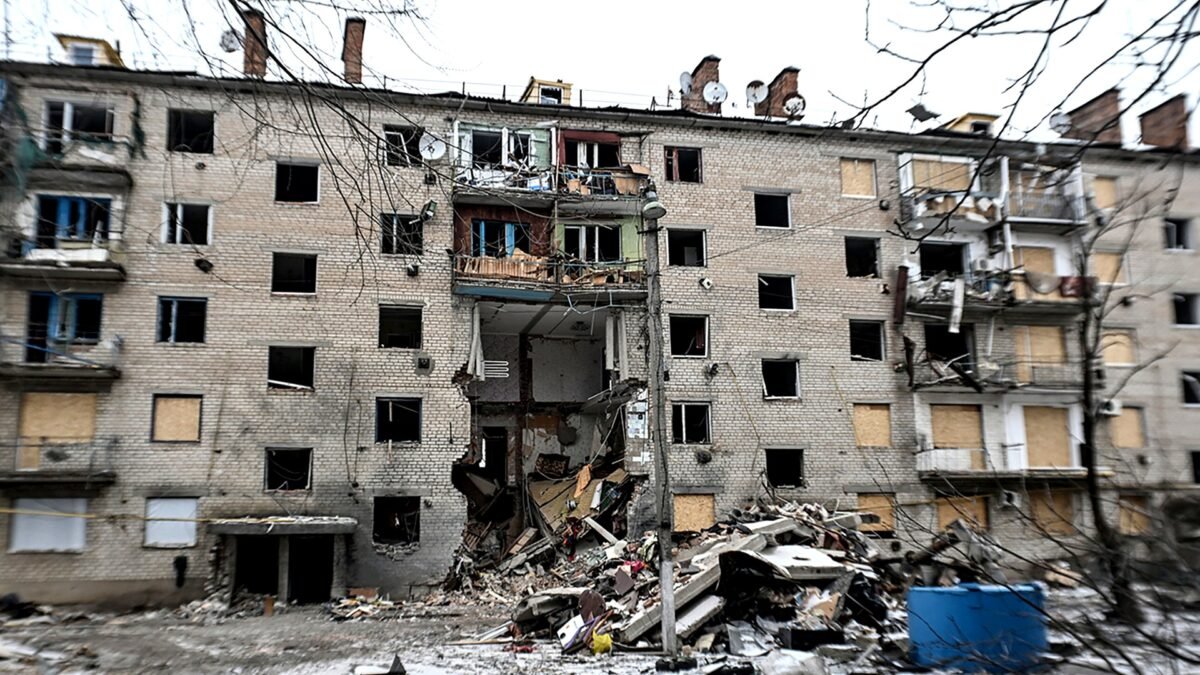
Russia has opened one of the deadliest weeks of its war in Ukraine with a double-tap bombing of a humanitarian aid centre that killed at least 33 people, followed hours later by one of the largest aerial assaults of the entire conflict against the country’s power grid — all of it landing a week before United States-brokered peace talks are due to resume in Abu Dhabi.
President Volodymyr Zelenskyy said at least 33 people were confirmed dead and about 50 more were still believed to be buried under the rubble after Russian forces dropped nine guided bombs on a school building in the village of Komyshuvakha, in the Zaporizhzhia region, on Monday, 2 November, according to Reuters. The building was being used as a shelter and as a humanitarian aid distribution centre, and residents had gathered there on their usual weekly day to collect food packages.
Zelenskyy described the attack as “one of the deadliest attacks of this war” and “one of the largest mass killings committed by Russia during this war”, according to CNN and the BBC. The strike came less than two days after the end of a brief humanitarian truce in the Russian-occupied town of Oleshky, agreed with the help of United States First Lady Melania Trump, which had allowed hundreds of starving residents to be evacuated.
Then, overnight into Tuesday, 3 November, Russia launched 289 drones, 17 ballistic missiles and 59 cruise missiles at power plants and substations across Ukraine, from the Black Sea port of Odesa in the south to Rivne in the west, according to figures given by Zelenskyy and reported by Reuters. Ukrainian officials described the overnight onslaught as one of the largest of the war, causing power cuts across the capital, Kyiv, and at least six other regions, and disrupting water supplies and transport in the capital.
Ukraine’s largest private generating company, DTEK, said three of its five thermal power plants had been knocked offline, according to Reuters. In Dnipro, in central Ukraine, two people were killed and about 20 wounded in the attacks, regional officials said, and Prime Minister Sergii Koretskyi said a train station, passenger carriages and locomotives had also been hit.
The timing was not lost on Kyiv. “It is very telling that all of this is happening on the day of the US congressional elections,” Zelenskyy said, according to Reuters. “The Russians believe that America will not notice this signal from them. But such terror must be noticed and stopped.”
A double-tap strike on people collecting aid
The bombing of Komyshuvakha followed a pattern Ukrainian officials and monitors say has become familiar: a first wave of strikes, then a second wave aimed at the people who rushed in to help. According to CNN, at least nine bombs hit the school building in the village, which lies about 20 kilometres from the front line in the Zaporizhzhia region. Local governor Mykhailo Semikin said the building was being used as a shelter and a humanitarian aid distribution centre, and that it had a newly built, European Union-funded reinforced basement designed to withstand most strikes. The force of the bombs caused the concrete structure to collapse and a fire broke out.
Semikin told Ukraine’s national television broadcast on Tuesday that Russia had used KAB-500 and FAB-3000 bombs in the attack, according to CNN. “To put this into perspective, this is a three-ton aerial bomb containing nearly 1.5 tons of explosive material; such weapons are primarily designed to destroy heavy concrete fortifications and bunkers,” he said.
Zelenskyy said the school was hit first, followed by a second attack on the area where people had sought refuge, according to CNN. The Ukrainian police said at least four of its officers were killed in the attack. They were named as Mykhailo Buzhenko and Mykola Balanda, who each had more than two decades of police service, and Mykhailo Romanov and Dmytro Besedin, who had each served as community police officers for more than a decade. “They were helping local residents take shelter in an underground school. A treacherous follow-up strike trapped everyone who was trying to escape,” the police said in a statement carried by CNN.
Two first responders, named locally as Denys Konovalenko and Oleksiy Sushchevsky, both aged 44, were also killed after rushing to the scene of the first strike, according to CNN. The State Emergency Service of Ukraine initially confirmed 24 deaths, including two rescuers and four police officers, and the toll was later updated to at least 33 dead, 10 injured and 50 missing, according to UPI, citing Governor Semikin.
Russia’s defence ministry said its forces had targeted Ukrainian military units in areas around Komyshuvakha and two other settlements in the Zaporizhzhia region, and said in a statement on Tuesday that up to 25 Ukrainian servicemen had been killed, while 15 vehicles and an electronic warfare station had also been destroyed, according to Reuters. However, BBC News Russian reported that there was no credible evidence the site was used by the military and no major military or industrial facilities in the settlement, according to reporting summarised by the BBC.
The United Nations Human Rights Monitoring Mission in Ukraine said the attack appeared to violate fundamental principles of international humanitarian law. “The timing and location of the humanitarian distribution was well publicized,” said Danielle Bell, the head of the mission, according to CNN and Le Monde. “Either the Russian armed forces knew that there was a humanitarian distribution taking place, or they failed to take the most basic steps to find out what was happening in this village they were planning to attack. In either case, this attack seems to have violated the most fundamental principles of international humanitarian law.”
The school in Komyshuvakha was built last year in an effort to keep classes going during wartime, according to CNN, but many civilians have since left as the fighting got closer to the village, and it is not currently used as a school. Instead, local authorities are using it as an administrative centre and humanitarian hub. Residents who remained in the village went there each week to collect aid packages, according to the BBC.
The largest assault on the grid in months
The overnight barrage that followed the Komyshuvakha bombing was aimed squarely at the energy system that keeps Ukraine’s cities lit and heated as winter approaches. Russia’s defence ministry said its troops had struck electricity facilities in several regions that supply power to military factories and the Ukrainian army, according to Reuters. It said it had hit four power plants and two electricity substations, as well as port infrastructure in Kiliia on the Danube river, and two cargo ships it said were delivering military equipment and dual-use cargo to the Ukrainian army. Reuters said it was not able to independently verify that information.
Ukraine’s energy minister, Denys Shmyhal, said three drones were directed at a substation that is crucial for the operation of the Khmelnytskyi Nuclear Power Plant, according to CNN. He said in a post on Telegram that actions like that threaten the nuclear safety of all of Europe, and that Ukraine had informed the International Atomic Energy Agency, the United Nations nuclear watchdog.
In more than four years of war, Russia has repeatedly targeted the Ukrainian energy system, destroying generation, distribution and heating facilities, according to Reuters. The attacks have worsened each year as winter approaches. With memories still fresh of last winter’s bitter cold, when Russian strikes left millions without power and heating for days at a time, many Ukrainians fear the months ahead, as several cities already suffer long outages, Reuters reported.
“This winter is going to be very hard,” said Olha Hyria, a 49-year-old resident of Dnipro in central Ukraine, according to Reuters. “Russia is striking power plants, heating plants, and that means this winter is going to be very difficult.” In Dnipro, resident Nataliia Danyliuk, 49, said residents had stocked up on water, power banks and other supplies. “We bought warm clothes and warm sleeping bags,” she said, according to Reuters. “Let them do whatever they want to us, but Ukraine has withstood, is standing, and will stand.”
Ukraine, for its part, has stepped up its strikes on Russian oil refineries this year, according to Reuters. Russian officials said Ukraine had set fire overnight to a major oil refinery in the city of Yaroslavl. The local governor, Mikhail Evrayev, said two employees were injured and emergency services were working to put out a fire at the site, according to Reuters.
Hospitals, a hospice and a train station
The Komyshuvakha bombing and the overnight barrage were not the only strikes on civilian sites in the space of 24 hours. According to the BBC, Russian strikes on an aid distribution centre, a hospice and a hospital killed at least 38 civilians in Ukraine over the past 24 hours, as the Kremlin announced it would take part in United States-brokered peace talks next week.
The devastating strikes continued on Monday, 2 November, and Tuesday, 3 November, targeting hospitals in Kharkiv, where 73 people were injured, and Kherson, where 46 were injured, according to Le Monde. The strike on Dnipro train station on 29 October had already killed 15 people, Le Monde reported, in a sign of how the campaign against civilian infrastructure has intensified in recent weeks.
According to Le Monde, hospitals in Kharkiv and Kherson, a humanitarian centre in the Zaporizhzhia region, the Dnipro train station, and shopping malls, gas stations and residential buildings across the country have all been hit as Russia increasingly intensifies its attacks on sites that have nothing to do with the war effort of the country it invaded four and a half years ago, with an ever-growing death toll.
The past few months have been exceptionally bloody for Ukrainian civilians, according to CNN. At least 33 people were killed last month when Russia hit two civilian buses in Kramatorsk in the Donetsk region. In August, 38 people were killed when a Russian drone strike on an ammunition depot near the capital triggered a large fire and multiple explosions that lasted hours in a residential area near Kyiv. And a mass Russian missile attack on Kyiv in July killed 33 people across the city in a coordinated barrage, CNN reported.
In the capital, Kyiv, now targeted almost daily, several symbolic thresholds have been crossed, according to Le Monde. Since late August, bombings have taken place in broad daylight rather than exclusively at night. In October, strikes also targeted bridges spanning the Dnipro River. The first use of a ballistic missile equipped with a cluster munition warhead, on the night of 21-22 October, marked another turning point: dispersing 58 submunitions over the city centre, capable of striking anyone within a 400-metre-by-400-metre area, fundamentally changes the situation, Le Monde reported, and the possibility that unexploded submunitions could remain in the streets adds another danger.
Talks in Abu Dhabi — under fire
The escalation lands in the middle of a renewed push for negotiations by the Trump administration. United States envoy Steve Witkoff recently held a meeting with Zelenskyy in Norway before flying to St Petersburg to meet Russian President Vladimir Putin, according to CNN. Witkoff announced a round of trilateral talks between the United States, Ukraine and Russia in Abu Dhabi on 10-11 November, covering “post-war security arrangements, de-escalation, and humanitarian measures”, according to reporting by Europe Says and Reuters.
The meeting in Abu Dhabi, on 10 and 11 November — the first direct Ukraine-Russia talks since February — is expected to discuss security guarantees, an “energy ceasefire” and a truce in the Black Sea to guarantee food exports, Zelenskyy said, according to Reuters. The talks are being led on the American side by Witkoff and Jared Kushner, according to Reuters.
German Chancellor Friedrich Merz hosted Zelenskyy in Berlin on Tuesday, 3 November, and said Russia must show it is serious about a ceasefire and a peace agreement at the Abu Dhabi talks. Merz said the new round of talks was “the right step” to help bring fighting to an end and that it was essential that Europe be part of the process, according to Reuters. “But I would also say it is important for Russia to finally engage in serious negotiations on a ceasefire and a subsequent peace agreement,” he told reporters. “I have not seen any sign of this so far.”
Merz said any lasting agreement would need to involve European countries, which have so far been largely shut out of efforts led by Trump’s envoys Witkoff and Kushner, according to Reuters. Germany has become Ukraine’s largest supporter in its war against Russia’s invasion since Donald Trump returned to the United States presidency last year and withdrew United States financial support, according to Reuters. Merz said Germany would continue its military support. “We are doing this in our own interests, in the interests of Europe, and in the interests of a stable political order in Europe,” he said, according to Reuters.
Looking ahead to a December meeting of leaders from the Group of 20 countries in Miami, Merz said Zelenskyy should also be present if Trump invited Putin. “In my view, it is completely unacceptable for third countries to discuss Ukraine’s future without involving Ukraine itself,” he said, according to Reuters. “But these must also genuinely lead to an end to hostilities.”
Ahead of those talks, the European Commission said it would host a meeting on Ukraine on Wednesday, 4 November, with the United States, NATO and European allies, as well as Ukraine itself, according to Reuters. Zelenskyy said they would discuss a “prosperity plan” and security guarantees for Ukraine. The transatlantic alliance said it would host further consultations on Thursday.
Separately, the first lady Melania Trump helped to secure a ceasefire in the occupied Ukrainian city of Oleshky, which enabled the evacuation of hundreds of civilians over the weekend, according to CNN. Trump’s office announced on Tuesday that the first lady would bring together representatives from Russia and Ukraine at the White House on Thursday, calling it “an extraordinary moment in American history”, CNN reported. The six-day local ceasefire in Oleshky, which ended on Sunday, 1 November, was the first humanitarian truce of its kind in more than four years of war and the longest local pause since the February 2022 full-scale invasion.
At a press conference in Berlin with Merz, Zelenskyy said the Komyshuvakha attack showed that Moscow was intent on killing people instead of building on the humanitarian ceasefire in and around Oleshky, according to Reuters. For Zelenskyy, Moscow’s objective is first and foremost political, aiming to torpedo “any hope of progress toward peace”, he said on Monday after the Komyshuvakha bombing, according to Le Monde. The bombing occurred the day after the end of the local ceasefire intended to evacuate residents from Oleshky — a ceasefire presented as the result of mediation by Melania Trump — just as Witkoff announced the upcoming talks between Moscow and Kyiv, scheduled for 10 and 11 November in Abu Dhabi, Le Monde reported.
Analysis: Why It Matters
The events of 2 and 3 November were not two separate stories — a bombing in a frontline village and a barrage against the power grid — but a single message, delivered in two registers. The first was aimed at civilians queuing for food. The second was aimed at the cities that will have to survive the winter. Both arrived in the same 48-hour window as the announcement of the first direct Ukraine-Russia talks in nine months, and on the very day Americans voted in midterm elections. That timing is the story, and it is what makes this week different from the many grim weeks that have come before it in a war now four and a half years old.
The timing is the message
Wars are fought with weapons, but they are also fought with calendars, and Moscow chose its calendar with care. The Komyshuvakha bombing came the day after the Oleshky ceasefire expired — a ceasefire that had been presented as proof that even this war could still produce humanitarian pauses, and that had been mediated with the involvement of the American first lady. To bomb an aid distribution centre the day after such a truce ends is not an accident of scheduling. It is a demonstration, and Zelenskyy read it exactly that way in Berlin, saying the attack showed Moscow was intent on killing people instead of building on the ceasefire. The overnight barrage then landed on election day in the United States, when Washington’s attention was fixed on its own politics. Zelenskyy’s complaint — that “the Russians believe that America will not notice this signal from them” — is both an accusation and a plea. The plea matters because the United States is the one actor whose pressure has moved this war’s diplomacy in 2026, and Moscow’s calculation appears to be that a distracted Washington is a permissive Washington. The risk in that calculation is that it may be wrong: nothing concentrates American attention quite like being seen to be ignored.
The energy war enters its hardest winter
The overnight assault of 289 drones, 17 ballistic missiles and 59 cruise missiles was described by Ukrainian officials as one of the largest of the war, and its target list tells its own story. This was not a strike on a single city or a single plant. It ran from Odesa on the Black Sea to Rivne in the west, hitting power plants and substations across the country, and it knocked three of DTEK’s five thermal power plants offline in a single night. That is the shape of a campaign designed to break a system, not to punish a place. Russia has attacked Ukraine’s energy infrastructure in every winter of this war, and the attacks have worsened each year as the cold approaches, as Reuters has documented. What is different this year is the starting point: several cities already suffer long outages before winter has properly begun, and last winter’s experience — millions without power and heating for days at a time in bitter cold — is fresh in every Ukrainian household. The residents of Dnipro stocking up on water, power banks, warm clothes and sleeping bags are not panicking; they are preparing for a winter they have been told, by the pattern of the last four years, is coming. A war that cannot be won on the front line can still be waged against the boiler room, and that is the war Ukraine now faces.
Abu Dhabi talks start under fire
The most dangerous thing about the timing is what it does to the diplomacy it precedes. The Abu Dhabi talks on 10-11 November are the first direct Ukraine-Russia talks since February, and their agenda — security guarantees, an “energy ceasefire” and a truce in the Black Sea to guarantee food exports — is ambitious. But negotiations do not happen in a vacuum, and the week before them has now been filled with the sound of the opposite of negotiation. When Witkoff lists “humanitarian efforts”, “steps toward peace” and even “postwar arrangements” as topics for discussion, Ukrainians are entitled to wonder how he interprets Moscow’s actions, as Le Monde put it: in Kyiv, every massacre is seen, beyond the intent to sow death and fear, as a message directed at Trump himself. The danger is not only that the talks fail — talks can fail and be resumed — but that they are staged as theatre while the war escalates around them, giving Moscow the appearance of engagement without the substance. Merz’s blunt verdict in Berlin, that he has “not seen any sign” of Russia engaging seriously, is the honest assessment of a European leader who has watched this pattern before. The test of Abu Dhabi will not be whether the delegations meet, but whether anything they agree survives the next night’s barrage.
Europe’s stake — and its exclusion
Merz’s hosting of Zelenskyy in Berlin was itself a statement about who is carrying this war now. Germany has become Ukraine’s largest supporter since the Trump administration withdrew American financial support, and Merz used the occasion to insist on something that should be obvious but has not been: that Europe must be part of the process that decides Ukraine’s future. His warning that it is “completely unacceptable for third countries to discuss Ukraine’s future without involving Ukraine itself” was aimed at the December G20 meeting in Miami, where Trump may invite Putin, but it applies just as much to the Abu Dhabi format, where European countries have so far been largely shut out of efforts led by Witkoff and Kushner. The European Commission’s meeting on Wednesday, with the United States, NATO, European allies and Ukraine, is an attempt to correct that — to put a “prosperity plan” and security guarantees on the table before the trilateral talks begin. But there is a gap between being consulted and being present, and Europe’s leverage depends on whether Washington treats its allies as partners in the negotiation or as an audience for it. The Black Sea shipping attacks off Romania and Bulgaria, which have surged in recent weeks according to Reuters, are a reminder that this war is already arriving on NATO’s doorstep; Europe does not need an invitation to be affected by it.
The law and the record
There is a reason the United Nations human rights mission’s language about Komyshuvakha was so precise. Danielle Bell did not say the attack was a tragedy; she said it “seems to have violated the most fundamental principles of international humanitarian law”, and she gave the reasoning: either the Russian armed forces knew a humanitarian distribution was taking place, or they failed to take the most basic steps to find out. The distribution was well publicised. The school was hit first, and then the shelter where survivors had fled — the classic double-tap pattern. The BBC’s finding that there was no credible evidence of military use at the site matters because it removes the only justification Moscow offered. This is not new ground for the law: in 2024 the International Criminal Court in The Hague issued arrest warrants for the defence minister, the chief of the general staff and other Russian officers for “crimes against humanity” in connection with their aerial bombing campaigns, according to Le Monde. But warrants and verdicts are slow, and bombs are fast. The record being built — by the United Nations mission, by the BBC, by Ukrainian police and emergency services naming the dead one by one — is the slow work of accountability in a war where the fast work is destruction. It matters because it is the only thing that will outlast the war itself.
What to Watch Next
- The European Commission meeting on Wednesday, 4 November: The Commission hosts the United States, NATO, European allies and Ukraine to discuss a “prosperity plan” and security guarantees. Watch for whether the meeting produces concrete commitments — above all on air defence — or only statements of support.
- The White House meeting on Thursday: Melania Trump is due to bring together representatives from Russia and Ukraine at the White House. Watch for whether the Oleshky model — a local, humanitarian pause — can be extended, or whether the week’s escalation has already closed that door.
- The power grid through the weekend: DTEK has three of its five thermal power plants offline. Watch how quickly repairs are made, whether emergency outages spread, and whether Russia follows up with a second wave aimed at the same facilities while they are down.
- The Komyshuvakha toll: About 50 people are still believed to be buried under the rubble. Watch for the updated casualty figures from Ukrainian officials, and for any response from Moscow beyond its claim that the target was military.
- Abu Dhabi on 10-11 November: The first direct Ukraine-Russia talks since February are expected to discuss security guarantees, an energy ceasefire and a Black Sea truce. Watch for whether the talks go ahead as planned, who sits at the table, and whether the bombardment pauses — or intensifies — as the date approaches.
Sources
- Reuters — Russia bombards Ukraine power grid before Abu Dhabi talks; Merz urges Moscow to engage
- CNN — Russian bombing of Ukrainian aid center is one of the war’s ‘deadliest attacks,’ Zelensky says
- Le Monde — In Ukraine, Russia intensifies strikes on civilian targets
- Reuters — Russia must show it is serious about ceasefire at Abu Dhabi talks, Germany’s Merz says
- Reuters — How NATO states on the Black Sea are being drawn into Ukraine war escalation

About the Author — Abdul Mannan
Related Articles
Russian Glide-Bomb Strike on Ukraine Aid Centre Kills at Least 31 in One of the War’s Deadliest Attacks on Civilians
At least 31 people were killed when Russian glide bombs hit a school doubling as a humanitarian aid…

South Korea to Reissue 168 Passports After President Lee’s Details Sat Exposed Online for Five Months
Passport numbers and birth dates of President Lee Jae Myung, his wife, cabinet ministers and his bodyguards sat…

Russia Confirms Abu Dhabi Peace Talks With Ukraine as US Pushes for a Breakthrough Before Winter
Russia has confirmed three-way peace talks with Ukraine and the United States in Abu Dhabi on 10–11 November…