
Russian Glide-Bomb Strike on Ukraine Aid Centre Kills at Least 31 in One of the War’s Deadliest Attacks on Civilians

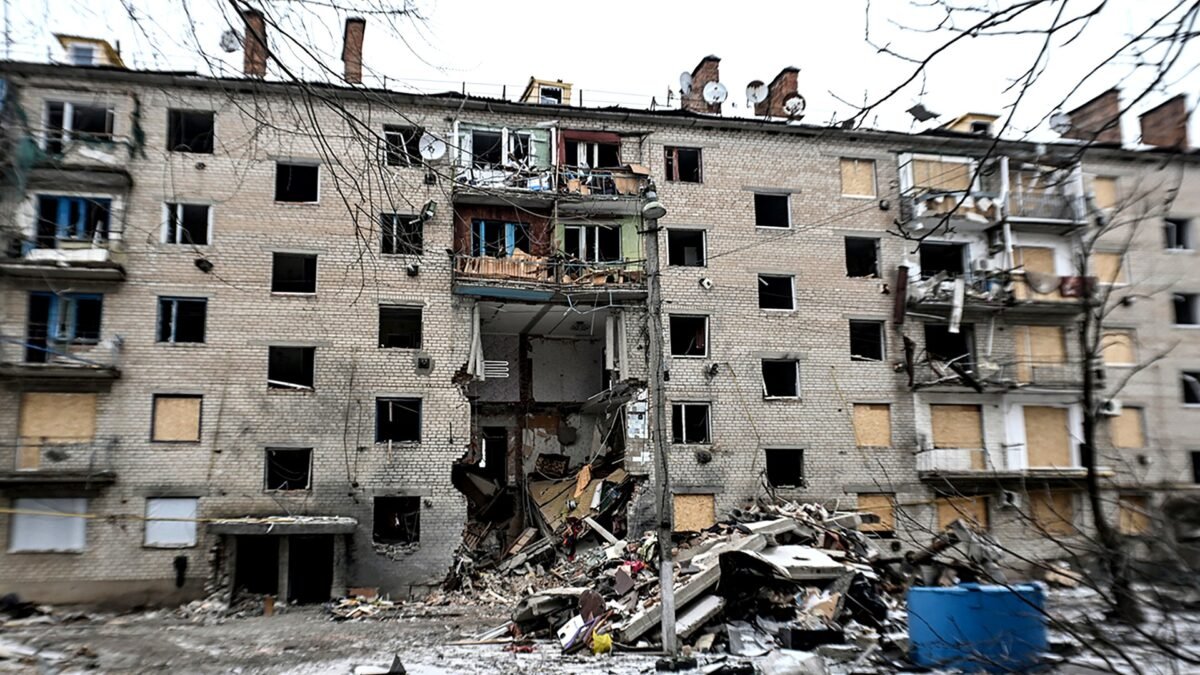
At least 31 people were killed on Monday when Russian glide bombs struck a school being used as a humanitarian aid distribution point in the front-line village of Komyshuvakha, in south-eastern Ukraine, in an attack President Volodymyr Zelenskyy described as one of the largest mass killings of the war. Dozens more remained missing under the rubble on Tuesday, and rescue workers warned the death toll was still likely to rise.
According to Reuters, the attack hit the village in the Zaporizhzhia region as residents were gathering to collect their weekly humanitarian supplies. The regional administration said on Tuesday that at least 31 people had been killed and five injured, with almost 50 people still missing. President Zelenskyy, speaking during a visit to Berlin, put the death toll higher, at 33, and said more than 50 people could still be trapped beneath the debris.
The United Nations condemned the attack on Tuesday. Its humanitarian coordinator for Ukraine, Matthias Schmale, said most of the victims were local residents who had come to the school to collect aid, along with employees of the local administration, and that subsequent strikes at the same location had killed two rescuers and four police officers who had rushed to help. The UN’s human rights monitoring mission in Ukraine went further, saying the attack appeared to have violated the most fundamental principles of international humanitarian law.
Russia’s defence ministry said its forces had targeted Ukrainian military units in the area around Komyshuvakha and two other settlements, and claimed that up to 25 Ukrainian servicemen had been killed, along with 15 vehicles and an electronic warfare station. But according to the BBC, there was no credible evidence that the site was being used by the Ukrainian military, and there were no major military or industrial facilities in the settlement.
What happened in Komyshuvakha
Komyshuvakha is a village south-east of the city of Zaporizhzhia, less than ten miles from Russian forces, according to The Times. It sits close to the front line in a region that has been under constant bombardment, and its school had long since stopped functioning as a classroom. Because the village lies too close to the fighting for children to attend lessons, the building had instead become a shelter and the place where the residents who remained gathered every Monday to pick up humanitarian packages.
According to President Zelenskyy, Russian aircraft dropped aerial bombs on the school just as people were arriving for the distribution. “The Russians struck first just as people were arriving — a few aerial bombs,” he said. “Then there was a second strike — more air bombs, this time on the shelter. A vile terrorist strike.”
The scale of the bombardment was extraordinary for a single village target. According to the BBC, nine 3,000kg aerial bombs hit Komyshuvakha. Mykhailo Semikin, the acting head of the Zaporizhzhia regional military administration, said Russia had used FAB-500 and FAB-3000 guided bombs — weapons designed to destroy heavily fortified concrete structures. One of the munitions caused the collapse of an underground shelter in which people had taken refuge, and local media reported that the roof of the shelter caved in, trapping many underneath.
President Zelenskyy said the second wave alone involved nine more bombs, “aimed precisely at the shelter where people were gathered”. The pattern — an initial strike followed by a second strike on the same location — is known as a double-tap attack. It is widely condemned by human rights organisations precisely because the second strike tends to kill the rescuers and civilians who rush to help the victims of the first.
That is what happened in Komyshuvakha. According to Ukraine’s emergency services, two members of a rescue crew and four police officers were among those killed in the follow-up strikes. The two rescuers were named by the State Emergency Service as Denys Konovalenko and Oleksii Sushchevskyi, both 44, according to AFP. Two more rescue workers were among those being treated in hospital. Photographs posted online showed smouldering rubble strewn across the area, and as night fell, emergency responders used torches to search through the wreckage, according to local officials.
Three days of mourning were declared in the Zaporizhzhia region, according to the Associated Press. Rescue efforts on Monday evening were hampered by Russian drones, shelling and heavy smoke, according to The Times, and by Tuesday the search was continuing only as far as the security situation allowed. “There is a threat of Russian double-tap strikes, as they always so wickedly do,” President Zelenskyy said in a post on Tuesday.
The dead and the missing
The death toll from the attack moved repeatedly through Monday and Tuesday, as it almost always does after a strike on a collapsed building. Early reports put the number of dead at 18, then 24, then 26, then 29. By Tuesday, the regional administration’s updated total stood at at least 31, according to Reuters and the Associated Press. President Zelenskyy said 33 people had been killed.
The United Nations gave a slightly different breakdown: its humanitarian coordinator said at least 29 civilians had been killed, and that the subsequent strikes had killed two rescuers and four police officers. Because it is not established how those counts overlap with the regional administration’s total, the figures should not be added together. What is certain is that the toll is large, that it includes civilians who had come for food and other essentials, and that it includes the very people sent to save them.
The Times reported that five children were among the dead. At least five people were injured, according to the regional administration, and the number of missing remained painfully uncertain: Semikin said almost 50 people were still missing, while the secretary of the Zaporizhzhia city council, Regina Kharchenko, put the figure at 27. The Associated Press reported that more than 45 residents remained missing. The differences reflect the chaos of a rescue operation conducted under fire, with families unsure whether their relatives were in the school, in the shelter, or somewhere else entirely when the bombs fell.
For the families of Komyshuvakha, the arithmetic of the missing is the cruellest part of the aftermath. A person listed as missing may still be alive under the rubble, or may already be among the dead awaiting identification. Rescue teams were still digging on Tuesday, and officials warned openly that the number of victims could change as the work continued.
A distribution the whole village knew about
One detail of the attack has drawn particular attention from the United Nations: the aid distribution was not secret. It was a fixture of village life, held at the same place, on the same day, every week. According to the UN’s human rights monitoring mission, local authorities had announced the distribution the day before on a social media channel with nearly 5,000 subscribers, stating that it would take place at the school between 10am and noon on 2 November.
“Dozens were killed while civilians gathered to receive humanitarian aid in Komyshuvakha — the timing and location of the humanitarian distribution was well publicised,” said Danielle Bell, the head of the UN rights mission, according to AFP. “Either the Russian armed forces knew that there was a humanitarian distribution taking place, or they failed to take the most basic steps to find out what was happening in this village they were planning to attack. In either case, this attack seems to have violated the most fundamental principles of international humanitarian law.”
President Zelenskyy made the same point in blunter language. “The Russians could not have been unaware that residents remaining in Komyshuvakha gathered each week to pick up humanitarian packages,” he said. The school was not a military installation that happened to have civilians nearby. It was a civilian installation, used for a civilian purpose, on a schedule that the whole district knew.
That distinction matters, because it goes to the heart of the legal questions the attack raises. Under international humanitarian law, warring parties must distinguish between civilians and combatants, and between civilian objects and military objectives. They must take precautions to verify that a target is a military one, and they must not launch attacks expected to cause civilian harm disproportionate to the military advantage. A weekly, publicly advertised aid distribution at a school is about as far from a concealed military target as it is possible to get.
Russia’s account — and the evidence against it
Russia’s defence ministry said on Tuesday that the attack had targeted Ukrainian military units in areas around Komyshuvakha and two other settlements in the Zaporizhzhia region, and claimed that up to 25 Ukrainian servicemen had been killed, with 15 vehicles and an electronic warfare station destroyed.
That account has not been supported by independent evidence. According to the BBC’s Russian defence correspondent, Ilya Abishev, there was no credible evidence that the site was being used by the Ukrainian military, and there were no major military or industrial facilities in the settlement of Komyshuvakha. The village is, however, of military importance in a different sense: according to the BBC, it forms part of Ukraine’s defensive and transport network on the approaches to the regional capital, the city of Zaporizhzhia, which has come under constant Russian bombardment.
Both Russia and Ukraine deny deliberately targeting civilians in the conflict, and Moscow has consistently described its strikes on Ukrainian towns and cities as aimed at military targets. But the pattern of this war has repeatedly seen civilian infrastructure — hospitals, schools, energy plants, markets and aid distribution points — hit by weapons whose blast radius leaves little room for doubt about the consequences. The UN said last month that civilian casualties in Ukraine had reached a record level, and in August its monitors reported that more civilians had been killed or injured in July than in any month since March 2022.
Ukraine’s foreign minister, Andrii Sybiha, condemned the attack on Tuesday as “another barbaric and cynical Russian attack”, adding that “Russia’s cruelty knows no bounds, and its disregard for human life has no moral justification.” He also used the attack to argue against the restoration of Russian participation in top-level international sport, following a ruling by sport’s highest court ordering the country’s reinstatement in major tournaments. “Russia deserves condemnation, isolation, and consequences, not a return to international respectability,” he wrote. “Its crimes cannot be separated from its flag, its national teams, or its attempts to regain international legitimacy.”
The United Nations responds
The United Nations’ response to the Komyshuvakha attack was unusually direct. Matthias Schmale, the UN humanitarian coordinator for Ukraine, said in a statement that both the school used for distributing assistance and a nearby shelter where civilians had sought safety were hit. “Civilians seeking support and first responders coming to the rescue must never be a target,” he said. “Civilian facilities, including humanitarian assistance, must be respected and protected under international humanitarian law.”
He added that people living near the front line already endured immensely difficult conditions. “The possibility of being killed when they seek essential assistance or shelter is horrible,” he said. “My thoughts are with the families mourning their loved ones and all those whose lives have been shattered by these attacks.”
The UN human rights mission’s statement carried a sharper legal edge. By saying the attack “seems to have violated the most fundamental principles of international humanitarian law”, the mission was not merely expressing sorrow; it was placing the strike in the category of incidents that demand investigation. UN monitors have documented alleged violations throughout the war, and their findings feed into accountability processes that move slowly but do not forget. Whether any individual commander is ever held responsible for Komyshuvakha, the UN’s language ensures the attack is now part of the formal record.
The condemnation also matters because it came from the humanitarian system itself — the same system whose aid was being distributed at the school. Attacks on aid distribution do more than kill the people present. They make every future distribution more dangerous, because residents must weigh the risk of gathering against the risk of going without food, medicine and fuel. When the place where help is handed out becomes a place where people die, the humanitarian system itself starts to break down.
A wider night of attacks across Ukraine
The strike on Komyshuvakha did not happen in isolation. It came during a night of heavy Russian attacks across Ukraine that, according to the BBC, killed at least 38 civilians and injured scores of others over the last 24 hours. According to President Zelenskyy, Russia launched 289 attack drones, 17 ballistic missiles and 59 cruise missiles across nine regions in a single overnight barrage, aimed primarily at energy infrastructure — power generation facilities and substations — in the Odesa, Cherkasy, Zhytomyr, Vinnytsia, Kharkiv, Dnipro, Chernivtsi, Chernihiv and Rivne regions.
In Dnipro, nearly 50 terminally ill patients were being transferred to other facilities after their hospice was destroyed by a Russian missile on Monday night, according to the BBC. The city’s mayor, Boris Filatov, posted photographs showing elderly people lying in their beds in a hospice room with blown-out windows and rubble and broken glass strewn across the floors. In Kharkiv, a major hospital was hit, injuring scores of people and shattering more than 1,000 windows across the clinic and nearby apartment buildings, according to local officials. A Russian drone also damaged a hospital in Kherson earlier on Monday.
“The Russians carried out a complex, massive attack overnight, aimed primarily at our critical infrastructure,” President Zelenskyy said. Emergency power cuts were triggered across several regions as the grid absorbed the damage. The pattern is by now familiar: as winter approaches, Russia intensifies its attacks on the energy system that heats Ukrainian homes, powers its hospitals and keeps its water running. Each autumn the campaign resumes; each winter civilians pay for it in cold and darkness.
The scale of the overnight barrage also underlines how far the war has moved from the front lines. The nine regions targeted stretch from Odesa on the Black Sea coast to Rivne in the west. No part of Ukraine is beyond the reach of Russian drones and missiles, and the distinction between the battlefield and the home front has effectively disappeared.
The day after a rare truce
The timing of the attack carried a bitter irony. It came a day after the expiry of a six-day local ceasefire arranged to bring aid into Oleshky, a town in the Kherson region, and to evacuate residents who wished to leave. The ceasefire had been brokered as part of a humanitarian mission associated with the US first lady, Melania Trump, and it was one of the rare moments in this war when the fighting paused long enough for help to reach people trapped behind the lines.
President Zelenskyy said the attack on Komyshuvakha had shown that Moscow was intent on killing people instead of building on that opening. “If Russia genuinely wanted de-escalation, there was an opportunity following the situation in Oleshky to continue taking humanitarian steps. We proposed this. But Russia continues to kill people,” he said, according to Reuters. He described the strike as Moscow’s response to Ukraine’s proposal to extend the truce.
The contrast between the two days — a ceasefire that saved lives, followed immediately by a strike that took them — captures the central frustration of every attempt to find even a partial pause in this war. Local truces work when both sides honour them, and they collapse the moment one side decides the pause has served its purpose. The Oleshky ceasefire showed that humanitarian steps are possible. Komyshuvakha showed how quickly they can be undone.
There is another context for the timing. In Washington, a senior US official told Reuters that the United States would bring together delegations from Ukraine and Russia in Abu Dhabi on 10 and 11 November to discuss moves towards ending the war, post-war security agreements and de-escalation. US negotiators have been seeking a breakthrough before winter, and the last US-mediated peace talks took place in February, before the United States and Israel launched a war against Iran. The Komyshuvakha strike will now hang over those talks before they have even begun.
Analysis: Why It Matters
When the aid queue becomes the target
There is something particularly corrosive about an attack on an aid distribution. Armies have always struck at supply lines, but an aid queue is not a supply line. It is the point at which a war’s civilian victims come to collect the means of survival — food, medicine, fuel, blankets — from the organisations trying to keep them alive. Striking it does not degrade an enemy army. It degrades the will of a population to remain in its homes, and it punishes the very act of seeking help.
That is why the publicity of the Komyshuvakha distribution matters so much. This was not a target of opportunity discovered by chance. The distribution happened at the same school, on the same weekday, every week, and it had been announced the day before on a public channel. Whoever planned the strike had every opportunity to know what the building was and who would be standing outside it. The UN rights mission’s formulation — either they knew, or they failed to take the most basic steps to find out — leaves no comfortable interpretation. Both alternatives describe a failure of the most basic obligations of warfare.
The practical consequence extends far beyond one village. Across the front line, thousands of Ukrainians depend on weekly distributions like the one in Komyshuvakha. If residents conclude that gathering for aid is as dangerous as staying away, they will stop coming — and then the choice becomes hunger, cold and untreated illness, or flight. Either way, the front-line population thins, the villages empty, and the territory becomes easier to take. That is the strategic logic of terror, and it is why attacks on humanitarian infrastructure are treated as a distinct category of wrong, not merely as collateral damage.
The double-tap and the laws of war
The double-tap deserves attention on its own, because it is not an accident of war but a technique. The first strike creates casualties and draws rescuers; the second strike kills the rescuers. In Komyshuvakha, the second wave killed two rescue workers and four police officers — people whose only offence was running towards the rubble while others ran away. The two rescuers, both 44, left behind widows and young children, according to the State Emergency Service.
International humanitarian law protects medical personnel, rescue workers and others engaged in humanitarian tasks, and it prohibits attacks that target them. The principle of distinction requires attackers to distinguish at all times between combatants and civilians; the principle of precaution requires them to take all feasible steps to verify that a target is a military objective. A second strike on a shelter, minutes after a first strike on a school, with no military objective identified, is difficult to reconcile with either principle. The UN rights mission clearly thought so, and its assessment will now sit in the record alongside the evidence collected by Ukrainian prosecutors and international investigators.
Accountability, however, is slow. The International Criminal Court has issued arrest warrants over the war, but Russia does not recognise its jurisdiction, and the political leaders who order such strikes are unlikely to face a courtroom soon. That does not make the documentation pointless. The record being built — by the UN, by Ukrainian authorities, by journalists and by open-source investigators — is what makes future accountability possible, and it is what prevents the attack from dissolving into the general fog of war. Komyshuvakha will have a file. The names of the dead, the names of the rescuers, the time of the distribution and the weight of the bombs are now all on the record.
Timing is never an accident — or is it?
President Zelenskyy drew attention to the date of the barrage. “It is very telling that all of this is happening on the day of the US congressional elections,” he wrote. The midterm elections on Tuesday 3 November dominated American news, and a massive Russian barrage on the same day ensured that Ukraine’s war would be part of the story Americans woke up to — or, just as plausibly, that it would be buried underneath it.
There are two ways to read the timing, and both are worth considering. The first is that Moscow chose the moment deliberately, to demonstrate that it can escalate at will, to test a distracted Washington, and to remind the incoming Congress that the war will not wait for American politics to settle. Russia has a long history of timing military actions to coincide with Western political events, and a strike of this scale, coordinated across nine regions, requires days of planning. The date was not chosen by accident.
The second reading is more prosaic: the barrage was driven by military and seasonal logic — the approach of winter, the state of the energy campaign, the expiry of the Oleshky truce — and its coincidence with the American elections was incidental. The truth may contain elements of both. What is clear is that Zelenskyy himself believed the timing was significant enough to point out, and that the strike will now be read in Washington through the lens of the election results. If the new Congress proves less sympathetic to Ukraine, Moscow will have learned that escalation carries no political cost. If it proves more sympathetic, the strike may have backfired. Either way, the timing has become part of the story.
Winter is now the front line
The overnight barrage that accompanied the Komyshuvakha strike was aimed, in Zelenskyy’s words, “primarily at our critical infrastructure” — power generation facilities and substations across nine regions. This is the third winter in which Russia has pursued a systematic campaign against Ukraine’s energy system, and the logic is brutally simple: a country that cannot heat its homes, light its hospitals or pump its water in January is a country under pressure to negotiate on any terms.
The campaign has a rhythm. Each autumn, the strikes intensify; each winter, engineers race to repair the damage faster than the missiles can inflict it; each spring, the assessment begins again. Ukraine has adapted — with air defences, with decentralised generation, with stockpiles and with help from its allies — but adaptation has limits, and every successful strike on a substation is a subtraction from the margin of safety. The destruction of a hospice in Dnipro and the damage to a hospital in Kharkiv on the same night as Komyshuvakha are a reminder that the energy campaign and the campaign against civilians are not separate. When the power fails in a hospital, patients die. When the heating fails in a front-line village, the elderly die. The weapons are different, but the victims are the same.
For the residents of the front line, winter also means a crueller arithmetic. The aid that was being distributed in Komyshuvakha — food, fuel, medicine — is what makes it possible to survive the cold months in a village with no functioning infrastructure. The strike did not merely kill 31 people. It destroyed the place where the survivors were supposed to collect the supplies that would carry them through winter, and it did so days before the cold sets in. That, too, is part of the damage, and it will not show up in any casualty count.
What this does to the road to Abu Dhabi
The talks scheduled for 10 and 11 November in Abu Dhabi were already facing long odds. The last US-mediated round took place in February, and since then the war has ground on, the front line has barely moved, and both sides have dug into positions that leave little room for compromise. The United States is seeking a breakthrough before winter; Russia is seeking to demonstrate that it can escalate faster than diplomacy can move.
Komyshuvakha complicates the talks in a specific way. Negotiations need trust, or at least a shared interest in de-escalation, and the strike — coming a day after a successful local ceasefire — suggests that Moscow’s interest in humanitarian steps is, at best, tactical. Kyiv will arrive in Abu Dhabi able to point to a concrete example of what happens when a truce expires: the killing of civilians at an aid point, on a schedule Moscow knew. That strengthens Ukraine’s hand in demanding guarantees, but it also raises the question of what any agreement would be worth if it cannot protect a school full of civilians collecting food.
There is a counter-argument, and it is worth stating honestly. Talks do not require trust; they require interest. Russia may calculate that a settlement on its terms is worth more than continued escalation, and the United States may calculate that a deal, even an imperfect one, is better than another winter of war. The Abu Dhabi meeting will test both calculations. But the road to it now runs through the rubble of a school in Komyshuvakha, and neither delegation will be able to pretend otherwise.
What to Watch Next
- The final death toll in Komyshuvakha. Rescue work was continuing on Tuesday under the threat of further strikes. The number of missing — nearly 50, according to the regional administration — means the confirmed toll of 31 is likely to rise, and the identification of the dead will take days.
- Whether Russia answers the United Nations. The UN humanitarian coordinator and the UN human rights mission have both condemned the attack in unusually direct language. Any Russian response — denial, justification, or silence — will shape how the incident is treated internationally.
- The Abu Dhabi talks on 10 and 11 November. The United States is bringing Ukrainian and Russian delegations together to discuss ending the war, security guarantees and de-escalation. Komyshuvakha will now frame the opening of those talks.
- The winter energy campaign. The overnight barrage hit power infrastructure in nine regions. Watch whether emergency power cuts spread, how quickly repairs proceed, and whether the coming weeks bring further large-scale strikes on the grid.
- The front line around Zaporizhzhia. Komyshuvakha sits on the approaches to the regional capital, a city under constant bombardment. Any Russian advance in the sector would put more villages within range of the same glide bombs.
Sources
- United Nations Office for the Coordination of Humanitarian Affairs — Humanitarian Coordinator for Ukraine condemns deadly Russian air strikes in Komyshuvakha (ReliefWeb)
- Reuters, via The Business Standard — Russian bombing kills 31 in village in southeastern Ukraine, local official says
- Australian Associated Press — Deaths rise after Russian strike on Ukrainian aid site
- The Times — At least 33 killed in ‘horrific’ Russian strike on aid centre

About the Author — Abdul Mannan
Related Articles

South Korea to Reissue 168 Passports After President Lee’s Details Sat Exposed Online for Five Months
Passport numbers and birth dates of President Lee Jae Myung, his wife, cabinet ministers and his bodyguards sat…
Russia Confirms Abu Dhabi Peace Talks With Ukraine as US Pushes for a Breakthrough Before Winter
Russia has confirmed three-way peace talks with Ukraine and the United States in Abu Dhabi on 10–11 November…
US Strikes Iran’s Qeshm Island in Secret Defensive Attacks on Eve of Midterm Elections
The United States struck Iran's Qeshm Island on Monday in a series of secret, limited attacks US officials…