
Andrew Mountbatten-Windsor Summoned to Give Evidence in High Court Fraud Trial in First Royal Witness Order Since 1891

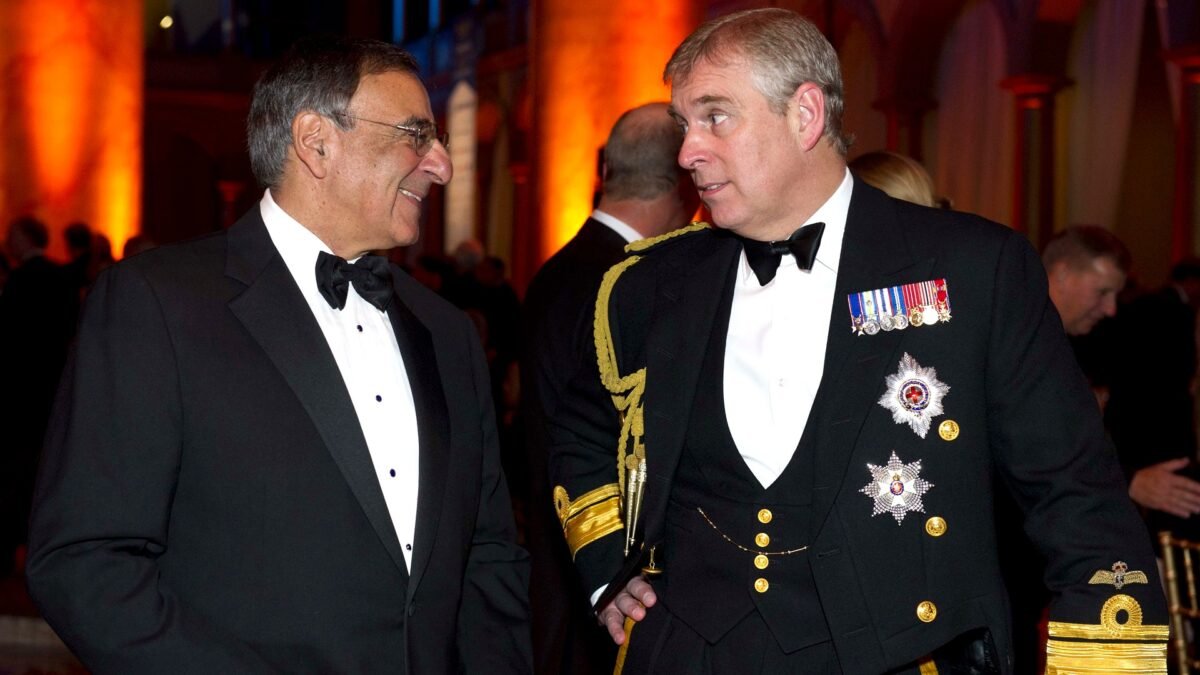
Andrew Mountbatten-Windsor has been served with a witness summons ordering him to give evidence in a High Court fraud trial, in what is believed to be the first time a member of the Royal Family has been legally compelled to testify in court since the nineteenth century.
According to the BBC and Sky News, the former prince is expected to appear before the High Court in London in mid-December, with reports putting the date at around 14 or 15 December. He is expected to attend in person, although he could also give evidence by video link. The trial itself, an eleven-week hearing, is due to begin in the week of 16 November.
Andrew is not accused of any wrongdoing, and he is not a defendant in the case. He has been called as a witness by the defendant, Turkish businessman Selman Turk, in a civil claim brought by Turkish businesswoman Nebahat Evyap Isbilen, who alleges that Turk, her former financial adviser, misled her over payments made from her fortune. The summons means that, unless he succeeds in having it set aside, Andrew will have to answer questions in open court about money that passed through his household at the very end of his life as a working royal. It would be his first public questioning since the BBC Newsnight interview in November 2019 that ended his royal career.
The summons and the judge’s ruling
The summons follows a ruling last month by Mr Justice Adam Johnson, who decided on 23 October that Turk should be allowed to call Andrew as a witness. The judge said that, given the seriousness of the allegations, fairness required that Turk be given the chance to put forward his own case using the evidence he considered relevant and material. He added that, although Turk had been late in seeking to rely on evidence from the former duke, the evidence would be limited in scope and could be accommodated within the eleven-week trial.
Mr Justice Johnson also made clear why a summons, rather than a polite request, was likely to be needed. He said he was content to find, on the balance of probabilities, that had Andrew been asked, he would have declined to provide a witness statement. In practice, the judge said, calling him would likely involve issuing a witness summons, which can be done without further permission from the court provided it is issued more than seven days before the trial begins.
That summons has now been issued and served this week, according to the BBC and Sky News. A witness summons is a court order: it requires the person named to attend and give evidence, and a witness who fails to comply can face serious consequences. Andrew may apply to have the summons set aside, according to the Associated Press, so there is no absolute guarantee that he will testify. But the issuing of the order, after a judge had already weighed the arguments and ruled in Turk’s favour, makes his appearance likely, and the timetable reported by the broadcasters points to the middle of December, several weeks into the trial.
The BBC’s royal correspondent, Sean Coughlan, said the evidence Andrew gives “could cast an interesting light on his finances”. That single observation captures why the summons matters beyond the courtroom: for years, questions about how Andrew funded his life, his home and his legal battles have gone unanswered in public. A witness box is one of the few places where those questions cannot be declined.
The £750,000 payment at the centre of the case
The dispute at the heart of the trial concerns a payment of £750,000 made to Andrew in November 2019. According to court documents, Isbilen claims she was misled by Turk into making the payment, believing that the money was needed to help her obtain a new Turkish passport. She told a hearing in 2022 that Turk had said he had received help from the then Duke of York to show or send a picture of her old passport to Turkey, and that the service would normally be worth £2 million but would cost less if the payment were made as a gift.
Turk denies the allegation. His case, as set out in court, is that the payment was a gift made on Isbilen’s own initiative, intended to create goodwill with the then duke, and that it had nothing to do with a passport. His solicitors, Janes Solicitors, have said he denies the claims of dishonesty and looks forward to being vindicated in court.
The money itself was repaid. In 2021, Isbilen’s lawyers contacted the then Prince Andrew, and the £750,000 was paid back. But the repayment does not end the argument: the forthcoming trial will examine Turk’s conduct, and Andrew’s evidence is expected to go to the disputed question of what the payment was for, who understood it to be for what, and what was said at the time.
The timing of the payment is part of the story. According to the BBC, the transfer was made the day after Andrew recorded his Newsnight interview, which was broadcast the following night and was followed within days by his decision to step back from royal duties. The case, in other words, covers payments made at the very end of his time as a working royal, when his public position was collapsing and his private finances were about to come under intense scrutiny.
Court documents show there will also be questions about another substantial sum: around £768,000 transferred from Isbilen’s account in January 2020. Turk has claimed that this was a loan to Andrew for the purchase of a chalet in Switzerland, a suggestion that Isbilen contests and that has been challenged in earlier court hearings. The chalet in question is the property in Verbier that Andrew and his former wife, Sarah Ferguson, bought and later sold after a dispute over an unpaid instalment.
Reporting by The Sun has set out further payments that are said to have flowed from Isbilen’s money towards Andrew’s family: £350,000 to Andrew himself, £225,000 to the former Duchess of York, £25,000 to Princess Eugenie, and a £750,000 contribution described as a gift for Princess Beatrice’s wedding. The court also heard in 2023 that there had been a settlement between Isbilen and the then Duke and Duchess of York, according to Mr Justice Johnson’s ruling, although the details of that settlement have not been made public.
A case that has run for five years
The trial that begins this month is the culmination of a dispute that started in 2021 and has already produced a long trail of judgments, injunctions and one prison sentence, without yet reaching a full trial of the main claim.
Isbilen is a Turkish national in her seventies. Her husband fell foul of the authorities in Turkey and has been imprisoned there. She fled Turkey in 2017, fearing she would suffer the same fate, and came to Britain, where she now lives. She is independently wealthy, with assets worth tens of millions of pounds, much of which had to be moved out of Turkey. She turned to Turk, a former Goldman Sachs banker, for help in getting herself and her money to safety.
Her case is that Turk was engaged to keep her assets safe and no more, and that he went far beyond those limited instructions. According to High Court judgments, she claims he applied 30 to 40 million dollars of her assets in ways that went beyond her instructions, a large part of them in the direction of entities in which he is said to have an interest. She is seeking to recover those assets, their traceable proceeds, and compensation. Turk’s case is that his instructions were not as limited as she says, that everything he did was proper and within his instructions, and that Isbilen herself authorised the documents that disposed of her assets, with full knowledge and consent.
Isbilen began proceedings in 2021 and obtained a freezing order against Turk in March of that year. The case has moved slowly since then: a 2024 judgment noted that the claim had still not been determined despite having been started in 2021, and described it as unfortunate that the action had not got very far down the road to trial. In the meantime, Turk was committed to prison for twelve months in 2024 after a judge found five breaches of the disclosure obligations in the freezing order proved to the criminal standard. The Court of Appeal upheld that committal in May 2024.
The trial now listed for eleven weeks is the first full hearing of the underlying claim. Andrew’s evidence is expected to be taken part-way through it, in mid-December, once the court has heard the opening of the case.
How Andrew met Selman Turk
Andrew met Turk in the autumn of 2019 through Pitch@Palace, the Dragons’ Den-style pitching initiative for entrepreneurs that Andrew ran as part of his work as a trade envoy. The project brought Turk into Andrew’s circle, and social gatherings followed, bringing together Turk and his family, Isbilen, and the then Duke and Duchess of York.
The encounter was, in hindsight, badly timed. Within weeks of the meeting, Andrew’s public life was in ruins. The Newsnight interview, recorded in November 2019, was intended to draw a line under his association with the late convicted sex offender Jeffrey Epstein. Instead it became one of the most damaging interviews ever given by a member of the Royal Family, and within days Andrew announced that he was stepping back from public duties for the foreseeable future. The payments from Isbilen’s account were made in that same narrow window, at the end of 2019 and the start of 2020, as his working royal life ended.
Andrew has never commented publicly on the Isbilen case. He was approached for a response when the summons was reported this week, and none was forthcoming. His silence is consistent with his conduct since 2019: apart from a brief statement when he relinquished his titles, he has said almost nothing in public in seven years.
The long fall from royal duty
The summons arrives at the end of a long and public decline. Andrew withdrew from official duties in November 2019, days after the Newsnight broadcast. In January 2022, Queen Elizabeth II removed his military affiliations and royal patronages and he stopped using the style His Royal Highness. A month later, he settled a civil sexual assault claim brought in the United States by Virginia Giuffre, in a settlement reported to be worth around £12 million, with no admission of liability. Giuffre, who died in 2025, had alleged that she was trafficked by Epstein and forced to have sex with Andrew when she was seventeen. Andrew has always denied the allegations.
The decisive break came in October 2025, when King Charles initiated a formal process to remove Andrew’s remaining styles, titles and honours. Buckingham Palace announced on 30 October 2025 that the King had begun the process, saying the censures were deemed necessary notwithstanding that Andrew continued to deny the allegations against him. Letters patent completed the removal, and Andrew became Andrew Mountbatten-Windsor, a private citizen who nonetheless remains eighth in line to the throne, a position that can only be changed by Parliament.
He was also told to leave Royal Lodge, the thirty-room house in Windsor Great Park where he had lived with Sarah Ferguson since 2003, under a lease that ran until 2078. He was evicted in February 2026 and moved to Marsh Farm, a smaller property on the King’s Sandringham estate in Norfolk, more than a hundred miles from Windsor. In October 2026 he formally surrendered the Royal Lodge lease, and the Crown Estate confirmed the property was back in its hands. King Charles paid around £1.8 million for repairs to the house from his private funds, according to People and USA Today, after independent assessors set the cost of dilapidations.
February 2026 also brought the most direct legal consequence of his life: on his sixty-sixth birthday, Andrew was arrested at Sandringham on suspicion of misconduct in public office, in connection with his time as a trade envoy. He was held for around twelve hours and released under investigation. According to reports, no charges had been filed as of late October 2026. In a separate development, a High Court judge ruled on 8 October 2026 that police searches of his homes at Sandringham and Royal Lodge earlier in the year had been unlawful, after Andrew challenged the warrants used to carry them out.
Public opinion has hardened against him. A YouGov poll conducted in October 2025 recorded a negative rating of 91 per cent, the lowest favourability ever measured for a senior royal. The summons will put him back in the headlines for weeks, and this time the setting is a courtroom, where the questions are asked under oath and the answers are a matter of public record.
The last royal in the witness box: 1891
The reason this summons has made headlines around the world is its rarity. No member of the Royal Family has been sent a witness summons since the nineteenth century, and the last comparable occasion is one of the most famous courtroom episodes in British history.
In June 1891, Albert Edward, Prince of Wales and heir to the throne, entered the witness box at the Royal Courts of Justice in London. The case was the Tranby Croft affair, a scandal that began at a house party in Yorkshire in September 1890, when Sir William Gordon-Cumming, a lieutenant colonel in the Scots Guards, was accused of cheating at baccarat during a game in which the Prince of Wales himself had acted as banker. Gordon-Cumming signed an agreement promising never to play cards again in exchange for silence, but when the story leaked he sued members of the Wilson family for slander, and the case came to trial in June 1891.
The Prince of Wales had been present at both baccarat sessions, had been told of the accusations, and had signed the secrecy agreement. When he was called, he told the court he had personally seen no cheating, and said he had accepted the allegations because the accounts given to him by several witnesses appeared unanimous. His examination lasted about twenty minutes. The jury found against Gordon-Cumming after thirteen minutes of deliberation, and the officer was dismissed from the Army the following day.
The 1891 appearance was described at the time as the first occasion on which an heir to the throne had been compelled to appear in court since 1411. The Prince of Wales had given evidence once before, in the Mordaunt divorce proceedings of 1870, when he was subpoenaed as a witness and spent seven minutes in the box denying a sexual relationship with Harriet Mordaunt, without being cross-examined. But the baccarat trial was different: he was examined at length, in public, about a scandal of his own circle’s making, and the experience, according to contemporary accounts, left him wearied and extremely nervous.
Andrew’s case is not a scandal about a card game, and he is not the heir to the throne. But the parallel is what makes the summons so striking: a member of the Royal Family, compelled by a court order to answer questions in public about money, reputation and the company he kept, more than a century after the last royal was put in the same position.
Analysis: Why It Matters
A summons, not an invitation
The most important fact in this story is the form of the order. Andrew was not invited to give evidence, and he was not asked to volunteer a statement. He was served with a witness summons, a court order that requires attendance, after a judge had already found that he would probably have refused to cooperate if asked. That is a deliberate and unusual step, and it tells us something about how the court views the case. Mr Justice Johnson concluded that Turk’s right to a fair hearing outweighed whatever reluctance Andrew might have, and that the evidence was sufficiently relevant to justify compulsion. For a man who has spent seven years avoiding public questions, the court has now removed the option of silence. The fact that he may apply to have the summons set aside does not change the significance of its issue: a judge has decided, on the evidence before him, that Andrew’s testimony is material to a fraud trial, and that the trial cannot fairly proceed without it.
The questions about money will be the story
Whatever Andrew says in the witness box, the questions themselves will dominate the coverage. The court will want to know what he understood the £750,000 to be, who told him what, and what, if anything, he did in return. It will want to know about the £768,000 said to have been a loan for a Swiss chalet, and about the other payments said to have reached his family. These are not questions about royal ceremony or constitutional duty; they are questions about cash, gifts, loans and favours, asked of a man whose finances have been the subject of speculation for years. Sean Coughlan’s observation that the evidence could cast an interesting light on Andrew’s finances is, if anything, an understatement. The last time Andrew answered questions in public, in the Newsnight interview, his answers about his finances and his friendships did him lasting damage. The witness box offers no presenter to steer the conversation and no opportunity to walk away from a difficult question.
Seven years of silence ends in public
Since November 2019, Andrew has barely spoken in public. He issued a short statement when he stepped back, another when he settled the Giuffre claim, and a brief one when his titles were removed. He has given no interviews, held no press conferences and made no public appearances at which he could be questioned. The summons breaks that silence in the most unforgiving setting available: under oath, in open court, with a transcript that will be pored over by journalists, historians and lawyers. For the Royal Family, that is a new kind of exposure. Previous royal court appearances have been voluntary and brief; this one is compelled, and the questioning will be conducted by lawyers for both sides, not by a sympathetic interviewer. Whatever the outcome of the trial, the transcript of Andrew’s evidence is likely to become a lasting part of the public record of his life.
The Palace’s problem: distance without detachment
King Charles has spent the last year putting distance between the Crown and his brother: titles removed, honours withdrawn, the Royal Lodge lease surrendered, the move to Norfolk. The strategy has been to present Andrew as a private citizen whose troubles are his own. The summons tests the limits of that strategy. Andrew may now be a private citizen in law, but he remains the King’s brother, eighth in line to the throne, and the son of the late Queen. When he gives evidence, the cameras and the headlines will describe him as a royal, whatever his legal style, and the Palace will be asked, daily, whether it has anything to say. The institution has no good options: to comment would drag the Crown into a fraud trial; to stay silent would look like indifference to a case in which the King’s brother is a central witness. The summons does not create this dilemma, but it makes it unavoidable, in public, for eleven weeks.
History’s echo is exact — and the difference matters
The comparison with 1891 is irresistible, but it is worth noting what has changed. In 1891, the man in the witness box was the heir to the throne, the future Edward VII, and the scandal was about a card game among his friends. His evidence lasted twenty minutes, the jury sided with his circle, and he became King ten years later. In 2026, the man in the box is a former prince who has lost his titles, his home and his public role, and the questions are about tens of millions of pounds of a vulnerable woman’s money. Edward’s appearance was an embarrassment that the monarchy survived; Andrew’s appearance is the latest chapter in a fall that the monarchy has already priced in. That is, paradoxically, why the summons is less dangerous to the institution than the 1891 case was, and more damaging to the man. The Crown has already cut him loose. What remains is a private citizen being asked, in public, to explain money he received from a woman who says she was cheated.
What to Watch Next
- The trial’s opening, in the week of 16 November: the eleven-week hearing will set out Isbilen’s full case against Turk, including the detailed account of how tens of millions of pounds are said to have been moved, before Andrew is called.
- Whether Andrew challenges the summons: he may apply to have it set aside, and any such application would be heard before his evidence is due. If it fails, his appearance in mid-December becomes effectively certain.
- The date and the format of his evidence: reports differ by a day on whether he will appear on 14 or 15 December, and whether he will attend in person or by video link. An in-person appearance at the Royal Courts of Justice would be a major public event; a video link would be quieter but no less significant.
- The £768,000 chalet question: the second large payment, said by Turk to have been a loan for a Swiss property and contested by Isbilen, is likely to be a central part of Andrew’s cross-examination.
- Any word from Buckingham Palace: the Palace has said nothing about the summons so far. Whether it maintains that silence once Andrew is in the witness box will be closely watched, as will any statement from Andrew’s own representatives.
Sources
- The National Archives — Nebahat Evyap Işbilen v Selman Turk & Ors, [2024] EWHC 505 (Ch)
- Associated Press — Ex-Prince Andrew called to testify in civil case, 1st royal in 156 years to get witness summons
- British Bulletin — Andrew Mountbatten-Windsor Called To Give Evidence In Fraud Trial Next Month
- People — Ex-Prince Andrew Returns Keys to Royal Lodge as King Charles Loans His Brother $2 Million for Repairs
- Wikipedia — Royal baccarat scandal (Tranby Croft affair, 1891)

About the Author — Abdul Mannan
Related Articles
Parliament Risks ‘Catastrophic Event’ as MPs Warn Notre Dame-Style Fire Could Destroy Westminster
MPs have warned the Palace of Westminster faces a 'catastrophic event' — a Notre Dame-style fire or the…

MPs Call for Ban on AI Chatbot Toys After Plush Bunny Gives Children Sexual Answers
Forty-four MPs and peers have urged Amazon and eBay to pull AI chatbot toys from sale and asked…
King Charles Says Slave Trade ‘Fills My Heart With Horror’ in Landmark CHOGM Speech — But Stops Short of an Apology
King Charles III has told Commonwealth leaders the transatlantic slave trade 'fills my heart with horror', but stopped…