
Parliament Risks ‘Catastrophic Event’ as MPs Warn Notre Dame-Style Fire Could Destroy Westminster

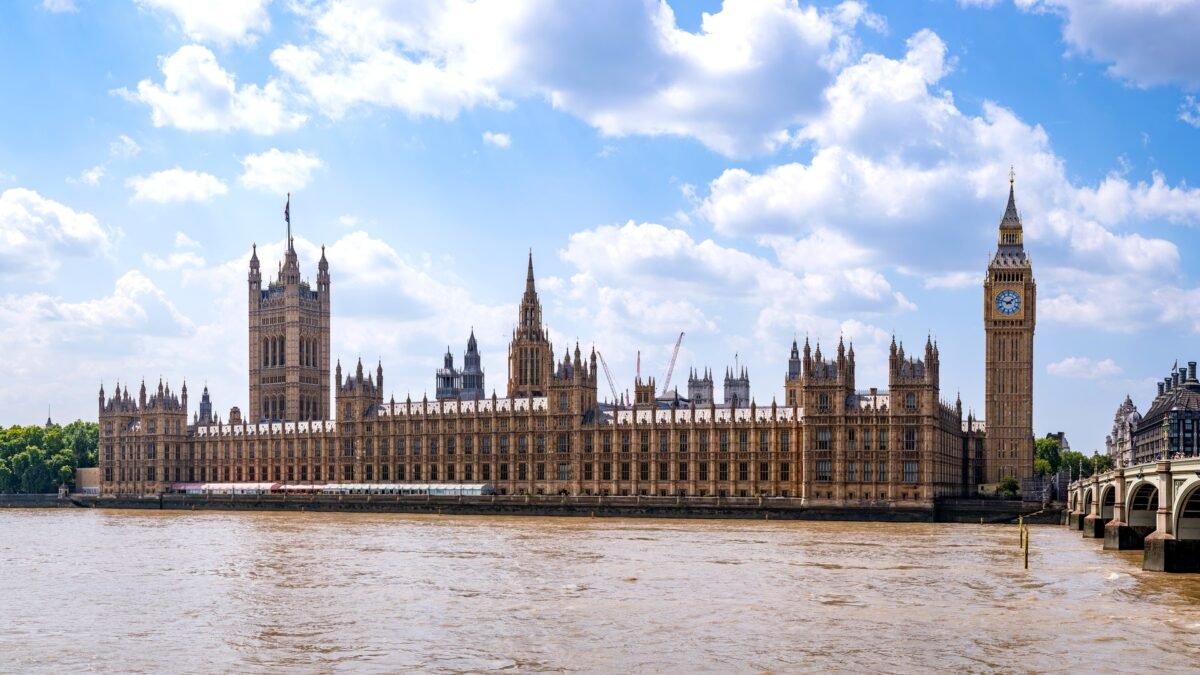
The Palace of Westminster risks a “catastrophic event” — a Notre Dame-style fire or the King being plunged into darkness during the State Opening of Parliament — if MPs keep delaying the decision to restore Britain’s crumbling seat of democracy, a committee of MPs has warned.
The Public Accounts Committee (PAC), which scrutinises government spending, said in a report published on Wednesday that the danger to the 19th-century palace was “real and rising”, and that every year of further delay would add £420 million to the cost of putting it right. At best, without action, the building would slide into what the committee called “managed decline”.
The warning is the starkest yet in a saga that has now run for the best part of a decade. MPs first voted in 2018 to leave the Palace so that it could undergo extensive repairs, yet Parliament has still not agreed how the work should be done, how much it should cost, or where MPs and peers should go while it happens. The committee said the weekly cost of patching up the parliamentary estate was expected to rise from £1.5 million to £2 million in the coming years, and that the votes to decide the programme’s future — which had been expected earlier this year — had themselves been delayed.
“Each kick of the can down the road costs hundreds of millions in public money,” Sir Geoffrey Clifton-Brown, the committee’s chairman, said, according to Sky News. He urged those who wanted to delay a decision further to “imagine the blow suffered by the UK’s morale and reputation of some kind of catastrophic failure”.
“A lack of action risks, for instance, the chamber being plunged into darkness during the State Opening of Parliament,” Sir Geoffrey added. “Consider the impact of global rolling news footage of Notre-Dame-like flames licking out of the building’s roof, resulting in the destruction of our heritage, or worse, injuries or loss of life. These are not notional possibilities, but real and rising risks which our committee identified three years ago.”
Four options, from £11 billion to £56 billion
Parliamentarians are being asked to narrow four options for the restoration down to two, and to approve an initial package of preparatory works capped at £3 billion. The four options examined so far range in cost from £11 billion to £56 billion and would take between 19 and 84 years to complete, according to figures reported by The Times.
The cheapest and quickest option, known as a “full decant”, would see MPs, peers and staff move out of the Palace entirely while the work is carried out. It would cost up to £15.6 billion and take up to 24 years, according to the committee’s report. The alternative favoured by some parliamentarians — a phased programme in which the Palace is repaired in stages while Parliament continues to sit there — could last more than six decades and cost close to £40 billion, with the committee putting the figure at up to £39.2 billion.
The initial £3 billion phase would focus on moving both Houses to temporary locations and relocating offices outside the Palace. But the committee warned that the temporary sites might not be ready when they were needed. On current timescales, restoration work would begin in 2032, and the committee said it was not convinced the temporary accommodation for MPs and peers would be ready by then.
The committee also questioned the cost of the temporary accommodation itself, describing estimates of £417 million to refurbish the Queen Elizabeth II Centre — the proposed temporary home of the House of Lords — and around £2 billion for the Commons Building Infrastructure Portfolio as “very high”, and calling for cheaper alternatives to be examined.
A Parliament spokesperson said the committee’s report “provides welcome scrutiny”, adding: “Work is already happening across the parliamentary estate to ensure the ongoing safety of those working here and visiting.”
How Parliament should buy a restoration
Beyond the headline costs, the committee’s report is a detailed critique of how the programme has been run — and, in the MPs’ view, how it should be run differently from now on.
The committee urged Parliament to consider a “competitive dialogue” procurement process, in which contractors develop rival proposals in parallel before a contract is awarded, so that the cost and timetable of the project can be pinned down with far greater confidence. It pointed to the Bank of England’s Real-Time Gross Settlement system — the infrastructure that underpins all sterling payments in the UK — as a rare positive example of government programme delivery, saying the competitive-dialogue approach used there “was instrumental to its success”.
“The clerks of both houses should ask the Delivery Authority, working with the Client Team, to assess whether a ‘competitive dialogue’ procurement approach could be adopted for the programme, to provide greater clarity on scope and confidence in its cost and schedule,” the committee said in its report, according to Construction News.
The committee also warned that approving the initial £3 billion package of works could effectively commit Parliament to the entire multibillion-pound restoration, because abandoning the programme afterwards would be “extremely difficult and costly”. It said it was “imperative” that robust cost and schedule estimates were developed to support the final decision, which Parliament is expected to take by 2030.
Three areas of the first phase of works have not yet been costed at all, the committee said: riverside security; isolating, decommissioning and relocating the Palace’s essential services; and the restoration of the medieval Cloister Court. It called for a timetable to develop “more robust” cost and schedule estimates, for stronger oversight including a dedicated select committee and annual independent scrutiny, and for a clear plan to engage MPs and parliamentary staff in the process — including, the report said, “innovative ways of demonstrating what the completed Palace will look like and how temporary accommodation will look and operate”. The committee warned that there had not been enough engagement with parliamentarians so far.
A building held together by patrols and patching
The Palace of Westminster is a Grade I listed building within a UNESCO World Heritage Site, and it requires extensive restoration to address serious risks including failing mechanical and electrical systems, fire safety problems and high levels of asbestos, according to The Times. It costs about £1.5 million a week to maintain and refurbish, a figure expected to rise to about £2 million a week between 2026 and 2030.
The palace that stands today was built after a fire in 1834 destroyed most of the old Palace of Westminster, and its stonework, services and wiring are now, in many places, more than a century old. The building is kept safe, in part, by 24-hour fire patrols whose job is to make sure no fire breaks out — a fact Sir Geoffrey himself highlighted. “We could wake up one morning and see flames coming out of the roof rather like Notre Dame,” he said, according to The Times. “They have 24-hour fire patrols around this place just to make sure that no fires are broken out. They could have the state opening of parliament and we go and turn all the floodlights on and the whole electricity goes phut.”
The committee has been warning about this for years. In 2017 it recommended that Parliament leave the Palace while major works were carried out, saying a full decant was most likely the most economical, effective and efficient choice, and that doing nothing was not an option. In 2022 it found there had been 25 fire incidents in the Palace over the previous seven years, along with 13 incidents of falling masonry. In 2023 it warned of a “real and rising risk” that the Palace would be destroyed by a catastrophic event before it was restored.
Dame Meg Hillier, who chaired the committee at the time, said then that it was “difficult to have confidence in the future of the project to repair and restore this iconic world heritage site that thousands of people work in and visit every day”. She added that there were already people on decades-long risk watchlists after being exposed to asbestos in the building, describing it as “a building that is leaking, dropping masonry and at constant risk of fire”.
Earlier this year, the National Audit Office, the public spending watchdog, found that Parliament was spending about £1.5 million a week on maintenance of the palace, and that each year of further delay would add an estimated £320 million to £420 million to the overall cost of completing the restoration, taking into account inflation, maintenance costs, work on options that might never be used and the cost of running the project team. The watchdog also found a lack of clarity over who was responsible for running the refurbishment, which it said could cause further delays and cost increases.
The cautionary tale the committee keeps returning to is the restoration of the Elizabeth Tower — the tower that houses Big Ben — whose costs, in the words of the committee’s 2023 report, “exploded” far beyond the original estimates. If a single tower can do that, the MPs argue, Parliament should not be surprised if the whole Palace does the same without a fundamentally different approach.
The Notre Dame parallel
The comparison the committee chose — Notre Dame — is deliberately vivid, and deliberately recent. On 15 April 2019, a fire broke out in the roof of Notre Dame Cathedral in Paris, destroying its spire and much of its roof before firefighters brought it under control. The images of flames pouring from one of the world’s most famous buildings were broadcast live around the globe, and the cathedral took more than five years to restore, reopening in December 2024 after a vast fundraising and rebuilding effort.
The Palace of Westminster is, in some ways, a more dangerous building than Notre Dame was. It is not a single open space but a warren of more than a thousand rooms, corridors, basements and service ducts, packed with ageing wiring, hidden voids and combustible material, and it is occupied every day by thousands of people — MPs, peers, staff, journalists and visitors. A fire in such a building would be harder to detect, harder to reach and harder to fight, and the committee’s warning is that the margin between a small incident and a catastrophic one is narrowing as the building’s systems age.
There is also a political dimension to the comparison that the committee did not need to spell out. Notre Dame’s fire was a national trauma in France, but it was also, in the end, a story of recovery: the cathedral was rebuilt, and its reopening became a moment of national pride. A fire at Westminster would be different in one crucial respect — it would strike at the working heart of British democracy, not only at a monument. The Commons and Lords chambers, the committee rooms, the libraries and the archives are not museum pieces; they are the rooms in which the country is governed.
Analysis: Why It Matters
1. The cost of doing nothing is now a line item
For years, the restoration of Parliament has been debated as if inaction were the cheap option — a way of avoiding an enormous, politically toxic bill. The committee’s report turns that argument inside out. Doing nothing now costs £1.5 million a week and rising, and each year of delay adds £420 million to the final bill. The “do nothing” option is not free; it is, on the committee’s figures, the most expensive way of arriving at the same destination, because the building keeps deteriorating while the money spent patching it buys no lasting improvement. The political question is no longer whether Britain can afford to restore Parliament, but whether it can afford to keep not restoring it.
2. The decant dilemma is democracy’s moving house
The central choice — move out entirely, or repair the building in stages while Parliament sits in it — is about much more than money. A full decant is cheaper and faster, but it means the Commons and the Lords spending years in temporary chambers, in buildings never designed for the purpose, with all the loss of atmosphere, tradition and practical convenience that implies. A phased programme keeps Parliament in its historic home, but at up to £39.2 billion and more than sixty years it would mean generations of MPs working on a building site, with the work itself creating new risks. There is no option that is cheap, quick and painless, and the committee’s frustration is that Parliament has spent years declining to choose between imperfect alternatives, which is itself a choice — the most expensive one.
3. Parliament keeps failing at its own project
The report’s most damaging finding may not be the cost figures but the governance critique. A project of this scale needs a single accountable owner, a settled scope, a credible cost estimate and a timetable — and the National Audit Office found earlier this year that it was not clear who was responsible for running it. The committee wants a dedicated select committee, annual independent scrutiny, and a procurement process borrowed from the Bank of England’s payments system, precisely because the normal machinery of government project delivery has, in its view, failed here. That is an extraordinary thing for a committee of MPs to say about a project run by Parliament itself, and it suggests the problem is not only the building’s age but the institution’s inability to manage a project that will outlast several parliaments.
4. The Notre Dame test is about morale, not just masonry
Sir Geoffrey’s appeal to MPs to imagine “global rolling news footage of Notre-Dame-like flames licking out of the building’s roof” is not mere rhetoric. It is a recognition that the Palace of Westminster is not only a workplace but a symbol — the image of British democracy that appears on news bulletins, banknotes and tourist posters around the world. Its destruction would be a blow to national morale and to Britain’s standing that no insurance payment could repair, and it would happen, the committee argues, not because the risk was unknown but because it was known and tolerated. The committee’s language is carefully chosen: these are “not notional possibilities, but real and rising risks” — a phrase designed to remove the excuse, after the event, that nobody could have foreseen it.
5. The £3 billion vote is the real decision
The committee’s warning that approving the initial £3 billion package could effectively commit Parliament to the whole programme is the most important sentence in the report for MPs themselves. It means the coming votes — to narrow four options to two, and to approve the first phase — are not the preliminary, low-stakes decisions they may appear to be. Once the temporary chambers are built, the services moved and the first billions spent, turning back becomes, in the committee’s words, “extremely difficult and costly”. MPs who vote for the first phase should therefore understand that they are, in practical terms, voting for the restoration itself. That is why the committee is insisting on better cost estimates, a proper procurement route and a dedicated scrutiny committee before the money starts to flow — and why the delay in holding the votes at all is, in its view, part of the problem rather than a way of avoiding it.
What to Watch Next
- The votes themselves. Parliament is expected to vote on narrowing the four restoration options to two, and on the £3 billion initial phase. Those votes were expected earlier this year and have already been delayed; when they happen, and how MPs vote, will determine whether the programme finally moves or stalls again.
- The 2030 deadline. Parliament is expected to make its final decision on the project by 2030. The committee wants a timetable for developing “more robust” cost and schedule estimates before then — watch for whether that timetable appears, and whether the estimates it produces are any more credible than the last set.
- Temporary accommodation. On current timescales, MPs and peers would leave the Palace in 2032, but the committee doubts the temporary sites will be ready. The £417 million Queen Elizabeth II Centre refurbishment and the roughly £2 billion Commons works will be early tests of whether the programme can deliver on time and on budget.
- The procurement decision. The clerks of both Houses have been asked to assess whether a “competitive dialogue” approach, modelled on the Bank of England’s payments-system procurement, could be used for the restoration. If adopted, it would be a significant change in how the project is bought — and a sign that the lessons of past failures have been learned.
- The next warning. The committee has warned of a “real and rising risk” since 2023, and this report repeats the warning in sharper terms. If the votes slip again, expect the committee — and the National Audit Office — to return with harder questions, and possibly with a fresh account of the incidents, from fires to falling masonry, that the building has already suffered.
Sources
- Sky News, “Parliament risks ‘catastrophic event’ without urgent renovation, MPs warn”, 4 November 2026
- Construction News, “MPs urge consideration of procurement methods for parliament refurb”, 4 November 2026
- The Times, “Parliament ‘risks Notre Dame-style fire without £16bn restoration'”, 4 November 2026
- UK Parliament, Public Accounts Committee, “‘Real and rising risk’ that Palace of Westminster will be destroyed by catastrophic event before it is restored”, 2023
- UK Parliament, Public Accounts Committee, “Restoration and Renewal of Parliament: Costing and governance”, inquiry page

About the Author — Abdul Mannan
Related Articles

MPs Call for Ban on AI Chatbot Toys After Plush Bunny Gives Children Sexual Answers
Forty-four MPs and peers have urged Amazon and eBay to pull AI chatbot toys from sale and asked…

King Charles Says Slave Trade ‘Fills My Heart With Horror’ in Landmark CHOGM Speech — But Stops Short of an Apology
King Charles III has told Commonwealth leaders the transatlantic slave trade 'fills my heart with horror', but stopped…
UK and EU Agree Draft Deal to Scrap Post-Brexit Food Checks in Biggest Reset Step Yet
Britain and the European Union have agreed a draft deal to remove most post-Brexit checks on food and…