
Wall Street’s Top Bankers Admit They Do Not Know Where AI Is Heading as Hong Kong Summit Exposes the Bubble Debate

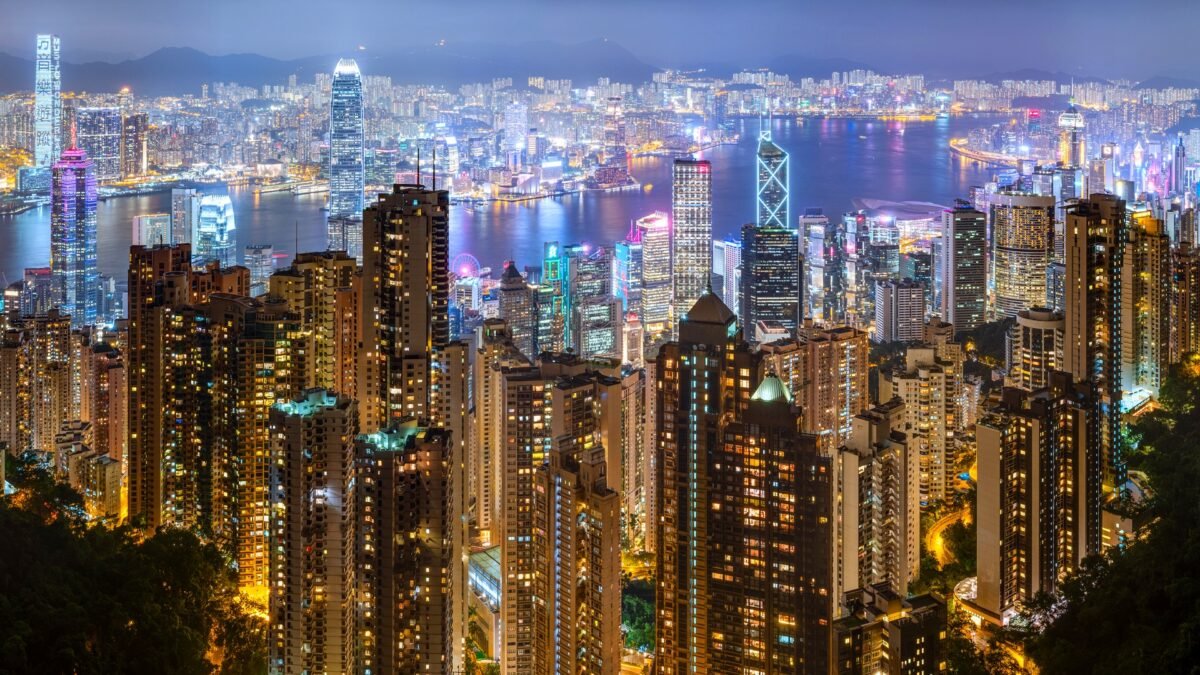
The most powerful bankers and investors in the world gathered in Hong Kong this week to talk about artificial intelligence, and the most striking thing they said was how little they actually know. At a summit where trillions of dollars of capital were represented in a single room, the chief executive of Goldman Sachs, the head of one of the world’s largest hedge funds, and the founder of a leading private equity firm all offered the same confession in different words: nobody can say with confidence how the artificial intelligence boom will end.
That admission, reported by Reuters from the Global Financial Leaders’ Investment Summit, landed at a moment of acute nerves across global markets. Technology stocks have been sliding for weeks, the Nasdaq 100 entered a correction earlier this week, and the question dominating trading floors from New York to Hong Kong is whether the largest investment wave in modern economic history is a genuine industrial revolution or a bubble that will end the way the dot-com boom did. The bankers in Hong Kong did not settle that question. What they did, unusually, was admit that they cannot.
“Asked if there is an AI bubble, Solomon argued that demand for computing power over the next couple of years vastly exceeds supply,” Reuters reported from the summit. “Beyond that, though, he acknowledged nobody knows how it will play out. Much of the value may emerge in specific applications of AI and from technological shifts that are at present hard to identify or understand. That uncertainty, he added, is part of what makes the moment exciting.”
David Solomon, the chairman and chief executive of Goldman Sachs, was speaking at the annual gathering organised by the Hong Kong Monetary Authority, which ran from 2 to 4 November under the theme “Rethinking the playbook”. The summit, first held in 2022 to revive interest in a city battered by protests and pandemic restrictions, has become one of the most important dates in the global financial calendar. This year it drew the heads of Goldman Sachs, Morgan Stanley, Bridgewater Associates, Citadel Securities, TPG, Franklin Templeton, Pimco, State Street, MSCI, General Atlantic and Standard Chartered, alongside senior Chinese policymakers and the chief executives of two of China’s most prominent AI companies.
The candour in the room was, as Reuters put it, almost refreshing. It is not typical for the global financial elite to confess to being clueless beyond a point. Yet the scale of the money now at stake has made honest uncertainty the only defensible position. The sums involved in the AI build-out are so large that, as Citadel Securities chief executive Peng Zhao told the summit, even small forecasting errors can translate into enormous miscalculations.
“Citadel Securities CEO Peng Zhao highlighted a fundamental problem: the technology is developing faster than the investment cycle,” Reuters reported. “Markets have immense financing capacity, but only on the basis of credible expectations. With the numbers involved so large, small forecasting errors can translate into huge miscalculations. Investors are suddenly confronting how little they can know with confidence, Peng said, and that uncertainty will inevitably produce mistakes.”
Jim Coulter, the founding partner of private equity giant TPG, went further still. According to Reuters, he told the summit that the three most important words in finance right now are “I don’t know”. Beneath the gold rush and the debate over which AI models will win, he said, lies “one of the biggest business questions we have ever been asked to unwind”, adding that everyone can be wrong. He reminded the room of 1999, when investors correctly grasped that the internet would be huge, yet still lost money backing the wrong companies, including AOL, Yahoo and Cisco.
China’s pitch: open models and the factory floor
If the Western bankers brought uncertainty to Hong Kong, the Chinese delegation brought a confident counter-narrative. Chinese officials and executives used the summit to argue that the next phase of the AI race will be won not in the data centre but on the factory floor — and that open-weight models, freely available for anyone to download and adapt, are already pushing the frontier of what the technology can do.
The most powerful advocate for China’s long-term advantage, according to Reuters, was Yang Zhilin, the chief executive of Moonshot, one of China’s leading AI companies. At a welcome reception to kick off the summit, Yang told guests that open-weight models such as its Kimi family are not just cheaper than proprietary rivals but are pushing the intelligence frontier and will rapidly gain global market share. It was, Reuters noted, a timely reality check for global asset managers as they assess the upcoming initial public offering of Anthropic, the American AI company behind the Claude models, which may value the San Francisco-based firm at more than $1.5 trillion.
Xiong Yan, the co-founder of Agibot, a humanoid robot maker, outlined the opportunity to take AI into the physical world through manufacturing, an area where China dominates. His argument, echoed in the summit’s closing remarks, is that the country that can put intelligent machines to work in its factories, warehouses and supply chains will capture more of AI’s value than the country that merely builds the most powerful chatbots.
Hong Kong’s Financial Secretary, Paul Chan, wrapped up the summit by offering a way forward along the same lines, arguing that realising AI’s promise requires putting it to work in the real world, and that China’s vast industrial base offers fertile ground to do so. It was, Reuters wrote, a reassuring note on which to end a lively summit, even if certainty remains in short supply.
The Chinese pitch arrived against a difficult market backdrop at home. The Shanghai Star50 Index of China’s hottest technology stocks has lost more than 40 per cent of its value from its June high, while the blue-chip CSI300 Index has tumbled nearly 20 per cent, according to Reuters. Chinese officials at the summit touted the country’s open-weight AI models and real-world deployment while downplaying the tech-led stock correction that has pulled major Chinese equity indices into the red for the year.
The quartet of Chinese policymakers participating in the summit did not directly address official efforts to prop up stocks, Reuters reported, preferring to talk about market stability and the transformation of the world’s second-largest economy. Xiao Yuanqi, vice minister of the National Financial Regulatory Administration, observed that short-term fluctuations and shocks can be digested and ultimately translated into growth. Vice Premier He Lifeng noted the shift in economic momentum toward new drivers. Thanks to its export boom, analysts expect Beijing to reach its 2026 GDP target of 4.5 to 5.0 per cent without resorting to additional stimulus, according to Reuters.
For their part, global executives made only vague references to the growing backlash in Europe against Chinese exports, which generated a $1.2 trillion trade surplus for China last year, Reuters reported. Speakers also avoided discussing China’s tightening tax net and its potential impact on banks including HSBC and Standard Chartered or insurers like AIA and Prudential. And, despite the summit overlapping with the United States midterm elections, President Donald Trump and his war against Iran barely featured in the discussions.
The numbers behind the nerves
The uncertainty voiced in Hong Kong is not abstract. It is anchored in numbers that have grown so large that even the people financing them struggle to keep them in proportion.
Morgan Stanley chief executive Ted Pick told the summit that AI-related capital spending could reach $10 trillion to $15 trillion, calling it one of the most significant economic transformations since the advent of the internet, according to a summary of the proceedings. Pimco chief executive Emmanuel Roman put the financing need at about $10 trillion over five years and warned that it would eventually reach excessive levels, Bloomberg reported from the summit. Goldman Sachs estimates that hyperscaler capital expenditure will reach roughly $800 billion in 2026 and $1.2 trillion in 2027, according to Reuters.
Those figures sit alongside a striking set of market signals. Asia-Pacific technology fundraising reached $125.8 billion in the first nine months of 2026, up from $36 billion a year earlier, according to LSEG data cited by Reuters. The Nasdaq 100 entered a correction on 2 November, closing more than 10 per cent below its all-time high of 6 October, according to Reuters, with chip stocks falling 12 per cent over three sessions. October was the Nasdaq’s worst month since April 2025, with the index down around 7 per cent and the Nasdaq 100 losing more than $2.5 trillion in value over the month, according to Reuters.
At the same time, the underlying demand for AI services keeps growing at a pace that would have seemed fantastical two years ago. Menlo Ventures, a Silicon Valley investment firm, estimated on 3 November that businesses spent $176.8 billion on AI deployment this year, more than five times last year’s figure, based on a survey of nearly 400 business decision-makers plus public filings. The striking finding of that report was that AI “agents” — programs that carry out tasks on their own — now generate about 80 per cent of the AI work flowing through OpenRouter, a service connecting users to many AI models, with agent use there growing about 37 times since February. Three companies, Anthropic, OpenAI and Google, took 69 per cent of business AI spending, according to the report.
That tension — extraordinary real demand on one side, extraordinary valuations and borrowing on the other — is precisely what divided the summit. State Street chief executive Ron O’Hanley told Bloomberg Television at the summit that it is “hard to see” AI as a bubble yet, because “there’s real orders behind them”. He added: “It’s not like these data centers are being built on spec. I mean, there’s real orders behind them, and in most cases, there’s real companies behind them.”
Franklin Templeton chief executive Jenny Johnson took the opposite view, cautioning that hyperscale cloud providers may be stretching capital beyond what returns justify, as they transition from previously capital-light businesses to capital-intensive enterprises. The European Central Bank’s vice-president listed high valuations for AI stocks among its main risks, and the head of Canada’s largest pension fund warned of “bubble-like” exuberance, according to reports from the summit. Xiao Yuanqi, the Chinese regulator, called global AI investment “overly concentrated”, according to Reuters.
Solomon himself tried to hold both truths at once. Bloomberg reported from the summit that he described deal demand as “very robust”, with investors “still focused on the trajectory of AI demand, compute demand and capital markets are open and receiving”. He also warned investors that some bets will fail, and that strong companies with compelling investment cases should still be able to raise capital even as the industry produces volatility. White House economic adviser Kevin Hassett, speaking separately, called AI “a really well-financed ecosystem”, according to Bloomberg.
A summit, a city, and a reversal of fortune
Beyond the AI debate, the summit told a second story: the return of Hong Kong as a financial centre. The mood at the gathering remained jovial and upbeat, Reuters reported, largely because the Asian hub is a hotter destination for global financiers than at any time since Eddie Yue, chief executive of the Hong Kong Monetary Authority, first organised the gathering in 2022 to revive interest in a city battered by protests and Covid restrictions. The hub owes its renewed allure to the boom in high-growth industries across the border, Reuters noted, with innovations in AI, semiconductors and biotechnology giving Western executives an extra incentive to make the trip beyond the HKMA’s considerable pulling power as custodian of Hong Kong’s $549 billion Exchange Fund.
The numbers underline the revival. In a reversal of Hong Kong’s traditional role channelling capital into the mainland, Chinese companies seeking to go global are now in need of funding, and data from Dealogic shows Hong Kong is enjoying a record spell for stock offerings, with 117 initial public offerings raising $51 billion so far this year, according to Reuters. Nearly 70 per cent of proceeds went to companies which already have a mainland listing. International lenders have earned almost $1.6 billion in investment banking revenue from Chinese clients over the same period, the biggest haul since 2021, and there are still more than 600 companies waiting to go public in Hong Kong, according to Reuters.
That IPO pipeline matters for the AI story too, because it is the route by which Chinese AI and technology companies will raise the capital to compete. The summit’s welcome dinner opened with a robot demonstration, according to the Hong Kong Monetary Authority’s own account of the event, and a fireside chat moderated by HSG founding partner Neil Shen featured Moonshot’s Yang Zhilin alongside Agibot’s Xiong Yan. The summit’s formal sessions included panels titled “War for compute: Where will it lead to?” and “AI boom: Will this boost productivity as much as the Digital Revolution?” — the two questions that now define the global debate.
The timing of the summit also placed it at the centre of a remarkable week for the AI industry. Anthropic, the company behind Claude, filed an amended prospectus with the United States Securities and Exchange Commission on 2 November, disclosing third-quarter revenue of about $17 billion and warning in new risk-factor language that AI systems may soon accelerate their own development faster than safety checks can follow. The filing is part of its path to a Nasdaq listing under the ticker ANT, with valuation reports ranging up to $2 trillion. The last week of October had already brought a burst of frontier model releases from OpenAI, Google’s DeepMind and Mistral, according to an AI research digest, and a separate report by Nikkei put the hidden debt accumulated by the largest AI spenders at $3.2 trillion, up about 90 per cent in six months.
Against that backdrop, the Hong Kong summit’s most honest contribution may have been its refusal to pretend the future is knowable. The bankers who gathered there finance the companies building the technology, and they are also the people who will have to explain to their shareholders if the bet goes wrong. Their collective answer — that demand is real, that the money is flowing, and that nobody knows what happens next — is less comforting than a confident forecast, but it is considerably more useful.
Analysis: Why It Matters
The Hong Kong summit matters not because it produced a forecast, but because it produced a confession. When the people who control the world’s capital admit, in public and on the record, that they do not know where the largest investment wave of their careers is heading, that is itself the news. It reframes the AI debate from a technical argument about model capabilities into a financial argument about risk, timing and the limits of knowledge — and it does so at the exact moment when the sums involved have outgrown the ability of any single institution to absorb a mistake.
1. The admission is the story
Financial leaders are trained to project confidence. Their job, in large part, is to persuade other people that the future is manageable. So when the chief executive of Goldman Sachs says nobody knows how the AI boom will play out, when the head of Citadel Securities says investors are confronting how little they can know with confidence, and when a founder of TPG says the three most important words in finance right now are “I don’t know”, something unusual has happened. These are not the words of people who have lost faith in the technology. Solomon was explicit that computing demand exceeds supply for the next couple of years, and that deal demand remains very robust. They are the words of people who have looked at the numbers, understood their scale, and concluded that the honest position is uncertainty. That candour is valuable precisely because it is rare. Markets function best when risk is priced honestly, and the summit’s most useful contribution may be that it made honest pricing socially acceptable at the top of the industry. The danger in every boom is not that people are optimistic, but that optimism becomes mandatory. Hong Kong broke that spell, at least for a week.
2. The 1999 parallel is a warning, not a prediction
Jim Coulter’s reference to 1999 deserves careful attention, because it is the most commonly misused analogy in the AI debate. His point was not that AI is a bubble destined to burst like the dot-com crash. It was subtler and more unsettling: that investors can be right about the technology and wrong about the investment. In 1999, the people who believed the internet would transform the world were correct. Many of them still lost most of their money, because they backed the wrong companies, at the wrong prices, at the wrong time. The same logic applies today. Nobody serious doubts that AI will transform large parts of the economy. The question is which companies will capture that value, at what price, and over what horizon. A world in which AI is revolutionary and most of today’s AI investments lose money is not a contradiction; it is, on the evidence of 1999, the normal outcome. That distinction matters for ordinary savers and pension funds, whose money is increasingly exposed to the same handful of companies, and for policymakers, who must decide whether to treat a market correction as a crisis or as the system working as it should.
3. Open weights are the real disruption
The most consequential idea voiced in Hong Kong may not have come from a banker at all, but from Moonshot’s Yang Zhilin. His claim — that open-weight models are not just cheaper than proprietary rivals but are pushing the intelligence frontier — challenges the business model on which the most valuable AI companies are built. If frontier-quality models become freely available, the value shifts away from the models themselves and toward the applications, data and distribution built on top of them. That would be bad news for companies valued in the trillions on the strength of their proprietary models, and good news for almost everyone else, from small businesses to developing countries. It would also reshape the geopolitical contest. The United States has led the AI race largely through private companies with closed models; China, constrained in access to the most advanced chips, has leaned into open models and real-world deployment. Yang’s pitch, and Agibot’s argument about manufacturing, amount to a claim that China has found a different and possibly more durable route to AI value. Whether that claim survives contact with reality will shape the industry for a decade. But the fact that it was made confidently, in front of the world’s largest asset managers, at a summit hosted by Hong Kong’s central bank, shows how far the centre of gravity has already shifted.
4. The speed of the technology has broken the speed of finance
Peng Zhao’s observation — that the technology is developing faster than the investment cycle — points to a structural problem with no easy fix. Financial markets are built on the assumption that investors can form credible expectations about future cash flows and price assets accordingly. That assumption breaks down when the underlying technology changes faster than the horizon over which those cash flows can be forecast. A data centre takes years to build and decades to pay for itself, yet the models it will run may be obsolete within months. Commitments of $10 trillion to $15 trillion, the figures discussed in Hong Kong, are being made on the basis of demand forecasts that everyone involved concedes are guesses. This does not mean the spending is irrational. The cost of underbuilding in a genuine revolution is also enormous, and the companies making these bets are, for now, generating real revenue from real customers. But it does mean that the margin for error has narrowed to almost nothing, and that the financial system has less capacity to absorb a collective forecasting mistake than at any point since the housing boom. The summit’s honesty about that fragility is a form of risk management in itself — provided it is followed by action, in the form of more careful underwriting, more diverse bets, and less leverage.
5. Hong Kong’s revival is part of the story, not the backdrop
It would be a mistake to treat the summit’s location as incidental. Hong Kong’s return as a financial centre — 117 IPOs raising $51 billion this year, more than 600 companies waiting to list, international banks earning their biggest fees from Chinese clients since 2021 — is itself a consequence of the same forces driving the AI debate. Chinese technology companies need capital to go global, Western investors need exposure to the world’s second-largest economy, and Hong Kong is the place where those two needs meet. The city’s revival also reflects a geopolitical reality: as the United States and China compete over AI, the financial plumbing that connects them matters more, not less. The summit’s most telling silence was on politics. Despite overlapping with the American midterm elections, Trump and the war on Iran barely featured. The bankers in Hong Kong were, for three days, more interested in computing power than in geopolitics. That focus is both the summit’s strength and its limitation. The AI boom will not be decided by technology alone; it will be decided by politics, regulation, export controls and war. Hong Kong’s bankers know that. Their decision to set it aside for a week was a luxury the rest of the world does not have.
What to Watch Next
- Anthropic’s IPO roadshow: With the company expected to begin marketing its Nasdaq listing in the coming weeks, the price it achieves — and whether it lands closer to the $1.5 trillion or $2 trillion figures reported — will be the market’s first hard verdict on whether the Hong Kong doubts or the Hong Kong optimism wins.
- The December central bank meetings: The European Central Bank meets on 16 and 17 December, with markets pricing a possible rate rise, and the United States Federal Reserve is also expected to move. Any signal that borrowing costs will stay higher for longer would raise the cost of the AI build-out and test the “well-financed ecosystem” thesis directly.
- Open-weight releases from China: If Moonshot’s Kimi family or other Chinese open models post benchmark results that match or beat proprietary rivals in the coming months, Yang Zhilin’s Hong Kong pitch will gain credibility fast — and the valuations of closed-model companies will come under fresh pressure.
- Hyperscaler earnings and capital expenditure guidance: The next round of results from the largest cloud and AI spenders will show whether the $800 billion of 2026 capital expenditure is translating into revenue growth, or whether, as Franklin Templeton’s Jenny Johnson warned, the returns are failing to justify the spending.
- Chinese markets and the Star50 index: With the Shanghai Star50 down more than 40 per cent from its June high, any further slide — or any sign of state intervention to support prices — will show whether Beijing’s confidence about digesting short-term shocks holds, and whether the open-weight story can survive a domestic market rout.
Sources
- Reuters Breakingviews — Hong Kong summit exposes Wall Street AI confusion (Una Galani, 4 November 2026)
- Hong Kong Monetary Authority — Global Financial Leaders’ Investment Summit 2026 (official summit page)
- Bloomberg, via FourWeekMBA — Goldman CEO Sees Robust AI Deal Demand; Pimco Sees Excess (3 November 2026)
- Reuters, via ad-hoc-news — Goldman Sachs CEO Solomon sees robust AI financing demand (4 November 2026)
- Paisano AI — AI News: Who Sets the Rules for the Agents? (Menlo Ventures State of Enterprise AI figures, 4 November 2026)

About the Author — Abdul Mannan
Related Articles

CrowdStrike Unveils AI Kill Switch for Rogue Agents and Buys Fiddler and Dreadnode in $495 Million Security Push
CrowdStrike has launched an AI Kill Switch that lets security teams shut down rogue agents, and agreed to…
Anthropic Warns AI May Soon Build Itself Faster Than Safety Checks Can Follow as $17 Billion Quarter Powers Its IPO Filing
Anthropic has told investors its AI may soon accelerate AI research faster than safety work can keep up,…
Britain’s Cyber Chiefs Warn AI-Powered Ransomware Will Strike Critical Infrastructure by 2028
Britain's cyber defence chief warns AI-powered ransomware is 'highly likely' to hit power stations, hospitals and airports by…