
Rafael Nadal Joins Real Madrid Board of Directors as Tennis Legend Takes Seat in the Bernabéu Boardroom

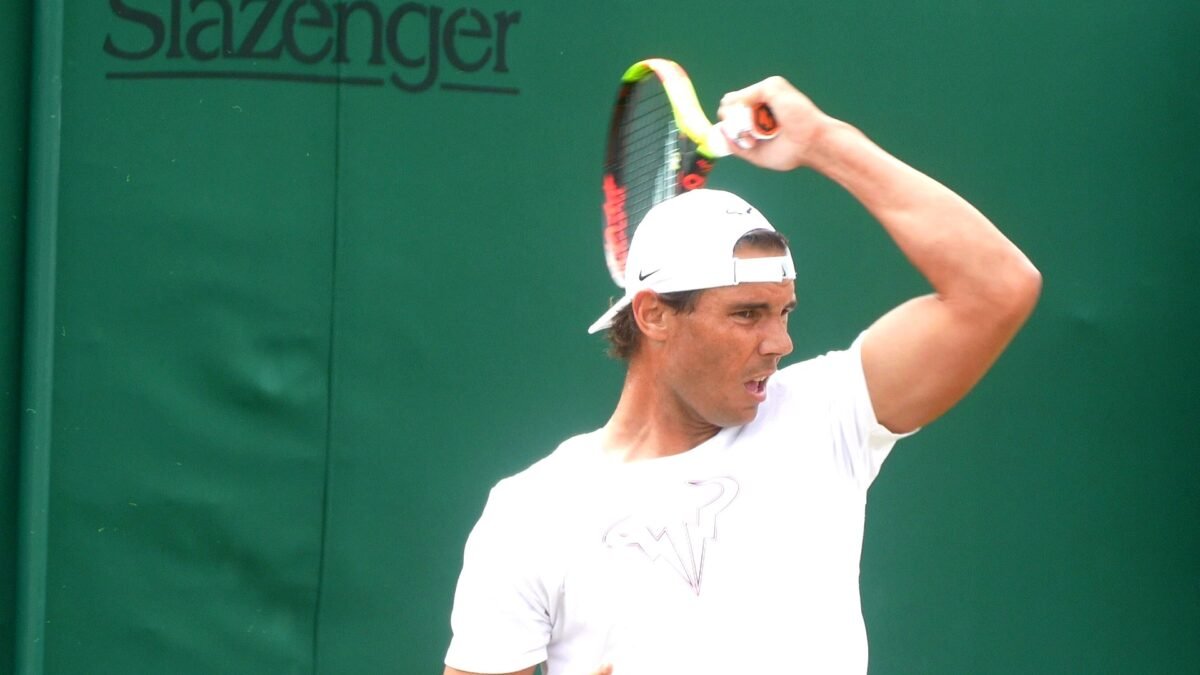
Real Madrid have appointed Rafael Nadal to their board of directors, bringing one of the greatest tennis players of all time — and one of the most admired sporting figures Spain has ever produced — into the boardroom of the most successful football club in Europe.
The club announced on Wednesday that its board had agreed, at a meeting on 4 November, to submit Nadal’s appointment to the General Assembly of Delegate Members for ratification. The 40-year-old, a 22-time Grand Slam champion who retired from professional tennis in November 2024, has accepted the invitation, and the members’ vote on 21 November is expected to confirm him as the board’s 20th member.
It is, by any measure, an extraordinary appointment. Football clubs do not usually hand boardroom seats to athletes from other sports, and Real Madrid — an institution famously protective of its own mythology — do not usually do anything for the sake of sentiment. That they have chosen Nadal, a man who has never kicked a ball for them, tells a story about what the club believes it is buying: not a tennis player, but a standard. In the words of the club’s own statement, Nadal is “one of the greatest legends in the history of sport and one of the most admired and recognised Spanish athletes in the world”.
“I want to thank President Florentino Pérez and the Board for proposing that I join the Board of Directors of Real Madrid,” Nadal wrote on social media after the announcement. “I have accepted this proposal with great excitement, a desire to learn, and a willingness to contribute everything I can.”
The announcement
According to Reuters, the board agreed at its 4 November meeting to put Nadal’s appointment to the General Assembly of Delegate Members, the body of elected representatives through which Real Madrid’s tens of thousands of members — the socios — exercise their ownership of the club. The club’s statement, published on Wednesday morning, named Nadal in full — Rafael Nadal Parera, member number 67,778 of the club — and set out the case for his appointment in terms that went well beyond his trophy cabinet.
“With his extraordinary track record, with 92 individual titles, including 22 Grand Slams, two Olympic gold medals, five Davis Cups with Spain and number one in the world ranking, Rafael Nadal has starred in a legendary sporting career,” the statement said, according to DAZN’s translation of the club’s announcement. “But his figure represents much more than his successes: his talent, his spirit of permanent improvement, his capacity for sacrifice, his competitiveness, his humility, his respect for rivals and his team-mates, and his commitment to solidarity make him an example on and off the courts.”
“All these values are part of Real Madrid’s identity and Rafael Nadal has represented and defended them throughout his sporting life, becoming a reference for millions of people around the world,” the statement continued. “For Real Madrid and for all madridistas, it is an immense honour that a figure of his sporting and human stature, a reference in Spanish and global sports, joins our Board of Directors and contributes, from this role, to the present and future of our club.”
The announcement was greeted with the kind of enthusiasm that suggested it had been long anticipated inside the club. Within hours, Nadal had posted on social media a photograph of himself as a small child wearing a Real Madrid kit — a reminder, if one were needed, that this is not a marriage of convenience but the formalisation of a lifelong attachment. Sky Sports reported that the photograph, and the warmth of Nadal’s message, set the tone for a day in which the story travelled far beyond the sports pages, into the mainstream news of Spain and beyond.
What the announcement did not do was spell out what Nadal will actually do. The statement sets out no portfolio, no committee, and no specific responsibility. That, for now, is the central open question — and it is one that the reporting around the appointment has already begun to answer, in cautious terms.
A lifelong Madridista
Nadal’s connection to Real Madrid is not a recent invention. He has been an honorary member of the club since 2011, a distinction usually reserved for direct relatives of existing members, and he has been a regular presence at the Santiago Bernabéu for years, sitting in the directors’ box and watching the team he has supported since childhood. His membership number — 67,778 — is itself a small piece of the story: it marks him out as a member of long standing, not a celebrity signed up for the occasion.
The family connection runs deeper, and more ironically, than a simple childhood loyalty. Nadal’s uncle, Miguel Ángel Nadal, was a rugged and much-loved defender who spent eight seasons at Barcelona, Real Madrid’s great rivals, and won the European Cup with them at Wembley in 1992. The younger Nadal, growing up in Manacor on the island of Mallorca, chose the other side of the divide — and he has never hidden it. When Real Madrid won their 15th European Cup at Wembley in June 2024, Nadal was among the first to congratulate them publicly; when the club’s basketball team has played in major finals, he has been there too.
That loyalty has been tested, at least in the telling, by the question of whether he might one day lead the club. For years, Nadal has been touted in the Spanish press as a potential successor to Florentino Pérez, the 79-year-old president who has dominated Real Madrid for most of the 21st century. According to Reuters, Nadal “has long been touted as a potential successor to Real president Florentino Perez, although he has played down the prospect”. Earlier in 2026, he took to social media to deny reports linking him to a possible candidacy for the presidency — a denial that now reads, in hindsight, as the careful positioning of a man who knew a different role was coming.
His life since retirement has been built around the Rafa Nadal Academy in Manacor, the high-performance tennis centre he opened in 2016, and the Rafa Nadal Foundation, the charity he set up in 2008 to work with disadvantaged children and young people. Both are run with the same methodical intensity that defined his playing career, and both have given him the kind of management experience — of institutions, of people, of money — that a boardroom role demands. He is, in other words, not a former athlete looking for something to do. He is a man who already runs things.
A career without parallel
To understand why Real Madrid would want Nadal in their boardroom, it helps to remember just how extraordinary his career was. He won 22 Grand Slam singles titles, a total bettered only by Novak Djokovic in the history of the men’s game. Fourteen of those came at Roland Garros, the French Open, where his record is not merely a record but a monument: no player in the history of tennis has dominated a single tournament the way Nadal dominated Paris, winning 14 titles in 19 appearances and losing just four matches there in his entire career.
The numbers around him are of a kind that will not be approached for a generation, if ever. Ninety-two tour singles titles. Two Olympic gold medals — the singles in Beijing in 2008 and the doubles in Rio de Janeiro in 2016, alongside Marc López. Five Davis Cup triumphs with Spain, in 2004, 2008, 2009, 2011 and 2019, a span of 15 years that covers almost his entire adult life. Two hundred and nine weeks as world number one, spread across five separate stints at the top, the last of them in 2020, when he was already 33. Thirty-six Masters 1000 titles, the second-highest total in history.
But the statistics, as the club’s statement tacitly acknowledged, are only part of the story. Nadal’s career was defined as much by what he overcame as by what he won. He played his entire career with a congenital foot condition, Müller-Weiss syndrome, that left him in chronic pain and required injections simply to compete. He missed months, sometimes years, with knee and wrist and abdominal injuries, and returned from every absence to win again — most famously at the Australian Open in 2022, when, at 35 and five months after foot surgery, he came back from two sets down to beat Daniil Medvedev in a final that lasted five hours and 24 minutes, and won his 21st Grand Slam.
He retired, finally, in November 2024, at the Davis Cup finals in Málaga, losing his last singles match to the Dutchman Botic van de Zandschulp in front of a crowd that included the King of Spain and a generation of players he had inspired. He was 38. The farewell was emotional, and deliberately understated — a man who had always let his tennis speak for him, leaving the stage without a fuss. Two years on, the boardroom appointment is the first formal role he has accepted at a major sporting institution since then, and it is, in its own way, a second debut.
There is a further point worth making about the timing. Nadal retired at a moment when Spanish sport was losing its defining figures of the last two decades — when the golden generation of Spanish footballers had already gone, and when the country was beginning to ask who would carry its sporting identity next. Real Madrid’s decision to bring Nadal inside the tent is, among other things, an answer to that question: the club that has always claimed to represent Spain will now have, at its highest table, the Spaniard who represented Spain most completely.
What the role actually involves
The most important thing to understand about Nadal’s appointment is what it is not. According to reporting by Sports Illustrated, citing The Athletic, he is not expected to take an executive role. “What’s expected is that he doesn’t have an executive role,” the report said. “That means that at the moment he won’t be part of the club’s operations, he won’t make any decisions. He’ll be more of a consultant than an executive.”
That distinction matters. Real Madrid’s board is a body of 19 members — Nadal will become the 20th, according to The Athletic, cited by Sportskeeda — drawn largely from Spanish business, law and finance. It meets regularly to approve budgets, sign off on major projects such as the redevelopment of the Bernabéu, and oversee a club whose annual revenues run into hundreds of millions of euros. Its members are not, for the most part, football people. They are custodians of an institution, and their job is governance, not management. Nadal’s role, on the available evidence, will be of the same kind: a voice in the room, a bearer of institutional memory and sporting credibility, rather than a decision-maker on transfers or tactics.
The appointment still has to be ratified. According to Insider Sport, citing the EFE news agency, the ratification will be the only item on the agenda of an extraordinary general assembly of delegate members on 21 November, held alongside the ordinary assembly that will vote on the 2026-27 budget and member fees for 2027-28. Ratification is expected to be a formality: Marca, the Madrid sports daily, reported that the vote is viewed inside the club as a formality, given Nadal’s standing among the membership. Nobody in Madrid expects the socios’ representatives to vote against the most popular Spaniard alive.
Whether the role grows from there is the question that will follow Nadal for as long as he holds it. A non-executive seat on a football club’s board is, in the modern game, a curious thing — a position of enormous prestige and almost no formal power. But prestige has its own uses. Nadal’s name opens doors that no other board member’s can. His presence on the board lends the club a credibility in the world of sport beyond football that money cannot buy. And his voice, in a room full of bankers and lawyers, will carry a weight that comes from having actually done, at the highest level, the thing the club exists to do: win.
The Pérez question
No appointment to Real Madrid’s board can be discussed without discussing Florentino Pérez, and no discussion of Pérez can avoid the question of succession. The president, 79, secured another four-year term in June after Real’s first contested presidential election in two decades, according to Reuters. More than a third of voting members backed his challenger, Enrique Riquelme, a businessman who opposed plans to bring outside investment into the member-owned club. It was, by the standards of Real Madrid politics, a genuine contest — and a reminder that even Pérez, after two decades of dominance, is not untouchable.
Pérez’s second spell in charge, which began in 2009, has been the most successful in the club’s history: six European Cups, a rebuilt stadium, and a commercial operation that has made Real Madrid the richest club in world football. It has also been built, to a remarkable degree, around a single man’s vision and will. The club’s statutes require presidential candidates to meet steep financial guarantees, which has effectively limited the field to the very wealthy; Pérez’s own fortune, built in construction, has always been part of his armour. The question of who follows him has hung over the club for years, and it has never had a convincing answer.
Nadal has been, for a decade, the name most often mentioned. He has the profile, the popularity, the wealth, and — crucially — the values that the club’s membership would recognise as its own. He has also, consistently, played the idea down. His denial earlier this year, when reports linked him to a presidential run, was categorical enough that the Spanish press treated the matter as closed. The board appointment changes the calculation, but not in the way the speculation assumed. It brings him inside the institution without the bruising politics of a presidential campaign, and it gives the membership four years to watch him at close quarters.
It would be wrong to read the appointment as a succession plan in disguise — the club has said nothing of the kind, and Nadal’s own words were those of a man joining to learn, not to lead. “I have accepted this proposal with great excitement, a desire to learn, and a willingness to contribute everything I can,” he wrote. The language of learning is not the language of a man positioning himself for a takeover. But it is also true that boardrooms are where successors are made, and that every great institution eventually has to answer the question of who comes next. Nadal’s presence on the board, whether by design or by accident, means that when the question is next asked, there will be a ready-made answer sitting at the table.
The night it was announced
The announcement came on a day when Real Madrid were, characteristically, also providing drama on the pitch. On Wednesday evening, hours after the board’s decision was made public, the team came from behind twice to beat AEK Athens 3-2 in the Champions League in the Greek capital, with a stoppage-time strike from captain Federico Valverde completing the comeback, according to Reuters. Jude Bellingham had equalised with a backheel finish on his 60th Champions League appearance — the youngest player ever to reach that number, according to TNT Sports — and Kylian Mbappé had levelled for a second time before Valverde’s winner in the 92nd minute.
The victory kept Real Madrid perfect in the league phase, with 12 points from four matches, second only to Paris Saint-Germain on goal difference, according to Reuters. It was, in the club’s modern idiom, a routine miracle — the kind of late escape that has become the team’s signature under their current manager, José Mourinho, who returned to the club this season. That the board announcement and the comeback fell on the same day was a coincidence, but it was a fitting one: a club that announces a tennis legend in the morning and stages a last-minute rescue in the evening is a club that understands the theatre of its own existence.
Analysis: Why It Matters
1. Real Madrid are buying something money cannot buy
Football clubs can buy players, managers, stadiums and sponsors. What they cannot buy is the kind of legitimacy that comes from being associated with a figure whose reputation is beyond reproach. Nadal’s career was remarkable not just for its length and its trophies but for its cleanliness: in two decades at the top of a sport that has had its share of scandal, he was never once credibly accused of anything worse than gamesmanship. His reputation is, in the truest sense, an asset — and Real Madrid, a club that has spent the last two decades burnishing its image as the standard-bearer of European football, have now acquired a share of it. The appointment is, in part, a branding decision. But it is a branding decision of a kind that only works because the brand in question is real.
2. This is about what a board is for
The modern football club board is a strange institution: part corporate governance, part social club, part political machine. At Real Madrid, where the members own the club and elect the president, the board’s job is to be the bridge between a commercial operation worth hundreds of millions of euros and a membership that thinks of the club as a family heirloom. Nadal’s appointment is interesting precisely because he does not fit the usual profile of a board member. He is not a banker, a lawyer or a construction magnate. He is a sportsman, and his presence on the board is a reminder — to the members, to the sponsors, to the players — that the club’s purpose is sporting, not financial. In an era when football is increasingly run by private equity and sovereign wealth funds, there is something almost defiant about putting a man who won his titles with a racket, not a spreadsheet, at the top table.
3. The succession question has not gone away — it has changed shape
The most persistent question in Spanish football for the last five years has been who succeeds Florentino Pérez. The board appointment does not answer it, but it changes its shape. Nadal is now inside the institution, learning its workings, meeting its people, and being seen by its members in a role of responsibility. If, in four years’ time, the presidency becomes vacant and Nadal decides he wants it, he will not be an outsider making a leap. He will be a board member with four years of institutional knowledge, a record of service, and the same popularity he has always had. That is a very different proposition from a cold candidacy, and it is one the club’s power brokers will have understood the moment the appointment was agreed. Whether it was intended as a succession plan or not, it functions as one.
4. Sport’s borders are dissolving
There was a time when football and tennis existed in separate worlds, with separate audiences, separate money and separate cultures. That time is ending. The biggest stars in world sport now move freely across disciplines — investing in each other’s teams, appearing at each other’s events, lending their names to each other’s ventures. Nadal’s appointment is part of that larger movement: the recognition that sporting greatness is, in the end, a transferable quality, and that the lessons of one sport — discipline, preparation, the management of pressure — apply to all of them. It is also, for Real Madrid, a way of reaching beyond football. Nadal’s global following is not a football following. It is a tennis following, a Spanish following, a following of people who admire excellence wherever they find it. The club has just acquired a ambassador to all of them.
5. The risk is real, and it is small
There is, inevitably, a risk. A board seat is a serious responsibility, and Nadal has no experience of corporate governance at this scale. The club’s finances, its stadium debt, its relationship with LaLiga and UEFA, its plans for outside investment — these are matters of genuine complexity, and a new board member who does not understand them can be a liability. But the risk is small, and it is manageable. Nadal is not being asked to run the club. He is being asked to be present, to contribute, and to learn — his own word. And if there is one thing his career proved, it is that Rafael Nadal learns faster than anyone else. He arrived on the professional tour as a 15-year-old who could barely speak English, and left it as the most complete competitor his sport has ever seen. The boardroom, by comparison, should hold few terrors.
What to Watch Next
- The 21 November vote. The General Assembly of Delegate Members will ratify Nadal’s appointment at an extraordinary assembly on 21 November. The vote is expected to be a formality, but the scale of the majority — and the tone of the debate, if any — will show how the membership feels about bringing a tennis player into the boardroom.
- The first board meeting. Nadal’s first appearance as a director, and any committee assignment he receives, will indicate how seriously the club intends to use him. A seat on a sporting or institutional committee would signal a real role; a purely ceremonial presence would suggest the appointment is symbolic.
- The presidential question. Watch what Pérez says about Nadal in the coming months, and what Nadal says about Pérez. Any warmth beyond the formal will be read in Madrid as a signal about the succession — and the Spanish press will be reading it closely.
- The academy and the brand. Nadal’s business interests — the academy in Manacor, his foundation, his hotel ventures — will now sit alongside his board role. Watch for any formal link between the academy and the club, which would be the clearest sign that the appointment is meant to be a working partnership rather than an honour.
- The reaction beyond Spain. The story has travelled globally, and the response from the tennis world — from Djokovic, from Federer, from the tours themselves — will show whether this is seen as a one-off honour or the start of a trend of great athletes moving into the governance of clubs in other sports.
Sources
- Reuters — Nadal lined up to join Perez on Real Madrid board (4 November 2026)
- Real Madrid — Official Statement: Rafael Nadal (4 November 2026)
- TNT Sports — Tennis legend Rafael Nadal appointed to Real Madrid board of directors (4 November 2026)
- Sky Sports — Real Madrid: Rafael Nadal appointed to LaLiga club’s board of directors (4 November 2026)
- DAZN — Rafael Nadal joins Real Madrid board (4 November 2026)

About the Author — Abdul Mannan
Related Articles
Yamal Breaks Mbappé’s Teenage Champions League Record as Raphinha Brace Seals Barcelona’s 3-0 Win Over Aston Villa
Lamine Yamal became the highest-scoring teenager in Champions League history and Raphinha struck twice as Barcelona ended Aston…
Tenerife Striker Jesús de Miguel Dies at 30 After On-Pitch Collision as Spanish Police Open Manslaughter Inquiry
CD Tenerife striker Jesús de Miguel has died aged 30 after suffering a cardiac arrest in a collision…
AFC Postpones 2027 Asian Cup by Almost a Year as War and Houthi Strikes Reach Saudi Arabia
The Asian Football Confederation has moved Asia's biggest football tournament from January 2027 to December 2027, after Houthi…